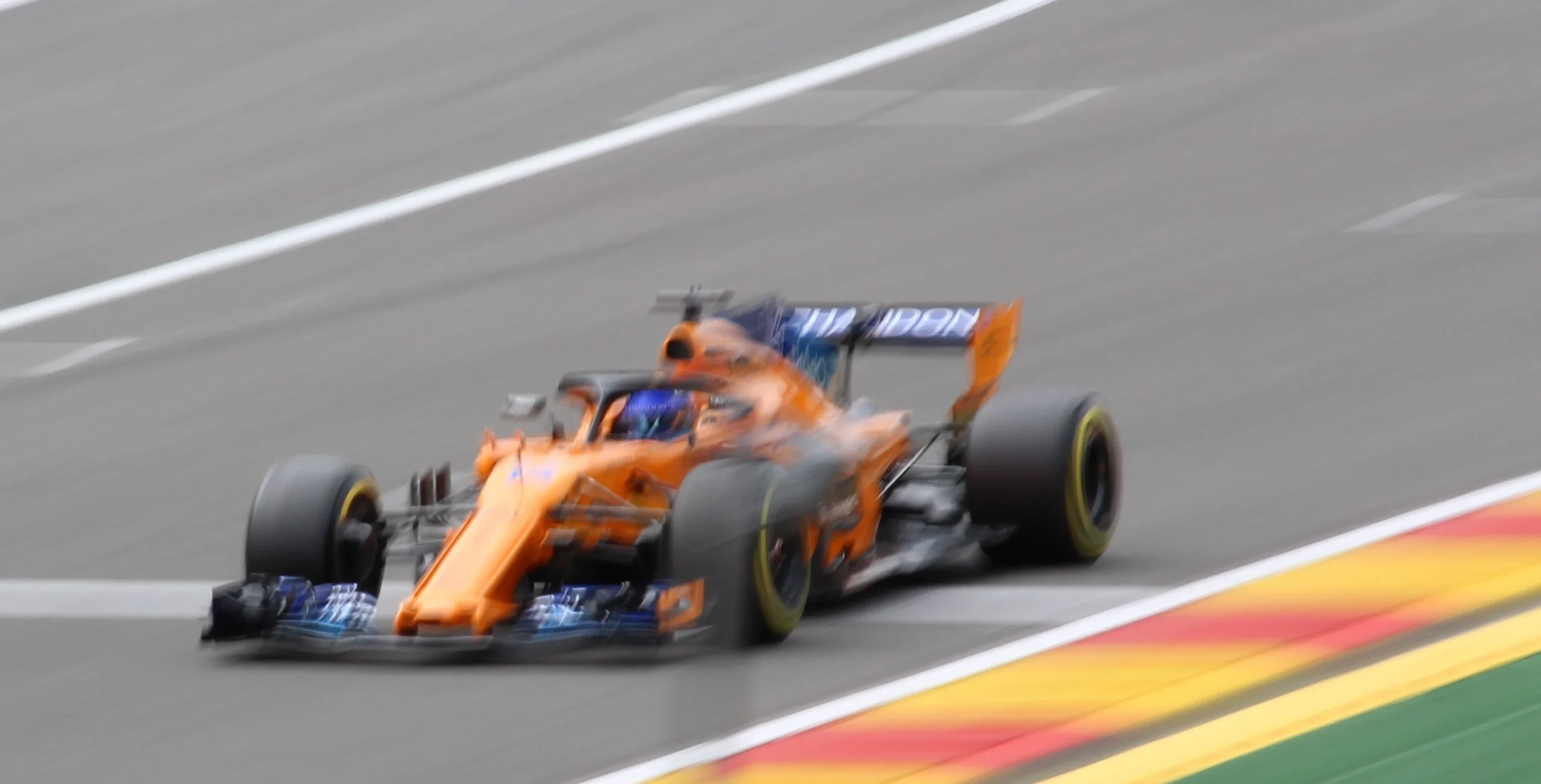
Why Did F1 Introduce Halo? Safety Device Explained
Formula 1 accepted a major visual change because the exposed cockpit remained one of its clearest safety weaknesses.
Formula 1 introduced the Halo in 2018 to protect a driver’s exposed head from large debris, another car and trackside structures. FIA testing showed it offered the best overall protection among the available cockpit systems.
For most of Formula 1 history, the driver’s helmet sat in an open cockpit with little structure directly ahead of it.
The survival cell became immensely strong. Helmets, headrests and the HANS device also transformed crash protection.
However, one weakness remained visible. A wheel, nose section or barrier could still enter the space around the driver’s head.
Several serious accidents exposed that risk. Consequently, the FIA began a long program to develop frontal cockpit protection.
The answer to why did F1 introduce Halo is not one crash or one driver. It is a chain of evidence gathered across many racing series.
Henry Surtees was killed by a detached wheel in Formula Two in 2009. One week later, Felipe Massa suffered a serious head injury from a suspension spring.
Later incidents involving Jules Bianchi and Justin Wilson kept cockpit protection at the center of safety discussions. Yet each accident presented a different engineering problem.
The FIA evaluated closed canopies, transparent shields and Red Bull’s aeroscreen. Meanwhile, Mercedes produced the basic Halo concept at the FIA’s request.
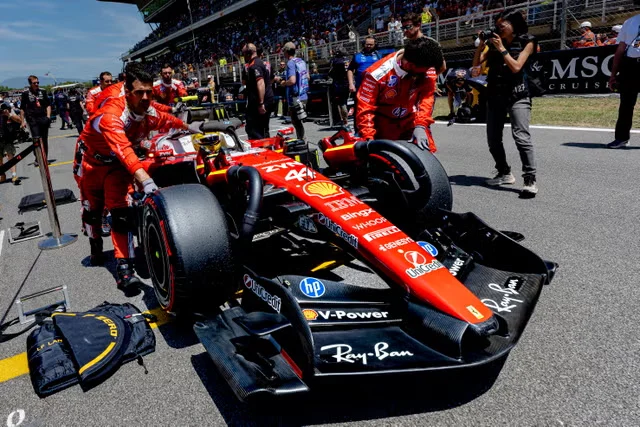
Ferrari first ran the device publicly during 2016 testing. Other teams and drivers then completed extensive visibility and extraction trials.
Formula 1 confirmed the Halo for 2018 despite fierce criticism. Many fans disliked its shape, while some drivers feared it would damage open-cockpit tradition.
Those arguments faded after several dramatic crashes. The marks left on Charles Leclerc’s Halo at Spa offered early evidence.
Romain Grosjean’s Bahrain fire, Lewis Hamilton’s Monza collision and Zhou Guanyu’s Silverstone rollover made the protection impossible to dismiss.
This guide explains the full story. It covers the accidents, design, strength, visibility, controversy and current 2026 regulations.
The Direct Answer: F1 Had to Protect the Exposed Cockpit
The FIA identified frontal cockpit protection as a safety priority after accidents involving wheels, debris, other cars and trackside objects. The Halo gave the broadest tested protection without fully enclosing the cockpit.
Formula 1 cars already had a strong carbon-fiber survival cell. However, the opening above the cockpit remained necessary for entry and escape.
That opening left the driver’s head exposed. A helmet could absorb many impacts, but it could not redirect a complete wheel or car.
The Halo added a physical load path around the cockpit. Therefore, large objects could strike the titanium structure instead of the helmet.
FIA analysis divided the threat into three broad categories. These were car-to-car contact, car-to-environment contact and external objects.
Testing showed meaningful protection in all three categories. Moreover, drivers could still see, enter and leave the car.
That combination answers why did F1 introduce Halo. It was the most mature solution that improved survival without creating a closed cockpit.
The Halo does not remove risk. Instead, it converts a direct head strike into a structural impact that the survival cell can manage.
What Is the Halo on a Formula 1 Car?
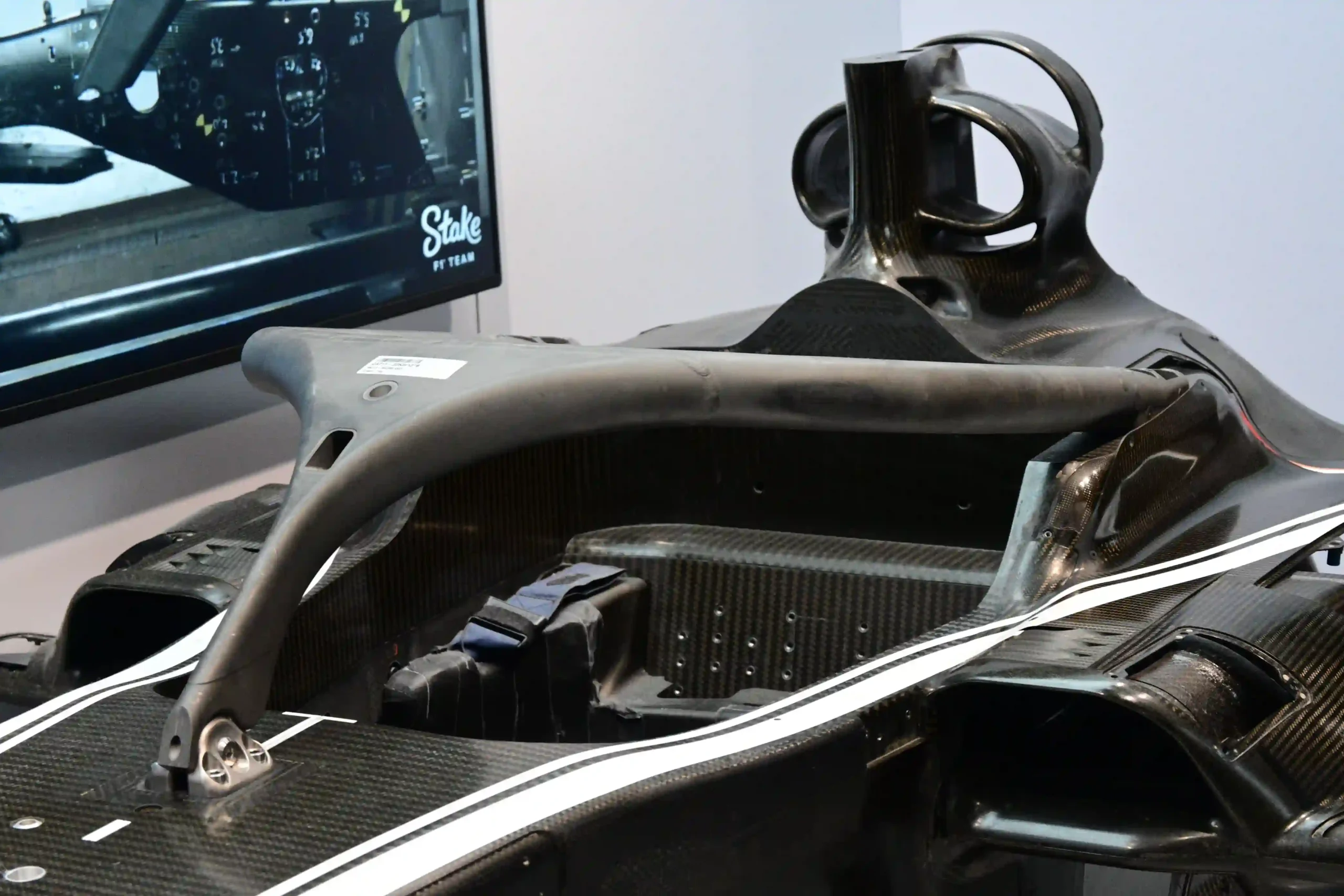
The Halo is a three-point titanium structure that surrounds the upper cockpit. A central pillar stands ahead of the driver, while a curved loop protects both sides and the area above the helmet.
The FIA officially calls the device the Secondary Roll Structure. It sits ahead of the principal roll hoop behind the driver.
One mounting point attaches at the front of the cockpit. Two rear mounts connect to strengthened sections on either side.
The structural part is standardized. However, teams can add regulated aerodynamic fairings around it.
The Central Pillar Takes Frontal Loads
The forward strut divides the driver’s view. It also creates the shortest strong path into the front mounting.
When a large object arrives from ahead, the pillar helps deflect it. Consequently, the object may pass above or beside the helmet.
The Curved Loop Protects the Sides and Top
The loop wraps around the cockpit opening. It can intercept a tire, nose cone or barrier edge approaching from an angle.
It also creates extra survival space when a car slides upside down. That role became clear during Zhou Guanyu’s 2022 accident.
It Works With Other Safety Systems
The Halo does not replace the helmet, HANS, headrest or monocoque. It adds another layer.
Read how those layers work in the guides to the F1 monocoque, HANS device and F1 headrest.
Formula 1 Halo Development Timeline
| Year | Development | Why It Mattered |
|---|---|---|
| 2009 | Henry Surtees and Felipe Massa suffer major head-impact accidents one week apart. | The search for stronger cockpit protection intensifies. |
| 2011–2015 | The FIA studies canopies, roll structures and deflection concepts. | Researchers compare protection, visibility and rescue access. |
| 2015 | Mercedes develops the basic Halo study at the FIA’s request. | The three-point titanium concept becomes the leading open-frame design. |
| March 2016 | Kimi Räikkönen runs a Halo on Ferrari’s SF16-H at Barcelona. | The device receives its first public Formula 1 track test. |
| 2016 | Teams and drivers test Halo prototypes during Grand Prix practice. | Visibility, airflow, extraction and driver reaction are assessed. |
| July 2016 | The Strategy Group commits to frontal cockpit protection for 2018. | Introduction is delayed from 2017 to allow broader testing. |
| July 2017 | The FIA confirms Halo after comparing it with Shield and aeroscreen concepts. | The FIA says Halo provides the best overall safety performance. |
| March 2018 | Halo makes its competitive F1 weekend debut in Australia. | Every Formula 1 car now carries the device. |
| 2026 | The latest FIA regulations retain the mandatory Secondary Roll Structure. | Halo remains a core part of F1 chassis homologation. |
The timeline shows that why did F1 introduce Halo cannot be answered with one emergency decision. Development took years.
Why Formula 1 Needed More Than Helmets and Wheel Tethers
The main target was a large object entering the cockpit area, including a detached wheel, another car or part of a trackside structure.
Modern helmets are extremely strong. They also use visors and reinforced panels to resist smaller projectiles.
However, a helmet sits directly on the driver’s head. It cannot safely absorb the energy of a complete wheel assembly.
Wheel Tethers Reduce Risk but Cannot Eliminate It
F1 wheels use multiple tethers. Their purpose is to keep a detached wheel close to the car.
Nevertheless, extreme accidents can break suspension and retention systems. Therefore, the cockpit needs a final protective structure.
Another Car Can Arrive Above Cockpit Height
Open-wheel contact can launch one car over another. A tire may then descend directly toward the driver.
The Halo provides a strong bridge across that vulnerable space. It does not depend on the approaching car following a predictable path.
Barriers Can Enter the Survival Area
A car may strike a rail or opening at an unusual angle. Structural elements can then pass close to the helmet.
The Halo helps preserve a protected volume. However, the complete outcome still depends on the barrier, monocoque and impact direction.
Small Debris Requires Different Protection
A spring or stone may pass through the Halo’s open spaces. Helmets and visor reinforcements address those smaller objects.
This layered approach matters. One device cannot solve every accident type.
For the broader safety context, see what causes crashes in motor racing.
Henry Surtees and Felipe Massa Changed the Cockpit Debate
Henry Surtees was killed by a detached wheel in Formula Two. One week later, Felipe Massa suffered a severe head injury when a suspension spring struck his helmet in Hungary.
The timing shocked the sport. Two different objects reached exposed cockpit areas within days.
Henry Surtees Was Struck by a Wheel
Surtees competed in the FIA Formula Two Championship at Brands Hatch. A wheel detached from another car and hit his helmet.
The 18-year-old later died from his injuries. The accident matched the large-object threat that Halo development would target directly.
Felipe Massa Was Hit by a Spring
During Hungarian Grand Prix qualifying, a spring detached from Rubens Barrichello’s car. It struck Massa above his visor.
Massa survived after surgery and later returned to Formula 1. As a result, helmet and visor reinforcement became another major safety project.
The Halo Would Not Guarantee Protection From a Spring
The Halo has open spaces around its frame. A small object can pass beneath or beside it.
Former FIA race director Charlie Whiting made that distinction during development. The primary Halo target was a much larger object, such as a wheel.
The helmet materials layer is covered in the Kevlar safety guide.
Jules Bianchi and Justin Wilson Added Urgency, but With Important Differences
No single accident caused the Halo. Bianchi’s crash strengthened the wider safety drive, but the FIA accident panel said cockpit enclosure could not practically mitigate that specific crane impact.
Jules Bianchi struck a recovery vehicle during the rain-affected 2014 Japanese Grand Prix. He died from his injuries in 2015.
The accident produced several safety changes. The Virtual Safety Car became the most visible operational response.
Bianchi’s Impact Was Beyond the Halo’s Main Design Case
The FIA panel examined whether enclosing the cockpit could have changed the outcome. It concluded that the enormous forces made that approach impractical.
Therefore, it is inaccurate to claim the Halo was invented specifically for Bianchi. His accident still reinforced the need for continuous safety research.
Justin Wilson Was Struck by Debris in IndyCar
Wilson suffered a fatal head injury at Pocono in 2015. Debris from another car entered his open cockpit.
The accident again showed that elite open-wheel racing shared the same vulnerability. Consequently, pressure for frontal protection grew beyond Formula 1.
Different Accidents Need Different Countermeasures
Virtual Safety Car procedures address speed around incidents. Stronger helmets address small projectiles.
The Halo addresses large cockpit intrusion. Meanwhile, circuit barriers and rescue protocols cover other parts of the chain.
See how a Safety Car controls race speed and what F1 marshals do.
How the FIA and Teams Developed the Halo
Mercedes produced the original Halo study at the FIA’s request in 2015. The FIA then coordinated testing, regulation and standardized production with teams, drivers and approved manufacturers.
The finished device was not a single company’s private performance part. It became an FIA-defined safety component.
Mercedes Produced the Basic Concept
The original study used a central pillar and a loop around the cockpit. Its simple geometry created strong load paths.
Other teams contributed through simulation and track testing. Therefore, the final system reflected a championship-wide program.
Ferrari Gave the Halo Its Public Track Debut
Kimi Räikkönen completed installation laps with a prototype in Barcelona during March 2016. He reported a positive first impression of visibility.
Sebastian Vettel and other drivers later tested versions during race weekends. The FIA collected feedback from different seating positions and circuits.
Every Driver Needed Practical Experience
Early testing involved too few laps. The FIA delayed full introduction so more drivers could assess the view.
Teams also studied cooling and airflow. Some prototypes disturbed engine and gearbox intakes on cars not designed around the frame.
Extraction Trials Ran Alongside Track Testing
Medical crews practiced reaching and removing drivers. Drivers also rehearsed normal exits.
The procedure changed slightly, but testing found no fundamental escape problem. Current rules still enforce a timed exit.
Why F1 Chose Halo Instead of a Shield, Canopy or Aeroscreen
The FIA concluded that Halo delivered the best overall tested safety performance while preserving visibility, airflow and emergency access.
The Halo was not the only design. Formula 1 evaluated several ways to protect the cockpit.
A Closed Canopy Offered Broad Coverage
A fighter-style canopy could block both large and small debris. However, it created heat, distortion and rescue questions.
A damaged transparent surface could also become difficult to open. Formula 1 therefore focused on less enclosed solutions.
Red Bull Developed an Aeroscreen
Red Bull’s concept used a clear screen supported by pillars. Daniel Ricciardo tested it during practice in Russia in 2016.
The screen offered strong small-debris coverage. However, FIA evaluation raised concerns about overall effectiveness and integration.
The FIA Shield Received a Short Test
Sebastian Vettel drove Ferrari’s transparent Shield at Silverstone in 2017. He stopped early after reporting visual discomfort.
The curved screen also raised distortion and airflow concerns. Consequently, the system was not ready for the planned 2018 deadline.
Halo Was the Most Mature Complete Package
Static testing and on-track trials repeatedly supported the open titanium frame. It handled large objects while leaving the cockpit accessible.
The FIA had already committed to frontal protection for 2018. Therefore, Halo offered the strongest proven route on schedule.
IndyCar Later Chose a Different Combination
IndyCar introduced an aeroscreen in 2020. Its system combines a Halo-like titanium frame with a transparent screen.
The series faces different aerodynamic and race conditions. Thus, two major championships selected different solutions for the same broad risk.
How Does the F1 Halo Work During a Crash?
The titanium frame catches or deflects an incoming object and transfers the load into reinforced chassis mounting points around the cockpit.
The Halo is not a soft energy absorber. It is a very strong structural barrier.
When struck, it changes the object’s path. Meanwhile, the monocoque spreads the reaction force through its carbon-fiber structure.
Deflection Is Often More Important Than Stopping
The Halo does not need to hold an entire car permanently. It needs to keep the object away during the critical instant.
A tire can slide along the curved structure. As a result, its energy moves past the cockpit rather than into the helmet.
The Mounting Points Are Part of the Safety System
A strong frame is useless if it tears away from the chassis. Teams therefore reinforce the survival cell around all three attachments.
Those areas face their own homologation tests. The entire structure must work as one load path.
The Halo Also Protects During a Rollover
The principal roll hoop sits behind the driver. The Halo forms a second support ahead of the helmet.
Together, they help keep the ground away from the driver. However, the principal roll structure still carries its own defined load requirements.
What Is the F1 Halo Made Of, and How Much Does It Weigh?
The structural device is made from Grade 5 titanium, an aerospace-grade alloy selected for high strength, stiffness and relatively low mass.
The titanium structure was commonly described as weighing about 7 kilograms when it entered Formula 1. That is roughly 15.4 pounds.
However, the total car penalty was greater than the frame alone. The chassis needed stronger mounting areas.
Why Titanium Instead of Carbon Fiber?
Carbon fiber is exceptionally strong in designed load directions. Yet sharp impacts and complex joints can damage laminated structures.
Titanium offers predictable strength around the curved frame and welded joints. It also tolerates local contact and abrasion well.
The Visible Surface Is Often a Fairing
Teams cover the standardized metal structure with aerodynamic bodywork. That fairing may be carbon fiber.
Consequently, a painted Halo can look like part of the chassis. The safety core underneath remains titanium.
Approved Manufacturers Follow a Common Specification
The FIA designates suppliers. Current regulations also require devices from different approved manufacturers to have similar mass.
Teams cannot create a lighter but weaker private Halo. Therefore, safety performance does not become a competitive gamble.
Manufacturing Requires Tight Quality Control
Grade 5 titanium is difficult to form and weld. Suppliers use controlled processes and precise inspection.
The finished geometry must match the FIA standard. Small dimensional errors could affect the chassis mounts or load path.
How Strong Is the F1 Halo?
FIA development tests showed the Halo could withstand 15 times the static load of a full F1 car. Mercedes compared the 7-kilogram frame with supporting roughly 12 metric tonnes.
Strength claims sound dramatic because the device must handle unusual contact. A weak bar could bend toward the driver.
The FIA therefore combined component standards with chassis attachment tests. Both areas must survive extreme loads.
Large-Object Testing Used Severe Impact Cases
The FIA fired wheel-and-upright assemblies toward protection concepts. Development targets included impacts around 225 km/h.
The official manufacturing explanation also compared the test with deflecting a full suitcase at that speed. These analogies show the target energy.
Car-to-Car Testing Used Historic Accident Geometry
Researchers recreated situations where one car crossed another cockpit. The Halo significantly reduced predicted injury risk.
The FIA also assessed wall and barrier contact. In many examples, the structure prevented helmet contact.
Current Attachment Tests Remain Demanding
The 2026 regulations include a combined 140 kN test route for the Secondary Roll Structure attachments. An alternate route combines physical testing with calculations demonstrating higher capacity.
Moreover, teams must prove upward and rearward strength at the front and rear mounts. The chassis cannot simply rely on the supplied frame.
Strength Does Not Mean Indestructible
No racing structure survives every imaginable load. The purpose is to improve the odds across realistic severe accidents.
That distinction matters when answering why did F1 introduce Halo. Safety engineering reduces risk rather than promising immunity.
Does the Halo Block an F1 Driver’s Vision?
Yes. The central pillar appears prominent on camera, but binocular vision lets each eye see around it. Drivers reported that they adapted quickly.
The television camera usually sits directly behind the pillar. That angle makes the bar look larger than it feels in the cockpit.
A driver uses two eyes separated by several inches. Each eye sees a slightly different side of the pillar.
The Brain Combines Both Views
Binocular vision fills much of the missing area. Drivers focus far ahead rather than on the nearby structure.
Consequently, the pillar becomes similar to the nose of the car. It remains visible but does not dominate attention.
The FIA Tested Many Tracks and Conditions
Drivers ran the Halo through elevation changes, tunnels and street circuits. Testing included different seating positions.
The FIA concluded that visibility was substantially unaffected. No significant central-strut obstruction appeared during the program.
Starting Lights Needed a Practical Adjustment
The front row can look upward at a steep angle. Therefore, the FIA standardized lower start-light positions in 2018.
Additional lights also helped drivers near the front. This was a small circuit change rather than a failure of the concept.
Rain and Spray Remain Separate Problems
The Halo does not create a windscreen. Rain, oil and spray can still reach the visor.
However, an open structure avoids fogging and contamination across a large transparent surface. That was one advantage over full-screen concepts.
Can a Driver Escape With the Halo Fitted?
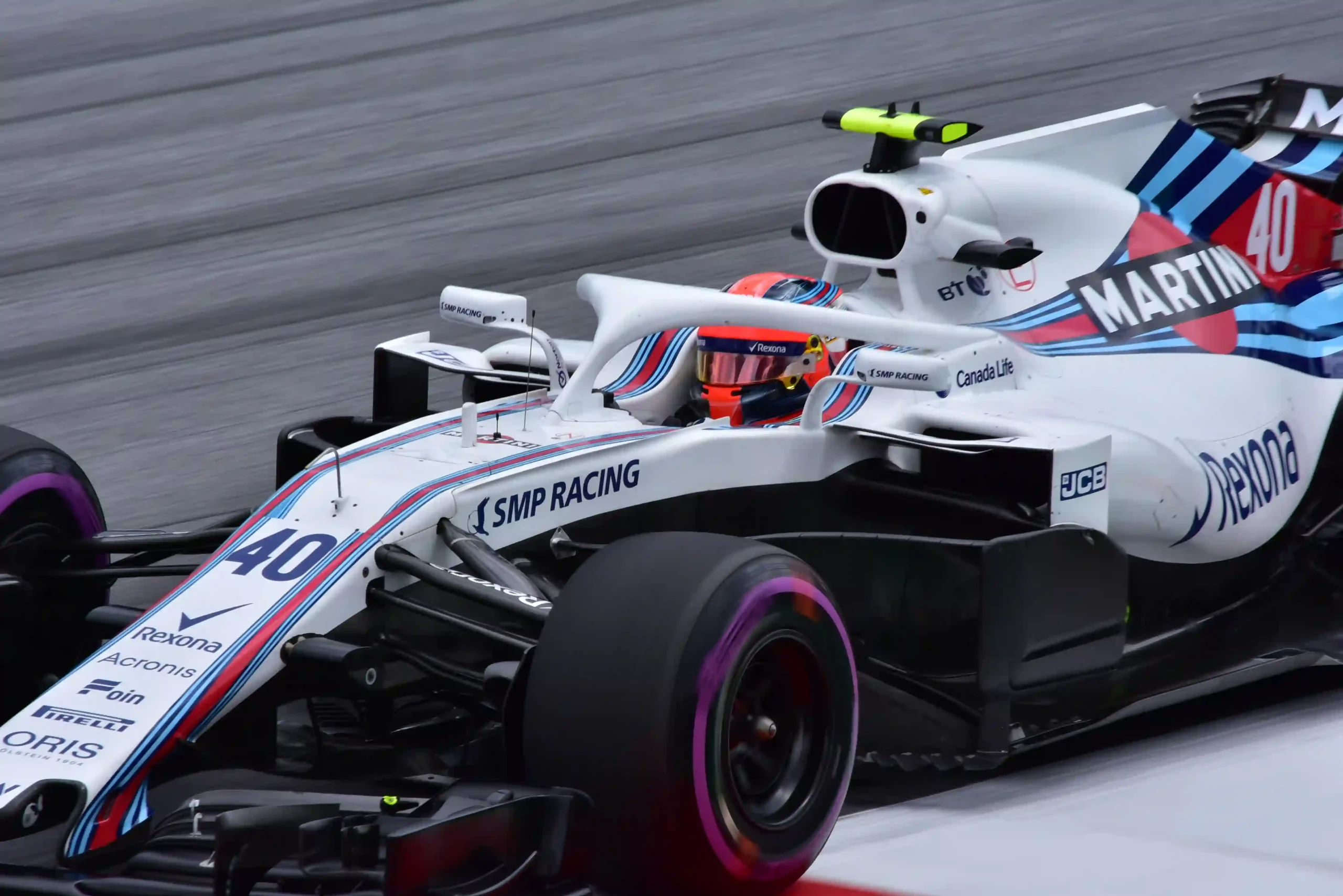
No. Drivers must pass a timed cockpit-exit test, while FIA medical teams train for extraction with the structure in place.
Escape was one of the loudest objections before 2018. An open car may stop upside down or catch fire.
The FIA therefore tested normal exits, inverted exits and medical extraction. The procedures changed, but access remained workable.
Current Drivers Must Exit Within Seven Seconds
The 2026 rules require a driver to remove the steering wheel and leave the cockpit within seven seconds. The driver must replace the wheel within 12 seconds total.
The test uses normal racing equipment and fastened harnesses. Therefore, teams cannot rely on an unrealistic demonstration.
The Halo Can Provide a Handhold
Some drivers use the structure to lift themselves from the cockpit. The curved loop can make the first movement easier.
However, they must still clear the side opening. Seating position and headrest shape remain important.
Medical Extraction Has Evolved
Rescue crews can work around the Halo. In 2026, FIA medical guidance moved away from extracting single-seater drivers while still seated.
The HANS and Halo make seat extraction more complex. Modern immediate-care methods can provide quicker alternatives.
Grosjean Proved Rapid Escape Was Possible
His 2020 car penetrated a barrier and burned. Yet he climbed through the restricted opening without outside physical extraction.
The accident was exceptional. Still, it showed that the Halo could protect the head while leaving an escape route.
Fire survival also depends on equipment explained in the Nomex guide.
How the Halo Affects Aerodynamics and Car Design
It adds mass and disturbs airflow, but teams recover much of the aerodynamic loss through fairings and bodywork development.
The Halo sits in sensitive air ahead of the engine intake and rear bodywork. Its pillar and loop create turbulence.
Teams must manage that wake. Otherwise, airflow can buffet the driver’s helmet or reduce airbox efficiency.
Fairings Guide Air Around the Structure
The FIA allows limited bodywork around the titanium frame. Teams shape small lips and profiles within defined rules.
These fairings smooth flow toward the airbox. Moreover, they can reduce helmet buffeting.
The Safety Frame Is Standard, but the Aero Is Not Identical
Every car uses the same essential geometry. However, permitted coverings can differ slightly.
Therefore, teams still search for small performance gains. They cannot alter the structural safety specification.
Chassis Reinforcement Changes Packaging
The front and rear mounting points carry enormous loads. Carbon-fiber laminates around them must be stronger.
This reinforcement adds weight high on the car. Engineers then adjust ballast and internal packaging.
The Minimum Weight Increased When Halo Arrived
Formula 1 recognized the structural penalty in the 2018 rules. Teams still faced a difficult integration challenge.
However, the lap-time cost was accepted for safety. It did not change the competitive order as dramatically as critics feared.
Related airflow concepts are explained in what downforce is, what an F1 airbox does and F1 bodywork rules.
Why Was the F1 Halo So Controversial?
Critics disliked its appearance, feared visibility and escape problems, and believed an open cockpit formed part of Formula 1’s identity.
The first prototypes looked unfinished. They sat above cars designed without the structure.
Consequently, the Halo appeared bolted on. Many fans felt it damaged the clean silhouette of a single-seater.
Open Cockpits Were Part of F1 Tradition
Drivers had always been visibly exposed. That image separated single-seaters from sports cars.
The Halo changed the philosophy. However, tradition could not outweigh a proven preventable risk.
Some Drivers Initially Rejected the Look
Romain Grosjean was among the critics. After his Bahrain escape, he called it one of Formula 1’s greatest safety additions.
That reversal reflected new evidence. Aesthetic arguments became difficult after the structure took real impacts.
Fans Feared the Central Pillar
Onboard cameras made the obstruction look severe. Drivers generally reported a smaller practical effect.
The start-light adjustment addressed the clearest issue. Racing lines and apex visibility remained workable.
Teams Faced a Late Design Challenge
The final 2018 confirmation arrived during development of the next cars. Chassis structures required substantial revision.
Nevertheless, safety rules often demand urgent engineering. Formula 1 accepted that burden.
Public Opinion Changed Quickly
Charles Leclerc’s Spa crash came during the Halo’s first season. Visible tire marks created a powerful image.
Later accidents made the case stronger. Therefore, criticism now focuses less on whether Halo should exist.
Charles Leclerc at Spa, 2018: The First Famous F1 Halo Save
Fernando Alonso’s airborne McLaren passed over Leclerc’s Sauber and left clear contact marks on the Halo during the 2018 Belgian Grand Prix start.
Nico Hülkenberg locked his brakes approaching La Source. His Renault hit Alonso’s McLaren from behind.
Alonso’s car then launched over Leclerc. The McLaren’s wheel and bodywork crossed the cockpit area.
The Halo Showed Visible Evidence
Scrape marks appeared on the right side of Leclerc’s structure. The marks showed where the airborne car had passed.
Leclerc escaped uninjured. Alonso called the crash clear proof of the device’s value.
The FIA Avoided an Absolute Claim
Accident outcomes without a safety device remain counterfactual. No one can prove the exact injury that would have occurred.
However, the contact location was alarming. The structure clearly intercepted part of the McLaren near the exposed cockpit.
The Debate Changed After One Corner
The Halo had completed only half its first season. Yet Spa provided a real case that resembled FIA test scenarios.
As a result, many former critics changed their language immediately.
Romain Grosjean at Bahrain, 2020: Halo Protected the Survival Space
The FIA investigation found that the Halo and other driver-safety equipment performed to specification while the survival cell penetrated the barrier.
Grosjean’s Haas struck the guardrail after first-lap contact. The car’s survival cell passed through the metal barrier.
Fuel escaped and ignited. Meanwhile, the front of the cockpit faced the upper rail during the violent impact.
The Impact Was Exceptionally Severe
The FIA calculated that the car hit the barrier at 192 km/h. The peak force reached an estimated 67g.
The power unit separated from the survival cell. Fire then spread forward around the cockpit.
The Halo and Roll Structure Preserved Space
The FIA concluded that the Halo performed according to its specification. The survival cell and restraint systems also protected Grosjean.
Without a strong structure ahead of his helmet, the barrier interaction could have been far worse. However, the investigation treated survival as a complete system.
Grosjean Escaped After 27 Seconds
His left foot was briefly trapped. He pulled it from his racing boot, moved the headrest and steering wheel, then climbed out.
Grosjean suffered burns to both hands but no life-threatening injury. He left hospital three days later.
The Accident Changed the Safety Program Again
The FIA reviewed barriers, fuel-bladder installation, fire protection and rescue procedures. Therefore, the Halo did not end safety development.
It proved one layer could work while other layers still needed improvement.
Learn how forces reach the body in the F1 versus fighter-jet G-force comparison.
Lewis Hamilton at Monza, 2021: A Rear Wheel Reached the Cockpit
Max Verstappen’s Red Bull landed across Hamilton’s Mercedes, and a rear wheel passed over the cockpit. Hamilton later said the Halo “saved my neck.”
Hamilton exited the pits beside Verstappen during the Italian Grand Prix. They collided at the first chicane.
The Red Bull climbed over the Mercedes. Its rear wheel and floor crossed the top of Hamilton’s cockpit.
The Crash Matched a Primary Halo Test Case
FIA engineers had focused heavily on car-to-car intrusion. Monza showed exactly why.
The Halo carried visible damage from the Red Bull. Hamilton reported neck stiffness but avoided a direct wheel strike.
The Driver’s Helmet Still Received Contact
The tire compressed against the Halo and touched Hamilton’s helmet area. However, the structure carried much of the load.
This distinction matters. The Halo does not create unlimited clearance, but it changes the force path dramatically.
The Incident Silenced Remaining Doubts
Two championship contenders walked away. The image of one car resting above another was difficult to ignore.
Therefore, the debate moved from appearance toward continued refinement.
Zhou Guanyu at Silverstone, 2022: Protection After the Roll Hoop Failed
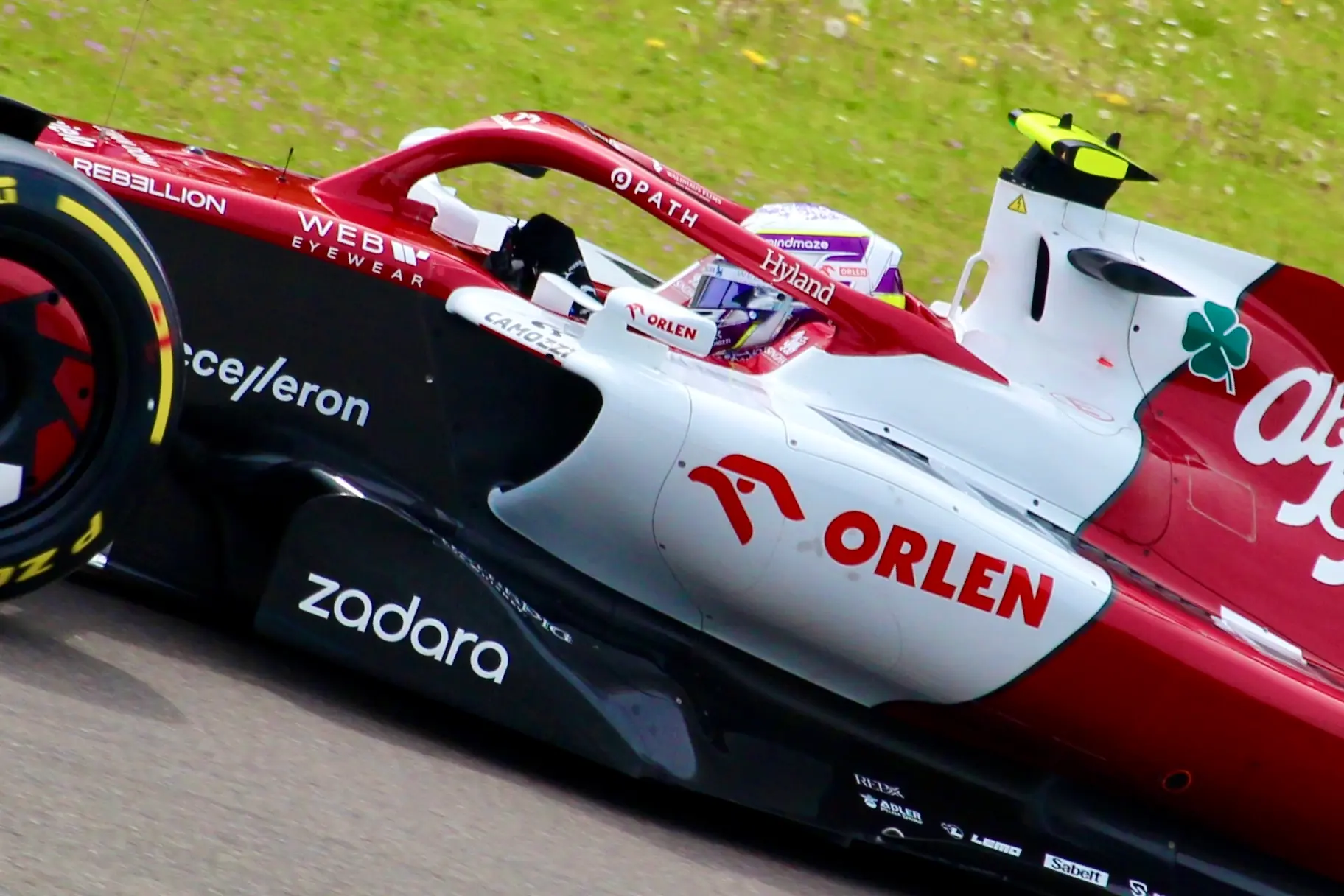
Zhou’s Alfa Romeo slid upside down after its principal roll hoop failed. The Halo helped maintain space between the cockpit and the track before the car reached the barriers.
Zhou was flipped at the start of the British Grand Prix. His car slid inverted across the asphalt and gravel.
It then rolled over the tire barrier and stopped between the barrier and catch fencing. Rescue access was difficult.
The Principal Roll Structure Failed
The roll hoop behind the driver broke during the initial inverted slide. That left the Halo as a vital forward support.
The titanium loop scraped along the surface. Consequently, the driver’s helmet remained away from direct ground contact.
The Halo Was Not the Part That Failed
Some early discussion confused the Halo with the rear roll hoop. They are separate structures.
The Halo remained attached. The FIA later strengthened principal roll-hoop regulations following its investigation.
Zhou Escaped Serious Injury
Medical teams extracted him after the car stopped in a narrow position. He was conscious and later cleared of major injuries.
The accident showed how several structures share rollover protection. It also confirmed why the Halo is officially a secondary roll structure.
What the Halo Cannot Protect Against
No. It greatly improves protection from large objects, but small debris, extreme forces and unusual impact paths can still reach the driver.
Safety devices are designed around realistic test cases. No structure can cover every possible racing accident.
Small Objects Can Pass Through the Open Frame
The Halo is not a windscreen. Springs, stones or small carbon fragments can enter the cockpit.
Helmets and visors provide the next layer. The lowered visor opening and stronger shell standards improve projectile resistance.
Very Large Forces Can Exceed Any Structure
The Bianchi accident involved a light race car striking a much heavier recovery vehicle. The FIA found cockpit enclosure could not practically mitigate those forces.
Therefore, speed control and vehicle-recovery procedures were the more effective response.
The Halo Does Not Prevent the Crash
It protects after the accident begins. It cannot stop wheel contact, mechanical failure or loss of control.
Track design, driving standards and car reliability remain essential. Safety must cover the complete accident chain.
It Does Not Replace the Roll Hoop
The principal roll structure behind the driver remains critical. Zhou’s crash showed why it must survive independently.
The Halo provides a second support, not permission for the primary structure to fail.
It Can Complicate Medical Access
The frame occupies space around the cockpit. Rescue crews must train around it.
However, the FIA considers the protection benefit far greater than the added complexity. Procedures continue to evolve.
What the Current 2026 FIA Rules Require
Yes. Article C12.4.2 requires a Secondary Roll Structure made to FIA standard 8869-2018 and supplied by an FIA-designated manufacturer.
The latest published 2026 Formula 1 Technical Regulations are Issue 19, dated June 25, 2026. Halo remains fully embedded in chassis design.
The Device Has a Defined Position
The rule fixes the front mounting axis and rear mounting faces relative to the cockpit. Therefore, teams cannot move the structure for aerodynamic advantage.
Approved Manufacturers Supply the Core Structure
The component must meet FIA 8869-2018. The FIA also ensures that units from different designated suppliers have similar mass.
This keeps the safety part controlled. Teams still design the surrounding chassis and permitted fairings.
The Chassis Must Pass Attachment Tests
The survival cell and mounts face physical loading and calculation requirements. A supplied Halo alone does not make a car legal.
Any significant structural modification can trigger further testing. Consequently, teams plan Halo integration early in chassis development.
The Driver Must Still Pass the Exit Test
The seven-second exit and 12-second steering-wheel replacement requirement remains. The Halo cannot obstruct compliance.
Halo Is Now Normal Across FIA Single-Seaters
The device has expanded through Formula 2, Formula 3 and other FIA categories. Young drivers now learn with it from earlier stages.
That normalization may be its greatest cultural success. A generation of racers no longer views frontal protection as unusual.
For the governing-body background, read what the FIA does.
Could Formula 1 Replace the Halo?
A future screen or canopy remains possible, but any replacement must outperform Halo in impact protection, visibility, airflow, fire escape and medical access.
The Halo solved the most urgent large-object problem. However, its open design cannot block every small projectile.
Future research may combine better debris protection with the existing frame. IndyCar’s aeroscreen provides one possible direction.
A Transparent Screen Could Add Small-Debris Protection
A screen can block springs, stones and fluid. Yet it also collects rain, oil and dust.
Optical distortion must remain minimal. Moreover, cooling and ventilation become harder in hot races.
New Materials Could Reduce Mass
Titanium offers proven strength and predictable behavior. A lighter replacement would need equally reliable performance.
Composite structures may improve, but joints and local impacts remain challenging. The FIA would require extensive validation.
Integration Could Become More Elegant
Future regulations could design the cockpit and Halo as one visual form. That would reduce the “added bar” appearance.
However, the removable standardized component offers manufacturing and inspection advantages. Styling cannot weaken those benefits.
Active Safety May Supplement Physical Protection
FIA research includes warning systems and improved accident data. Such tools may help drivers avoid stalled cars or hidden hazards.
They would work alongside the Halo, not replace it. Physical protection remains necessary when avoidance fails.
There Is No Approved Halo Replacement for 2026
The current regulations continue using the existing standard. Therefore, claims of an imminent closed F1 cockpit lack official support.
The Halo will remain visible for the foreseeable future. Its proven accident record gives regulators little reason to rush a change.
F1 Halo: Advantages and Disadvantages
Advantages
- Deflects wheels, cars and large debris
- Protects against some barrier intrusion
- Adds forward rollover support
- Maintains an open cockpit and airflow
- Allows rapid driver exit
- Uses a standardized, proven structure
Disadvantages
- Adds weight high on the chassis
- Disturbs airflow around the airbox
- Changes the traditional car appearance
- Leaves openings for small debris
- Requires stronger chassis mounting points
- Adds complexity to medical access
The disadvantages are real engineering costs. However, none outweighs the reduction in direct head-impact risk.
That balance explains why did F1 introduce Halo despite widespread opposition.
Common Myths About the Formula 1 Halo
“Jules Bianchi’s Crash Directly Created the Halo”
False. The safety program already existed, and the FIA found enclosure could not practically mitigate his specific impact.
“The Halo Is Made From Carbon Fiber”
False. The structural device is Grade 5 titanium. Carbon-fiber fairings may cover it.
“Drivers Cannot See the Apex”
False. Binocular vision lets drivers see around the central pillar, and track testing found no significant obstruction.
“The Halo Traps Drivers in a Fire”
False. Drivers must pass timed exit tests, and Grosjean escaped his burning car through the Halo opening.
“Halo and the Rear Roll Hoop Are the Same Part”
False. The Halo is the Secondary Roll Structure, while the principal roll hoop sits behind the driver.
“The Halo Makes Head Injuries Impossible”
False. It reduces specific risks but cannot block every object or survive unlimited force.
“The Halo Was Added After Only One Test”
False. The FIA completed years of simulation, impact work, driver trials and extraction testing.
The wider sport is introduced in the Formula 1 beginner’s guide and the F1 race-car explainer.
Formula 1 Halo FAQs
Why did F1 introduce the Halo?
Formula 1 introduced it in 2018 to protect the driver’s exposed head from large debris, another car and trackside structures entering the cockpit area.
What is the F1 Halo made of?
The structural Halo is made from Grade 5 titanium. Teams may cover it with regulated aerodynamic fairings.
Does the Halo block an F1 driver’s vision?
The pillar is visible, but binocular vision lets drivers see around it. FIA testing found no significant obstruction during normal driving.
Is the Halo still mandatory in Formula 1 in 2026?
Yes. The 2026 rules require an FIA 8869-2018 Secondary Roll Structure supplied by an FIA-designated manufacturer.
Conclusion: The Halo Turned an Exposed Weakness Into a Structural Defense
So, why did F1 introduce Halo?
The cockpit remained one of the few areas where a large object could reach a driver directly. Stronger helmets alone could not solve that problem.
Henry Surtees’ fatal wheel strike and Felipe Massa’s spring impact intensified research in 2009. Later accidents added urgency across open-wheel racing.
However, no single crash produced the finished device. The FIA spent years studying different impact types.
Mercedes created the original three-point concept at the FIA’s request. Ferrari then gave the prototype its first public F1 track test in 2016.
Teams and drivers evaluated visibility, airflow and emergency escape. Meanwhile, engineers compared Halo with canopies, Shield and aeroscreen designs.
The FIA chose Halo because it offered the best overall tested protection. It also preserved an open cockpit and workable rescue access.
The frame uses Grade 5 titanium. Its central pillar and curved loop transfer impact loads through three reinforced chassis mounts.
FIA tests showed strength equal to 15 times the static load of a complete car. Yet strength alone did not make the system successful.
Drivers had to see past it. They also needed to exit quickly after a rollover or fire.
Binocular vision reduced the practical obstruction. Start-light positions were adjusted, while exit rules allowed seven seconds.
The Halo also created aerodynamic and weight penalties. Teams reinforced their monocoques and developed fairings around the structure.
Those costs became part of every car. Therefore, no team could trade safety for a lighter private design.
Criticism remained intense before the 2018 season. Fans disliked the shape, and some drivers defended open-cockpit tradition.
Then the Halo met real accidents. Alonso’s airborne McLaren crossed Charles Leclerc’s cockpit at Spa.
Romain Grosjean’s survival cell penetrated a Bahrain barrier and burned. The FIA found that Halo and the other safety equipment performed to specification.
Max Verstappen’s Red Bull landed over Lewis Hamilton at Monza. A rear wheel passed across the cockpit and struck the protected area.
Zhou Guanyu later slid upside down at Silverstone after his principal roll hoop failed. The Halo helped preserve space above his helmet.
Those incidents do not provide a precise official number of lives saved. Counterfactual outcomes cannot be measured perfectly.
However, they show the device taking loads that would otherwise reach the driver. That evidence changed public opinion.
The Halo still has limits. Small debris can pass through its open frame, and extreme impacts can exceed any structure.
It also does not prevent crashes. Helmets, HANS, barriers, medical response and race control remain essential.
The 2026 regulations keep the device mandatory. They define it as the Secondary Roll Structure under FIA standard 8869-2018.
A future screen or canopy could add further protection. Yet any replacement must prove better across impact, visibility, airflow and escape.
That is the lasting answer to why did F1 introduce Halo. Formula 1 accepted a visual compromise because the safety evidence demanded it.
The bar once described as ugly is now one of the clearest symbols of modern motorsport safety.
Sources and Fact-Checking
This article was checked against official FIA and Formula 1 material available on July 29, 2026. Current-rule references use the FIA 2026 Formula 1 Technical Regulations, Section C, Issue 19, published June 25, 2026.
- FIA: Why Halo was selected as Formula 1’s frontal cockpit-protection solution
- FIA: Grade 5 titanium construction, manufacturing and strength of the F1 Halo
- FIA: Investigation into Romain Grosjean’s 2020 Bahrain Grand Prix accident
- FIA: 2026 Formula 1 Technical Regulations, Articles C12.4.2, C12.5.1 and C13.3