London E-Prix 2026 Preview:
Title Contenders, Track Guide & Predictions
A pre-race analysis of the nine mathematical title contenders, the ExCeL indoor-outdoor circuit, race strategy, schedule and our evidence-based predictions for Formula E’s GEN3 finale.
London E-Prix 2026 Preview:
Title Contenders, Track Guide & Predictions
The title fight, ExCeL circuit, race strategy and pre-weekend predictions in one guide.
The 2026 London E-Prix arrived with the Formula E championship almost impossibly tight. After 15 of 17 rounds, Andretti’s Jake Dennis led Mitch Evans by only two points, Pascal Wehrlein sat only five points off the lead, and nine drivers remained mathematically capable of winning the Drivers’ World Championship. London was not simply another double-header. It was the last race weekend of the GEN3 era and the final Formula E event at ExCeL before the British round moves away from the venue.
This article is written as a true pre-race preview, using the championship position and information available before Round 16. That matters because a preview should explain the pressure, probabilities and strategic choices before the result is known. The central question was simple: could Dennis convert a tiny lead at home, would Evans finally turn years of title contention into a championship, or would Wehrlein use Porsche’s proven race efficiency to jump both of them?
London E-Prix 2026 Preview: The Quick Answer
Jake Dennis entered London as the championship leader on 146 points, two ahead of Mitch Evans and five ahead of Pascal Wehrlein. Oliver Rowland remained close enough on 132 points to be a genuine threat if the leading trio hit trouble. Five more drivers — Edoardo Mortara, António Félix da Costa, Nick Cassidy, Nico Müller and Nyck de Vries — were mathematically alive but needed increasingly complicated combinations of big scores and poor results from the leaders.
Dennis, Evans and Wehrlein were the clear favorites. Only five points covered the top three entering the final two races. Dennis had the points lead, Evans had strong momentum and Jaguar support, while Wehrlein brought recent title-winning experience and a Porsche package that had repeatedly shown strong race efficiency.
Our pre-weekend judgment was that the title was too close for a single overwhelming favorite. Dennis deserved a slight statistical edge because he controlled the lead and had produced a strong second half of the season. Evans looked like the most dangerous direct challenger because he had two wins and several podiums, while Wehrlein was the driver most likely to punish any tactical mistake from the top two. The margins were so small that qualifying bonus points, ATTACK MODE timing, a Full Course Yellow or one damaged front wing could alter the entire championship order.
For readers who want the basics before diving into the championship mathematics, our What is Formula E? guide explains the category, while the Formula E 2026 race weekend guide explains practice, qualifying, the Duels and race flow. You can also keep the broader Formula E schedule open for calendar context.
London E-Prix 2026 Schedule and U.S. Eastern Times
The official Formula E timetable put both London races at 3:05 p.m. British Summer Time. For U.S. viewers, that translated to 10:05 a.m. Eastern Time. Qualifying was scheduled for 10:40 a.m. BST on both Saturday and Sunday, or 5:40 a.m. ET. The early qualifying start made London a long motorsport morning for American fans, but the race time itself was convenient compared with many European events.
| Day | Session | London (BST) | U.S. Eastern (ET) |
|---|---|---|---|
| Friday, Aug. 14 | Free Practice 1 | 4:00 p.m. | 11:00 a.m. |
| Saturday, Aug. 15 | Free Practice 2 | 8:30 a.m. | 3:30 a.m. |
| Saturday, Aug. 15 | Qualifying | 10:40 a.m. | 5:40 a.m. |
| Saturday, Aug. 15 | Round 16 Race | 3:05 p.m. | 10:05 a.m. |
| Sunday, Aug. 16 | Free Practice 3 | 8:30 a.m. | 3:30 a.m. |
| Sunday, Aug. 16 | Qualifying | 10:40 a.m. | 5:40 a.m. |
| Sunday, Aug. 16 | Round 17 Race | 3:05 p.m. | 10:05 a.m. |
In the United States, Formula E’s official pre-race broadcast guide listed every session live on Roku Sports Channel, with the free-practice sessions also available through Formula E’s YouTube coverage. That made London one of the easier Formula E weekends for American viewers to follow from first practice through the championship finale. Our separate How to Watch Formula E guide is the better evergreen reference for changing broadcast arrangements.
Who Were the London E-Prix 2026 Title Contenders?
The most striking number before London was nine. Formula E’s own championship preview confirmed nine drivers could still become world champion. Yet mathematics and probability were not the same thing. The 52-point spread from Dennis in first to de Vries in ninth meant the bottom half of the contender list needed extraordinary help. A more useful way to read the championship was to separate the leaders into four groups: the front three, Rowland as the prime disruptor, the long-shot midfield contenders, and the drivers who needed near-perfect weekends plus multiple failures ahead.
| Rank entering London | Driver | Team | Points | Gap to lead |
|---|---|---|---|---|
| 1 | Jake Dennis | Andretti | 146 | Leader |
| 2 | Mitch Evans | Jaguar TCS Racing | 144 | -2 |
| 3 | Pascal Wehrlein | Porsche | 141 | -5 |
| 4 | Oliver Rowland | Nissan | 132 | -14 |
| 5 | Edoardo Mortara | Mahindra | 116 | -30 |
| 6 | António Félix da Costa | Jaguar TCS Racing | 113 | -33 |
| 7 | Nick Cassidy | Citroën Racing | 104 | -42 |
| 8 | Nico Müller | Porsche | 102 | -44 |
| 9 | Nyck de Vries | Mahindra | 94 | -52 |
1. Jake Dennis: the leader with the cleanest path
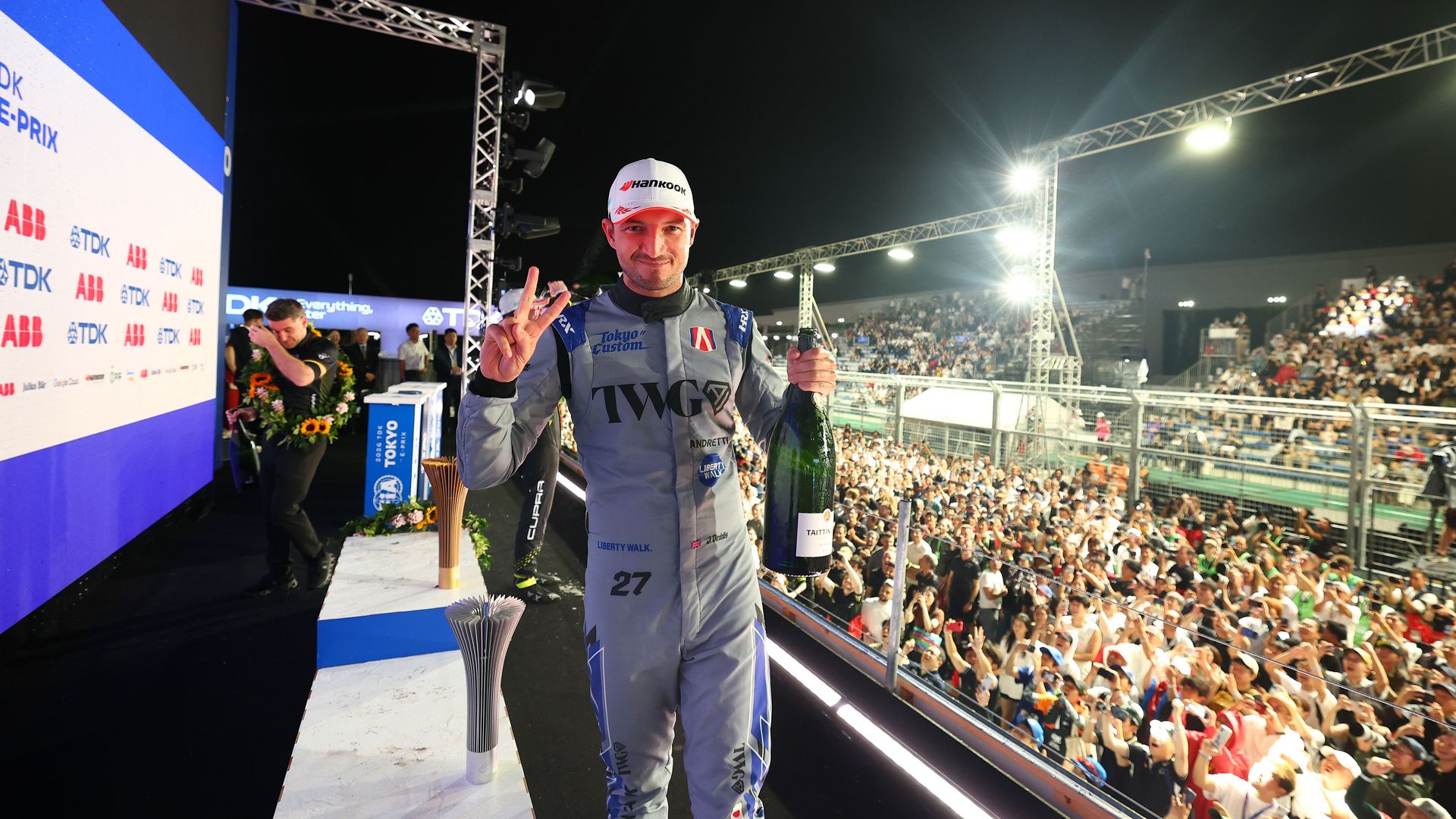
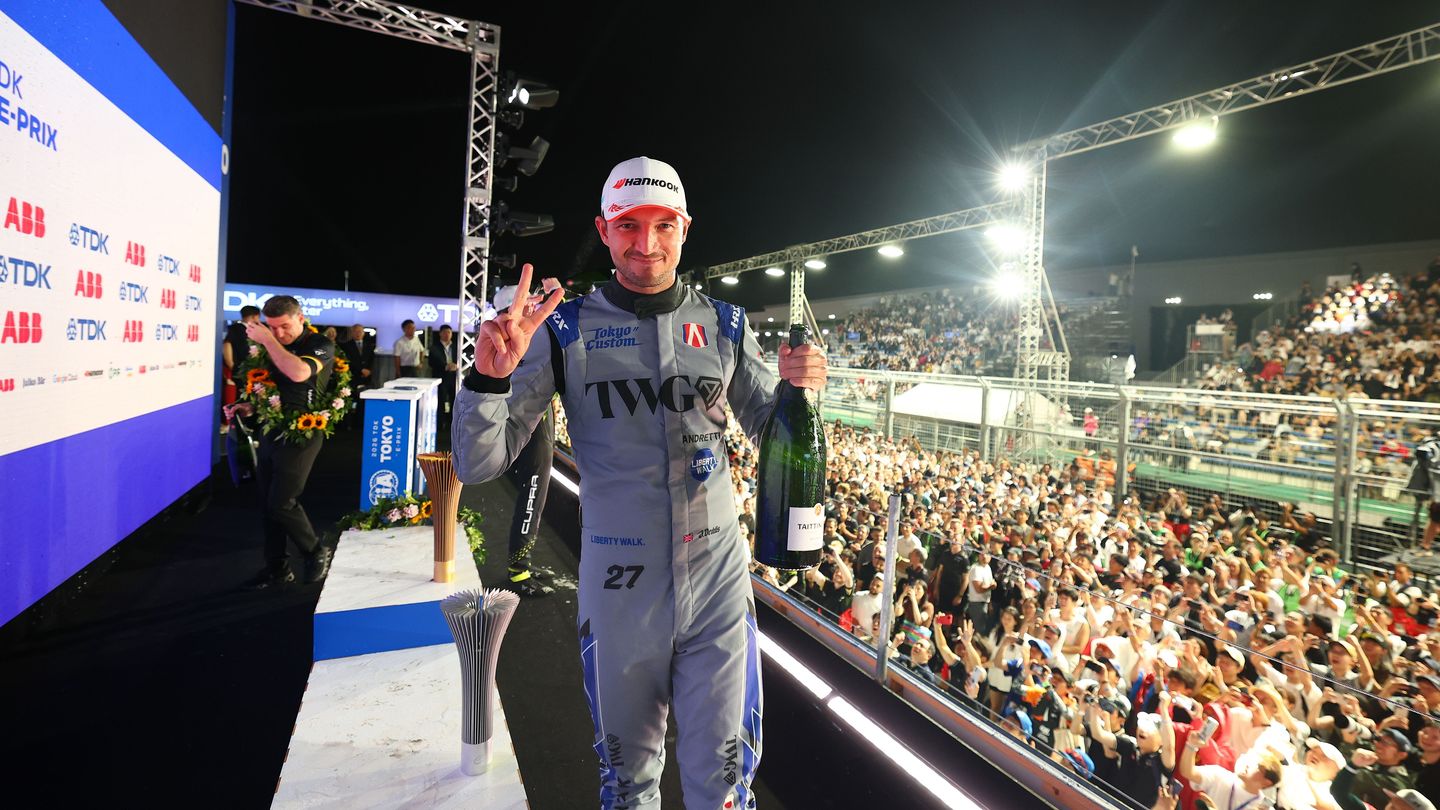
Dennis arrived in London with 146 points and the simplest equation of anyone: keep finishing ahead of the other main contenders and the championship would stay under his control. Formula E’s pre-event analysis highlighted the strength of his second half, including victories in São Paulo and Sanya plus recent podium form in Tokyo. He had also already proved that he could handle the peculiar emotional pressure of London, having secured a previous Formula E world title at the venue.
The concern was that a two-point lead is not really a cushion. It is one qualifying position, one bonus point swing or one minor racing incident. Dennis could not afford to drive as though protecting a conventional championship advantage. He still had to attack, especially in qualifying, because starting deep in the field at ExCeL increases the chance of contact and forces a driver to spend energy and ATTACK MODE tactically just to recover track position.
2. Mitch Evans: the challenger with a farewell story
Evans entered London on 144 points after victories in Miami and Berlin and podiums in Monaco, Madrid and Jeddah. Reuters reported that the weekend was also set to be his final event with Jaguar after a decade together, adding another layer of emotion to a title bid that had come close before. That narrative mattered, but the performance case mattered more: Evans had shown the speed to win from the front and the racecraft to score heavily on very different circuit types.
London traditionally rewards drivers who are comfortable operating with barriers close to the car and who can switch their braking references quickly as grip changes between indoor and outdoor surfaces. Evans fits that profile. His biggest strategic problem was internal as much as external. Jaguar also entered London fighting Porsche for the Teams’ Championship, so the team needed to maximize two-car points rather than build every decision around one driver.
3. Pascal Wehrlein: the five-point threat nobody could ignore
Wehrlein was only five points off Dennis and carried a huge advantage in one specific area: he already knew how to survive a London title decider. He won the 2023/24 Formula E championship at ExCeL after navigating one of the series’ most complicated final weekends. That does not guarantee a repeat, but experience changes how a driver approaches risk. Wehrlein had already lived through the situation where every ATTACK MODE activation, every energy percentage and every rival’s position changes the title calculation.
Porsche’s strength also made him dangerous even if qualifying was imperfect. Formula E races are often won through energy use and timing rather than raw one-lap pace alone. Wehrlein has repeatedly shown patience in races where sitting behind another car for part of the distance creates an energy advantage that can be converted later. For a refresher on why that matters, our slipstream explainer covers the basic aerodynamic principle, while our race timing guide explains why the visible order can hide the real strategic picture.
4. Oliver Rowland: the home favorite with enough points to attack
Rowland entered on 132 points, 14 behind Dennis. That was a meaningful gap but not an impossible one across two races. More importantly, Rowland did not need to protect the lead. He could approach Saturday aggressively and force the top three to react. In a championship finale, that freedom is valuable. A driver outside the front three can change the title even without winning it simply by taking pole points, race wins or podium places away from the leaders.
Calling the lower five contenders “mathematically alive” did not mean they had equal chances. Mortara, da Costa, Cassidy, Müller and de Vries needed very high scoring weekends and major trouble for several drivers ahead. Their more realistic role was as title disruptors capable of taking points away from the leading four.
The Teams’ Championship added another strategic layer. Jaguar and Porsche were separated by only 14 points before London. That meant Evans and Wehrlein were not racing in isolation; every place scored by their teammates mattered. This is where Formula E differs from a simple one-on-one title fight. Team instructions, qualifying progression and whether a second car can sit between championship rivals can become decisive without any explicit order being given.
To understand how championship points turn finishing positions into title permutations, see our guide to how racing championships are scored. The same logic is useful when following any multi-race finale: start with the maximum points available, then track the gap after every qualifying session and race.

London E-Prix 2026 Track Guide: What Made ExCeL So Difficult?
The defining feature of the London E-Prix was obvious even to a first-time viewer: part of the lap ran inside the ExCeL exhibition center and part outside around Royal Victoria Dock. The 2026 layout was a compact 2.09-kilometer, 20-turn temporary circuit. That combination created an unusually high number of braking, traction and direction-change events in a very short lap.
Short laps compress the field. A small absolute time loss becomes a large number of grid positions because so many cars are separated by tenths or hundredths. That makes qualifying especially important. A driver does not need to make a dramatic mistake to miss the Duels; a minor lock-up, a badly timed warm-up lap or traffic at the wrong moment can be enough.
Indoor grip versus outdoor grip
Surface change was the track’s signature technical challenge. Drivers moved from exterior asphalt into the enclosed arena, where light, temperature and surface texture felt different. The car itself does not suddenly change, but the driver’s references do. Braking confidence depends heavily on visual cues and grip expectation. At ExCeL, both could shift within seconds.
This is also why London was a circuit where setup compromise mattered. A car that rotated beautifully in the slow indoor section still had to remain stable under braking outside. Engineers could not optimize for one corner type and ignore the rest. Mechanical grip, traction and predictable brake behavior carried more practical value than chasing a theoretical peak that was difficult to use in traffic.
Why overtaking was difficult but not impossible
ExCeL was narrow enough that conventional side-by-side racing could be risky. Yet Formula E’s energy management and ATTACK MODE created overtaking windows that a normal street circuit might not provide. A driver could spend the first half conserving, build an energy advantage, then use ATTACK MODE when the pack spread. The catch was that the activation lane cost track position. Choosing the wrong lap could drop a contender behind a slower group and erase the performance benefit.
For readers new to the system, our What is ATTACK MODE in Formula E? guide explains why drivers deliberately leave the racing line. It is one of the most important concepts for understanding London strategy because an activation is not simply a boost button; it is a timed trade between temporary position loss and extra power.
Barriers turn small errors into championship-changing incidents
The street-circuit geometry also raised the cost of mistakes. At a permanent circuit, a small lock-up may end in a paved runoff area. At London, the same error can damage a front wing, puncture a tire or trigger a Safety Car. That makes risk management particularly difficult for championship contenders. Drive too conservatively and rivals take points. Push too hard and the wall ends the title bid.
Our guide to what causes crashes in motor racing gives broader context, while what is a Safety Car? explains why a neutralization can erase carefully built energy or time gaps in seconds.
| ExCeL characteristic | What it changes | Championship consequence |
|---|---|---|
| 2.09 km lap | Very small time gaps between cars | Qualifying mistakes are heavily punished |
| 20 turns | Frequent braking and traction phases | Efficiency and clean exits matter |
| Indoor / outdoor transition | Grip and visual references change | Driver confidence and adaptability matter |
| Narrow barriers | Limited room for correction | Contact risk can swing the title |
| ATTACK MODE lane | Drivers surrender position to activate | Timing becomes a major tactical weapon |
London E-Prix Race Strategy: The Five Things That Mattered Most
1. Qualifying was worth more than just starting position
Formula E awarded bonus points for pole, so qualifying had direct championship value before the race even started. With Dennis, Evans and Wehrlein separated by five points, a successful qualifying run could erase a meaningful part of the gap. That forced contenders to balance aggression with survival in the Duels. A clean front-row start reduced exposure to midfield contact, but chasing the final hundredth on a barrier-lined circuit carried obvious risk.
2. Energy had to be measured against track position
Formula E strategy is often described as energy saving, but that can oversimplify the problem. Saving energy is useful only if the driver can later convert it into position. A car sitting fourth with extra usable energy may still be trapped if the circuit offers no clean passing opportunity. London’s narrow layout magnified that trade-off. The ideal race was not necessarily the one with the lowest consumption early; it was the one that preserved enough energy without surrendering strategic control.
3. ATTACK MODE timing could decide the title
The activation decision becomes harder in a close championship because teams are not just racing the cars ahead. They are racing the points table. If Dennis activated and dropped behind Evans, Andretti had to calculate whether the temporary position loss was acceptable. If Wehrlein waited, Porsche had to judge whether a Safety Car could suddenly make a late activation awkward. The correct call could change from one lap to the next depending on traffic and neutralizations.
4. Safety Cars and Full Course Yellows could reset everything
On a circuit with barriers close to the racing line, interruptions were always part of the risk model. A neutralization can compress the field, change the value of saved energy and create new ATTACK MODE windows. The championship leaders therefore needed flexible strategies rather than a single fixed plan. Engineers had to keep recalculating based on the remaining race distance and the position of every direct rival.
5. Teammates were strategically important
Jaguar and Porsche were simultaneously fighting for the Teams’ Championship, with only 14 points between them. That gave da Costa and Müller major roles even if their own Drivers’ Championship odds were small. A teammate qualifying between two title contenders could alter ATTACK MODE timing, energy usage and overtaking risk. Formula E is at its most tactical when a driver’s championship and team championship overlap like this.
London was not a race where the fastest driver could simply disappear. The title favorites had to solve pace, energy, traffic and championship mathematics at the same time.
That is also why starting position deserves more attention than casual viewers often give it. Our grid position explainer is written with broader motorsport examples, but the principle is universal: track position changes how much risk a driver must take before the race even reaches its strategic phase. Our qualifying guide gives additional context on why one-lap execution matters so much.

London E-Prix 2026 Predictions: Who Had the Best Chance?
Predictions for a Formula E double-header should never be treated as certainty. The series is too sensitive to qualifying, contact, energy targets and race interruptions. The better approach is to rank the most plausible outcomes and explain the evidence behind them. Based only on information available before Round 16, our prediction board leaned slightly toward Dennis for the championship, with Evans and Wehrlein extremely close behind.
1Jake Dennis — slight title favorite
Why: championship lead, strong second-half form, home event experience and the simplest points equation.
Main risk: only a two-point cushion over Evans meant he could not safely manage the weekend from behind.
2Mitch Evans — strongest direct challenger
Why: race-winning speed across the season, strong Jaguar package and only two points to recover.
Main risk: balancing personal title ambition with Jaguar’s Teams’ Championship fight.
3Pascal Wehrlein — tactical danger
Why: only five points behind, former London title success and Porsche’s reputation for efficient race execution.
Main risk: with two drivers ahead, he could lose control of the title even with solid finishes.
4Oliver Rowland — best outsider
Why: 14 points off the lead was recoverable across two races and he could attack without protecting first place.
Main risk: he needed to outscore three elite contenders, not just one.
Prediction for Saturday Round 16
Our pre-race expectation was that Saturday would reward the contender who qualified in the top group and avoided early contact. Wehrlein looked particularly dangerous in a race that became energy-sensitive because Porsche could use patience and late ATTACK MODE timing. Dennis and Evans were more likely to feel pressure to cover each other. That dynamic created an opening for either Wehrlein or an aggressive outsider such as Rowland to take the first win of the weekend.
Prediction for Sunday Round 17
Sunday was harder to predict because the championship situation would depend entirely on Saturday. If one of the top three built a double-digit lead, the finale could become a controlled points race. If the leaders stayed within one result of each other, Sunday would effectively become a tactical match race inside a 20-car event. In that scenario, qualifying position and teammate placement would become even more important than outright long-run pace.
Championship prediction
Pre-weekend pick: Jake Dennis by a very narrow margin. The reasoning was not that Andretti clearly had the fastest car. It was that Dennis started with the points lead, had already produced multiple high-level results in the second half of the season and did not need a rival to fail — he only needed to keep scoring at the same level. Evans was effectively a co-favorite because two points is negligible across two races. Wehrlein, five back, was close enough that one pole or one place gained could move him ahead immediately.
If forced to identify the driver most likely to outperform his starting championship position, Wehrlein was the choice. His title-decider experience and Porsche’s strategic strength made him the obvious threat if Dennis and Evans spent too much time reacting to each other. Rowland was the best outsider, but overcoming three drivers required more variables to fall his way.
There was no safe single-race favorite. Dennis, Evans and Wehrlein were the strongest title-based picks, while Rowland had enough pace and points freedom to disrupt them. For the championship itself, Dennis held the narrowest pre-weekend edge because he arrived as leader.
Five Drivers to Watch Beyond the Top Three
Oliver Rowland
Rowland was the obvious first name because he was only 14 points behind. His role could shift quickly from outsider to favorite if the top three hit trouble in Round 16. He also had the freedom to prioritize race wins rather than defend a championship lead.
Edoardo Mortara
At 116 points, Mortara needed a huge weekend to win the title, but Mahindra’s competitiveness meant he could take podium points away from the leaders. In a close championship, a non-contender finishing second instead of fifth can be decisive because it changes the relative score between the favorites.
António Félix da Costa
Da Costa was mathematically in the hunt on 113 points, but his more immediate strategic importance came from Jaguar’s Teams’ Championship battle. If he ran near Evans, Jaguar gained options. If he qualified between Evans and a Porsche, the entire energy and ATTACK MODE pattern could change.
Nico Müller
Müller’s role mirrored da Costa’s from the Porsche side. With Porsche only 14 points behind Jaguar in the Teams’ standings, every place mattered. A strong Müller result could help Wehrlein indirectly by occupying track position that a Jaguar otherwise wanted.
Nyck de Vries
De Vries began 52 points off the championship lead, so his mathematical route required an extreme combination of results. But that did not make him irrelevant. A fast Mahindra could still take qualifying places, podium points or strategic track position away from the main contenders.
How to Read the London Finale Like a Race Analyst
The easiest mistake when watching Formula E is to assume the current race leader is automatically in the strongest position. London demanded a more layered view. Watch the usable energy numbers, then compare which drivers have already taken ATTACK MODE. Next, check whether a championship rival is ahead or behind a teammate. Finally, remember the points table. A driver fighting desperately for sixth may actually need that position more than the leader needs first.
On the first half of the race, pay attention to who is willing to lead. Running at the front can cost energy because the leader receives less aerodynamic benefit from the cars ahead. A driver sitting second or third may deliberately avoid taking over too early. That is not weakness; it can be preparation for a later attack. London’s short lap made these exchanges happen rapidly.
During ATTACK MODE cycles, ignore the raw running order for a moment and ask which drivers still owe an activation. A contender shown in second place may effectively be behind a rival if he still has to leave the racing line later. Conversely, a driver who has already completed both activations may be stronger than the timing screen suggests.
When a Safety Car or Full Course Yellow appears, the whole race has to be recalculated. Gaps shrink, energy targets change, and teams may suddenly have different optimal activation laps. This is why Formula E strategy can appear chaotic on television while being highly calculated inside the engineering room.
For more background, our guides to how laps are counted, racing flags and pole position cover the core concepts that make live race analysis much easier.
London E-Prix 2026 FAQ
Conclusion: Why the 2026 London E-Prix Was Set Up for a Classic
London offered exactly the kind of uncertainty a championship finale needs.
Dennis arrived with the advantage, but it was barely an advantage at all. Evans was two points behind. Wehrlein was five back. Rowland was close enough to become a genuine factor with one strong race. Behind them, five more mathematical contenders and two teams fighting for their own title guaranteed that the leading drivers would rarely have a clean, isolated battle.
The ExCeL circuit intensified every weakness in a title campaign: qualifying errors, barrier contact, bad ATTACK MODE timing and energy miscalculation. It also rewarded calm execution. That made London less about producing one spectacular lap and more about surviving two complete race days without giving away a cheap result.
Our pre-race championship pick was Dennis by a fraction, with Evans almost level and Wehrlein the most dangerous tactical threat. More important than the prediction, though, was the reason the finale was compelling: no leading contender had enough of a points margin to race defensively. Every session mattered, and the final GEN3 weekend was built to force the championship contenders to attack.
Sources
- Formula E — Down to the wire in London: nine championship contenders — pre-event points context, contender form and 56 points available.
- Formula E — How to watch the 2026 Hankook London E-Prix — official session times and U.S. broadcast information.
- Formula E — 2026 Hankook London E-Prix spectator guide — venue and event schedule.
- Formula E — London circuit guide — official ExCeL event and circuit reference.
- Reuters — Nine drivers still in the hunt ahead of Formula E title decider — championship points, Teams’ title gap and pre-London context.