Tokyo E-Prix 2026 Strategy Analysis: Tyres, Pit Stops, Safety Cars, Overtaking Problems & Championship Impact
How Dan Ticktum and Nyck de Vries won two very different Tokyo races—and why energy, timing, weather and track position mattered more than outright speed.
The 2026 Tokyo E-Prix double-header produced two races that looked unrelated on the surface but were connected by the same strategic truth: the driver who best protected future options usually beat the driver who appeared strongest in the moment. Saturday was dry, tactical and shaped by PIT BOOST, ATTACK MODE timing and extreme energy sensitivity. Sunday began wet, dried rapidly, and became a setup gamble in which tyre pressures, traction and the timing of the final ATTACK MODE activation decided the podium.
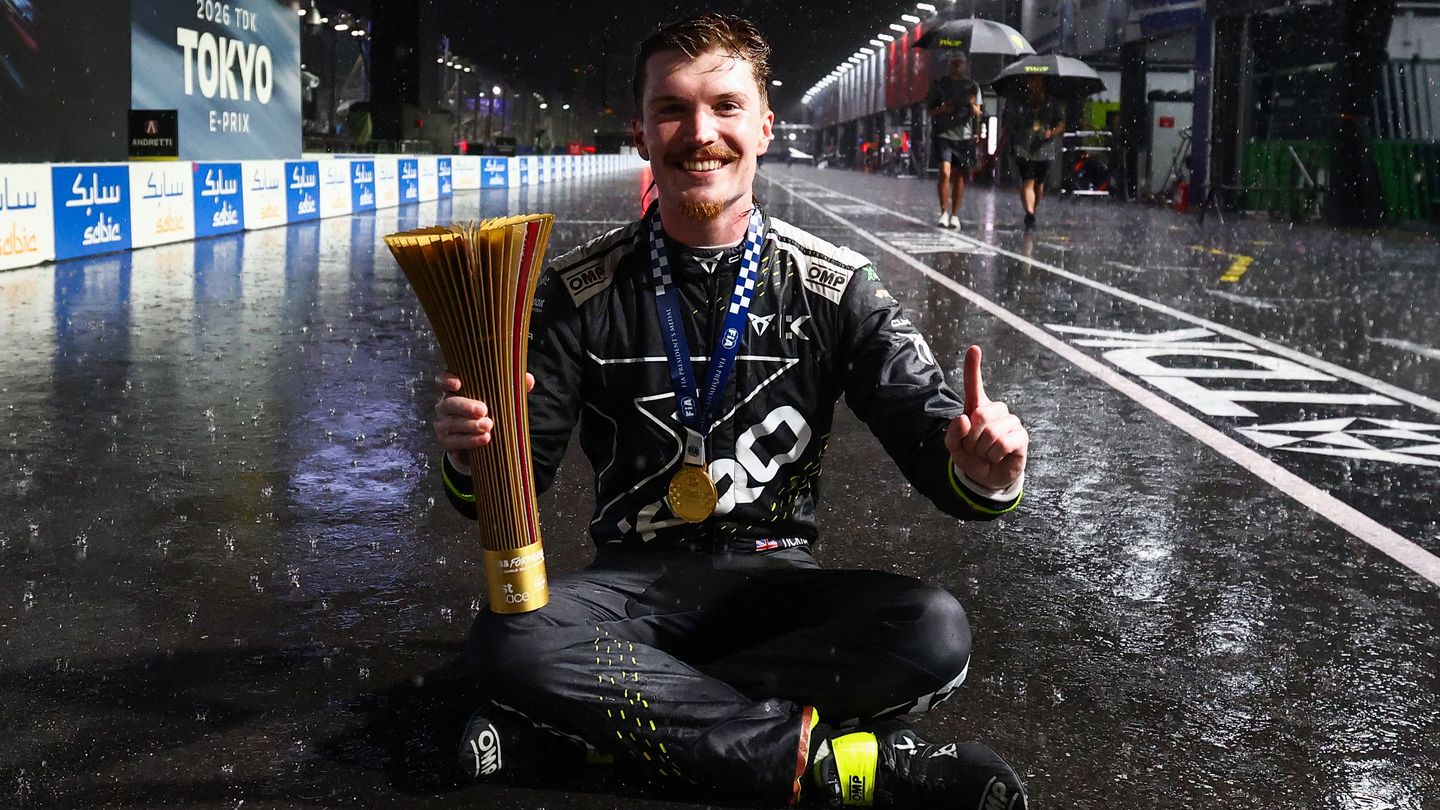
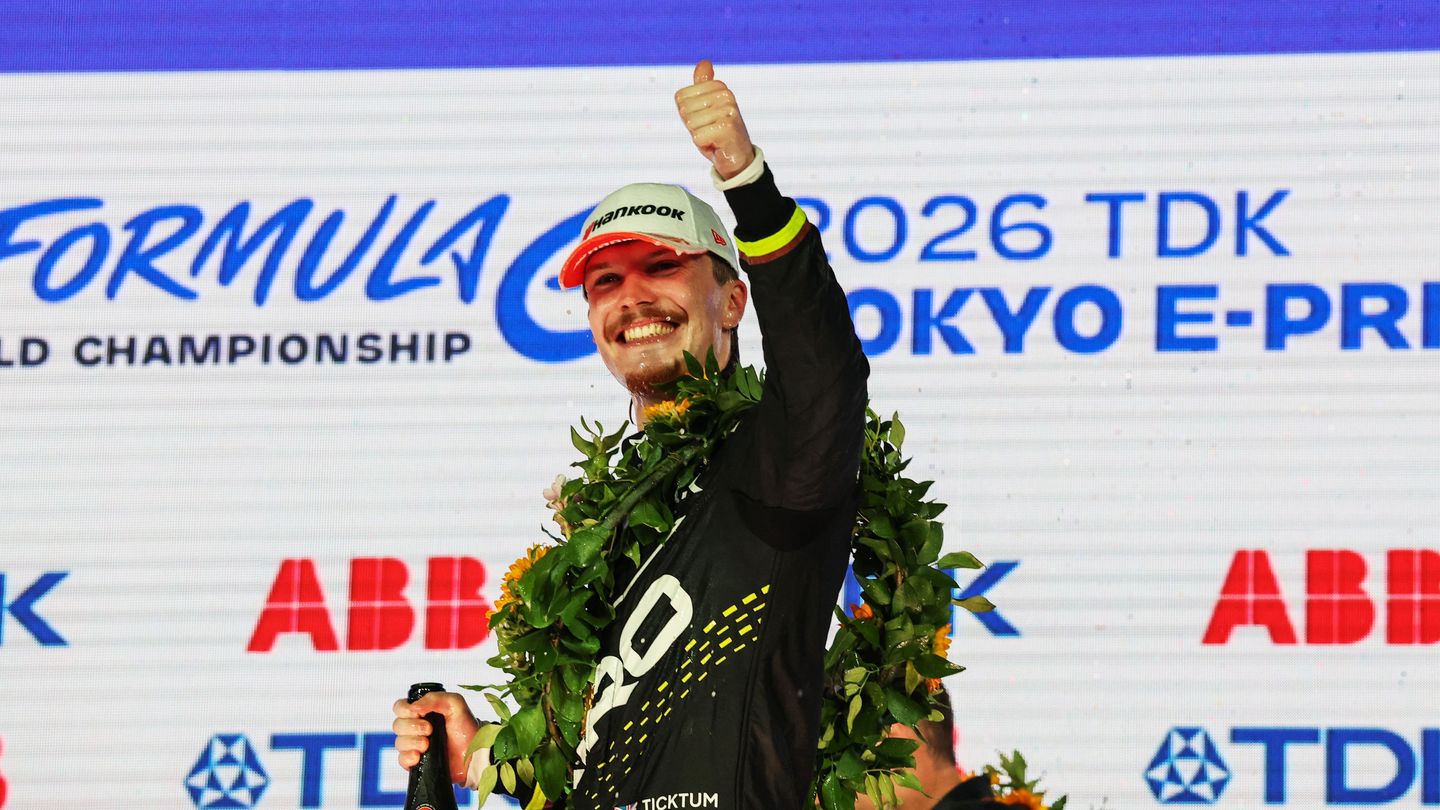
Dan Ticktum won Round 14 by passing Jake Dennis three corners from the finish after Dennis ran critically short of usable energy. Nyck de Vries won Round 15 from fifth after Mahindra committed to a drying-track setup and timed his late ATTACK MODE perfectly. Nick Cassidy finished on the podium in both races from deep starting positions, while Dennis turned second and third into the championship lead. The weekend also showed why Tokyo remains one of Formula E’s most difficult venues for clean overtaking: narrow braking zones, a stop-start first sector, limited line choice and a final chicane that punishes any loss of momentum.
What was the winning strategy at the Tokyo E-Prix 2026?
Saturday: Dan Ticktum used PIT BOOST and ATTACK MODE early enough to gain track position, then preserved enough energy to attack Jake Dennis when the polesitter suffered a late energy shortfall. Sunday: Nyck de Vries benefited from Mahindra’s drying-track setup, stayed in contention through the wet opening phase, and used his final ATTACK MODE on Lap 28 to pass Oliver Rowland and control the restart after a late red flag.
Formula E strategy is rarely a conventional “pit on Lap X for a new compound” calculation. The Tokyo races were built around four variables: usable battery energy, ATTACK MODE timing, PIT BOOST or interruption timing, and track position. Tyres mattered, but mostly through temperature and pressure rather than compound choice. The standard Hankook all-weather tyre had to operate on a soaked circuit, a drying line and finally near-dry asphalt without a normal slick-to-wet switch.
Round 14: How Ticktum turned an early commitment into a last-lap win
Jake Dennis began Saturday from pole and initially controlled the field. On a circuit where overtaking is difficult, leading from the start should have been the safest strategic position. Yet Formula E’s energy race does not reward a driver simply for staying first. It rewards the driver who reaches the final laps with the best combination of position, energy and power-mode flexibility.
Ticktum started sixth and committed early to both PIT BOOST and ATTACK MODE. That decision carried obvious risk. An early stop can drop a car into traffic, and an early ATTACK MODE activation can leave the driver exposed when rivals retain their higher-power phase for later. CUPRA KIRO accepted those risks because the alternative—sitting behind cars on a narrow street circuit—offered little upside.
PIT BOOST created the first major strategic split
PIT BOOST forced drivers to make a mandatory charging stop, turning the order into a temporary puzzle of actual and net positions. Ticktum entered the stop sequence early enough to clear the most damaging traffic. When Dennis delayed his own stop until Lap 21, he returned behind Ticktum, who had already combined the stop with ATTACK MODE use and converted the sequence into the net lead.
The key was not merely stopping early. Ticktum used the period before and after the stop to keep his average energy consumption under control. That allowed him to survive Dennis’s later charge. Dennis still had the stronger immediate weapon: a late 50kW ATTACK MODE phase with all-wheel drive. He passed Cassidy and then Ticktum by the end of Lap 29. At that point the race appeared decided.
Why Dennis lost after retaking the lead
Dennis’s move to first came at a cost. He had used more energy than Ticktum to recover the gap, pass Cassidy and complete the pass for the lead. Formula E cars can display competitive pace while approaching an energy limit, but once the available target becomes critical, the driver must lift earlier, coast longer and reduce acceleration demand. The official Formula E debrief reported that Dennis suffered a small power cut after overconsuming energy. Ticktum recognized the slowdown and attacked through the penultimate corner.
Tokyo’s first race was not won by the fastest final charge. It was won by the driver who still had enough energy to answer that charge.
The winning margin was the closest of the season. That detail matters because it shows how narrow the strategic window was. Had Dennis saved a fraction more energy earlier, Ticktum might not have had the speed difference required to complete the pass. Had Ticktum spent more defending during Dennis’s ATTACK MODE, he might have reached the final corners without the reserve needed to strike back.
Who gained most from Saturday’s strategy?
Dan Ticktum
Converted P6 into victory by committing early, avoiding a long spell trapped in traffic, and preserving enough energy for one final attack.
Nick Cassidy
Managed the PIT BOOST and ATTACK phases calmly, passed Mortara late and secured third despite not having the cleanest route through the race.
Mitch Evans
Went late with ATTACK MODE and used stored energy to recover to fourth, reclaiming the championship lead after Wehrlein retired.
Sébastien Buemi
Was the first to take ATTACK MODE and climbed as high as second after starting 14th, showing the value of using extra power before traffic settled.
Round 15: Wet-to-dry conditions made setup and tyre pressure decisive
Sunday demanded a different kind of strategic courage. Heavy rain before the race forced an opening lap behind the Safety Car before the standing start. The track was wet, but the forecast and surface trend suggested it could dry. Teams therefore had to choose between a setup that protected the opening laps and one that would become stronger later.
Mahindra selected the second option for de Vries. The car was prepared for a drying circuit, accepting that the early laps could be difficult. Citroën made a similar call for Cassidy. That choice became more valuable as the racing line cleared and tyre pressures moved into their intended operating window.
Why tyre pressure mattered more than tyre compound
Formula E did not present drivers with a normal menu of wet, intermediate and slick compounds. The Hankook all-weather tyre remained on the car. Teams instead worked with pressures, temperatures, suspension settings and energy maps to make one tyre perform across radically different conditions.
A higher pressure target can help a tyre respond in cold and wet conditions, but it may become less favorable as the track dries and the carcass heats. A lower or dry-biased pressure can feel weak and slippery early, then come alive when surface water disappears. Oliver Rowland’s pace improved dramatically in the drying phase, and Porsche later said Nico Müller had made the correct call to switch to dry tyre pressures, though a pit procedural error cost him time.
De Vries’s setup gave him traction and stability when the decisive phase arrived. He did not need to dominate the first third of the race. He needed to remain close enough that his car’s later strength could be converted into passes once the surface improved.
The first Safety Car and the standing start
The initial Safety Car lap reduced the immediate risk of a standing start on the wettest surface, but it also gave drivers a short opportunity to understand grip, brake temperatures and visibility. Once the race started, Edoardo Mortara led from pole. António Félix da Costa used an early ATTACK MODE activation to pass him and build a gap. That looked like a strong move because all-wheel drive and extra power were valuable on a slick circuit.
However, early ATTACK MODE use can become strategically expensive when a later interruption neutralizes the speed advantage. On Lap 15, Pepe Martí hit the wall after contact involving Sébastien Buemi, triggering a Full Course Yellow. Mortara’s ATTACK MODE window was effectively crushed by the neutralization. He had paid the positional cost of driving through the activation zone without receiving the full racing-lap benefit.
A caution does not refund ATTACK MODE time. A driver who activates just before a Full Course Yellow can lose much of the strategic value while rivals retain their activation for green-flag running.
Barnard, Rowland and the drying-line battle
Taylor Barnard emerged as a serious threat by combining strong energy numbers with precise timing. He passed Mortara and then used a switchback at Turn 17 to take the lead from da Costa as his ATTACK MODE expired. Rowland’s Nissan then improved as dry tyre pressures came into range. He moved past Ticktum, Mortara and da Costa, and took the lead when Barnard activated for the second time.
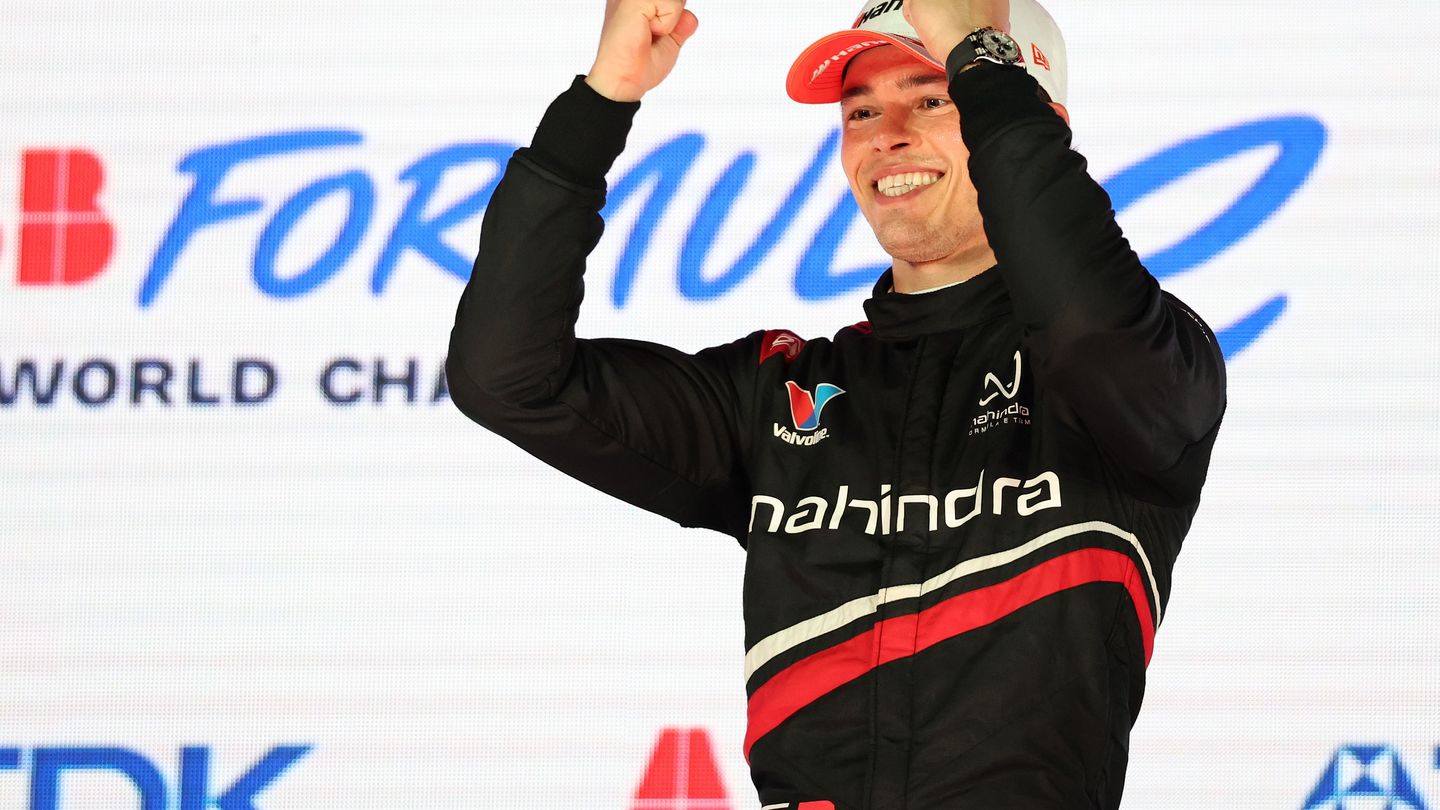
At this stage Rowland appeared to have the winning hand, but de Vries still had his final ATTACK MODE. The Mahindra driver activated on Lap 28 and used the 50kW boost plus all-wheel drive to reach and pass Rowland. Rowland did not immediately mirror the move with his own final activation. That decision left him vulnerable at the exact moment de Vries’s car and tyres were strongest.
De Vries’s pass was the culmination of the entire race plan: accept the difficult wet phase, preserve position, allow the setup to improve with the circuit, then deploy ATTACK MODE when overtaking potential and tyre performance were both at their highest.
How the late red flag changed the finish
A multi-car incident near the end produced a red flag and a one-lap sprint to the finish. That interruption protected de Vries’s lead but hurt Dennis, who had charged from 17th and saved his final ATTACK MODE for the closing laps. Dennis had momentum, additional power and a realistic chance to challenge the front two. The stoppage reset gaps and shortened the time available to exploit his remaining advantage.
After the restart, de Vries controlled the final lap ahead of Cassidy and Dennis. The red flag did not create Mahindra’s victory—the team had already placed de Vries at the front through setup and ATTACK timing—but it reduced the opportunity for Dennis to convert his late energy and power advantage into another pass.
Formula E tyre strategy in Tokyo explained
Calling Tokyo a “one-tyre race” would be technically true but strategically misleading. Even without compound changes, teams faced a complex tyre problem. The all-weather Hankook had to provide braking stability in standing water, traction at low speed, confidence over painted lines and kerbs, and then acceptable temperature control as the circuit dried.
Because the tyre is relatively durable, degradation was not the central concern seen in some Formula 1 races. The more important issue was when the tyre reached the correct pressure and temperature. A car prepared for wet conditions could be easier to drive early but overheat or lose precision later. A dry-biased car could slide in the opening laps yet become substantially quicker once water cleared.
Did drivers make tyre pit stops?
There was no routine compound-change strategy comparable with Formula 1. Saturday’s important stops were PIT BOOST charging stops, not conventional tyre stops. Sunday’s strategic tyre work involved setup and pressure choices. Müller’s switch to dry tyre pressures is the clearest example of a team using pit lane to alter the tyre operating window, though Porsche said a procedural error during the stop cost enough time to limit his result.
This distinction is important for readers searching for “Tokyo E-Prix pit stop strategy.” In Formula E, a stop may be mandated for energy replenishment through PIT BOOST, required for repairs, or used for a pressure adjustment in unusual conditions. The strategic question is not always “which tyre?” It is often “how can the same tyre be made to work for the phase of the race that matters most?”
Why was overtaking difficult at the Tokyo Street Circuit?
Overtaking was difficult because Tokyo’s narrow walls, short straights, tight first sector and limited alternative lines make it hard to run side by side. Drivers usually needed ATTACK MODE, a meaningful energy advantage, a tyre-temperature advantage or a rival mistake to complete a pass safely.
The circuit rewards precision but offers few forgiving overtaking zones. Turn 1 is an opportunity, yet the entry is narrow and the approach can be compromised by the final chicane. The middle sector contains direction changes where a following car loses momentum if it cannot position itself early. The final sequence can produce passes, as Ticktum demonstrated, but the walls and chicane make an unsuccessful attempt costly.
Energy saving adds another layer. A leading driver may intentionally lift early, which compresses the field and gives the car behind a chance to attack. Yet the following car also needs to save energy and may suffer from reduced clean airflow over the body and brakes. In Formula E, “difficult to overtake” does not mean “no overtaking.” It means a pass often requires a temporary performance mismatch created by ATTACK MODE, energy state or tyre condition.
Qualifying versus race pace
Dennis’s pole and Mortara’s Sunday pole showed the value of qualifying at Tokyo, but neither polesitter won. That was not evidence that qualifying did not matter. Both had control of the early race because of track position. The losses came when strategic variables changed: Dennis’s energy deficit on Saturday and the wet-to-dry performance shift on Sunday.
A driver starting deep in the field needed a much larger strategic advantage to advance. Cassidy’s 13th-to-second and Dennis’s 17th-to-third drives were exceptional because they combined energy saving, clean overtaking and well-timed ATTACK MODE. Their gains also underline how the mixed conditions temporarily widened the performance differences between cars.
Safety Cars, Full Course Yellows and added-lap pressure
Formula E races use predetermined lap counts, and laps can be added to compensate for Safety Car and Full Course Yellow periods. That system prevents teams from treating every caution as free energy saving. Drivers may save energy while circulating slowly, but additional racing distance can be added later, restoring part of the original demand.
In Tokyo, the effect was tactical rather than merely mathematical. The Round 15 Full Course Yellow ruined Mortara’s active ATTACK MODE window. The late red flag then froze the order, erased gaps and created a one-lap finish. Dennis lost the continuous green-flag running he needed to use his final ATTACK MODE fully. De Vries gained a simpler defensive task: execute one clean restart and avoid giving Cassidy a run.
Teams therefore have to evaluate two uncertainties at once. First, how much usable energy can be saved under caution? Second, how many laps or how much green-flag time will remain after race control adjusts the distance? A driver cannot simply spend aggressively after a Safety Car without knowing whether extra laps will be announced.
Tokyo E-Prix 2026 championship impact
Tokyo transformed the drivers’ championship. Dennis arrived as one of several contenders and left on top after scoring second and third. The official standings after Round 15 placed him on 146 points, two ahead of Mitch Evans on 144 and five ahead of Pascal Wehrlein on 141. Oliver Rowland remained in contention on 132, while Edoardo Mortara’s strong weekend moved him to 116.
| Pos. | Driver | Team | Points after Tokyo | Gap |
|---|---|---|---|---|
| 1 | Jake Dennis | Andretti | 146 | — |
| 2 | Mitch Evans | Jaguar TCS Racing | 144 | -2 |
| 3 | Pascal Wehrlein | Porsche | 141 | -5 |
| 4 | Oliver Rowland | Nissan | 132 | -14 |
| 5 | Edoardo Mortara | Mahindra | 116 | -30 |
Dennis’s weekend was strategically more valuable than a single victory. He collected heavily in both races while Evans and Wehrlein suffered. Evans recovered to fourth on Saturday and briefly led the championship, but a puncture and the wrong side of the drying-track gamble contributed to a non-finish on Sunday. Wehrlein left Tokyo without points after contact and retirement in Round 14, followed by another non-score in Round 15.
Porsche still secured the Manufacturers’ World Championship with two rounds remaining. The result came through the combined output of the factory team and its customer teams. Ticktum’s win for CUPRA KIRO and Dennis’s double podium for Andretti supplied major points even though Porsche’s factory drivers had a difficult weekend. Porsche left Tokyo with an insurmountable advantage in the manufacturers’ table, while the Teams’ Championship remained alive with Jaguar ahead of Porsche by 14 points.
Why Dennis’s “safe” points were actually aggressive
Finishing second and third can look conservative, but Dennis’s Sunday race was one of the most aggressive strategic recoveries of the season. Starting 17th, he saved enough energy to delay his final ATTACK MODE until the closing phase and then climbed rapidly. The late red flag denied him a longer shot at victory, yet the podium was enough to turn rivals’ failures into the championship lead.
What Tokyo means for London
The finale at London’s ExCeL circuit on August 15–16 was set to decide both the drivers’ and teams’ championships. Dennis held the smallest useful margin: enough to control his own destiny, but not enough to race defensively. Evans was only two points behind, Wehrlein five back, and Rowland still within range with 58 points available across the double-header.
Tokyo also provided clues for London. Andretti showed excellent energy efficiency and late-race pace. Jaguar retained enough speed to challenge but could not afford another strategic misread. Porsche’s factory operation needed cleaner execution after two non-scores for Wehrlein. Nissan’s Rowland demonstrated that tyre-pressure understanding and late-race pace can create opportunity even when the opening phase is difficult.
Tokyo E-Prix 2026 strategy FAQ
Conclusion: Tokyo rewarded strategic flexibility
The 2026 Tokyo E-Prix was a complete Formula E strategy study. Saturday proved that leading late is not enough when energy consumption has been pushed beyond the safe limit. Sunday proved that the best setup is not always the one that feels best at the start. Ticktum and de Vries won because their teams planned for the decisive phase rather than the immediate phase.
Tyres mattered through pressure and temperature. Pit stops mattered through PIT BOOST and, in Müller’s case, a pressure adjustment. Safety Cars and Full Course Yellows changed the value of ATTACK MODE. The late red flag protected de Vries and restricted Dennis. Overtaking remained difficult, but drivers with a genuine strategic performance advantage could still move through the field.
The largest championship winner was Dennis. He did not win either race, yet his two podiums converted the failures of Evans and Wehrlein into a narrow points lead. Porsche also left with the manufacturers’ crown, supported by the success of its customer-powered teams. Tokyo therefore delivered both immediate drama and long-term consequence—the clearest sign of a race weekend in which strategy mattered every bit as much as speed.
Sources
Race facts and classifications were checked against official ABB FIA Formula E reports, results and standings, including the Round 14 and Round 15 race reports, Formula E’s Tokyo weekend debrief, the official standings page and Porsche’s manufacturers’ championship announcement. Supporting championship figures were cross-checked with RacingNews365.
Formula E: Tokyo Round 14 race report · Formula E: Tokyo Round 15 race report · Formula E Tokyo debrief · Official Formula E standings · Porsche manufacturers’ title report