Freedom 250 Grand Prix 2026 Results:
Winner, Podium & Classification
Kyle Kirkwood won the inaugural Washington, D.C. street race after leading 128 of 147 laps. Here is the complete 25-car classification, podium, major incidents and championship impact.
Winner, Podium & Classification
Kyle Kirkwood dominated the inaugural Washington race, leading 128 of 147 laps.
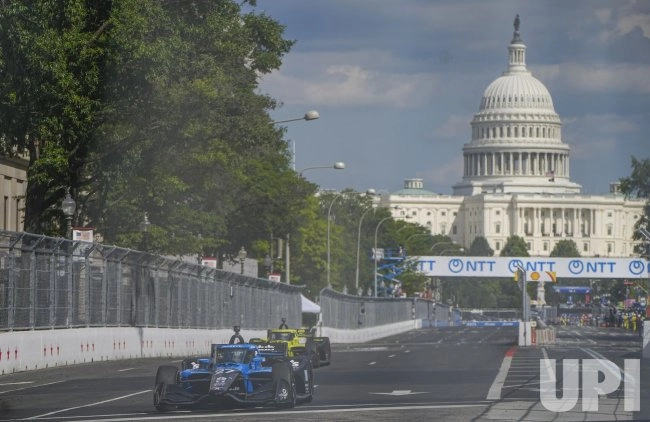
Kyle Kirkwood won the Freedom 250 Grand Prix 2026, taking the inaugural IndyCar race through Washington, D.C., by 3.0906 seconds over Christian Lundgaard. Will Power completed the podium. Kirkwood started second, immediately moved ahead of pole sitter Alex Palou and eventually led 128 of the 147 laps on the new 1.7-mile, seven-turn street circuit.
The finishing order tells only half the story. The race produced six caution periods, 29 caution laps, eight lead changes and five retirements. Palou, who arrived as the championship leader and started from pole, ended 20th after a drive-through penalty, a slow pit stop and a late crash. The result cut his championship advantage over Kirkwood from 133 points before Washington to 91 with three races remaining.
What Are the Freedom 250 Grand Prix 2026 Results?
The headline result is simple: Kyle Kirkwood won the 2026 Freedom 250 Grand Prix for Andretti Global, with Christian Lundgaard second for Arrow McLaren and Will Power third for Andretti Global. Kirkwood’s winning margin was 3.0906 seconds, but that final number disguises how much control he had before the late cautions compressed the field.
The race was the first NTT INDYCAR SERIES event staged on the streets of Washington, D.C., and it was built around a 1.7-mile, seven-turn temporary circuit. The 147-lap distance was designed to reach 250 miles as part of the United States’ 250th-anniversary celebrations. INDYCAR recorded the winner’s average speed at 93.295 mph, with a total race time of 2:40:42.9548.
Kyle Kirkwood won the Freedom 250 Grand Prix 2026. Christian Lundgaard finished second, 3.0906 seconds behind, and Will Power finished third. Kirkwood led 128 of 147 laps, making the inaugural Washington street race one of the most dominant drives of his IndyCar career.
Freedom 250 GP 2026 winner and podium
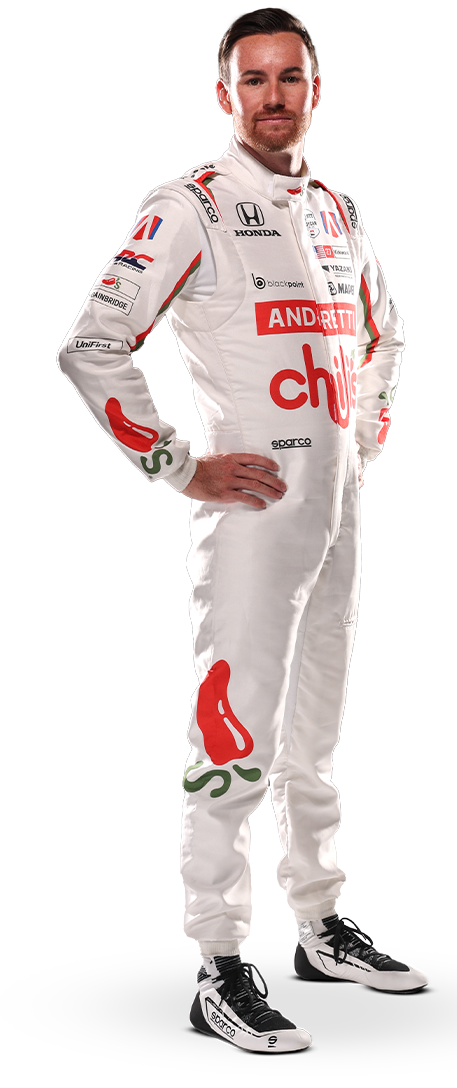
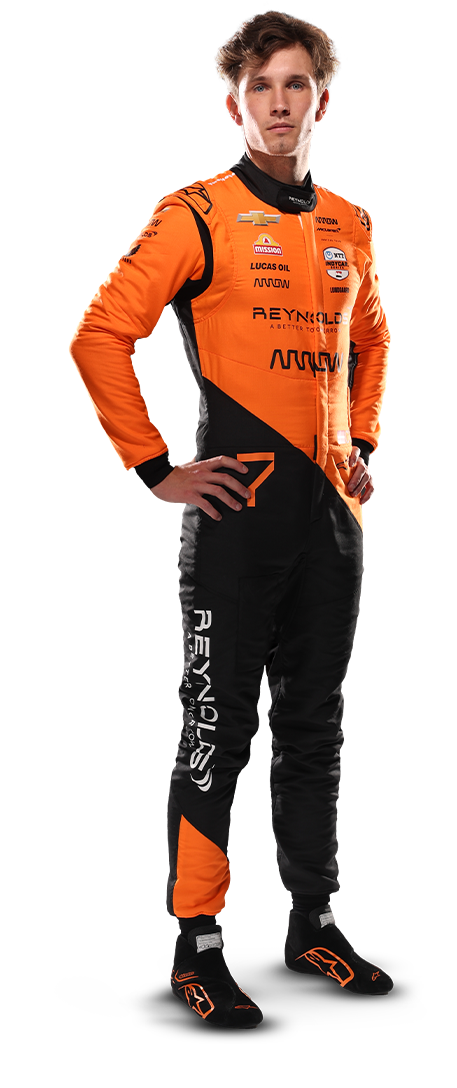
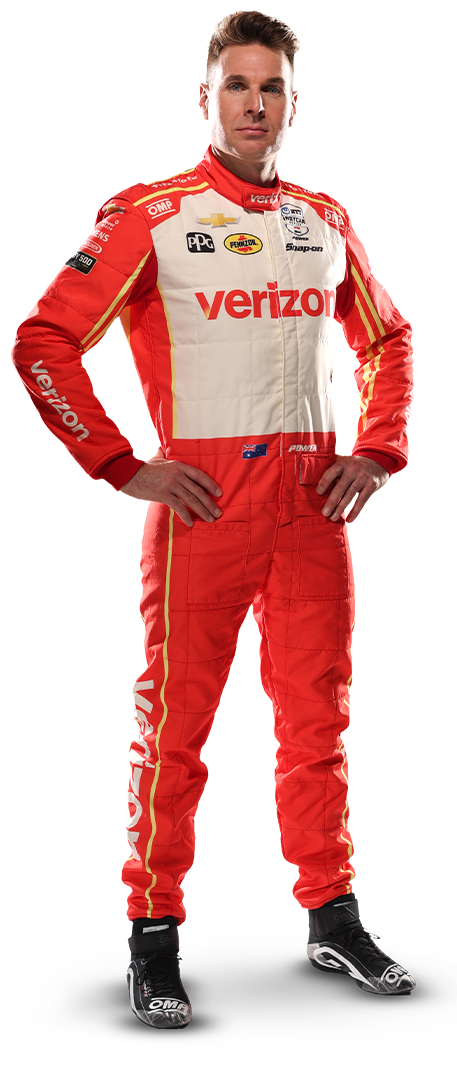
The result was particularly strong for Andretti Global. Kirkwood won and Power finished third, while Marcus Ericsson added fourth place. That put three Andretti cars inside the top four in the first IndyCar race on the streets of the capital.
Freedom 250 Grand Prix 2026 Full Classification
The complete Freedom 250 Grand Prix 2026 finishing order shows how unusual the race became behind the leader. The front group stayed compact late, while the lower half of the field was shaped by incidents, repairs and the six caution periods. Thirteen of the 25 starters completed all 147 laps on the lead lap.
| Pos | Driver | Car | Team | Race Distance | Gap | Status |
|---|---|---|---|---|---|---|
| 1 | Kyle Kirkwood | #27 | Andretti Global | 147 laps | — | Winner |
| 2 | Christian Lundgaard | #7 | Arrow McLaren | 147 laps | +3.091s | P2 |
| 3 | Will Power | #26 | Andretti Global | 147 laps | +4.184s | P3 |
| 4 | Marcus Ericsson | #28 | Andretti Global | 147 laps | +12.464s | Lead lap |
| 5 | Kyffin Simpson | #8 | Chip Ganassi Racing | 147 laps | +13.863s | Lead lap |
| 6 | Nolan Siegel | #6 | Arrow McLaren | 147 laps | +15.651s | Lead lap |
| 7 | Scott Dixon | #9 | Chip Ganassi Racing | 147 laps | +18.587s | Lead lap |
| 8 | Josef Newgarden | #2 | Team Penske | 147 laps | +19.476s | Lead lap |
| 9 | Caio Collet | #4 | A.J. Foyt Enterprises | 147 laps | +20.190s | Lead lap |
| 10 | Romain Grosjean | #18 | Dale Coyne Racing | 147 laps | +22.218s | Lead lap |
| 11 | Mick Schumacher | #47 | Rahal Letterman Lanigan Racing | 147 laps | +26.644s | Lead lap |
| 12 | Alexander Rossi | #20 | Ed Carpenter Racing | 147 laps | +30.934s | Lead lap |
| 13 | Graham Rahal | #15 | Rahal Letterman Lanigan Racing | 147 laps | +32.050s | Lead lap |
| 14 | Christian Rasmussen | #21 | Ed Carpenter Racing | 146 laps | 1 lap | Running |
| 15 | Dennis Hauger | #19 | Dale Coyne Racing | 146 laps | 1 lap | Running |
| 16 | Pato O’Ward | #5 | Arrow McLaren | 146 laps | 1 lap | Running |
| 17 | Marcus Armstrong | #66 | Meyer Shank Racing w/ Curb-Agajanian | 146 laps | 1 lap | Running |
| 18 | Louis Foster | #45 | Rahal Letterman Lanigan Racing | 146 laps | 1 lap | Running |
| 19 | Felix Rosenqvist | #60 | Meyer Shank Racing w/ Curb-Agajanian | 146 laps | 1 lap | Running |
| 20 | Alex Palou | #10 | Chip Ganassi Racing | 144 laps | 2 laps | Running |
| 21 | Santino Ferrucci | #14 | A.J. Foyt Enterprises | 132 laps | 14 laps | DNF |
| 22 | Scott McLaughlin | #3 | Team Penske | 128 laps | 18 laps | DNF |
| 23 | Rinus VeeKay | #76 | Juncos Hollinger Racing | 43 laps | 103 laps | DNF |
| 24 | David Malukas | #12 | Team Penske | 35 laps | 111 laps | DNF |
| 25 | Sting Ray Robb | #77 | Juncos Hollinger Racing | 35 laps | 111 laps | DNF |
Official classification note
The classification above follows the published Freedom 250 race result. Gaps are shown as recorded in the official race classification; drivers listed with fewer than 147 laps are classified by distance completed.
Who Won the Freedom 250 Grand Prix 2026?
Kirkwood did not win because the race simply fell into his hands. He had the pace to build the result before the cautions ever arrived. Starting second beside Palou, he attacked the opening sequence and took the lead almost immediately. Once in front, he repeatedly controlled the pace after restarts and pit cycles.
The most important number is 128 laps led. Across a 147-lap race, that is nearly 87 percent of the distance. His Andretti Global Honda also had the strongest overall rhythm in the key green-flag portions of the event. Motorsport.com’s official result summary reported that Kirkwood was more than 15 seconds clear at one point, which puts the final 3.0906-second margin into perspective.
The late caution periods made the finish look closer than the race had been. A late restart removed much of Kirkwood’s accumulated advantage and gave Lundgaard and Power a fresh opportunity. Kirkwood responded without giving the lead away. That distinction matters. A driver can inherit a restart advantage; maintaining control when the field is compressed is a different task.
“You can’t even put it into words – this is incredible. I’m almost in tears here.”
Kyle Kirkwood, speaking after his Freedom 250 victory. Source: Freedom 250 Grand Prix race recap.
How the Freedom 250 Grand Prix Unfolded
The Washington race was always going to be different from a standard IndyCar weekend. Teams had little historical data because this was a brand-new street circuit. The temporary track ran 1.7 miles with seven turns, using city streets around the National Mall and Pennsylvania Avenue. That meant drivers were balancing concrete walls, bumps, changing grip and the unusual pressures of racing around landmarks that had never hosted an IndyCar field.
Practice already hinted at the weekend’s major theme: Palou and Kirkwood were the two drivers most comfortable finding speed on the unfamiliar surface. Kirkwood topped the opening practice, while Palou led the second session. Then Palou produced a 56.8993-second pole lap in the Firestone Fast Six, giving Chip Ganassi Racing the preferred front-row position for race day.
The event was originally shorter, but the race distance was extended to 147 laps and 250 miles to fit the 250th-anniversary theme. That extra distance made fuel strategy, tyre management, pit sequencing and caution timing more important than they would have been in a standard short street race.
Why the Washington Circuit Changed the Nature of the Race
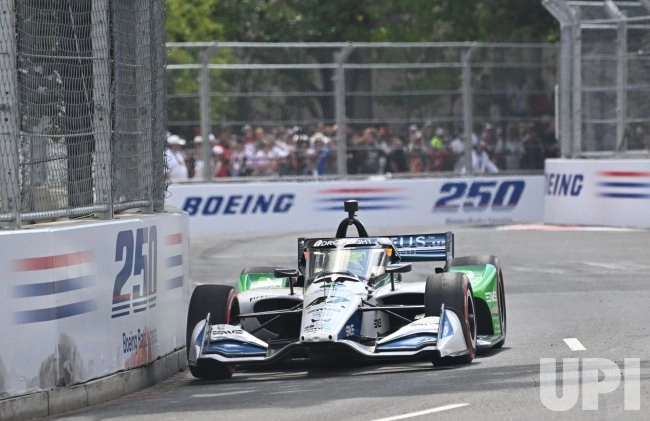
Street races do not behave like permanent road courses. The barriers are close, surface grip evolves quickly and small mistakes carry a much higher penalty. In Washington, the equation was intensified by the fact that the circuit had never been raced before. No driver arrived with years of braking references, no team had old race charts and no engineer could simply pull up previous year’s tyre-degradation curves.
INDYCAR described the circuit as a 1.7-mile, seven-turn layout that winds around the National Mall and features a high-speed 0.4-mile run down Pennsylvania Avenue. Pit lane sat just off the straight between Turns 1 and 2. The result was a track with long full-throttle sections, heavy braking zones and relatively little margin for error.
The unfamiliarity created a premium on driver confidence. Kirkwood had already shown in 2026 that he could adapt quickly to new street tracks, having won the inaugural race in Arlington, Texas. Marcus Ericsson also entered Washington with recent evidence of strong street-course performance after winning the inaugural Ontario event at Markham.
Surface grip versus wall proximity
One of the hardest parts of a new temporary circuit is that drivers need to attack the track while the surface is still evolving. More running creates more rubber, but the walls remain fixed. That encourages increasingly aggressive laps, especially when qualifying and restarts compress the competitive order.
In practical terms, that means drivers cannot simply maximize braking late and hope the tyres provide the final margin. They need the car to rotate cleanly, put power down without excessive wheelspin and remain predictable over bumps. Those characteristics matter even more when the race stretches beyond 240 miles and teams must preserve the tires over long stints.
For newer motorsport readers, concepts such as downforce, slipstreaming and race timing explain why a street-track race can appear simple on television while being much more demanding from the cockpit.
Key Incidents That Shaped the Freedom 250 Results
Alex Palou’s drive-through penalty
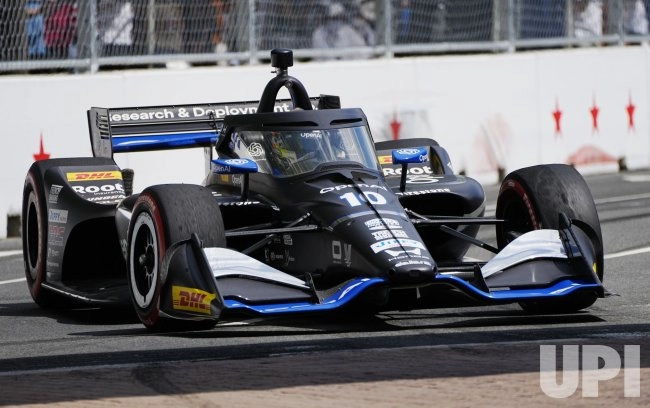
The biggest championship story was Palou’s penalty. Starting from pole, the Chip Ganassi Racing driver appeared to have everything required for a controlled points day. Instead, he was forced to serve a drive-through penalty after clipping a tyre in pit lane. That instantly transformed his race from one centered on track position into one centered on damage limitation.
A penalty alone does not always destroy a championship contender’s afternoon. What made this one so costly was the combination of the penalty, a slow stop and the late-race incident that damaged his car. Palou eventually finished 20th, scoring only 11 points from the race while Kirkwood collected the winner’s 53.
That swing was massive because Kirkwood entered Washington 133 points behind Palou. By the end of Sunday, the gap was only 91. The Freedom 250 therefore changed the title fight without changing the identity of the championship leader.
Malukas and Robb end their races early
David Malukas and Sting Ray Robb were the first major casualties of the race sequence around lap 37. Malukas struck the inside wall and then the outside wall. Robb had nowhere safe to go and became involved in the incident. Both cars ended the race after 35 laps.
The incident mattered strategically because street-circuit caution periods are not neutral events. A caution can hand a driver a free pit stop, erase a deficit, compress the lead and allow a driver running a different fuel cycle to suddenly become a threat. Race engineers therefore treat every yellow period as both a safety event and a potential strategic reset.
That is why understanding racing flags and safety-car and caution procedures is useful even for viewers who are new to IndyCar.
McLaughlin’s late challenge ends in the wall
Scott McLaughlin was one of the few drivers capable of putting immediate pressure on Kirkwood in the final portion of the race. On the restart, McLaughlin attacked into Turn 1 and went too deep, sliding into the wall. That retirement removed the most direct late challenge and left Lundgaard and Power to inherit the remaining podium positions.
McLaughlin’s retirement also underlined the central problem with street racing: once the field is compressed, the reward for a bold move is large, but the room for recovery is tiny. A driver who misses the braking point by a small amount does not always lose one position. On a circuit protected by walls, he can lose the entire race.
Fastest Lap, Race Statistics and Other Key Numbers
| Statistic | Figure | Why it matters |
|---|---|---|
| Race distance | 147 laps / 250 miles | Created an unusually long street-race strategy cycle. |
| Winner | Kyle Kirkwood | Second IndyCar victory of 2026. |
| Laps led | 128 | Dominant control of the race. |
| Margin of victory | 3.0906 seconds | Much smaller than Kirkwood’s peak lead before the late cautions. |
| Fastest race lap | 57.9495s | Set by Will Power. |
| Average race speed | 93.295 mph | Reflects the pace of a long temporary street circuit. |
| Cautions | 6 for 29 laps | Almost 20% of race laps occurred under caution conditions. |
| Lead changes | 8 among 4 drivers | Strategy and caution timing produced multiple changes despite Kirkwood’s control. |
| Lead-lap finishers | 13 of 25 | Shows the physical and strategic spread created by the race. |
| DNFs | 5 | Four-fifths of the field completed the race; five did not. |
The fastest race lap belonged to Will Power at 57.9495 seconds. Interestingly, that does not mean Power had the best race overall. A fastest lap is only one slice of performance. In a 147-lap race, tire condition, traffic, fuel load, pit timing, cautions and restart execution usually matter more than one peak lap.
Readers looking to understand why 147 laps changes the strategic picture can also use the World of Speed explainers on how laps are counted in racing and how pit stops work in racing.
Freedom 250 Grand Prix Championship Standings Impact
The most important championship statistic from Washington is not the identity of the winner. It is the reduction in the gap between Palou and Kirkwood. Palou entered the race 133 points ahead. After finishing 20th while Kirkwood won, the advantage fell to 91 points.
That is still a substantial lead, but the margin now sits inside the realistic range of a late-season title fight. With three races remaining after Washington, Kirkwood has moved from needing an extraordinary collapse by Palou to having a genuine mathematical path if he continues winning and Palou continues leaving large points on the table.
| Pos | Driver | Points after Freedom 250 | Washington result |
|---|---|---|---|
| 1 | Alex Palou | 553 | 20th |
| 2 | Kyle Kirkwood | 462 | 1st |
| 3 | Christian Lundgaard | 443 | 2nd |
| 4 | David Malukas | 411 | DNF |
| 5 | Pato O’Ward | 399 | 16th |
| 6 | Josef Newgarden | 376 | 8th |
| 7 | Marcus Ericsson | 361 | 4th |
| 8 | Felix Rosenqvist | 355 | 19th |
| 9 | Scott McLaughlin | 354 | DNF |
| 10 | Will Power | 328 | 3rd |
The championship calculation now has a clear narrative. Palou remains in control because the lead is still 91 points. Kirkwood, however, has momentum because the single best result available to a title challenger is a win, and he delivered exactly that on the largest new stage IndyCar has visited this season.
For readers wanting a broader explanation of championship math, the site’s guides to how racing championships are scored and what pole position means in racing provide useful background.
What the Freedom 250 Results Really Tell Us
The first mistake would be to reduce the Freedom 250 to a patriotic backdrop and a winner’s photo. From a racing perspective, the event offered a clean test of how IndyCar teams adapt to a completely new street circuit. The answer was revealing: driver confidence and immediate setup understanding mattered enormously, and the drivers with the strongest street-course form were again among the most competitive.
Kirkwood’s biggest strength was adaptability
Kirkwood entered the weekend second in the championship and already had an inaugural street-race win from Arlington. That matters because the key skill on a new temporary track is not simply bravery. It is learning speed without overstepping the available grip.
His weekend progression was also efficient. Kirkwood finished first in opening practice, was second-fastest in Practice 2, then qualified second behind Palou. That sequence suggests a driver who found the car’s workable window early and kept it there rather than searching for a radical setup breakthrough.
Palou’s failure was more costly than Kirkwood’s success was surprising
That sounds harsh, but the data supports it. Palou entered the weekend with the championship lead, qualified on pole and had already shown exceptional pace in practice. A 20th-place finish therefore represented a major loss relative to his expected result.
Kirkwood deserved the win, but the championship swing also required Palou’s race to go badly. Both things happened together. That is what makes Washington more important than an ordinary 53-point race win.
Andretti Global emerged as the strongest organization
Andretti’s result was not limited to Kirkwood. Power finished third and Ericsson fourth. Three cars inside the top four on a new street track is powerful evidence that the team’s package worked across different driver styles and race phases.
It also suggests that the Freedom 250’s result should not be interpreted as one driver’s isolated performance. The Andretti organization brought a strong technical package, drivers who were comfortable with the circuit and race execution that survived repeated cautions.
The race’s historical importance goes beyond IndyCar
From a motorsport-history perspective, the location matters. This was the first NTT INDYCAR SERIES race on the National Mall and the first major modern IndyCar street race through the heart of Washington, D.C. The circuit placed open-wheel racing beside the U.S. Capitol, Washington Monument, National Gallery of Art, National Archives and Smithsonian landmarks.
That type of backdrop changes how casual fans encounter a racing series. Many people who would never plan a visit to a traditional circuit now saw IndyCar racing through a place they already recognize. INDYCAR reported that more than 140,000 spectators were expected over Saturday and Sunday, reinforcing the event’s potential reach beyond the existing fan base.
For historical context, World of Speed’s archive on Mario Andretti and its collection of famous race car drivers offer useful perspective on how American open-wheel racing has changed over generations.
Freedom 250 Grand Prix 2026: What Fans Should Remember
The cleanest lesson from the Freedom 250 is that street races reward adaptability. Kirkwood did not have a database of previous races at the circuit. Neither did the engineers. Everyone started with the same blank page. The drivers who could build confidence without overdriving the track gained an immediate advantage.
The second lesson is that championship racing magnifies every mistake. Palou’s pole should have been the foundation for another strong points score. Instead, the penalty, slow stop and late incident turned a probable championship-building afternoon into a result that allowed his nearest challenger to take 53 points.
The third lesson is strategic. A 250-mile street race is long enough for the normal rhythm of an urban event to break several times. Every caution resets track position, every pit stop changes the fuel cycle and every restart creates another chance for contact. That is why the six caution periods were not simply interruptions; they were part of the competitive structure of the race.
The Freedom 250 will be remembered as a Kyle Kirkwood victory, but its championship significance belongs equally to Alex Palou’s collapse. Kirkwood leaves Washington with momentum. Palou leaves with the points lead still intact, but with a much smaller margin for error.
Fans who want to understand the broader racing mechanics behind this result can continue with how car racing works, how racing drivers qualify, what causes crashes in motor racing, and how engine oil protects a racing engine.
Frequently Asked Questions
Final Takeaway: Why the Freedom 250 Results Matter
Kyle Kirkwood’s Freedom 250 victory was more than a symbolic home-country win in the nation’s capital. He controlled 128 of 147 laps, handled six caution periods and survived a late compression of the field to win the first IndyCar race on the streets of Washington, D.C. That is a serious racing achievement regardless of the event’s patriotic setting.
Christian Lundgaard’s second place and Will Power’s third gave the podium a competitive balance, while Marcus Ericsson’s fourth helped make Andretti Global the standout organization of the weekend. Behind them, 13 drivers finished on the lead lap and five retired from the race.
But the championship story is the part fans should watch most closely. Palou still leads, yet his 20th-place finish transformed a comfortable 133-point advantage into a 91-point lead. Kirkwood has momentum, Palou still controls the championship, and the remaining races now carry significantly greater pressure.
The first Freedom 250 already has its defining image: an American driver winning a 250-mile IndyCar race around the National Mall. The more important racing memory, however, may be the moment Washington turned the 2026 title fight into a much closer contest.
Sources & Verification
This article was checked against official series/event information and post-race classification reporting available after the August 23, 2026 race. Result figures, finishing order, championship points and race statistics were cross-checked before publication.
- INDYCAR — Kyle Kirkwood Dominates for Historic, Star-Spangled Victory in D.C.
- Motorsport.com — Official race results: 2026 IndyCar Freedom 250 Grand Prix
- Freedom 250 Grand Prix of Washington, D.C. — Official Event Site
- Associated Press via WTOP — Freedom 250 Grand Prix Results & Race Statistics
Image credits: UPI editorial photographs by Bonnie Cash and David Tulis are used as identified in the image captions. Confirm the appropriate editorial image license for your WordPress publication before commercial use.