Nashville INDYCAR 2026 Practice Results: Fastest Drivers and Full Times
Kyle Kirkwood led a crash-shortened opening session at 197.097 mph. David Malukas then returned from hospital checks to lead Final Practice, where Team Penske finished first and second.
The Nashville INDYCAR 2026 practice results told two connected stories. Kyle Kirkwood set the fastest single lap of the day in Practice 1. However, David Malukas produced the most remarkable performance by returning from a heavy crash and medical checks to lead Final Practice.
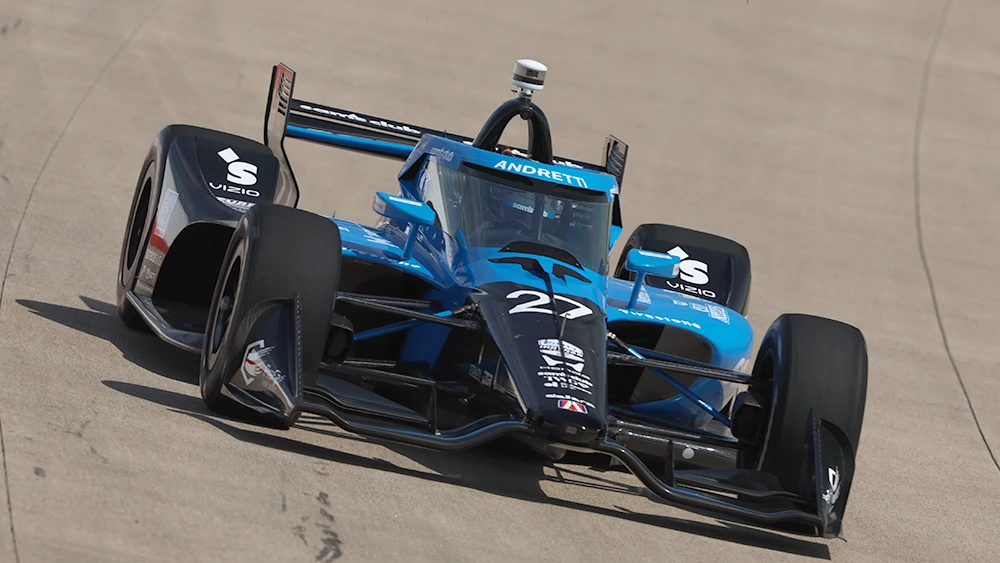
Kirkwood’s #27 Andretti Global Honda completed a 23.7447-second lap at 197.097 mph. Alex Palou followed only 0.0158 seconds behind. In the evening, Malukas led Team Penske teammate Scott McLaughlin by 0.0351 seconds with a 24.1529-second lap at 193.766 mph.
Kirkwood was fastest across the full practice day because his 197.097-mph Practice 1 lap was the quickest. Malukas led the separate Final Practice session at 193.766 mph after his Team Penske crew repaired the car damaged in his morning crash.
Nashville INDYCAR Practice at a Glance
The Borchetta Bourbon Music City Grand Prix weekend took place at Nashville Superspeedway in Lebanon, Tennessee. The 1.33-mile track is a concrete oval, so surface grip and tire behavior differ from the asphalt used at many INDYCAR venues.
Practice 1 began at 10 a.m. Eastern Time on Saturday, July 18. The session was scheduled for one hour. However, it ended after about 52 minutes because Malukas crashed heavily in Turn 2.
Qualifying followed at 3 p.m. ET. Kirkwood later converted his morning speed into the NTT P1 Award. Final Practice began at 6 p.m. ET and focused far more heavily on traffic, tire use and race preparation.
The lap totals explain the different objectives. Practice 1 produced 660 combined laps before the stoppage. Final Practice produced 1,684 laps, more than two and a half times as many. Therefore, the first session provided the cleaner qualifying reference, while the evening offered a broader race-preparation sample.
Kyle Kirkwood
His third lap remained the day’s fastest at 23.7447 seconds and 197.097 mph.
David Malukas
He returned after medical evaluation and set the evening benchmark on lap 66.
Team Penske
Malukas led McLaughlin, with only 0.0351 seconds between the two Chevrolets.
Nashville INDYCAR Practice 1 Results: Kirkwood Leads Palou
Kirkwood established the benchmark almost immediately. His best time came on lap three, which showed Andretti Global unloaded with a strong low-fuel balance. The speed remained unbeaten through the rest of the shortened session.
Palou came closest. The Chip Ganassi Racing driver set a 23.7605-second lap on lap 28. His 196.966-mph speed left him only 0.131 mph and 0.0158 seconds behind Kirkwood.
Malukas completed only four laps before the crash. Even so, his fourth lap stood as the third-fastest time. Rosenqvist followed in fourth, while Ferrucci completed the top five.
Why Kirkwood’s early lap mattered
Nashville’s concrete surface began the day with limited rubber and difficult grip. Drivers reported loose handling, and several cars moved visibly near the limit. Kirkwood’s ability to produce the fastest lap during his first short run indicated a stable starting setup.
Nevertheless, the speed chart did not reveal every qualifying variable. Drivers used different fuel loads and run plans. In addition, Malukas’ crash removed the final eight minutes, when several teams might have attempted another qualifying simulation.
| Pos. | Car | Driver | Team | Best time | Best speed | Best lap | Difference | Gap | Total laps |
|---|---|---|---|---|---|---|---|---|---|
| 1 | #27 | Kyle Kirkwood | Andretti Global w/ Curb-Agajanian | 23.7447 | 197.097 | 3 | — | — | 21 |
| 2 | #10 | Alex Palou | Chip Ganassi Racing | 23.7605 | 196.966 | 28 | 0.0158 | 0.0158 | 30 |
| 3 | #12 | David Malukas | Team Penske | 23.8362 | 196.340 | 4 | 0.0915 | 0.0757 | 4 |
| 4 | #60 | Felix Rosenqvist | Meyer Shank w/ Curb-Agajanian | 23.8473 | 196.249 | 21 | 0.1026 | 0.0111 | 23 |
| 5 | #14 | Santino Ferrucci | A.J. Foyt Enterprises | 23.8804 | 195.977 | 23 | 0.1357 | 0.0331 | 24 |
| 6 | #2 | Josef Newgarden | Team Penske | 23.8849 | 195.940 | 15 | 0.1402 | 0.0045 | 17 |
| 7 | #3 | Scott McLaughlin | Team Penske | 23.8889 | 195.907 | 6 | 0.1442 | 0.0040 | 16 |
| 8 | #4 | Caio Collet | A.J. Foyt Enterprises | 23.9575 | 195.346 | 14 | 0.2128 | 0.0686 | 21 |
| 9 | #6 | Nolan Siegel | Arrow McLaren | 23.9661 | 195.276 | 32 | 0.2214 | 0.0086 | 35 |
| 10 | #9 | Scott Dixon | Chip Ganassi Racing | 23.9932 | 195.055 | 29 | 0.2485 | 0.0271 | 29 |
| 11 | #66 | Marcus Armstrong | Meyer Shank w/ Curb-Agajanian | 24.0006 | 194.995 | 19 | 0.2559 | 0.0074 | 24 |
| 12 | #20 | Alexander Rossi | ECR | 24.0141 | 194.886 | 29 | 0.2694 | 0.0135 | 33 |
| 13 | #28 | Marcus Ericsson | Andretti Global | 24.0246 | 194.800 | 25 | 0.2799 | 0.0105 | 30 |
| 14 | #26 | Will Power | Andretti Global | 24.0502 | 194.593 | 7 | 0.3055 | 0.0256 | 24 |
| 15 | #76 | Rinus VeeKay | Juncos Hollinger Racing | 24.0701 | 194.432 | 28 | 0.3254 | 0.0199 | 30 |
| 16 | #21 | Christian Rasmussen | ECR | 24.0831 | 194.327 | 17 | 0.3384 | 0.0130 | 28 |
| 17 | #5 | Pato O’Ward | Arrow McLaren | 24.1246 | 193.993 | 14 | 0.3799 | 0.0415 | 16 |
| 18 | #18 | Romain Grosjean | Dale Coyne Racing | 24.1850 | 193.508 | 26 | 0.4403 | 0.0604 | 31 |
| 19 | #7 | Christian Lundgaard | Arrow McLaren | 24.1985 | 193.400 | 28 | 0.4538 | 0.0135 | 28 |
| 20 | #8 | Kyffin Simpson | Chip Ganassi Racing | 24.2053 | 193.346 | 27 | 0.4606 | 0.0068 | 32 |
| 21 | #77 | Sting Ray Robb | Juncos Hollinger Racing | 24.2791 | 192.758 | 27 | 0.5344 | 0.0738 | 28 |
| 22 | #47 | Mick Schumacher | Rahal Letterman Lanigan Racing | 24.2935 | 192.644 | 37 | 0.5488 | 0.0144 | 38 |
| 23 | #19 | Dennis Hauger | Dale Coyne Racing | 24.2949 | 192.633 | 21 | 0.5502 | 0.0014 | 27 |
| 24 | #45 | Louis Foster | Rahal Letterman Lanigan Racing | 24.5865 | 190.348 | 27 | 0.8418 | 0.2916 | 32 |
| 25 | #15 | Graham Rahal | Rahal Letterman Lanigan Racing | 24.8933 | 188.002 | 5 | 1.1486 | 0.3068 | 39 |
How close was the Practice 1 field?
The first five drivers were separated by 0.1357 seconds. Moreover, the top 10 were covered by 0.2485 seconds. A quarter of a second therefore separated Kirkwood from Dixon.
The midfield was equally compressed. Armstrong sat 11th at 194.995 mph, only 0.0074 seconds behind Dixon. Rossi, Ericsson and Power remained within 0.3055 seconds of first place.
The final two RLL cars were further back. Foster ranked 24th, while Rahal finished 25th. Schumacher, however, placed 22nd and completed 38 laps, the second-highest total in the session.
Kyle Kirkwood led Practice 1 for Andretti Global with a 23.7447-second lap at 197.097 mph. Alex Palou finished second, only 0.0158 seconds behind.
David Malukas’ Practice 1 Crash and Rapid Return
Malukas lost the rear of the #12 Team Penske Chevrolet in Turn 2 about 19 minutes into the opening session. The car rotated and struck the SAFER Barrier heavily with the rear. Damage was extensive, and the red flag eventually ended Practice 1 early.
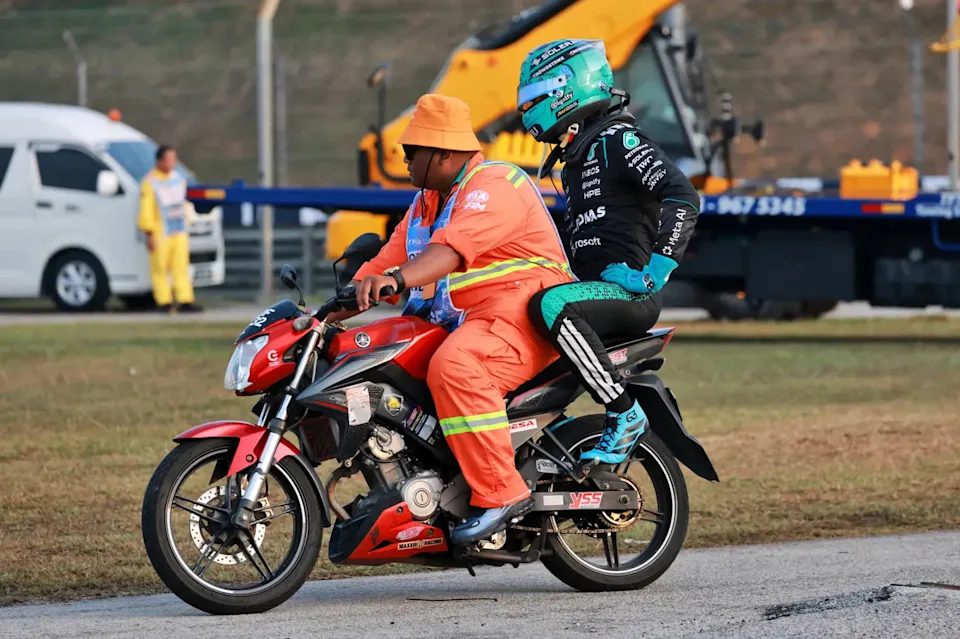
Malukas climbed out with assistance from the AMR INDYCAR Safety Team. He reported that his right knee struck the steering wheel during the impact. INDYCAR then confirmed that he traveled to a local hospital for further tests.
The medical results showed no broken bones or torn tissue. However, the knee was badly bruised. Malukas missed qualifying because the car could not be repaired in time and because he was away for medical evaluation.
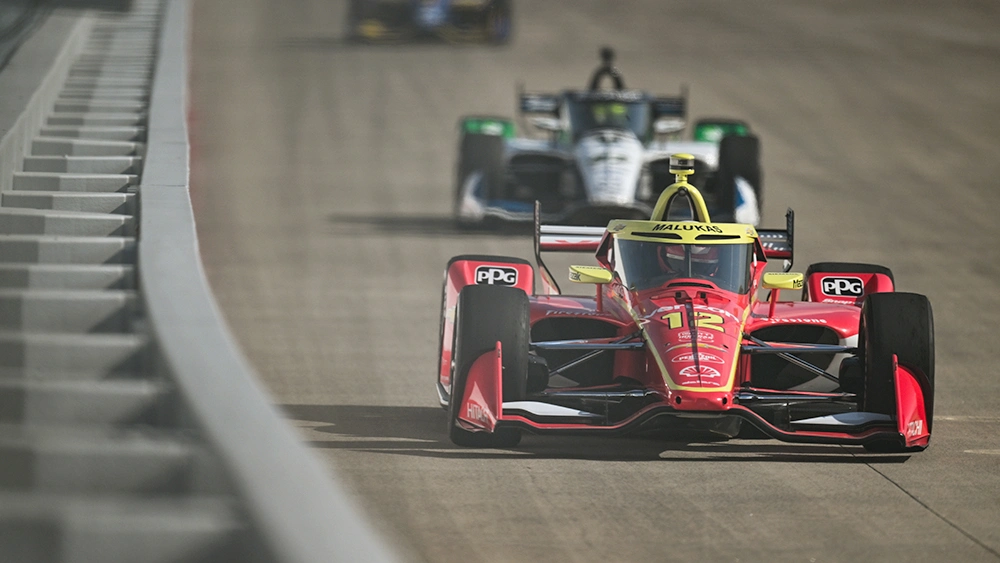
The comeback became the day’s central story. Team Penske repaired the car within hours. Malukas returned for Final Practice and completed 76 laps, which was more than any driver except four others in the session.
His fastest time arrived on lap 66. That detail matters because it showed the repaired car remained competitive late in a long race-preparation run. It also demonstrated how quickly Malukas used setup information from Newgarden and McLaughlin after missing most of Practice 1.
Malukas went from four morning laps and a hospital visit to the top of the evening speed chart in the same car number and on the same day.
Nashville INDYCAR Final Practice Results: Team Penske Finishes 1–2
Final Practice produced a different order because teams shifted from qualifying preparation toward the race. Malukas led at 193.766 mph. McLaughlin followed at 193.484 mph, giving Team Penske the top two positions.
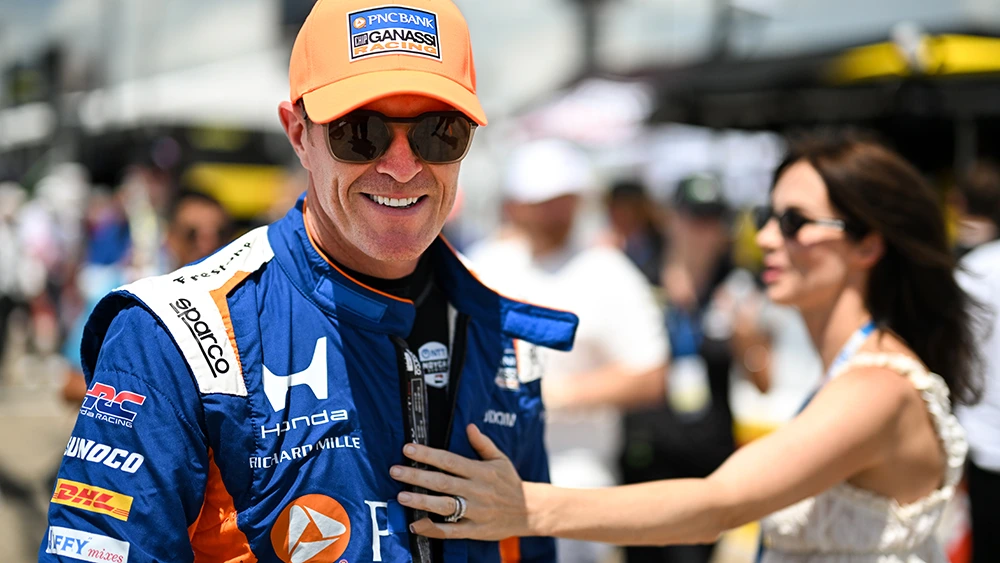
Armstrong ranked third despite later hitting the Turn 4 barrier. Schumacher produced the session’s biggest improvement by moving from 22nd in Practice 1 to fourth. Rosenqvist completed the top five.
Kirkwood fell from first to seventh, while Palou moved from second to eighth. Those drops did not automatically signal weaker race cars. Both completed at least 80 laps and likely prioritized longer traffic runs over a single clean-lap attempt.
| Pos. | Car | Driver | Team | Best time | Best speed | Best lap | Difference | Gap | Total laps |
|---|---|---|---|---|---|---|---|---|---|
| 1 | #12 | David Malukas | Team Penske | 24.1529 | 193.766 | 66 | — | — | 76 |
| 2 | #3 | Scott McLaughlin | Team Penske | 24.1880 | 193.484 | 58 | 0.0351 | 0.0351 | 71 |
| 3 | #66 | Marcus Armstrong | Meyer Shank w/ Curb-Agajanian | 24.2080 | 193.325 | 34 | 0.0551 | 0.0200 | 53 |
| 4 | #47 | Mick Schumacher | Rahal Letterman Lanigan Racing | 24.2407 | 193.064 | 50 | 0.0878 | 0.0327 | 83 |
| 5 | #60 | Felix Rosenqvist | Meyer Shank w/ Curb-Agajanian | 24.3102 | 192.512 | 54 | 0.1573 | 0.0695 | 84 |
| 6 | #14 | Santino Ferrucci | A.J. Foyt Enterprises | 24.3277 | 192.373 | 42 | 0.1748 | 0.0175 | 50 |
| 7 | #27 | Kyle Kirkwood | Andretti Global w/ Curb-Agajanian | 24.3285 | 192.367 | 16 | 0.1756 | 0.0008 | 80 |
| 8 | #10 | Alex Palou | Chip Ganassi Racing | 24.3455 | 192.233 | 11 | 0.1926 | 0.0170 | 81 |
| 9 | #4 | Caio Collet | A.J. Foyt Enterprises | 24.3564 | 192.147 | 70 | 0.2035 | 0.0109 | 72 |
| 10 | #76 | Rinus VeeKay | Juncos Hollinger Racing | 24.3592 | 192.125 | 45 | 0.2063 | 0.0028 | 70 |
| 11 | #28 | Marcus Ericsson | Andretti Global | 24.3691 | 192.046 | 41 | 0.2162 | 0.0099 | 71 |
| 12 | #19 | Dennis Hauger | Dale Coyne Racing | 24.3694 | 192.044 | 63 | 0.2165 | 0.0003 | 65 |
| 13 | #6 | Nolan Siegel | Arrow McLaren | 24.3743 | 192.006 | 35 | 0.2214 | 0.0049 | 45 |
| 14 | #9 | Scott Dixon | Chip Ganassi Racing | 24.3855 | 191.917 | 70 | 0.2326 | 0.0112 | 76 |
| 15 | #45 | Louis Foster | Rahal Letterman Lanigan Racing | 24.3869 | 191.906 | 53 | 0.2340 | 0.0014 | 68 |
| 16 | #8 | Kyffin Simpson | Chip Ganassi Racing | 24.4088 | 191.734 | 62 | 0.2559 | 0.0219 | 73 |
| 17 | #21 | Christian Rasmussen | ECR | 24.4288 | 191.577 | 6 | 0.2759 | 0.0200 | 74 |
| 18 | #26 | Will Power | Andretti Global | 24.4425 | 191.470 | 69 | 0.2896 | 0.0137 | 79 |
| 19 | #18 | Romain Grosjean | Dale Coyne Racing | 24.4573 | 191.354 | 57 | 0.3044 | 0.0148 | 57 |
| 20 | #5 | Pato O’Ward | Arrow McLaren | 24.4933 | 191.073 | 8 | 0.3404 | 0.0360 | 78 |
| 21 | #2 | Josef Newgarden | Team Penske | 24.5464 | 190.659 | 55 | 0.3935 | 0.0531 | 62 |
| 22 | #20 | Alexander Rossi | ECR | 24.5500 | 190.631 | 56 | 0.3971 | 0.0036 | 90 |
| 23 | #77 | Sting Ray Robb | Juncos Hollinger Racing | 24.6648 | 189.744 | 12 | 0.5119 | 0.1148 | 59 |
| 24 | #7 | Christian Lundgaard | Arrow McLaren | 24.9664 | 187.452 | 51 | 0.8135 | 0.3016 | 54 |
| 25 | #15 | Graham Rahal | Rahal Letterman Lanigan Racing | 26.4543 | 176.909 | 12 | 2.3014 | 1.4879 | 13 |
Final Practice was tighter at the front
The top 10 were covered by 0.2063 seconds, which was slightly closer than Practice 1. The top five spread was 0.1573 seconds. Malukas, McLaughlin and Armstrong were separated by only 0.0551 seconds.
Small gaps continued through the midfield. Ericsson beat Hauger by 0.0003 seconds for 11th. Dixon beat Foster by 0.0014 seconds for 14th. Therefore, a tiny change in traffic or tire condition could move a car several positions.
Who completed the most laps?
Rossi led the mileage chart with 90 laps. Rosenqvist completed 84, Schumacher 83, Palou 81 and Kirkwood 80. Power followed with 79, while O’Ward completed 78.
High mileage did not always create a top speed-chart position. Rossi finished 22nd despite leading the lap count. O’Ward ranked 20th. This contrast is normal in oval final practice because teams often value tire-life and traffic behavior more than one clean lap.
David Malukas led Final Practice with a 24.1529-second lap at 193.766 mph. Scott McLaughlin made it a Team Penske 1–2, only 0.0351 seconds behind.
Final Practice Incidents: Rahal, Grosjean and Armstrong Crash
Rear-end concern became a wall contact
Rahal told the team that the rear of the car felt wrong during the high-line session and early Final Practice. The crew attempted several changes. However, the car brushed the Turn 2 wall, and Rahal finished last at 176.909 mph.
Handling problem ended against the SAFER Barrier
Grosjean also struggled with balance. The #18 Dale Coyne Racing Honda pushed into the Turn 2 barrier on its right side. He still ranked 19th with a 191.354-mph best speed.
Third-fastest driver crashed late
Armstrong hit the Turn 4 SAFER Barrier with roughly 10 minutes remaining. His earlier 193.325-mph lap remained third fastest. None of the three drivers involved in Final Practice accidents was injured.
The incidents underlined the oval’s narrow setup window. A car needed enough rear stability to run in traffic without creating excessive understeer. Meanwhile, the concrete bumps punished any driver who lost confidence or allowed the rear to step out.
INDYCAR allowed Rahal, Grosjean and Armstrong one installation lap in their repaired cars before the race. That provision gave each team a chance to confirm basic operation without adding a full practice session.
Four significant crashes occurred across the two practice sessions when Malukas’ morning accident is included. The common theme was rear balance and the difficulty of the Nashville concrete oval.
Practice 1 vs Final Practice: What Changed?
| Metric | Practice 1 | Final Practice | What it suggests |
|---|---|---|---|
| Fastest driver | Kyle Kirkwood | David Malukas | Different run plans produced different leaders |
| Fastest time | 23.7447 | 24.1529 | Final Practice leader was 0.4082 seconds slower |
| Fastest speed | 197.097 mph | 193.766 mph | Race-prep session was 3.331 mph slower |
| Top-10 spread | 0.2485 seconds | 0.2063 seconds | Evening order was slightly tighter |
| Combined laps | 660 | 1,684 | Final Practice produced far more race data |
| Session shape | Short qualifying-focused runs | Long traffic and tire runs | Direct rank comparison can mislead |
| Major incidents | Malukas | Rahal, Grosjean, Armstrong | Rear stability remained a central issue |
Why Final Practice speeds were slower
Drivers carried more fuel and spent more time in traffic. Both factors reduce a clean-lap average. Teams also tested how the car behaved over longer tire runs rather than chasing one qualifying-style lap.
The track and air conditions also changed between morning and evening. However, the largest difference came from purpose. Practice 1 prepared for single-car qualifying, while Final Practice prepared for a 25-car oval race.
Which drivers gained the most positions?
Schumacher made the largest jump, moving from 22nd to fourth. Armstrong climbed from 11th to third, while Hauger advanced from 23rd to 12th. Foster also moved from 24th to 15th.
These gains did not prove that every car gained the same amount of outright speed. Instead, they showed which drivers produced stronger race-session laps when fuel, traffic and tires changed.
Which drivers dropped most sharply?
Newgarden fell from sixth to 21st, while Rossi moved from 12th to 22nd. Kirkwood and Palou each dropped six places. Yet Newgarden and Rossi completed 62 and 90 laps, respectively, so their low positions likely reflected run plans rather than a complete lack of race pace.
A Final Practice speed chart is not a race forecast by itself. The quickest clean lap and the strongest 40-lap traffic car can be two different machines.
Fastest Drivers and Teams to Watch
Kyle Kirkwood and Andretti Global
Kirkwood delivered the fastest lap of Practice 1 and later earned pole. The #27 Honda looked stable enough to attack early despite the green surface. Moreover, Kirkwood completed 80 Final Practice laps, giving Andretti a large race-data sample.
Power and Ericsson also placed inside the Practice 1 top 14. Therefore, Andretti showed broad one-lap strength. Its Final Practice order was less impressive, but high mileage suggested the team focused on traffic behavior.
David Malukas and Team Penske
Malukas’ recovery overshadowed the raw numbers, but the speed itself was meaningful. His repaired car led after 76 laps. McLaughlin followed in second, which gave Penske two independent references near the top.
Newgarden ranked only 21st in Final Practice after finishing sixth in the morning. However, he remained a proven Nashville oval benchmark. The team could compare his long-run data with Malukas and McLaughlin before the race.
Alex Palou and Chip Ganassi Racing
Palou finished second in Practice 1 and eighth in Final Practice. The championship leader remained within 0.1926 seconds of Malukas in the evening. He also completed 81 laps, demonstrating that the #10 car combined speed with mileage.
Dixon and Simpson completed 76 and 73 Final Practice laps. As a result, Ganassi accumulated one of the largest three-car data sets. Dixon’s 14th place was less important than his ability to complete long sequences in traffic.
Meyer Shank Racing
Rosenqvist ranked fourth and fifth across the two sessions. That consistency made him one of the day’s most reliable front-running drivers. Armstrong’s third-place Final Practice speed added another positive sign, although his late crash created repair work.
A.J. Foyt Enterprises
Ferrucci placed fifth and sixth, while rookie Collet finished eighth and ninth. Both cars stayed inside the top 10 in both sessions. That result made Foyt one of only two organizations with two consistently high entries.
Ferrucci’s best Final Practice speed was 192.373 mph. Collet followed at 192.147 mph. The small gap suggested both cars shared a useful race setup direction.
What Nashville Practice Revealed About Race Pace
High-line confidence mattered more than one clean lap
INDYCAR used a dedicated high-line segment before Final Practice. The purpose was to add rubber above the preferred lane and help create a second groove. Teams then evaluated whether their cars could follow closely without losing front grip.
A car that looked fast alone could still struggle behind another car. The front wing loses aerodynamic load in dirty air. Therefore, drivers needed mechanical grip and a balanced platform to remain close through the corners.
Tire degradation changed the handling balance
Firestone tires lose grip as heat and wear build. On a concrete oval, the balance can shift quickly. A car that begins neutral may develop understeer in traffic or oversteer as the rear tires fade.
That is why Rossi’s 90 laps were useful despite 22nd place. ECR collected data across several runs. Rasmussen added 74 laps, allowing the team to compare two cars over a wide tire-life range.
Traffic could hide or exaggerate speed
A slipstream can increase straight-line speed, while turbulent air can reduce corner grip. Consequently, a driver’s best lap may depend on where traffic appears. The official chart records the result but not the complete context of every tow.
Malukas and McLaughlin leading together still carried weight because both Penske cars reached the top. However, long-run consistency would remain more important once the race began.
Fuel load separated the two sessions
Practice 1 favored low-fuel qualifying simulations. Final Practice included heavier fuel loads and repeated pit exits. More fuel increases mass, which slows acceleration and asks more from the tires.
The 0.4082-second leader difference was therefore expected. It did not mean the evening track was automatically worse. Instead, it reflected how teams changed their goals.
Team Penske’s 1–2 showed strong clean-lap speed. Rosenqvist’s fifth place and 84 laps showed consistency. Palou, Kirkwood, Power and Rossi each completed at least 79 laps, giving their teams substantial long-run information.
Five Nashville INDYCAR Practice Takeaways
Kirkwood owned the fastest lap
His early Practice 1 benchmark survived every later attempt and preceded his pole-winning run.
Malukas completed the comeback
He returned from hospital checks, completed 76 laps and led the evening session.
Penske had the strongest Final Practice
Malukas and McLaughlin were separated by only 0.0351 seconds.
The oval punished instability
Malukas, Rahal, Grosjean and Armstrong all hit the barrier during practice day.
1. The fastest qualifying car and the fastest race-session car were different
Kirkwood led the morning, while Malukas led the evening. This split showed why both sessions mattered. One measured low-fuel speed; the other tested race preparation.
2. Palou remained dangerous in every condition
Palou ranked second in Practice 1 and eighth in Final Practice. He never fell outside the useful lead group. In addition, his 81 evening laps gave Ganassi a strong tire and traffic sample.
3. Foyt produced the quietest two-car success
Ferrucci and Collet remained inside the top 10 twice. Neither topped a session, but both cars showed repeatable speed. That pattern often matters more than a single standout lap.
4. Schumacher’s Final Practice result deserved attention
The former Formula 1 driver improved from 22nd to fourth. He completed 83 laps and finished within 0.0878 seconds of Malukas. That was RLL’s strongest positive result during a difficult day.
5. Practice results required careful interpretation
Newgarden, Rossi and O’Ward sat outside the Final Practice top 19. However, all three teams used extensive race runs. A low position therefore did not remove them from contention.
Nashville INDYCAR 2026 Practice Results FAQ
Conclusion: Kirkwood Had the Fastest Lap, Malukas Had the Strongest Story
The Nashville INDYCAR 2026 practice results placed Kirkwood at the top of the day’s outright speed chart. His 197.097-mph lap led Palou by only 0.0158 seconds and established Andretti Global as the early qualifying benchmark.
Yet Final Practice belonged to Malukas. He returned from a heavy crash, hospital testing and a missed qualifying session to lead Team Penske teammate McLaughlin. The #12 car completed 76 laps and produced its fastest time late in the run.
The broader results showed a highly competitive field. Only 0.2063 seconds covered the Final Practice top 10. Meanwhile, four practice accidents demonstrated how difficult the concrete oval remained when rear balance moved outside the safe window.
Practice 1 offered the best guide to single-lap speed. Final Practice supplied the deeper race-preparation evidence. Together, they showed Andretti, Penske, Ganassi, Meyer Shank and Foyt entering the race with credible strengths—but in very different areas.
Sources & Official References
- INDYCAR — official Nashville Practice 1 speed chart
- INDYCAR — official Nashville Final Practice speed chart
- INDYCAR — Kirkwood leads crash-shortened opening practice
- INDYCAR — Malukas comeback and Final Practice incident report
Times, speeds, best-lap numbers, gaps and lap totals follow the official INDYCAR session classifications. Session analysis distinguishes recorded data from editorial interpretation.