Nashville INDYCAR 2026 Preview: Oval Favorites, Track Guide & Predictions
A race-day breakdown of the 300-lap Nashville oval contest, including the front-row duel, proven short-oval specialists, tire and fuel strategy, passing lanes, championship pressure, sleeper picks, and our winner prediction.
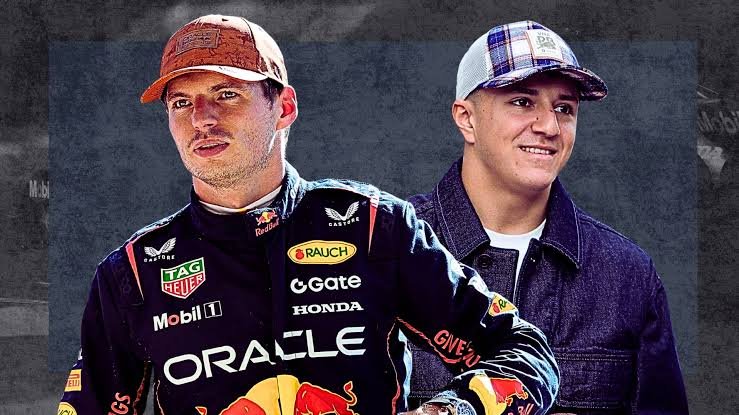
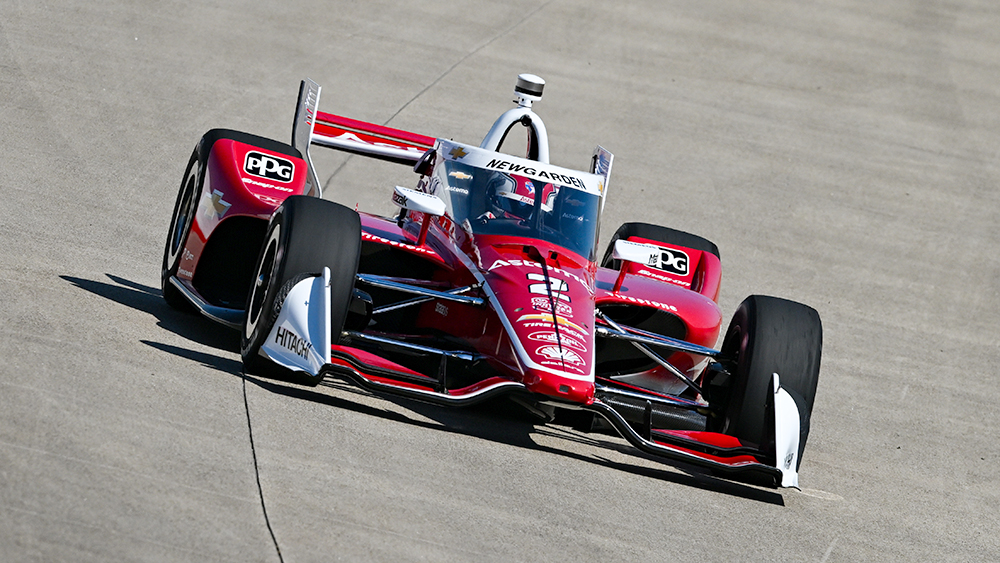
Nashville INDYCAR 2026 arrives with a front row that captures the entire race. Kyle Kirkwood has the fastest single-car package. Josef Newgarden has the strongest recent short-oval record. Behind them sit Scott McLaughlin, championship leader Alex Palou, Scott Dixon, and Alexander Rossi.
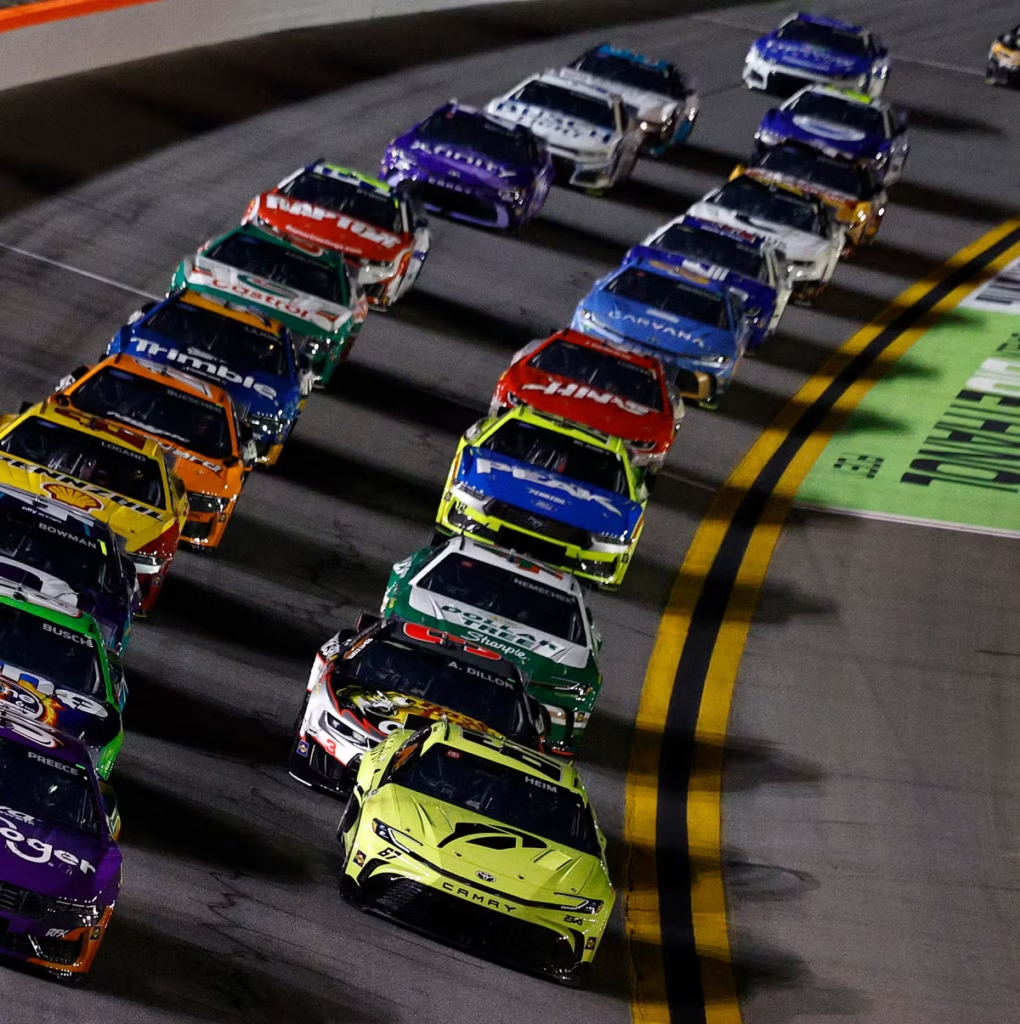
The distance makes this more than a qualifying contest. Sunday’s race covers 300 laps, which is 75 more than last year. Therefore, one quick stint will not be enough. The winner must survive hot conditions, changing grip, traffic, pit cycles, and several late-race restart possibilities.
Nashville INDYCAR 2026 Race-Day Snapshot
Who starts on pole for Nashville INDYCAR 2026?
Kyle Kirkwood starts from pole after averaging 196.852 mph across two qualifying laps. Josef Newgarden starts second at 196.642 mph. Scott McLaughlin and Alex Palou share Row 2, while Scott Dixon and Alexander Rossi start from Row 3.
Kirkwood completed the ideal Saturday. First, he led practice at 197.097 mph. Then, he produced the only qualifying lap above 197 mph and took his second Nashville Superspeedway pole. The Andretti Global driver also started first here in 2024.
Newgarden was only 0.210 mph slower across the two-lap average. However, his race case rests on more than qualifying. He won this event in 2025 and has captured the last three short-oval races, dating to last season’s Nashville finale.
McLaughlin gives Team Penske another front-row-level threat from third. Meanwhile, Palou starts fourth with a 56-point championship lead. Dixon and Rossi complete a top six filled with drivers who understand long green-flag runs.
| Start | Driver | Team | Engine | Two-lap average |
|---|---|---|---|---|
| 1 | Kyle Kirkwood | Andretti Global | Honda | 196.852 mph |
| 2 | Josef Newgarden | Team Penske | Chevrolet | 196.642 mph |
| 3 | Scott McLaughlin | Team Penske | Chevrolet | 196.087 mph |
| 4 | Alex Palou | Chip Ganassi Racing | Honda | 196.050 mph |
| 5 | Scott Dixon | Chip Ganassi Racing | Honda | 195.802 mph |
| 6 | Alexander Rossi | Ed Carpenter Racing | Chevrolet | 195.664 mph |
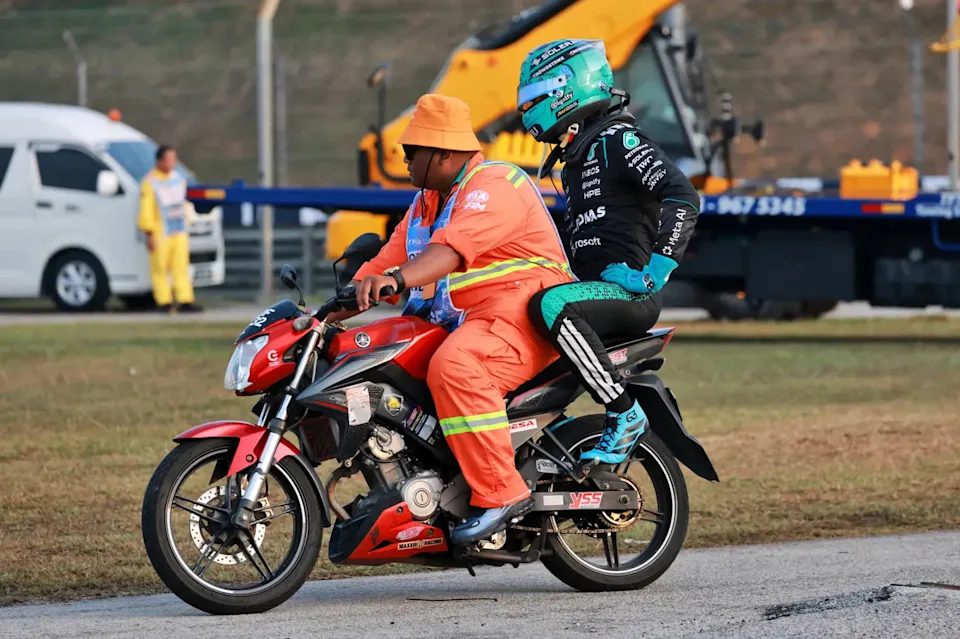
The difficult news concerns David Malukas. He crashed heavily in Turn 2 during opening practice and did not make a qualifying attempt. INDYCAR reported that he went to a local hospital for further testing. His race status remained undecided in the latest official update used for this preview.
This article does not predict Malukas’ participation. Only INDYCAR or Team Penske can confirm whether he receives medical clearance. Competitive analysis comes second to the driver’s health.
Nashville Superspeedway Track Guide
What makes Nashville Superspeedway challenging?
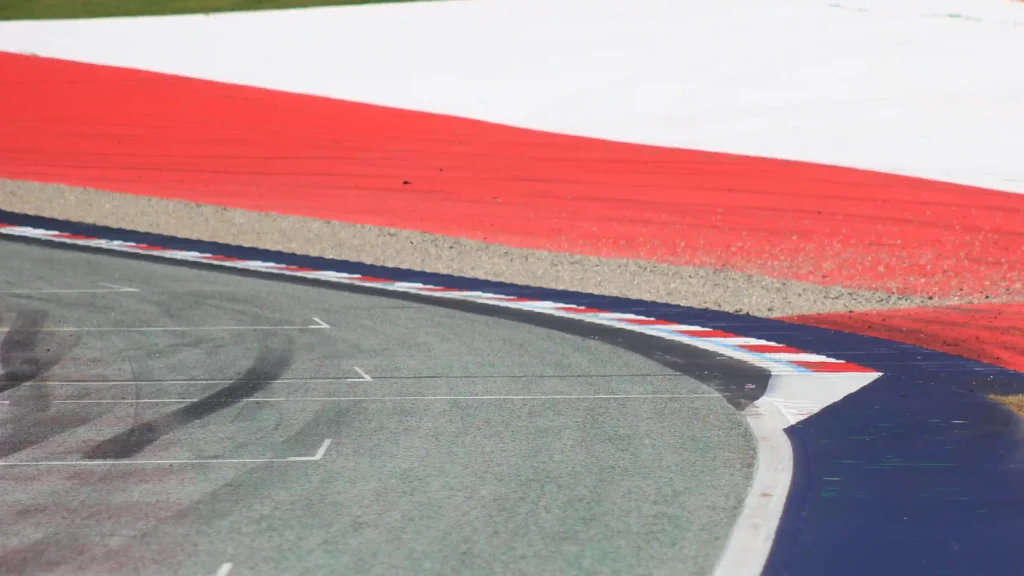
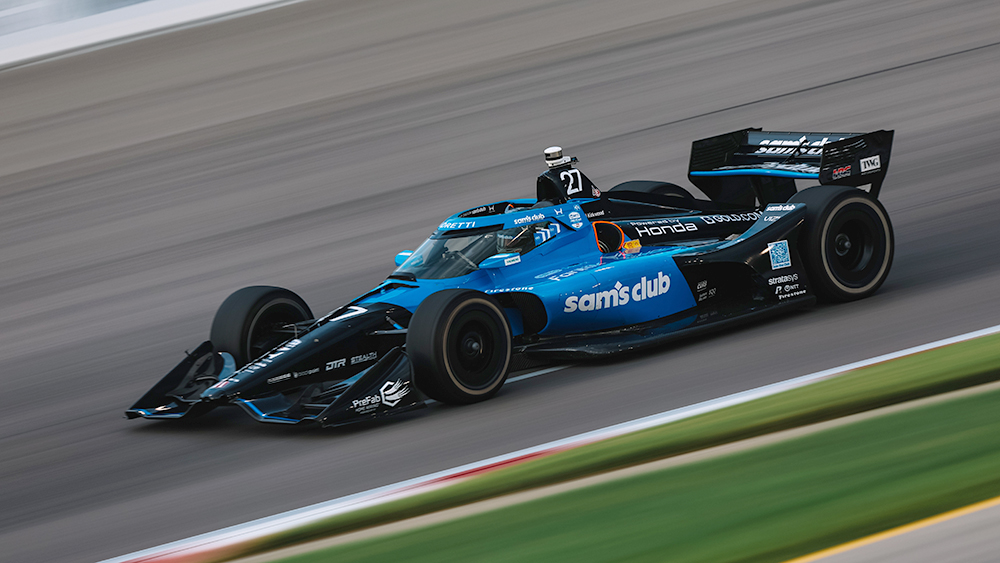
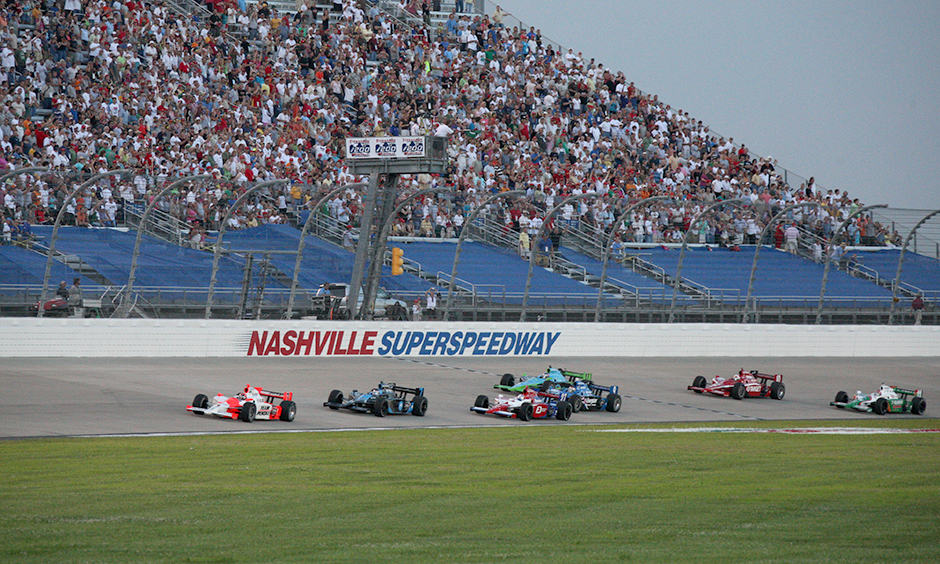
Nashville is a 1.33-mile, D-shaped concrete oval with 14 degrees of banking. The surface offers different grip than asphalt, while bumps and heat can unsettle the car. Drivers also need a usable second lane to pass without destroying the tires.
Nashville Superspeedway sits in Lebanon, Tennessee, east of downtown Nashville. The venue is not a superspeedway in the Indianapolis sense. Instead, it behaves like a high-speed short oval with long, loaded corners and limited recovery time.
The concrete surface is the first major variable. Concrete can maintain grip differently than asphalt, yet it also highlights temperature changes and rubber buildup. During Saturday qualifying, the air temperature reached 94 degrees and the track rose to 130 degrees.
Those numbers matter because the right-side tires work continuously. A car that feels secure for three qualifying laps may become loose after 25 race laps. Therefore, engineers must choose stability over the final fraction of trimmed-out speed.
Turns 1 and 2: the commitment corner
Drivers enter Turn 1 at high speed after the front straight. The car remains loaded through a long arc, so an early balance problem can continue through Turn 2. A small rear slide also scrubs momentum before the backstretch.
Saturday practice showed the danger. Several drivers reported low grip, and Malukas lost control in Turn 2. Consequently, the opening stint should reward drivers who accept a small pace loss while the surface gains rubber.
Turns 3 and 4: traffic decides the exit
The second end of the oval often becomes the key passing area. A trailing car can use the draft, move high, and carry momentum toward the front straight. However, the outside lane must have enough rubber to support the move.
A driver who enters too high may lose the front tires in the aerodynamic wake. Meanwhile, diving low can pinch the exit and overheat the right rear. The fastest pass usually starts one corner earlier through positioning, not a desperate late turn.
Why the second lane changes the entire race
Single-lane oval racing traps faster cars behind slower traffic. A developed high lane changes that. It lets drivers build runs, vary corner entry, and keep the leader under pressure during long green-flag periods.
INDYCAR has used dedicated high-line practice at several ovals to add rubber outside the preferred groove. Even so, the lane only becomes trustworthy after repeated use. Early caution periods can slow that process because the field spends less time racing side by side.
The bumps reward a calm platform
Nashville is not perfectly smooth. The car moves over bumps while producing heavy aerodynamic load. Therefore, engineers need a platform that remains predictable without becoming too stiff.
Too much stiffness can make the tires skip across the surface. Too much softness can create bottoming and imprecise steering. Readers can explore the basic forces in our guides to downforce, grip, and car handling.
Nashville INDYCAR 2026 Favorites
Who are the favorites for Nashville INDYCAR 2026?
Josef Newgarden, Kyle Kirkwood, Pato O’Ward, Scott McLaughlin, and Alex Palou form the leading contender group. Newgarden has the best short-oval record, Kirkwood starts on pole, O’Ward has led heavily at Nashville, McLaughlin is consistently strong on short ovals, and Palou starts fourth with elite race management.
1. Josef Newgarden — narrow favorite
Newgarden starts second, but he remains our first choice. The defending Nashville winner has won the last three short-oval races. Since 2019, he has also won 12 of 26 short-oval events and owns 20 career oval victories.
His advantage is repeatability. Newgarden understands how to protect the right-front tire while maintaining corner speed. Moreover, Team Penske has two cars inside the top three, giving the organization valuable strategy information.
The risk is physical and strategic. Newgarden is still recovering from a foot injury suffered at Indianapolis. He also cannot allow Kirkwood to dictate the opening stint from clean air.
2. Kyle Kirkwood — fastest car over one and two laps
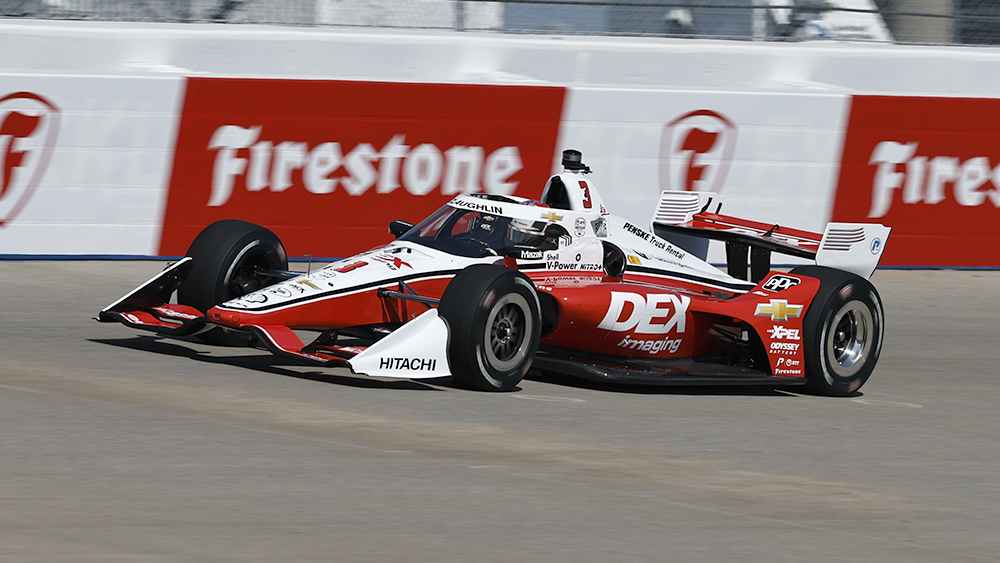
Kirkwood has earned the right to be treated as a co-favorite. He led practice, took pole, and has finished fourth and sixth in his two Nashville Superspeedway starts. He also finished second at Phoenix earlier this season.
Clean air is his major advantage. The pole sitter can control the first green-flag run and choose how aggressively to use the tires. However, leading creates a different aerodynamic problem because the second-place car receives the draft.
Kirkwood must avoid overdriving the first 50 laps. The race is 399 miles, not a sprint to the first stop. If the No. 27 remains balanced in traffic, his winning case becomes stronger than Newgarden’s.
3. Pato O’Ward — the unfinished Nashville story
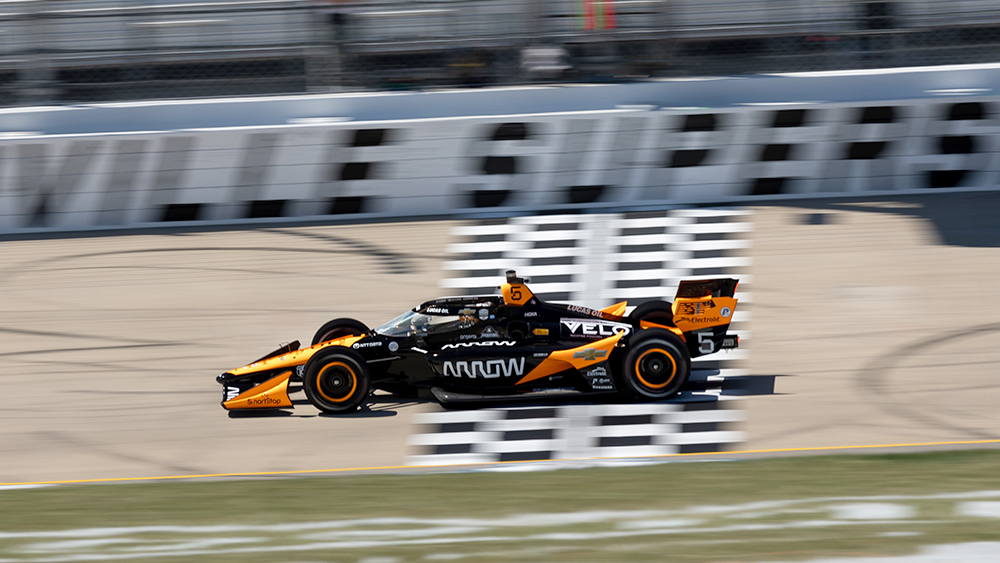
O’Ward has led 137 of the 431 Nashville laps run during the previous two events. He finished second in 2024. Last year, he led 116 laps before a cut right-front tire ended a likely winning challenge.
He also arrives after winning at Mid-Ohio. That result matters because confidence affects decision-making in traffic. O’Ward rarely waits for a perfect invitation, yet he can also preserve tires when the car responds.
His challenge is track position. He is not in the first three rows, based on the official top-six report. Therefore, Arrow McLaren must create progress without spending the tire too early.
4. Scott McLaughlin — the high-floor contender
McLaughlin starts third and has finished fifth and third in the two recent Nashville races. Across 20 career short-oval starts, he has two victories and 15 top-five finishes. That record shows unusual consistency.
His race may depend on pit position within Team Penske. Newgarden starts ahead, so McLaughlin could lose time if both cars pit together. On the other hand, split strategies could give the No. 3 a clean-air opportunity.
5. Alex Palou — the championship-smart threat
Palou starts fourth and leads the championship by 56 points. Nashville remains one of the few active tracks where he has raced without winning. Still, he finished second here last year.
His greatest strength is not raw oval aggression. It is race construction. Palou reduces mistakes, stretches fuel, and turns difficult afternoons into large points. If the favorites damage their tires, the No. 10 can quietly inherit the lead fight.
Newgarden has the strongest historical case. Kirkwood has the fastest current car. O’Ward has the most unfinished business. The 300-lap distance gives all three a realistic route to victory.
World of Speed pre-race assessmentTire, Fuel and Pit Strategy at Nashville
The 2026 race is 300 laps, up from 225 in 2025. That 25 percent increase forces at least one additional pit stop under normal green-flag conditions. It also makes the final fuel window harder to predict.
A typical oval strategy begins with a target stint length. Engineers then adjust for caution laps, fuel saving, tire falloff, and traffic. However, Nashville’s concrete surface can make tire performance the deciding limit before the fuel tank empties.
Fuel windows will create the first split
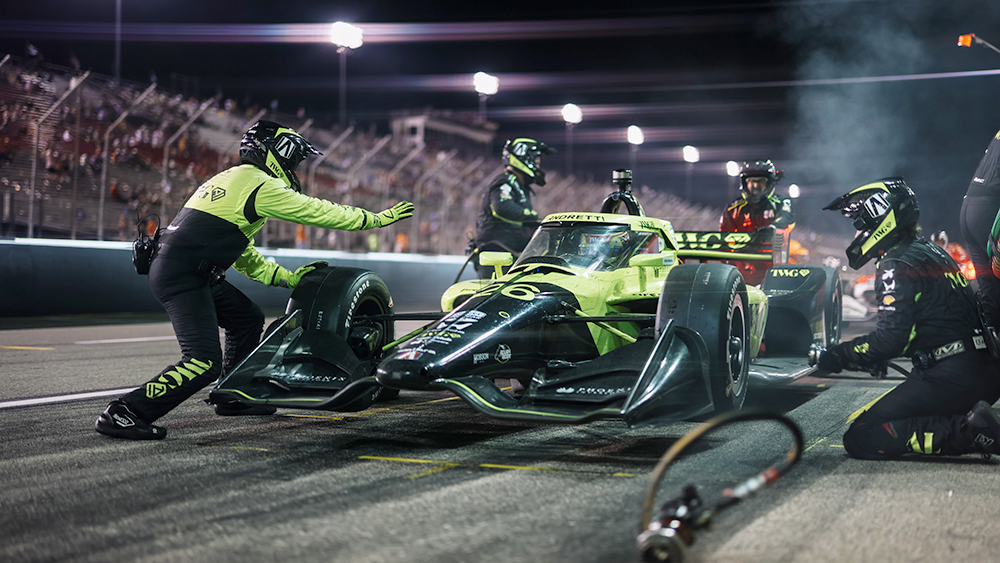
Teams near the front usually prefer to stay on the lead strategy. Yet a midfield car may pit early to escape traffic. That move creates an undercut because fresh tires produce faster laps.
The danger appears when a caution follows the stop. Cars that remained on track can pit under yellow and lose less time. Consequently, early stopping offers speed but increases exposure to timing luck.
Our pit-stop guide explains the basic sequence. The race-timing guide shows why gaps look confusing during green-flag cycles.
Tire falloff versus clean air
Fresh tires give a driver immediate confidence. However, every extra stop costs track position. The fastest theoretical strategy can fail if the car returns behind a dense pack.
Clean air reduces aerodynamic disturbance and helps the front tires. Therefore, a leader may stay out on older tires to protect position. A trailing car may accept traffic because the new tire offers enough grip to pass.
The central question is whether the high lane works. A two-lane track rewards fresh tires because drivers can use the outside. A single-lane track makes position more valuable than outright pace.
Restarts are the biggest passing windows
Every restart compresses the field and removes the leader’s gap. Tires also cool behind the pace car. As a result, drivers face lower grip at the exact moment they attempt the most aggressive moves.
The first two laps after green are critical. A driver can gain five positions or damage the race in one corner. World of Speed’s safety-car explainer covers how neutralizations reshape strategy.
Hot conditions increase the penalty for sliding
Saturday’s 130-degree track temperature showed the scale of the heat challenge. A race start near late afternoon may bring a slightly cooler surface later. Nevertheless, the opening half should still punish wheelspin and correction.
A forecast risk of thunderstorms adds uncertainty around the estimated start window. Any delay would change track temperature and rubber conditions. Therefore, teams must prepare more than one opening setup assumption.
What usually wins this kind of race?
The ideal package combines a stable right rear, a front end that works in traffic, and a pit crew that avoids mistakes. Raw speed matters, but it must survive four hours of changing conditions.
Drivers also need patience. The first 100 laps establish position. The middle 100 reveal tire trends. The final 100 decide whether the team saved enough flexibility for a late caution.
Nashville INDYCAR 2026 Predictions
Who will win the Nashville INDYCAR race 2026?
World of Speed predicts Josef Newgarden will win narrowly over Kyle Kirkwood. Newgarden starts second, won Nashville in 2025, and has captured the last three short-oval races. Kirkwood is the strongest alternative because he starts from pole and led practice.
Winner prediction: Josef Newgarden
Newgarden is the pick because his strengths match the race length. He manages traffic well, understands short-oval tire behavior, and has repeatedly converted late restarts into wins. Starting second also removes the need for an early recovery drive.
This is not a comfortable selection. Kirkwood’s No. 27 appears quicker in clean air. However, Newgarden’s race record gives him a slight edge once the field reaches repeated pit cycles.
Podium prediction
Best dark horse: Christian Rasmussen
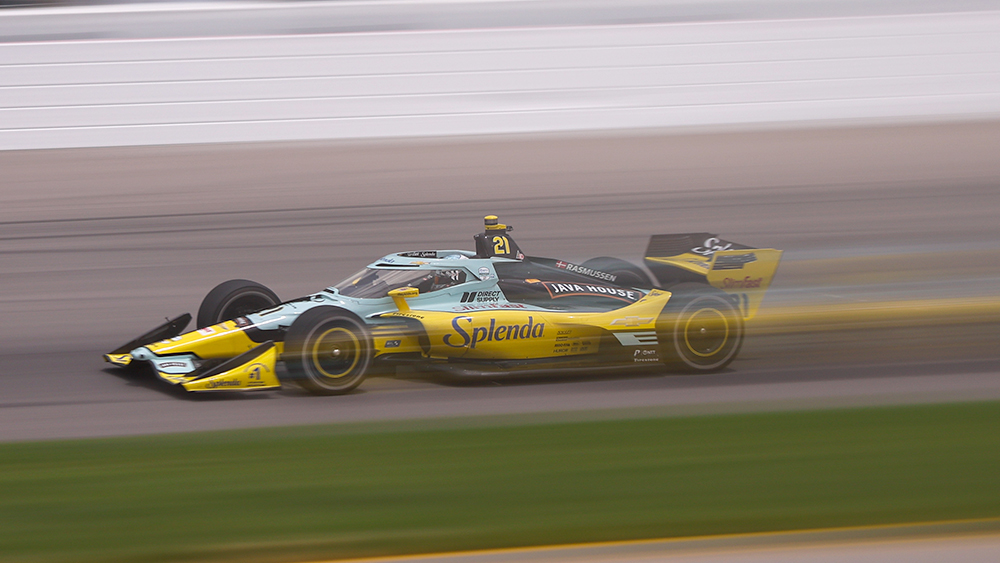
Rasmussen has produced top-10 finishes in five of six oval races last season and won at Milwaukee. He also ran near the front at Phoenix before contact and finished third at World Wide Technology Raceway.
His path is not based on dominating from the start. Instead, Ed Carpenter Racing can use an alternate pit sequence and strong long-run pace. A late caution could place Rasmussen near the front on fresher tires.
Second dark horse: Marcus Ericsson
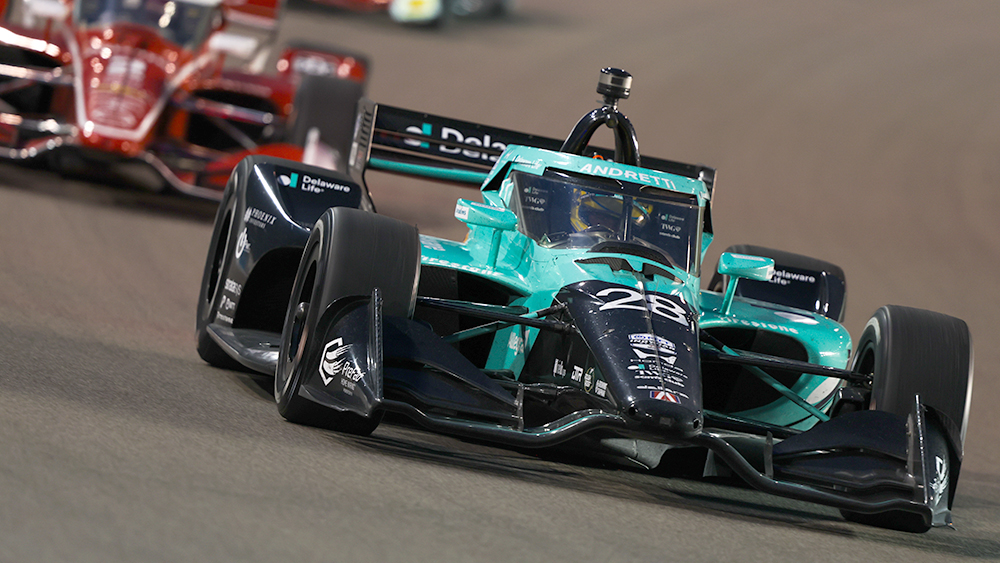
Ericsson led 114 laps at World Wide Technology Raceway before finishing second. That performance showed that Andretti’s oval package works beyond Kirkwood. It also confirmed Ericsson can control a race in clean air.
His challenge is qualifying position and traffic. Still, a long 300-lap event creates multiple chances to move forward. Ericsson becomes especially dangerous if cautions fall near his pit window.
Driver most likely to outperform the starting spot: Pato O’Ward
O’Ward combines recent momentum with proven Nashville speed. He has already shown he can pass and lead here. The primary question is whether Arrow McLaren can protect the right-front tire that failed during last year’s race.
Driver most likely to protect points: Alex Palou
Palou does not need to win. His 56-point lead cannot disappear in one normal race because the maximum gain between two drivers is 49 points. Therefore, a controlled top-five result is strategically valuable.
Likely race pattern
- Kirkwood controls the opening stint. Clean air and pole position should help him set the early pace.
- Penske improves after the first stop. Newgarden and McLaughlin should gain as tire behavior becomes clearer.
- A middle-race caution splits strategies. Some leaders will stop, while others will stay out for track position.
- The final 60 laps become a restart race. Fresh tires and lane choice will matter more than the early average speed.
- Newgarden wins through execution. The margin should remain small because Kirkwood has genuine pace.
These are evidence-based forecasts, not reported results. Weather, medical clearance, cautions, mechanical failures, and post-qualifying penalties can change the competitive picture before the green flag.
Championship Implications of Nashville INDYCAR 2026
Palou enters Nashville 56 points ahead of Kirkwood. Christian Lundgaard trails by 65, while Malukas sits 66 points behind. O’Ward is 94 points back after winning at Mid-Ohio.
The maximum one driver can gain over another in a standard event is 49 points. Therefore, Palou is guaranteed to leave Nashville with the championship lead, assuming he competes and the normal scoring system remains in place.
That does not make Sunday unimportant. Kirkwood can reduce the gap before Portland. O’Ward can continue his post-Indianapolis surge. Meanwhile, McLaughlin and Newgarden can turn oval wins into a stronger late-season position.
Why Palou can race differently
Palou does not need an all-or-nothing move. Starting fourth gives him access to the lead pack without forcing an aggressive launch. A top-five finish would protect his advantage and remove another race from the calendar.
However, excessive caution can create its own risk. A driver who falls into traffic becomes vulnerable to pit timing. Palou must remain close enough to respond when the front runners stop.
The fight behind the leader
Kirkwood starts the weekend as Palou’s closest rival and now owns the pole. A win with maximum bonus points could change the tone of the championship. It would not erase the gap, but it would prove the No. 27 can pressure Palou on both road courses and ovals.
Lundgaard’s Nashville task is more defensive because oval racing has not always been Arrow McLaren’s easiest environment. O’Ward, though, provides a strong technical reference. Shared data could help both cars improve through the race.
For the scoring framework, read our guide to how racing championships are scored. The INDYCAR drivers guide provides wider roster context.
Chevrolet versus Honda
Chevrolet-powered drivers have won 33 of 42 short-oval races at Iowa, Milwaukee, Nashville, Phoenix, and World Wide Technology Raceway since the current 2.2-liter engine formula began in 2012. That historical advantage supports Newgarden, McLaughlin, and O’Ward.
Honda still owns pole through Kirkwood and starts Palou and Dixon inside the top five. Therefore, Nashville is not a one-manufacturer race. Fuel mileage and drivability may matter as much as maximum power.
Seven Race Details Worth Watching
1. Kirkwood’s first 20 laps in traffic
The pole sitter will eventually reach lapped cars. His ability to follow closely will show whether the No. 27 is only fast alone or balanced for the race.
2. Newgarden’s restart lane choices
Newgarden often creates passes through positioning before the green flag. Watch whether he chooses the inside for protection or the outside for momentum.
3. McLaughlin’s pit sequence
Penske may split McLaughlin from Newgarden to avoid stacking. An earlier stop could give the No. 3 clean air and force the leaders to respond.
4. O’Ward’s right-front tire condition
Last year’s failure makes this a natural focus. Any vibration report or early pit stop would immediately change his winning probability.
5. The high lane after 100 laps
A reliable outside groove increases passing and favors aggressive drivers. A narrow groove increases the value of track position and pit execution.
6. Palou’s willingness to attack
The points leader can accept a solid finish. However, starting fourth may tempt him to challenge for the lead before the field spreads.
7. Weather near the estimated green flag
Late-afternoon heat and a thunderstorm risk can alter the start time. A cooler post-delay surface would change tire pressure targets and early grip.
Nashville INDYCAR 2026 FAQ
Conclusion: Nashville Is a Test of Pace, Patience and Pit Execution
Nashville INDYCAR 2026 begins with Kirkwood and Newgarden separated by only 0.210 mph in qualifying. That gap is almost meaningless across 300 laps. The race will be decided by traffic balance, tire life, pit timing, and restart decisions.
Newgarden is our narrow winner pick because his short-oval record remains unmatched. Kirkwood has the strongest chance to overturn that prediction from pole. O’Ward, McLaughlin, and Palou complete a contender group with different but credible paths.
The most important clue will appear outside the preferred groove. If the high lane gains grip, Nashville can become a passing race. If it remains narrow, track position will dominate. Either way, the extra 75 laps give teams enough time to make one brilliant call—or one costly mistake.
Sources & Verification
Race distance, track facts, qualifying speeds, standings gaps, practice details, and contender statistics were checked against official INDYCAR material. The article was prepared before the July 19 race and does not present predictions as results.
- INDYCAR — official Nashville event page, race distance, start window and track specifications
- INDYCAR — official qualifying report and top-six starting speeds
- INDYCAR — official 2026 race preview, championship gaps and 300-lap strategy context
- INDYCAR — opening practice results and David Malukas status update