Portland INDYCAR 2026 Practice Results: Fastest Driver and Full Times
Marcus Armstrong set the quickest practice lap of the Portland weekend after Alex Palou led Friday. Here are the confirmed times, tire context, session storylines and what practice revealed before qualifying.
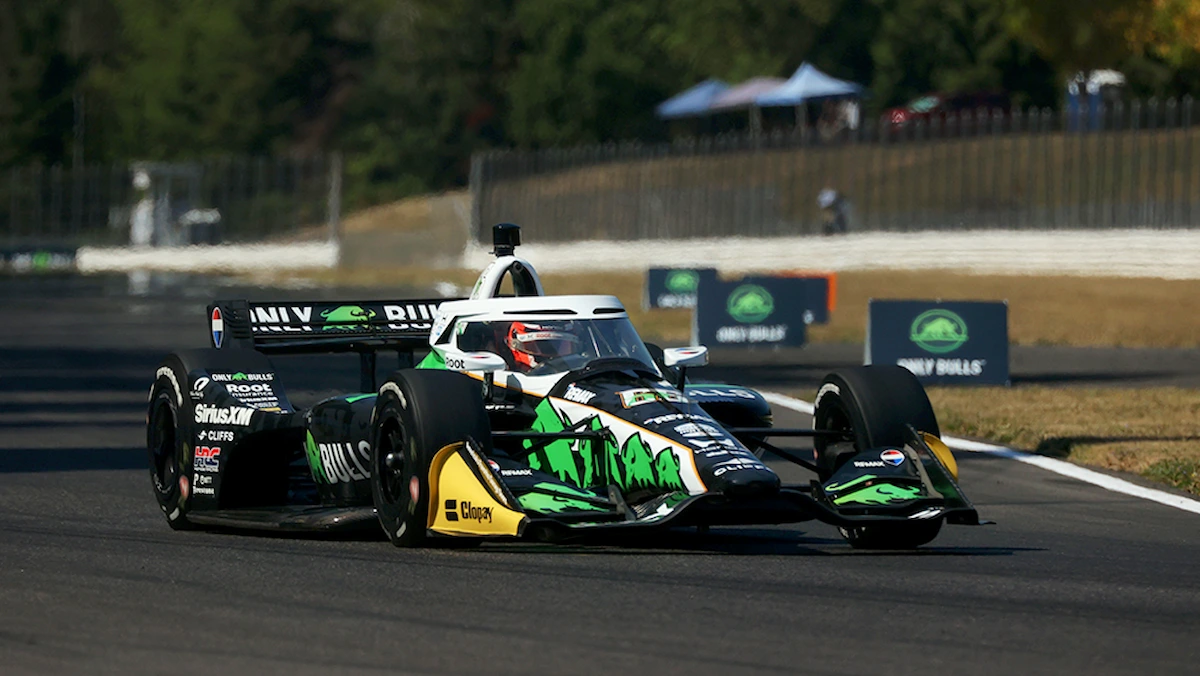
Marcus Armstrong was the fastest driver across the two official Portland IndyCar 2026 practice sessions. The Meyer Shank Racing driver produced a 58.2981-second lap in Practice 2 on Saturday, August 8. That became the quickest practice time of the weekend.
Friday belonged to Alex Palou. The championship leader opened the weekend with a 58.5716 in Practice 1, narrowly beating Kyle Kirkwood. The raw numbers, however, need context. Armstrong set his Saturday benchmark on Firestone’s faster alternate tire, while INDYCAR reported that he was the only driver among the leading group to record his best lap on that compound.
This Portland IndyCar 2026 practice results guide separates confirmed timing data from interpretation. It explains what the sessions told us about tire choice, track evolution, qualifying pace and the unusually tight field at Portland International Raceway.
Who was fastest in IndyCar practice at Portland 2026?
Marcus Armstrong was fastest in Portland IndyCar practice in 2026 with a 58.2981-second lap in Practice 2. Alex Palou led Practice 1 at 58.5716 and finished second in Practice 2 at 58.6106. Armstrong’s Saturday lap was 0.2735 seconds quicker than Palou’s Friday benchmark.
That difference does not mean Armstrong suddenly held a quarter-second advantage on equal conditions. His fastest lap came on the Firestone Firehawk alternate tire. The alternate offered more grip but less durability. Therefore, his time was as much a qualifying clue as a practice headline.
*INDYCAR’s event page uses 1.967 miles for event-distance calculations and describes the natural road course as 1.964 miles. The 2026 race distance was 110 laps and 216.04 miles.
Portland IndyCar 2026 Practice 1 results
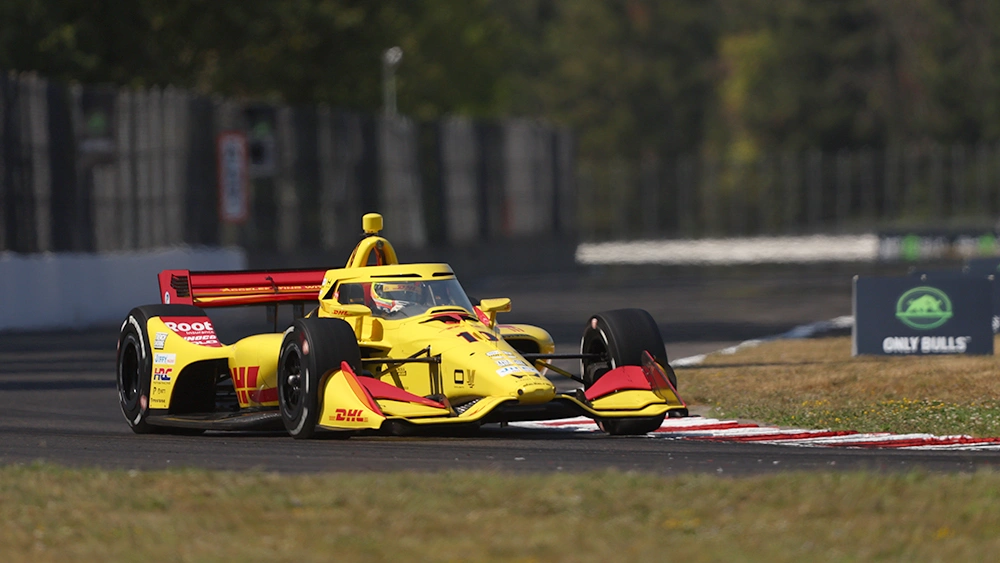
Practice 1 immediately showed that Chip Ganassi Racing had arrived with a strong baseline. Palou set the session standard at 58.5716. He, Scott Dixon and Kyffin Simpson had tested at Portland on July 29. That prior running allowed the team to begin the weekend with useful setup information instead of spending the first session building from zero.
Palou said the car was already strong on Firestone primary tires. However, he also pointed to work still required on the alternates. That detail became important on Saturday because the red-walled alternate tire eventually produced the fastest practice lap of the weekend.
Kyle Kirkwood was only 0.0886 seconds behind Palou at 58.6602. His Friday was particularly encouraging after Andretti Global made significant setup changes compared with the previous Portland event. Kirkwood described the new direction as a major step forward from the car he had driven at the circuit one year earlier.
| Pos. | Driver | Team | Best Lap | Gap |
|---|---|---|---|---|
| 1 | Alex Palou | Chip Ganassi Racing | 58.5716 | — |
| 2 | Kyle Kirkwood | Andretti Global | 58.6602 | +0.0886 |
| 3 | Rinus VeeKay | Juncos Hollinger Racing | 58.7996 | +0.2280 |
| 4 | Will Power | Andretti Global | 58.9096 | +0.3380 |
| 5 | Louis Foster | Rahal Letterman Lanigan Racing | 58.9274 | +0.3558 |
| 8 | David Malukas | Team Penske | 58.9888 | +0.4172 |
Timing-sheet accuracy
INDYCAR’s written Practice 1 report publishes these exact times and confirms that less than half a second covered the top 10. The complete official classification sheet is linked from the Sources section. This article does not invent unpublished rows.
VeeKay confirmed the value of recent Portland running
Rinus VeeKay placed third at 58.7996. Juncos Hollinger Racing had also taken part in recent Portland testing, so the team arrived with current data. That mattered because Portland’s short lap compresses the order. A two-tenths improvement can move a driver from the middle of the top 10 to a serious front-row conversation.
VeeKay’s position also put a Chevrolet-powered car near the front while several Hondas looked strong. The result reminded teams that engine badge alone could not explain the order. Mechanical grip, tire preparation, braking confidence and a clean lap were all major factors.
Power was immediately competitive at a favorite track
Will Power was fourth at 58.9096. His Portland record made that result worth attention. He had won the previous two Portland races before moving to Andretti Global for 2026, so he brought a clear reference for what a good car should feel like at this circuit.
Fourth place did not need to look dramatic. The important number was the gap: only 0.3380 seconds to Palou. Power was already in the narrow group that could realistically fight for the first few rows once qualifying arrived.
Foster recovered from a disrupted start
Louis Foster’s fifth-place 58.9274 was one of the strongest recovery stories from Friday. Technical problems forced extended repair time early in the session. Nevertheless, he returned and ended inside the top five.
That mattered because lost practice time is expensive on a short road-course weekend. Drivers need consecutive laps to understand balance changes. Engineers also need data from both tire compounds and different fuel levels. Foster’s ability to produce a competitive time despite the interruption suggested there was useful underlying pace.
Turn 1 punished Armstrong and O’Ward
Marcus Armstrong’s weekend did not begin with the clean Saturday headline that followed. He and Pato O’Ward both hit the Armco barrier at the apex of Turn 1 in separate incidents. Each contact involved the right-front wheel and required extended repairs.
That is important context for Armstrong’s eventual Practice 2 pace. His crew had to recover from lost track time and damage before he could set the fastest practice lap of the weekend. Meanwhile, O’Ward’s interruption reduced the clean running available to Arrow McLaren.
Portland’s opening complex puts a premium on braking stability and precise car placement. Readers who want more background can use our guides to grip, brake balance and chicanes.
Portland IndyCar 2026 Practice 2 results
Practice 2 changed the headline. Marcus Armstrong jumped to the top at 58.2981, producing the quickest practice lap of the Portland weekend. More importantly, INDYCAR explained exactly how he achieved it: Armstrong was the only driver among the leaders to set his best time on the Firestone alternate tire.
The alternate had more grip but less durability than the primary. That made Armstrong’s time highly relevant to qualifying. It also made direct comparisons with the other leaders imperfect. His 0.3125-second margin over Palou looked significant on the timing screen, yet the compound difference was part of the story.
| Pos. | Driver | Team | Best Lap | Gap | Context |
|---|---|---|---|---|---|
| 1 | Marcus Armstrong | Meyer Shank Racing | 58.2981 | — | Best lap on alternate tire |
| 2 | Alex Palou | Chip Ganassi Racing | 58.6106 | +0.3125 | Friday leader stayed near front |
| 3 | Scott Dixon | Chip Ganassi Racing | 58.6404 | +0.3423 | Second Ganassi car in top three |
| 4 | Felix Rosenqvist | Meyer Shank Racing | 58.6692 | +0.3711 | Later qualified on pole |
| 5 | David Malukas | Team Penske | 58.7462 | +0.4481 | Published top-five Chevrolet |
Armstrong demonstrated the alternate-tire potential
The most revealing reaction came from Marcus Ericsson. He said Armstrong had effectively shown the field that the red tire should be faster over one lap. Theoretical expectations are one thing; a real timing reference on the same circuit and same weekend is more useful.
If the alternate had overheated immediately or failed to create a meaningful first-lap gain, qualifying preparation would have changed. Instead, Armstrong’s 58.2981 gave every team a clear benchmark and a reason to focus on extracting the tire’s peak.
Armstrong’s 58.2981 was the fastest practice lap, but the larger lesson was what it proved: the alternate tire had enough one-lap advantage to reshape qualifying preparation.
Palou remained the most consistent front-runner
Palou did not match Armstrong’s alternate-tire benchmark, yet his 58.6106 still placed him second. Combined with first place on Friday, that made him the clearest driver to remain near the front across both official practice stories.
Consistency matters at Portland because the lap is short. One isolated peak can flatter a car. Repeated competitive pace under changing conditions gives engineers more confidence that the setup window is broad enough to survive temperature changes and tire differences.
Dixon strengthened the Ganassi picture
Scott Dixon’s 58.6404 put him third. That gave Chip Ganassi Racing two cars in the top three and reinforced the value of its earlier Portland test. Different drivers provide different feedback, so similar pace across both cars helps engineers distinguish a real setup strength from one driver’s preference.
It also gave the team more information about how the circuit was evolving. When two experienced drivers report similar balance changes, engineers can make stronger decisions before qualifying.
Rosenqvist’s fourth place was only the beginning
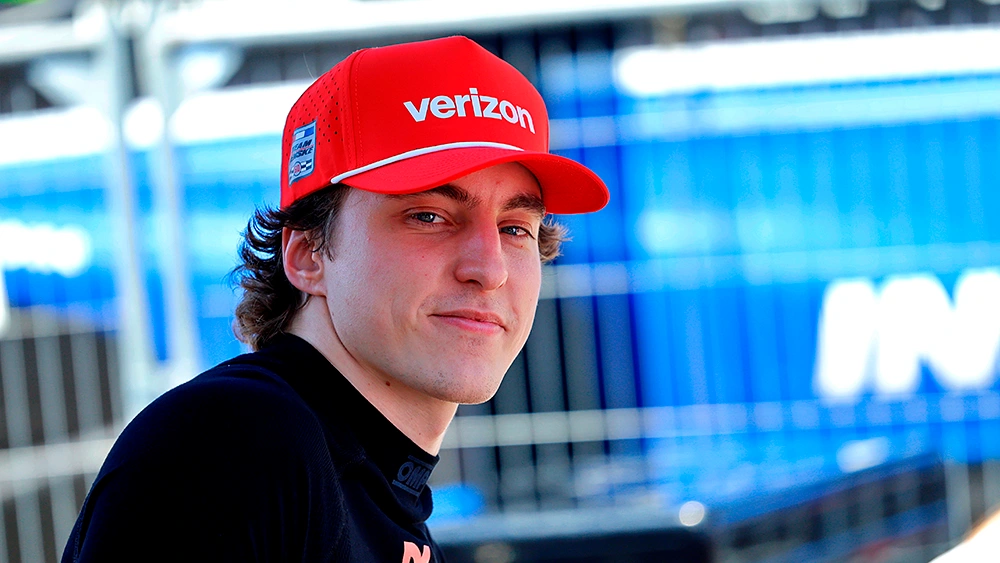
Felix Rosenqvist was fourth at 58.6692. A few hours later, he delivered the most important one-lap result of the weekend by winning pole. His qualifying lap was 58.4828, only 0.0184 seconds faster than Palou’s 58.5012.
That progression shows why practice results should be treated as direction, not destiny. Rosenqvist was not fastest in either practice. However, Meyer Shank Racing continued refining the package and executed when the lap determined grid position.
Malukas moved forward before qualifying
David Malukas improved from the published 58.9888 that put him eighth Friday to 58.7462 for fifth Saturday. That was a gain of 0.2426 seconds between his two confirmed practice benchmarks.
The improvement mattered for both pace and confidence. Malukas entered the weekend as Palou’s nearest championship challenger. Every step toward the front reduced the chance of becoming trapped in traffic during qualifying or the race.
Combined Portland IndyCar 2026 practice times
The combined view makes the weekend trend easier to understand. Armstrong owned the outright practice benchmark. Palou owned the strongest two-session consistency. Rosenqvist’s practice pace then converted into pole. Malukas showed a measurable step between Friday and Saturday.
| Driver | Practice 1 | Practice 2 | Best Confirmed Time | Note |
|---|---|---|---|---|
| Marcus Armstrong | Exact time not stated in accessible report | 58.2981 | 58.2981 | Fastest overall practice lap |
| Alex Palou | 58.5716 | 58.6106 | 58.5716 | P1 leader; P2 second |
| Kyle Kirkwood | 58.6602 | Exact time not stated in accessible report | 58.6602 | P1 second |
| Scott Dixon | Exact time not stated in accessible report | 58.6404 | 58.6404 | P2 third |
| Felix Rosenqvist | 10th; exact time not stated | 58.6692 | 58.6692 | P2 fourth; later pole |
| Rinus VeeKay | 58.7996 | Exact time not stated in accessible report | 58.7996 | P1 third |
| David Malukas | 58.9888 | 58.7462 | 58.7462 | Improved 0.2426 sec |
| Will Power | 58.9096 | Exact time not stated in accessible report | 58.9096 | P1 fourth |
| Louis Foster | 58.9274 | Exact time not stated in accessible report | 58.9274 | P1 fifth |
Why some rows do not show an exact time
The official written reports do not print every one of the 25 driver times in article text. Their full official classification sheets are linked from INDYCAR’s event page. Rather than substitute old-year data or estimate missing rows, this table identifies exactly what the accessible official reports confirm.
That distinction is essential for a results article. A complete-looking table with guessed values would be less useful than a transparent set of confirmed numbers. Readers who need the full downloadable timing sheets can open the official session-result links in the Sources section.
What did the Portland practice results actually tell us?
1. Tire compound changed the meaning of the P2 ranking
Practice 2 was not an equal-condition qualifying simulation. Armstrong’s best lap came on the alternate tire, while INDYCAR specifically highlighted that he was the only driver among the leaders to use that compound for his best time.
Therefore, comparing 58.2981 directly with Palou’s 58.6106 exaggerates the simplicity of the gap. The useful conclusion was that Armstrong had strong pace and that the alternate worked. It was not proof of a three-tenths chassis advantage.
2. Palou’s pace looked transferable
Palou’s Friday comments emphasized strength on the primary tire. That matters because practice and qualifying ask different questions. A durable tire that remains balanced over a stint can be more valuable for Sunday, while a fast alternate lap is more informative for one-lap qualifying performance.
Moreover, Palou stayed second on Saturday. His car remained competitive as the session changed, which suggested Ganassi had not found a narrow setup that only worked in one window.
3. Portland compressed the field
INDYCAR reported that less than half a second separated the top 10 Friday. On a lap under 59 seconds, that is an extremely dense group. Small mistakes become expensive because so many cars fit inside the same few tenths.
A minor slide, imperfect tire warm-up or short traffic delay can cost multiple positions. That is why our explainer on how racing drivers qualify is useful background. A fast car still needs a clean, well-timed lap.
4. Recent testing gave some teams a head start
Palou, Dixon and Simpson had tested at Portland on July 29. VeeKay’s Juncos Hollinger Racing team also had recent running. Friday’s order suggested that preparation had value, even though testing never guarantees the final result.
Known ride-height ranges, damping references and tire information reduce uncertainty. Consequently, teams can spend official practice refining smaller details rather than discovering a basic setup from scratch.
5. Temperature change complicated the comparison
INDYCAR’s Friday paddock report expected Saturday practice in upper-60-degree air temperatures, while qualifying later in the day could be roughly 20 degrees warmer. That kind of change affects surface grip, tire preparation and balance.
A setup that feels ideal early in the day may need adjustment before evening qualifying. Therefore, engineers must predict where the circuit is going rather than simply preserve the fastest practice configuration.
Who is fast now?
The order shows pace under the tire, fuel, traffic and temperature conditions of that exact run.
Who can repeat it later?
The more important question is whether the pace survives a hotter track, another compound and a different fuel load.
For technical background, see our guides to downforce, slipstream, race timing and how car racing works.
Did Portland practice predict qualifying?
Practice identified several eventual qualifying threats, but it did not predict the pole winner exactly. Rosenqvist was fourth in Practice 2 at 58.6692. He then improved to 58.4828 and won the NTT P1 Award in the Firestone Fast Six.
Palou came even closer to the practice expectation. After leading Friday and finishing second Saturday, he qualified second at 58.5012. Rosenqvist’s pole margin was only 0.0184 seconds.
Will Power qualified third at 58.5130 after placing fourth in Practice 1. Marcus Ericsson qualified fourth at 58.6729. Rinus VeeKay, third in opening practice, became the quickest Chevrolet-powered qualifier in fifth at 58.7701.
This is why grid position and pole position should not be confused with practice rankings. Practice is development. Qualifying is classification.
Armstrong’s practice benchmark was quicker than pole
Armstrong’s 58.2981 practice lap was 0.1847 seconds faster than Rosenqvist’s pole time. That does not make the practice lap a superior qualifying result. The sessions took place under different conditions and with different objectives.
Instead, the comparison reinforces the tire story. Armstrong demonstrated a peak that the qualifying field did not reproduce at exactly the same level. Temperature, run timing, tire preparation and traffic can all change within a few hours.
Rosenqvist demonstrated useful progression
Rosenqvist said his team had begun the weekend a little behind and improved through execution rather than a magical change. That is exactly what productive practice should achieve. Each run narrows the setup problem until the driver can combine the corners when the result matters.
For series context, readers can use our IndyCar drivers guide, 2026 IndyCar schedule and IndyCar racing guide.
Why Portland practice is unusually important
Portland International Raceway is a relatively flat, 12-turn natural road course. INDYCAR describes the circuit as 1.964 miles, while its event-distance listing uses 1.967 miles. The layout contains a quick chicane at the end of the frontstretch, a hard-braking Turn 7 and a three-turn complex leading back to the main straight.
Because a front-running lap takes less than a minute, the field naturally compresses. A tenth of a second is proportionally significant. Teams cannot expect to find huge gains from one setup change. Instead, they hunt small improvements across braking, rotation and traction.
The first chicane can make or break a lap
The opening complex is one of Portland’s defining challenges. Drivers arrive quickly, brake hard and need a clean change of direction. A poor first sequence costs more than the corner itself because it changes acceleration and rhythm for the next part of the lap.
Engineers use practice to judge braking stability and front-tire response there. A car that locks a front tire easily forces the driver to leave margin. A car that rotates too aggressively can become nervous over the change of direction.
Turn 7 provides a second major braking reference
Turn 7 is a hard-braking right-hander leading toward the sweeping backstretch. Drivers need confidence on entry and a stable platform for the exit. It becomes another checkpoint for judging brake balance and mechanical grip.
The fastest setup is therefore a compromise. A change that improves rotation in the opening complex may make the car less stable at Turn 7. Practice gives teams enough repetition to decide which weakness costs more lap time.
Traffic matters more on a short circuit
A short circuit means drivers encounter traffic more frequently. A car beginning a push lap can catch another driver preparing tires or cooling systems. Even without deliberate blocking, disturbed air can change corner performance.
The practice sessions used a group format, reducing congestion and giving drivers more representative laps. However, different groups can still run on slightly different track conditions, which is another reason raw timing comparisons require care.
Portland IndyCar 2026 practice and weekend schedule
The official event schedule placed Practice 1 on Friday, August 7 at 5:30 p.m. ET. Practice 2 followed Saturday at 1:00 p.m. ET. Qualifying began at 7:00 p.m. ET that evening. Sunday warmup was scheduled for 1:00 p.m. ET, with the 110-lap race at 4:00 p.m. ET.
| Date | Session | Start (ET) | Headline |
|---|---|---|---|
| Fri, Aug. 7 | Practice 1 | 5:30 PM | Palou — 58.5716 |
| Sat, Aug. 8 | Practice 2 | 1:00 PM | Armstrong — 58.2981 |
| Sat, Aug. 8 | Qualifying | 7:00 PM | Rosenqvist pole — 58.4828 |
| Sun, Aug. 9 | Warmup | 1:00 PM | Final preparation |
| Sun, Aug. 9 | Race | 4:00 PM | 110 laps / 216.04 miles |
The practice schedule mattered because the weekend moved quickly from data collection to qualifying. There was no unlimited time to correct a weak baseline. Teams had to use each run efficiently and make decisions before conditions changed again.
You can follow the wider season through our IndyCar hybrid system coverage, Mid-Ohio 2026 report and IndyCar next-round preview.
Portland IndyCar 2026 practice results FAQ
Conclusion: Armstrong owned the fastest lap, Palou owned the consistency
The Portland IndyCar 2026 practice results produced two leaders and two different lessons. Palou opened the weekend fastest at 58.5716 and remained second on Saturday. His pace across both sessions confirmed that Ganassi had brought a strong and adaptable package.
Armstrong delivered the outright benchmark at 58.2981. His alternate-tire run showed how much one-lap performance the red tire could provide. That was particularly notable after his Friday Turn 1 contact cost useful running time.
Meanwhile, Rosenqvist demonstrated why practice is only part of the weekend. He never topped either practice session, yet he refined the car enough to win pole at 58.4828. In a field where hundredths separate front-row positions, progression can matter more than leading every preliminary session.
The cleanest summary is this: Armstrong was the fastest Portland practice driver, Palou was the most consistently prominent across the two sessions, and Rosenqvist converted Saturday development into pole. Those facts describe the weekend more accurately than a single timing column.
Sources
- INDYCAR — Championship Leader Alex Palou on Point in Opening Portland Practice
- INDYCAR — Alternate Tires Help Marcus Armstrong Jump to Top in Portland
- INDYCAR — Steady Progress Helps Grateful Felix Rosenqvist Win Portland Pole
- INDYCAR — 2026 OnlyBulls Grand Prix of Portland event page and official session-result links