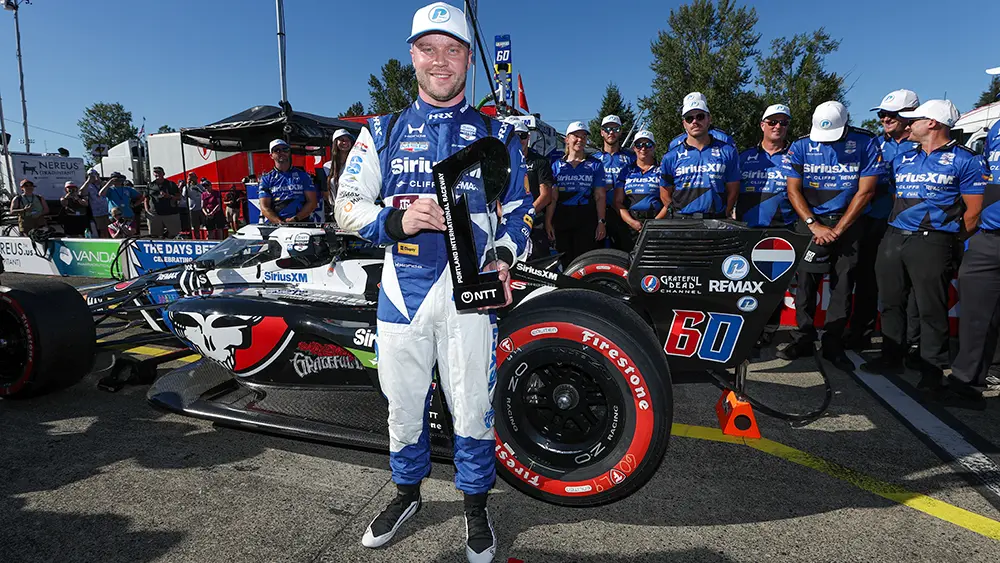
Portland INDYCAR 2026 Preview: Championship Contenders, Track Guide & Predictions
Alex Palou arrived in Portland with an 83-point championship lead, but David Malukas, Kyle Kirkwood, Christian Lundgaard and Pato O’Ward still had reasons to attack. Here is the full pre-race picture, track breakdown, contender ranking and prediction.
Portland was the first race of the 2026 stretch run, and Alex Palou entered it with the championship firmly under control. The Chip Ganassi Racing driver carried 457 points after 12 starts. David Malukas sat second on 374, while Kyle Kirkwood was only four points behind Malukas. Christian Lundgaard and Pato O’Ward completed the top five.
However, Portland International Raceway was not a place where the chasing group could simply hope Palou struggled. The 12-turn natural road course had been one of his better venues. Palou won there in 2021 and 2023. Will Power, meanwhile, won the previous two Portland races and entered 2026 with Andretti Global.
This preview is intentionally written from the pre-race perspective entering the Portland weekend. The championship numbers, prior form and predictions below reflect what was known before the 2026 race result. That keeps the analysis useful as a genuine race preview rather than rewriting the prediction after the fact.
Who were the favorites to win Portland INDYCAR 2026?
Alex Palou was the safest pre-race favorite because of his championship form and two previous Portland wins. Christian Lundgaard was the strongest road-course challenger on 2026 form. Will Power was the specialist pick after winning Portland in both 2024 and 2025, while Kyle Kirkwood and David Malukas were high-upside championship contenders.
The race was scheduled for Sunday, August 9 at 4:00 p.m. ET on FOX. Official INDYCAR materials listed Portland International Raceway at 1.967 miles for race-distance calculation, with 110 laps and 216.04 total race miles.
For the full session-by-session timetable, readers can also use our INDYCAR schedule guide. This preview focuses on why the title fight and track characteristics made Portland more interesting than the points gap alone suggested.
2026 INDYCAR Championship Standings Entering Portland
Palou’s Nashville victory changed the tone of the championship. He reached Portland with five wins, six poles, nine top-five finishes and 10 top-10s in 12 starts. That combination produced 457 points and an 83-point cushion.
Meanwhile, David Malukas had become the surprise nearest challenger in his first season with Team Penske. Kyle Kirkwood remained close behind. Lundgaard’s natural-road-course results kept him relevant, while O’Ward still had enough pace to change the picture with a big run.
| Pos. | Driver | Team | Points | Gap | Wins | Top 5s |
|---|---|---|---|---|---|---|
| 1 | Alex Palou | Chip Ganassi Racing | 457 | — | 5 | 9 |
| 2 | David Malukas | Team Penske | 374 | -83 | 0 | 6 |
| 3 | Kyle Kirkwood | Andretti Global | 370 | -87 | 1 | 7 |
| 4 | Christian Lundgaard | Arrow McLaren | 353 | -104 | 2 | 6 |
| 5 | Pato O’Ward | Arrow McLaren | 336 | -121 | 1 | 7 |
An 83-point lead was substantial, but not mathematically safe with six races still remaining when the field arrived in Portland. The chasing drivers needed to beat Palou consistently, not merely finish a few places ahead once.
Why Palou still had pressure despite the gap
Big championship leads create a different kind of race. The leader can protect points. The challengers cannot. Therefore, Malukas, Kirkwood, Lundgaard and O’Ward had more incentive to chase qualifying position, alternate strategy or aggressive passing opportunities.
Palou also understood the danger of unnecessary risk. A fifth-place finish can be a championship win when the nearest rival finishes fourth. However, a crash or mechanical problem can erase a large chunk of an 83-point margin in one afternoon.
That is why the title battle was still strategically alive. The arithmetic favored Palou, but the tactical pressure belonged to the drivers behind him.
Championship Contenders: Who Had the Best Portland Case?
1. Alex Palou — the benchmark and the title favorite
Palou entered Portland as the obvious championship benchmark. He had five victories in 12 starts and led the standings by 83 points. More importantly, Portland had already rewarded his style.
He won at the circuit in 2021 and again in 2023. His strength on natural road courses is not based on one qualifying trick. Palou usually combines tire life, clean pit windows and low-error race management.
That matters at Portland because the race can become chaotic at Turn 1, then settle into long strategic phases. Palou does not need every stint to be spectacular. He needs them to be consistently fast.
His biggest pre-race risk was simple: the chasing drivers had less to lose. If Malukas or Kirkwood saw a marginal pass, they had reason to take it. Palou could not afford to get dragged into unnecessary contact.
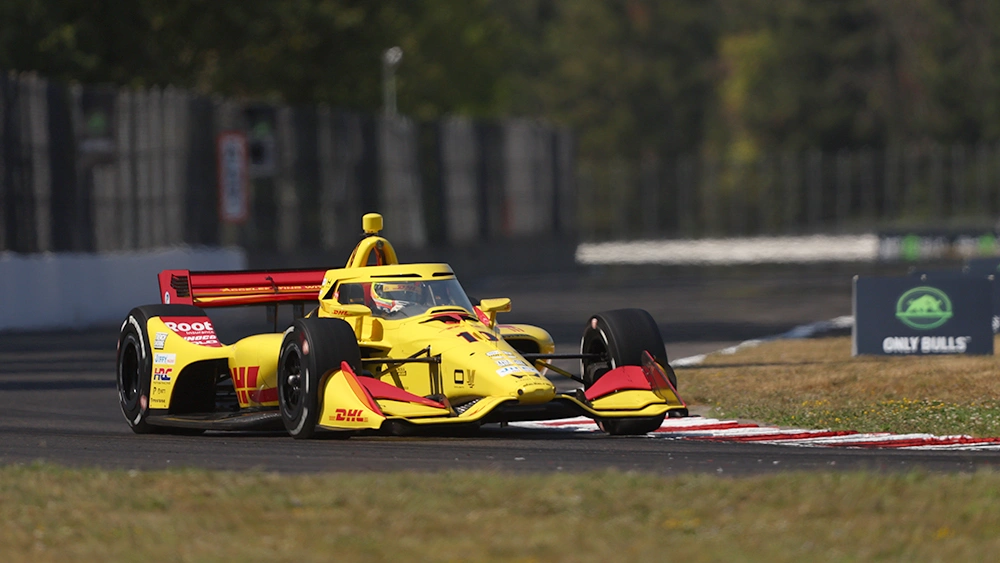
2. Christian Lundgaard — the road-course threat
If this prediction were based only on natural-road-course form, Lundgaard belonged near the top. INDYCAR highlighted that he had two victories and a runner-up finish in the first three natural road-course starts of 2026. He also won at Road America after falling to the back of the field on Lap 1.
That Road America win showed why Portland suited him. Lundgaard can recover through strategy, save tires and still attack late in a stint. Those traits matter on a circuit where alternate and primary tire windows can create very different race shapes.
However, his 104-point championship deficit meant a conservative podium was not enough. He needed to beat Palou by a meaningful margin. That could encourage Arrow McLaren to split strategy if the race developed into a straightforward two- or three-stop contest.
3. Will Power — Portland’s specialist pick
Power was not a top-five championship contender entering Portland. Yet he was impossible to ignore in a race prediction. He won at Portland in 2024 and 2025, and the 2025 victory came after leading 78 of 110 laps.
The 2026 season also carried a major change. Power moved from Team Penske to Andretti Global and drove the No. 26 Honda. His career record still made him one of the most accomplished road-course qualifiers in the field, with an all-time INDYCAR record 71 career poles.
Portland rewards a driver who can place the car precisely under braking and avoid overworking the rear tires. Power has done that repeatedly. Therefore, even without title-favorite status, he was one of the best event-specific picks.
4. Kyle Kirkwood — consistency gave him a real title path
Kirkwood arrived third in the standings with 370 points. He had one victory, seven top-five finishes and 11 top-10s in 12 races. That top-10 record was important because it kept him only four points behind Malukas.
Andretti Global had also shown it could compete across different track types. Kirkwood’s ability to qualify near the front and race aggressively made him a strong Portland candidate.
His championship challenge, though, needed a turning point. Being 87 points behind Palou meant matching the leader was not enough. Portland offered a chance to create that swing because qualifying position and Turn 1 risk can produce big differences in track position.
5. David Malukas — the closest challenger on points
Malukas was the statistical No. 2 entering Portland. He had 374 points, six top-five finishes, 10 top-10s and 189 laps led. He had not yet won in 2026, but his consistency with Team Penske kept him closer to Palou than anyone else.
That was significant because Malukas joined Team Penske only for 2026. He took over the No. 12 Chevrolet, the car previously associated with Will Power. The transition had not prevented him from becoming a championship threat.
Portland represented a different test from some of Malukas’ strongest oval performances. He needed road-course pace and clean execution. If he could qualify on the first three rows, his championship position alone made him a driver Palou could not ignore.
6. Pato O’Ward — dangerous if qualifying unlocked the race
O’Ward came to Portland fifth with 336 points and a victory at Mid-Ohio. His 121-point deficit made the title situation difficult, but his speed meant he still had race-winning potential.
For O’Ward, the first priority was qualifying. Portland’s opening chicane can turn a mid-pack start into a survival exercise. A front-two-row start, by contrast, gives the driver control over tire usage and strategy.
Arrow McLaren also had two serious threats in O’Ward and Lundgaard. That gave the team flexibility. One car could cover the leaders while the other tried a more aggressive tire sequence.
Portland International Raceway Track Guide
What makes Portland International Raceway difficult?
Portland combines a high-risk opening chicane with a flat, technical road-course layout. Drivers need strong braking stability for Turn 1 and Turn 7, but they also need efficient traction and tire management through the longer corners. Because the lap is short, traffic can disrupt qualifying and race strategy quickly.
INDYCAR’s official 2026 event page lists Portland International Raceway at 1.967 miles for race-distance calculation. The traditional circuit description calls it a 12-turn, 1.964-mile natural road course. The 110-lap race totals 216.04 miles.
The track opened in 1961 on land once occupied by the city of Vanport. That history gives Portland a different identity from newer purpose-built facilities. The circuit is relatively flat, yet it contains several distinct overtaking zones.
Turns 1–2: where the race can change before it starts
The quick chicane at the end of the front straight is the most famous danger point. The field arrives tightly packed on Lap 1. Drivers behind the first few rows often have limited visibility and little room to change direction.
A lockup can force a car across the escape road. A late move can trigger contact. Consequently, qualifying near the front has value beyond raw track position.
This is also why fans should not judge a Portland race only by the final margin. The first 20 seconds can eliminate a contender or completely alter the strategy of a car that survives with minor damage.
Turn 7: the classic braking-zone opportunity
INDYCAR specifically identifies the hard-braking right-hander at Turn 7 as a passing opportunity. A driver can use a strong run from the preceding section, then commit under braking.
However, the move still depends on tire condition and push-to-pass deployment. A driver on older tires may defend the inside but lose exit speed. A driver on fresher rubber can sometimes accept a wider entry and complete the move on exit.
If you want the physics behind straight-line attacks, our slipstream guide explains why the following car can gain speed in the tow.
The final complex: exit speed matters more than drama
The last three-turn sequence feeds cars back toward the front straight. A small mistake here carries into the next lap because it damages acceleration all the way to the braking zone.
That makes the final corners especially important in qualifying. Drivers cannot simply attack the apex. They must position the car for a clean exit.
For a deeper explanation of line choice, see our guide to what an apex means in racing.
Why downforce setup becomes a compromise
Portland needs enough aerodynamic load for confidence through the faster corners. However, excessive wing creates drag. Teams therefore balance corner grip against the ability to attack and defend on straights.
This compromise can produce cars that look strong in one sector and weak in another. A setup with more downforce may protect tires and help qualifying. A lower-drag setup can make passing easier.
Our downforce explainer covers the basic trade-off in more detail.
Portland history that still matters
Al Unser Jr. won the first top-level INDYCAR race at Portland in 1984. The circuit also produced one of the sport’s most famous finishes in 1997. Mark Blundell beat Gil de Ferran by 0.027 seconds and Raul Boesel by 0.055 in a three-wide finish.
Recent winners underline how specialist-friendly Portland can be. Palou won in 2021 and 2023. Scott McLaughlin won in 2022. Power then won in both 2024 and 2025.
That recent sequence was one reason Palou and Power ranked so highly in this preview. Both had already proven they could manage the track’s braking zones, tires and traffic.
Race Strategy: Where Portland Could Be Won or Lost
The basic INDYCAR road-course strategy question starts with Firestone’s primary and alternate compounds. The alternate tire usually offers more immediate grip. However, it typically wears faster. The primary tire gives up some peak performance but can extend a stint.
Portland makes that decision important because the lap is short. A driver who catches traffic can lose the benefit of fresher tires in only a few corners. Meanwhile, a clean-air driver can produce a powerful in-lap before pitting.
The undercut versus overcut decision
An undercut means stopping before a rival and using fresher tires to gain lap time. An overcut means staying out and trying to use clean air or better old-tire pace before stopping later.
Neither approach is automatically correct. Portland’s outcome depends on traffic, tire warm-up and pit-lane timing. If a driver exits behind a slower car, a theoretically strong undercut can disappear.
For more detail, see our guide to how pit stops work in racing and our explanation of race timing.
Cautions can destroy a carefully built plan
Road-course strategy is vulnerable to yellow flags. A caution can compress the field and create a cheap pit stop for drivers who have not stopped yet. Therefore, teams often hedge rather than commit every car to the same window.
That factor mattered for Arrow McLaren and Andretti because both had multiple competitive drivers. Splitting strategies can protect a team from a badly timed caution.
If the field remains green, though, raw tire life becomes more important. That scenario tends to favor drivers such as Palou and Lundgaard, who had already shown strong long-run road-course performance in 2026.
Track position still matters
INDYCAR road races create more overtaking opportunities than many formula categories. Yet clean air is still valuable. The leading car controls its pace, manages tires and avoids turbulence from cars ahead.
A front-row starter also avoids the worst of the Turn 1 congestion. That can be worth more than a small theoretical race-pace advantage from seventh or eighth.
Readers who want a broader explanation can see our guide to grid position in racing.
Portland INDYCAR 2026 Predictions
The picks below are editorial predictions based on championship form entering Portland, recent natural-road-course performance, prior Portland results and team consistency. They are not presented as confirmed results.
Alex Palou
Best blend of championship form, Portland history and tire-management strength.
Christian Lundgaard
Natural-road-course results made him the most compelling challenger on current form.
Will Power
Back-to-back Portland winner and a proven specialist at this circuit.
Winner prediction: Alex Palou
Palou was the safest winner pick. Five victories in the first 12 races already showed the No. 10 Chip Ganassi Racing team could execute under several different race conditions.
His two prior Portland wins added track-specific evidence. More importantly, he did not need a desperate strategy. If Palou qualified near the front, he could race the strongest opponents rather than the championship standings.
The biggest argument against him was risk management. A driver protecting an 83-point lead may avoid a marginal pass that a rival would attempt. Still, his pace was strong enough that he did not need to rely on aggression alone.
Best value challenger: Christian Lundgaard
Lundgaard’s road-course form made him the strongest alternative. Two wins and a runner-up in the first three natural road-course starts of 2026 were difficult to ignore.
He also had more championship urgency than Palou. Arrow McLaren could afford to chase an aggressive strategy because fourth in points was not enough. That combination of pace and tactical freedom gave Lundgaard a genuine path to victory.
Track-specialist pick: Will Power
Power was the obvious driver to outperform his championship position. He had won Portland twice in a row and three times overall in the modern period, including 2019, 2024 and 2025.
Moving to Andretti Global changed the engineering environment. However, the driver’s Portland knowledge remained. His braking references, tire feel and race experience were still valuable.
Therefore, a podium prediction was reasonable even though Power entered only 14th in the standings with 220 points.
Dark horse: Kyle Kirkwood
Kirkwood was not really a sleeper in championship terms, but he could be overlooked beside Palou, Lundgaard and Power. His seven top-fives and 11 top-10s showed how rarely he disappeared from the competitive group.
One clean qualifying run could put him in the fight. If Andretti found the right balance, Kirkwood also had the aggressive racecraft to capitalize on any hesitation from championship-focused rivals.
Championship prediction after Portland
The most likely pre-race scenario was not a dramatic change at the top. Palou had enough cushion to absorb a modest points loss. Therefore, the more realistic battle was for second place.
Malukas and Kirkwood were separated by only four points. Lundgaard was 21 behind Malukas. A podium for one of those drivers, combined with a poor finish for another, could completely reorder the chase behind Palou.
That made Portland important even if the championship leader left Oregon still comfortably ahead. The second-place battle could determine who had the best chance to pressure him over the final five races.
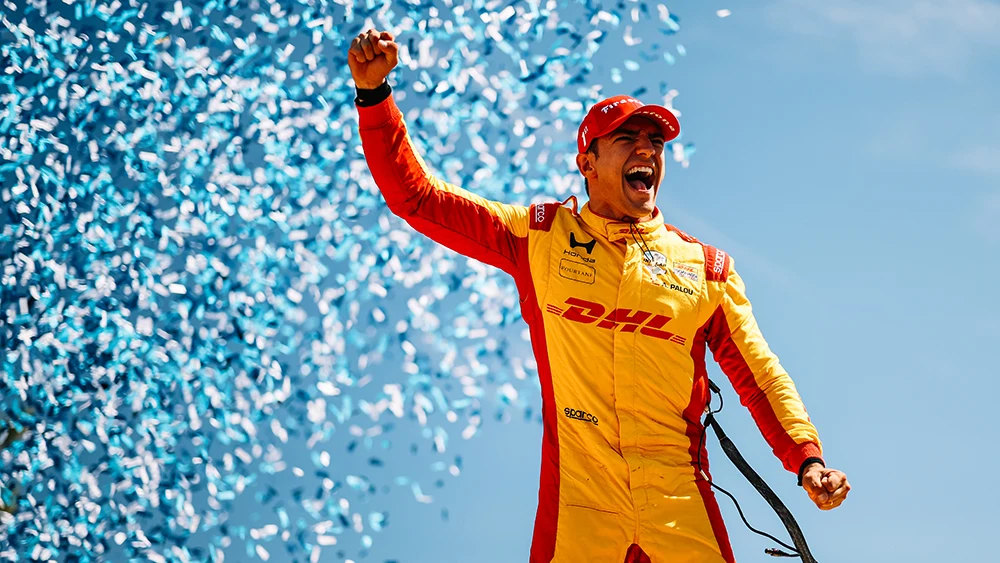
Five Things to Watch During the Portland Race
- Turn 1 on Lap 1: The chicane can reshape the entire race before strategy begins.
- Palou versus the nearest title challengers: Malukas and Kirkwood needed to take points out of the leader.
- Lundgaard’s tire usage: His natural-road-course strength made long-run pace a key signal.
- Power’s qualifying position: A front-row or second-row start would make the Portland specialist far more dangerous.
- Timing of the first pit cycle: The undercut or overcut could decide track position before the final stint.
Fans should also watch lapped traffic. On a short circuit, the leaders reach slower cars sooner than on longer road courses. That can erase a gap or create an overtaking chance.
In addition, pit-lane execution matters. A slow stop of even one second can be enough to lose multiple positions during a tight cycle. Our pit-stop guide explains why those margins are so important.
Portland INDYCAR 2026 FAQ
Conclusion
Palou had control, but Portland gave the challengers a real opening
The championship numbers made Palou the clear favorite. He arrived with 457 points, five wins and an 83-point lead. His two Portland victories strengthened the case.
However, the race was not a formality. Lundgaard’s natural-road-course record made him a serious threat. Power had won Portland twice in a row. Kirkwood and Malukas were separated by only four points in the fight behind Palou.
Our pre-race winner pick was Alex Palou, with Lundgaard as the strongest form-based challenger and Power as the specialist pick. The main championship question was whether anyone could cut significantly into Palou’s lead before the final five races.
Portland’s Turn 1 chicane, alternate-tire strategy and short lap ensured the answer would depend on execution, not just season-long statistics.