Portland INDYCAR 2026 Qualifying Results:
Pole Winner, Fast Six & Full Grid
Felix Rosenqvist stole pole with three seconds left in the Firestone Fast Six, beating Alex Palou by 0.0184 seconds. Here is the complete qualifying story and the 25-car starting grid after penalties.
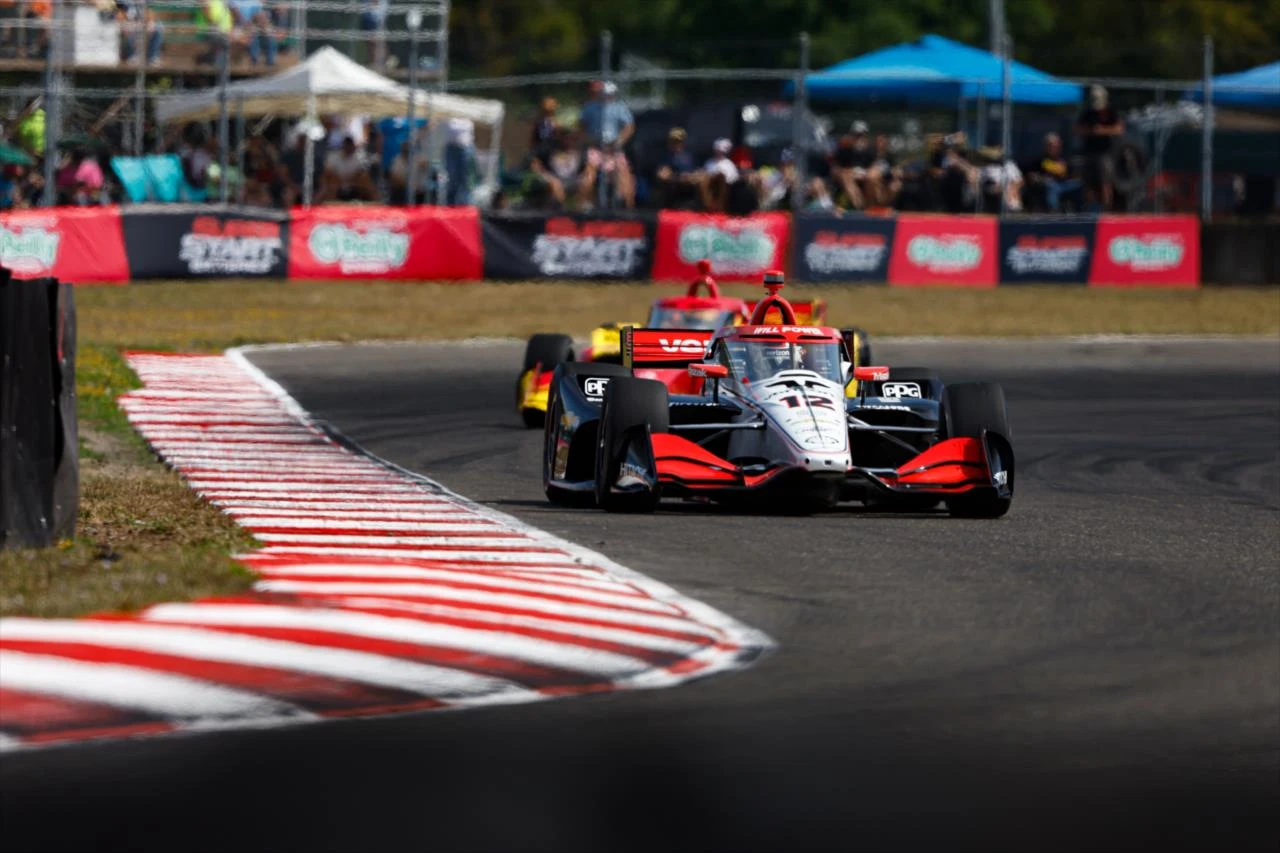
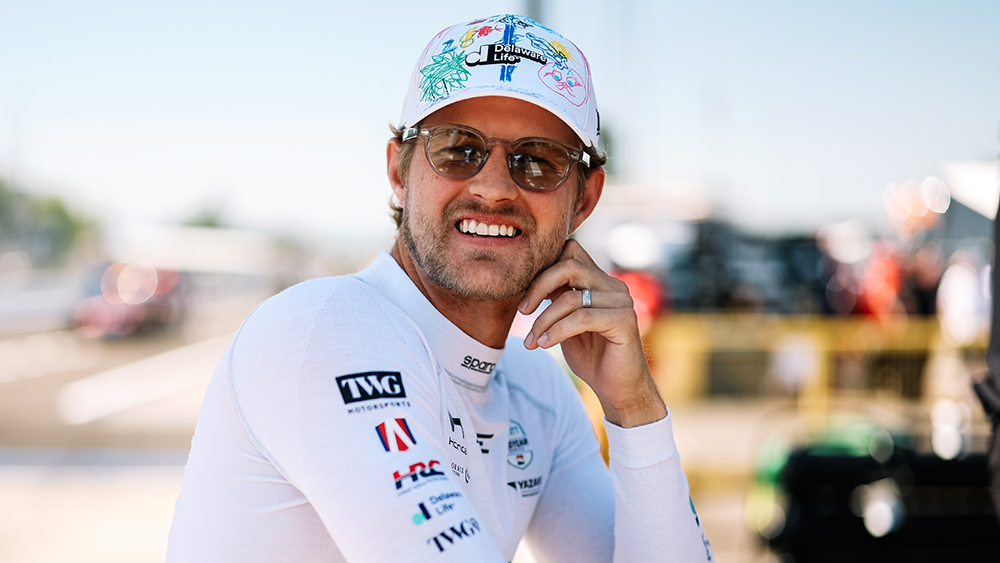
Felix Rosenqvist won pole for the 2026 OnlyBulls Grand Prix of Portland with a last-gasp 58.4828-second lap in the Firestone Fast Six. The Meyer Shank Racing w/Curb-Agajanian driver beat championship leader Alex Palou by only 0.0184 seconds at Portland International Raceway.
Palou qualified second in the No. 10 Chip Ganassi Racing Honda, while Will Power took third for Andretti Global. Marcus Ericsson, Rinus VeeKay and Kyffin Simpson completed a Fast Six that contained five Hondas and one Chevrolet.
However, the qualifying order was not identical to the final starting grid. David Malukas qualified ninth but carried a six-position penalty for an unapproved engine change from the previous Nashville round. That moved the Team Penske driver to 15th and advanced the cars originally qualified 10th through 15th by one position.
Who won pole for the Portland INDYCAR race in 2026?
Felix Rosenqvist won pole at Portland in 2026. The No. 60 Meyer Shank Racing w/Curb-Agajanian Honda produced a 58.4828-second lap with three seconds remaining in the Firestone Fast Six. Alex Palou qualified second at 58.5012 seconds, only 0.0184 seconds behind.
The margin explains why the final seconds mattered so much. Palou appeared set to take another NTT P1 Award before Rosenqvist completed his last lap. The Swedish driver found enough time across Portland’s 12 corners to flip the order at the flag.
The pole was Rosenqvist’s second of the 2026 season and the eighth of his INDYCAR career. It also continued a memorable year after his Indianapolis 500 victory in May.
More importantly, the lap came after Meyer Shank Racing had spent the weekend improving rather than dominating from the first session. Rosenqvist described the gain as steady execution and setup work, not one dramatic change.
Portland INDYCAR 2026 Fast Six Results
The Firestone Fast Six settled the first three rows. Rosenqvist and Palou were separated by less than two hundredths, while Power was only 0.0302 seconds from pole. The first meaningful gap appeared behind the top three.
| Pos | Car | Driver | Team | Engine | Best Lap | Gap |
|---|---|---|---|---|---|---|
| 1 | #60 | Felix Rosenqvist | Meyer Shank Racing w/ Curb-Agajanian | Honda | 58.4828s | — |
| 2 | #10 | Alex Palou | Chip Ganassi Racing | Honda | 58.5012s | +0.0184s |
| 3 | #26 | Will Power | Andretti Global | Honda | 58.5130s | +0.0302s |
| 4 | #28 | Marcus Ericsson | Andretti Global | Honda | 58.6729s | +0.1901s |
| 5 | #76 | Rinus VeeKay | Juncos Hollinger Racing | Chevrolet | 58.7701s | +0.2873s |
| 6 | #8 | Kyffin Simpson | Chip Ganassi Racing | Honda | 59.0841s | +0.6013s |
Rosenqvist delivered when the clock was almost empty
Rosenqvist’s timing made the pole feel more dramatic than a normal session result. His best lap was completed with only three seconds remaining. Therefore, Palou had no practical response once the No. 60 crossed the line.
The result also showed how small Portland’s qualifying margins can become. Power was barely three hundredths behind pole. Ericsson’s fourth-place 58.6729 was the first time more than a tenth separated a driver from Rosenqvist.
Honda controlled the decisive round
VeeKay was the only Chevrolet driver inside the Fast Six. His 58.7701-second lap earned fifth for Juncos Hollinger Racing. Simpson completed the top six in the No. 8 Chip Ganassi Racing Honda.
INDYCAR reported that Honda-powered drivers led all three knockout rounds and claimed 10 of the first 12 qualifying positions. That advantage was broad, not limited to a single team.
For readers new to the format, our guide to how racing drivers qualify explains why a knockout session rewards both raw pace and timing. Our pole-position guide covers what the first starting spot means once the race begins.
Full Portland INDYCAR 2026 Starting Grid
The table below shows the Sunday starting grid and each driver’s original qualifying position. That distinction matters because Malukas qualified ninth but started 15th after his six-place engine-change penalty.
As a result, Hauger, Grosjean, Dixon, Foster, Newgarden and McLaughlin each moved forward one grid position. Drivers from 16th backward were not affected by the six-position drop because Malukas rejoined the order ahead of them in 15th.
| Grid | Qual | Car | Driver | Team | Engine | Qualifying Note |
|---|---|---|---|---|---|---|
| 1 | Q1 | #60 | Felix Rosenqvist | Meyer Shank Racing w/ Curb-Agajanian | Honda | Firestone Fast Six pole |
| 2 | Q2 | #10 | Alex Palou | Chip Ganassi Racing | Honda | Front row |
| 3 | Q3 | #26 | Will Power | Andretti Global | Honda | Fast Six |
| 4 | Q4 | #28 | Marcus Ericsson | Andretti Global | Honda | Fast Six |
| 5 | Q5 | #76 | Rinus VeeKay | Juncos Hollinger Racing | Chevrolet | Fast Six |
| 6 | Q6 | #8 | Kyffin Simpson | Chip Ganassi Racing | Honda | Fast Six |
| 7 | Q7 | #27 | Kyle Kirkwood | Andretti Global w/ Curb-Agajanian | Honda | Fast 12 |
| 8 | Q8 | #15 | Graham Rahal | Rahal Letterman Lanigan Racing | Honda | Fast 12 |
| 9 | Q10 | #19 | Dennis Hauger | Dale Coyne Racing | Honda | Fast 12 · gained 1 grid spot |
| 10 | Q11 | #18 | Romain Grosjean | Dale Coyne Racing | Honda | Fast 12 · gained 1 grid spot |
| 11 | Q12 | #9 | Scott Dixon | Chip Ganassi Racing | Honda | Fast 12 · gained 1 grid spot |
| 12 | Q13 | #45 | Louis Foster | Rahal Letterman Lanigan Racing | Honda | Round 1 · gained 1 grid spot |
| 13 | Q14 | #2 | Josef Newgarden | Team Penske | Chevrolet | Round 1 · gained 1 grid spot |
| 14 | Q15 | #3 | Scott McLaughlin | Team Penske | Chevrolet | Round 1 · gained 1 grid spot |
| 15 | Q9 | #12 | David Malukas | Team Penske | Chevrolet | Qualified 9th · six-place engine-change penalty |
| 16 | Q16 | #6 | Nolan Siegel | Arrow McLaren | Chevrolet | Round 1 |
| 17 | Q17 | #5 | Pato O'Ward | Arrow McLaren | Chevrolet | Round 1 |
| 18 | Q18 | #66 | Marcus Armstrong | Meyer Shank Racing w/ Curb-Agajanian | Honda | Round 1 |
| 19 | Q19 | #20 | Alexander Rossi | ECR | Chevrolet | Round 1 |
| 20 | Q20 | #21 | Christian Rasmussen | ECR | Chevrolet | Round 1 |
| 21 | Q21 | #4 | Caio Collet | A.J. Foyt Enterprises | Chevrolet | Round 1 |
| 22 | Q22 | #14 | Santino Ferrucci | A.J. Foyt Enterprises | Chevrolet | Round 1 |
| 23 | Q23 | #47 | Mick Schumacher | Rahal Letterman Lanigan Racing | Honda | Round 1 |
| 24 | Q24 | #77 | Sting Ray Robb | Juncos Hollinger Racing | Chevrolet | Round 1 |
| 25 | Q25 | #7 | Christian Lundgaard | Arrow McLaren | Chevrolet | Round 1 · technical problems |
David Malukas qualified ninth in the No. 12 Team Penske Chevrolet. INDYCAR applied a six-position starting-grid penalty for an unapproved engine change from the previous Nashville round, so his official Portland start was 15th.
Rows 1–3 were set entirely by the Firestone Fast Six
Rosenqvist and Palou formed Row 1. Power and Ericsson made Row 2, while VeeKay and Simpson occupied Row 3. That group contained four teams and both engine manufacturers.
Consequently, the Fast Six did not belong to one organization. Meyer Shank Racing, Chip Ganassi Racing, Andretti Global and Juncos Hollinger Racing all had a representative in the first three rows.
Kirkwood led the drivers who missed the final round
Kyle Kirkwood qualified seventh at 58.8303 seconds. INDYCAR reported he missed the Firestone Fast Six by only 0.0352 seconds, which placed the No. 27 Andretti Global Honda at the head of Row 4.
Graham Rahal qualified eighth. Malukas was ninth on pace, while Hauger, Grosjean and Dixon completed the 12 drivers who reached the second knockout round.
Foster became the first driver outside the Fast 12
Louis Foster qualified 13th but started 12th after Malukas’ penalty. INDYCAR reported that Foster missed the second round by only 0.0216 seconds, another example of how compressed the Portland order became.
Newgarden and McLaughlin also gained a spot and started 13th and 14th. Malukas then slotted into 15th, immediately ahead of Siegel and O’Ward.
How Portland INDYCAR Knockout Qualifying Worked
Portland used INDYCAR’s road-course knockout structure. The field was divided for the opening phase, then the quickest drivers advanced to a 12-car second round. Six of those drivers moved into the Firestone Fast Six to fight for pole.
The structure puts pressure on every run. A driver cannot simply set one respectable time and assume it will survive. Track grip changes, alternate tires peak quickly, and a late improvement can knock another car below the transfer line.
That is exactly what happened at the front. Palou had a lap that looked good enough for pole until Rosenqvist finished his final effort. At the other end of the transfer fight, Kirkwood missed the Fast Six by 0.0352 seconds and Foster missed the Fast 12 by 0.0216.
The Fast 12 exposed Honda’s depth
Honda placed 10 cars among the first 12 qualifiers. VeeKay and Malukas were the only Chevrolet-powered drivers in that group, and Malukas’ penalty later changed the visible starting order.
The Honda strength came from several teams. Andretti Global put Power, Ericsson and Kirkwood near the front. Chip Ganassi Racing had Palou, Simpson and Dixon, while Meyer Shank Racing took the pole with Rosenqvist.
That diversity is useful when reading qualifying results. A manufacturer advantage can be real, but team execution still decides which car extracts the best lap. Rosenqvist ultimately did that better than anyone else.
Coyne produced one of Saturday’s biggest surprises
Dale Coyne Racing entered qualifying without obvious practice momentum. Grosjean had been 23rd and 24th in the two practice sessions, while Hauger lost Friday running to mechanical problems.
However, both advanced into the second round. Hauger started ninth after the Malukas penalty, and Grosjean started 10th. For Hauger, it was his first appearance beyond Round 1 since the St. Petersburg season opener.
Grosjean’s result was also notable because his previous Portland starting positions had been deep in the field. The No. 18 team found qualifying pace at the moment it mattered most.
What the Portland INDYCAR 2026 Qualifying Results Tell Us
Rosenqvist beat the championship benchmark
Palou arrived as the series leader and was chasing another pole. He had also shown speed in opening practice. Beating him by 0.0184 seconds made Rosenqvist’s lap more significant than the raw margin suggests.
Moreover, Palou was not simply a front-row rival. He was the central championship reference point. Taking pole away from the No. 10 car denied Palou the cleanest possible start into Portland’s tight opening chicane.
Power remained a Portland specialist after changing teams
Power had won the Portland race in both 2024 and 2025 with Team Penske. In 2026, he returned with Andretti Global and still qualified third.
That continuity matters because Power changed organizations without losing his Portland pace. His 58.5130-second lap was only 0.0302 seconds from pole, keeping him firmly in the fight for the first row.
Ericsson gave Andretti two cars in the top four
Ericsson qualified fourth, giving Andretti Global two cars on the first two rows. Kirkwood added seventh, so all three Andretti entries were inside the first seven starting positions.
That was one of the clearest team-wide signals from Saturday. Even though Rosenqvist took the headline, Andretti had strong depth across its lineup.
Arrow McLaren faced the opposite problem
Arrow McLaren started Siegel 16th, O’Ward 17th and Lundgaard 25th. O’Ward’s 17th-place start was his worst of the season at that point.
Lundgaard’s situation was more mechanical than competitive. He reported a frozen dash, trouble restarting the car and hybrid-system problems during Round 1. Consequently, a driver who had been exceptionally strong on permanent road courses started last.
That contrast is important. A qualifying table records the result, but it does not always reveal why a car is deep on the grid. Mechanical interruptions can be just as costly as a slow lap.
Malukas’ penalty changed more than one row
Grid penalties can make a qualifying article confusing if the two orders are combined. Malukas was the ninth-fastest qualifier, yet he did not start ninth. His six-place drop reshuffled three rows behind him.
That is why this article keeps “Qual” and “Grid” in separate columns. Our explainer on grid position in racing covers the broader difference between a timed classification and the final starting order.
Portland’s qualifying result was decided by thousandths, but the Sunday grid was also shaped by reliability and a penalty carried from the previous race.
For comparison with another 2026 INDYCAR weekend, see the Nashville qualifying results. The related Nashville strategy analysis also gives context for the round that triggered Malukas’ Portland engine-change penalty.
Why Qualifying Matters So Much at Portland International Raceway
Portland International Raceway is a relatively flat natural road course in Portland, Oregon. INDYCAR’s event page displays a 1.967-mile track length, while its circuit description refers to the familiar 12-turn, 1.964-mile configuration.
The first challenge arrives immediately. The front straight feeds into a quick and tight chicane, where a large pack must compress under braking. Starting near the front reduces the amount of traffic a driver must negotiate in that opening sequence.
Further around the lap, Turn 7 creates another heavy braking opportunity before the sweeping backstretch. The final three-turn complex then rewards a clean exit because it determines speed onto the front straight.
Therefore, a qualifying lap is a chain of compromises. A driver needs enough aggression to create rotation, but too much sliding costs tire grip and exit speed. The fastest Portland laps look calm because the car stays connected from one corner to the next.
Portland has a long INDYCAR history
The circuit opened in 1961 on the former site of Vanport. The first INDYCAR SERIES race there was won by Al Unser Jr. in 1984.
Portland also owns one of the championship’s famous finishing records. In 1997, Mark Blundell beat Gil de Ferran by 0.027 seconds and Raul Boesel by 0.055 in a three-wide finish. INDYCAR still cites that race as its closest two-car and three-car road-course finish.
That history helps explain why grid position matters without guaranteeing the outcome. Portland can produce strategy races, restart pressure and close finishes even when one driver controls qualifying.
Readers wanting the broader basics can use our INDYCAR racing guide, the current INDYCAR schedule and our INDYCAR race-today guide.
How the Qualifying Order Shaped Sunday’s Portland Race
Sunday showed both the value and the limits of pole position. Rosenqvist led the first 30 laps from the front, but Palou used strategy and tire management to move ahead during the first pit cycle.
Palou eventually won by 4.1167 seconds over Rosenqvist. Power completed the podium in third, meaning the three fastest qualifiers also became the three podium finishers, although their order changed.
The race had only one caution for two laps, which reduced the number of reset opportunities. Palou led a race-high 60 laps and earned his sixth victory of the season.
That outcome reinforces the main qualifying lesson. A front-row start gives a driver control and clean air, but it does not remove tire strategy from the equation. Palou’s overcut during the opening sequence changed the lead despite Rosenqvist’s strong start.
Our pit-stop explainer breaks down why timing a stop can change track position. The race timing guide is useful for understanding gaps and elapsed-time comparisons during these strategy cycles.
Qualifying still predicted the strongest race cars
The top three qualifiers finishing on the podium was not a coincidence. All three cars had genuine pace from Saturday through Sunday. However, the race required different skills from the one-lap shootout.
Rosenqvist had the fastest qualifying lap. Palou had the strongest 110-lap package. Power remained close enough to capitalize, while VeeKay converted fifth on the grid into fourth at the finish.
For a wider view of season form, the Alex Palou qualifying coverage tracks his speed elsewhere in 2026. Our Mid-Ohio INDYCAR results also show how qualifying and race pace can interact on another permanent road course.
Seven Takeaways From Portland INDYCAR Qualifying
1. Rosenqvist’s final lap was the decisive lap
There was no comfortable pole margin. Rosenqvist needed his final effort and completed it with only seconds left. That made execution under pressure the central story of the session.
2. Palou missed pole by almost nothing
A gap of 0.0184 seconds is tiny across a full road-course lap. Palou did enough for the front row, but one slightly cleaner corner could have changed the pole winner.
3. Power carried his Portland speed to a new team
Power’s move to Andretti Global did not erase his strength at Portland. He qualified third after winning the previous two races at the venue.
4. Honda’s advantage was wider than the Fast Six
Five Hondas reached the final six, but INDYCAR also reported 10 Hondas inside the top 12. That made the manufacturer story one of the clearest themes of Saturday.
5. VeeKay was Chevrolet’s Fast Six benchmark
VeeKay was fifth and the only Chevrolet in the pole shootout. His Juncos Hollinger Racing entry therefore became the strongest Chevrolet reference at the sharp end of qualifying.
6. Malukas showed why qualifying order and starting grid are different
His raw speed was good enough for ninth. The engine-change penalty made his official start 15th. That single change advanced six other drivers.
7. Arrow McLaren faced a recovery race
Siegel, O’Ward and Lundgaard started 16th, 17th and 25th. Their positions forced the team to think about traffic and strategy from the opening lap rather than simply protecting front-running track position.
Those strategy choices are easier to follow with our guides to racing flags and championship scoring. Both become important when a poor qualifying result changes the risk level on race day.
Portland INDYCAR 2026 Qualifying FAQ
Conclusion: Rosenqvist Won the Lap, Palou Kept the Pressure On
The Portland INDYCAR 2026 qualifying results came down to one final lap and 0.0184 seconds. Felix Rosenqvist delivered the fastest time when the Fast Six clock was almost empty, earning his second pole of the season and eighth of his career.
Palou joined him on the front row, while Power, Ericsson, VeeKay and Simpson completed a varied and competitive top six. Honda controlled the wider qualifying picture, yet VeeKay kept Chevrolet represented in the final round.
The grid also carried an important correction. Malukas was genuinely ninth-fastest in qualifying, but his Nashville engine-change penalty moved him to 15th for the start. Keeping those two orders separate gives the clearest picture of what happened on Saturday and what the field actually faced on Sunday.
Then the race added one final layer. Palou converted second on the grid into victory, Rosenqvist finished runner-up and Power took third. The fastest qualifiers remained the strongest group, even though strategy changed their order over 110 laps.
Sources
Primary event and qualifying information used in this article: