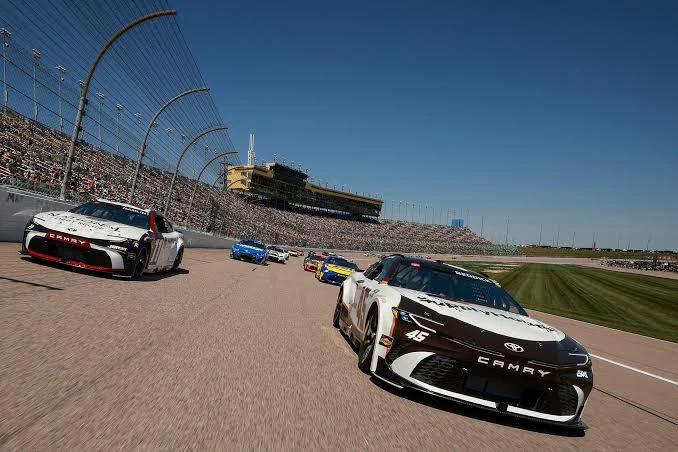
NASCAR eero 400 2026 Preview: Favorites, Qualifying Battle, Tire Strategy & Predictions
Everything you need before Sunday’s return to Joliet — the championship math, the qualifying setup, the tire wear question, and a final call on who wins the eero 400.
Favorites, Qualifying Battle & Tire Strategy
Everything you need before NASCAR’s return to Chicagoland — championship math, qualifying setup and a final prediction.
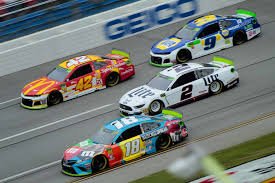
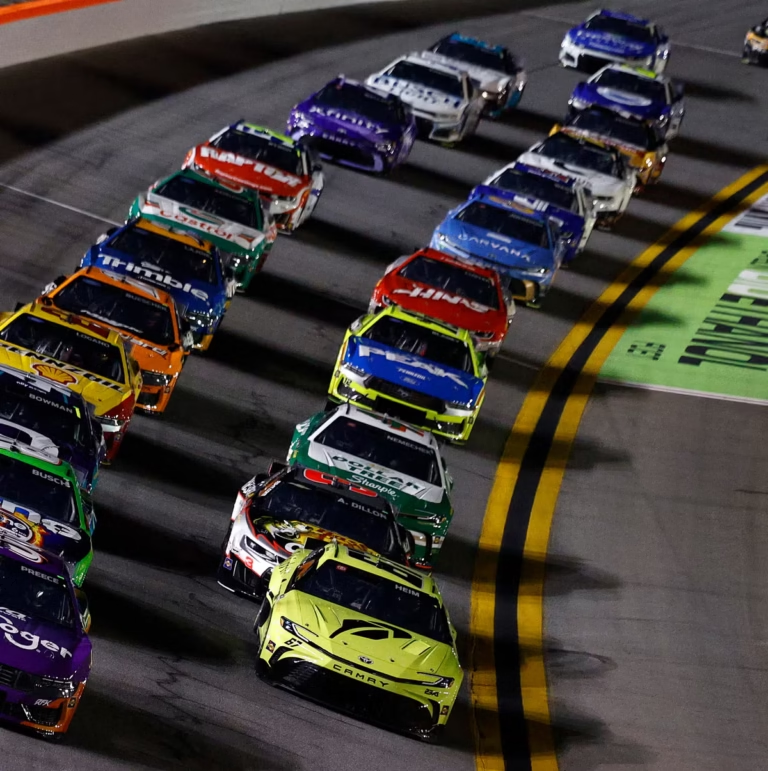
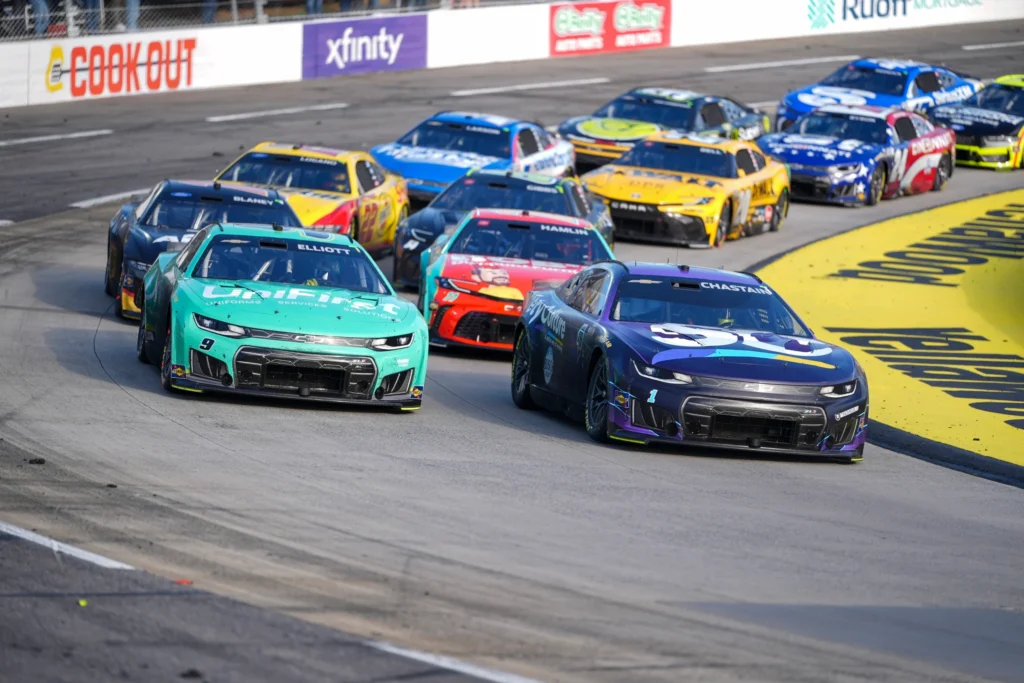
NASCAR’s Cup Series rolls back into Chicagoland Speedway this weekend for the first points-paying race at the Joliet oval since 2019. The eero 400 marks a genuine return rather than a reboot — the 1.5-mile D-shaped tri-oval sat dormant for seven seasons, and nobody currently in the Next Gen car has raced a points event on this surface before.
That alone makes Sunday’s race harder to predict than almost anything else on the 2026 calendar. Throw in a championship battle that flipped at Sonoma, a $1 million bracket tournament hanging in the balance, and a fresh asphalt surface nobody has fully cracked, and you have the most unpredictable weekend of the summer.
This guide covers the full session schedule, a breakdown of the track itself, the genuine favorites heading into Sunday, how qualifying will shape the day, what tire wear actually means at Chicagoland, the In-Season Challenge stakes, and a final prediction for who takes the checkered flag.
Full Weekend Schedule — eero 400 2026
All times below are listed in Eastern Time. The Cup Series weekend runs across three days, sharing the Independence Day slate with the ARCA Menards Series on Friday and the NASCAR O’Reilly Auto Parts Series on Saturday before the Cup field takes the green flag Sunday evening.
Chicagoland replaces a downtown Chicago street race that has been paused for 2026, moving the Independence Day weekend event back to the suburbs. It is the venue’s first Cup points race since the 2019 Camping World 400. Check our 2026 NASCAR points standings for the latest championship picture heading in.
July 3
July 4
July 4
July 4
July 5
Practice and qualifying both air on Max and truTV, while Sunday’s race is the start of TNT Sports’ run of Cup Series broadcasts this summer. The race covers 267 laps in three stages — 80, 165 and the full 267 — for a total distance of roughly 400.5 miles. For the complete rundown of every Cup date this season, see our NASCAR 2026 points standings and how to watch NASCAR guide.
Chicagoland Speedway: The Track Everyone Has to Relearn
Chicagoland Speedway sits on 930 acres southwest of Chicago, next door to Route 66 Raceway. The layout is a 1.5-mile D-shaped tri-oval with four banked turns, the same broad category of track as Charlotte, Texas or Kansas — but with its own personality. Drivers who raced here before 2019 remember a surface that rewarded patience early and rewarded aggression late, with grip that built rather than degraded as a long run wore on.
None of that history matters quite as much this year. The track has been repaved, and the cars themselves have changed completely since 2019 — every team in the field is currently racing the Next Gen chassis, a car that didn’t exist the last time anyone turned a competitive lap here. A two-day Goodyear tire test in April gave teams their first real data points, and the early signs were encouraging.
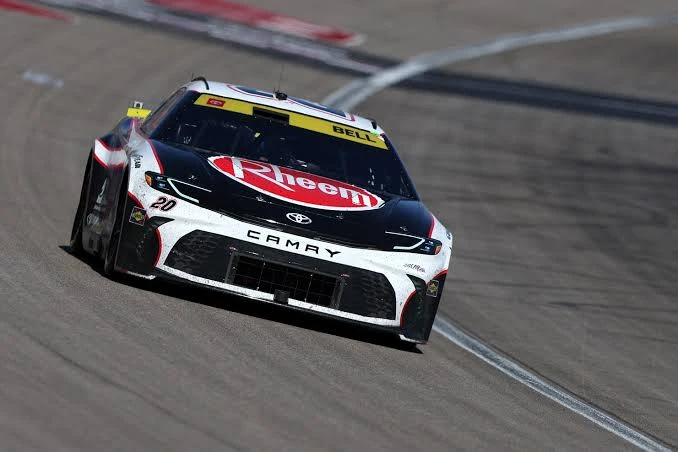
“It looks to be in really good shape.” — Ryan Blaney, on the repaved Chicagoland surface following April’s Goodyear tire test
Kyle Larson, one of three Cup drivers who took part in that test alongside Blaney and Denny Hamlin, described the new surface as completely raceable. That matters because intermediate ovals live or die on whether the asphalt holds grip through a long green-flag run, and a fresh surface tends to be slicker before it rubbers in. Expect handling to evolve noticeably between Saturday’s qualifying runs and Sunday’s race once 36 cars have laid rubber down for hundreds of laps.
What Makes Chicagoland Different
If you want a deeper primer on how banking, grip and downforce interact on tracks like this one, our downforce explainer and how fast NASCAR cars go breakdown both cover the physics in plain language.
Who Are the Favorites for the eero 400?
The favorites list for Sunday starts with the two men currently separated by a single point at the top of the standings. Denny Hamlin takes the championship lead into Chicagoland for the first time all season after a wild finish at Sonoma, where a late spin from his title rival opened the door. Tyler Reddick, who had led every single race weekend of 2026 until Sunday, now sits one point back after a power steering failure dropped him to last in the 36-car field.
That swing matters enormously heading into Chicagoland. Hamlin has historically thrived on tracks that turn left, and while he isn’t walking in with prior Chicagoland data on the Next Gen car, his recent form — three wins in five races — suggests he’s peaking at exactly the right moment. Reddick, meanwhile, is the most statistically dominant driver of the 2026 season by a wide margin, with five victories already banked and a body of work that makes him impossible to rule out anywhere.
The Genuine Contenders
- Denny Hamlin — New points leader, four wins on the year, and a driver who consistently finds speed at intermediate ovals once practice data starts flowing.
- Tyler Reddick — Five wins in 2026, the most dominant overall season to date, and motivated to answer back immediately after Sonoma’s mechanical heartbreak.
- Ryan Blaney — One of just three drivers who tested at Chicagoland in April, giving the Team Penske driver a genuine data advantage few others on the grid can claim.
- Kyle Larson — The defending series champion, also part of the April tire test, and the series leader in stage points this season — a track-position specialist on exactly this style of layout.
- Shane van Gisbergen — Two wins already this year and red-hot momentum after Sonoma, though his strength has historically leaned toward road and street courses rather than mile-and-a-half ovals.
Alex Bowman is the most fascinating name in the field this weekend. He’s the defending winner at Chicagoland — albeit from 2019 — and has three top-10 finishes in five career starts at the track, the best track-specific record of anyone in the current Cup garage. After a difficult year battling on-track inconsistency, a strong Chicagoland run would be a timely reset.
It’s also worth watching Christopher Bell, who arrives carrying a broken left wrist from a recent incident and remains a question mark for raceday participation, and Erik Jones, who has surged into Chase contention with two top-10 finishes in three prior Chicagoland starts on an earlier-generation car. For the latest title math, see our full 2026 NASCAR standings.
The Qualifying Battle: Why Saturday Matters More Than Usual
Qualifying at a track nobody has raced at in seven years carries a different weight than a normal weekend. Teams arrive Saturday with practice data from a single 50-minute session and the April tire test as their only real reference points. That means setup choices made hours before qualifying could prove either prescient or completely wrong by the time the green flag drops Sunday night.
Track position typically matters at Chicagoland because, while multiple grooves do open up as a long run wears in, the clean air advantage of starting up front is significant on a repaved surface that hasn’t yet built up extra grip in the higher lanes. Expect teams with strong recent intermediate-track form — Larson, Blaney, Hamlin and Hocevar among them — to qualify well, while road-course specialists like van Gisbergen may find Saturday tougher than Sunday.
How Single-Car Qualifying Works Here
NASCAR’s group qualifying format puts every car through two rounds, with the fastest single lap setting the grid. On a 1.5-mile oval like Chicagoland, that single lap is run essentially flat out from green to checkered — there’s little room for a conservative approach the way there might be on a tighter short track. For a full explainer on the format itself, see our how racing drivers qualify guide.
| Watch | Driver | Team / Make | Why They Matter Saturday |
|---|---|---|---|
| 1 | Ryan Blaney | Team Penske, Ford | Tire-test data advantage |
| 2 | Kyle Larson | Hendrick Motorsports, Chevrolet | Tire-test data, defending Cup champion |
| 3 | Denny Hamlin | Joe Gibbs Racing, Toyota | Tire-test data, new points leader |
| 4 | Tyler Reddick | 23XI Racing, Toyota | Most dominant car on the grid in 2026 |
| 5 | Carson Hocevar | Spire Motorsports, Chevrolet | Strong recent intermediate-track speed |
The three drivers who took part in April’s tire test — Blaney, Hamlin and Larson — carry a real, quantifiable edge into Saturday. They’ve already felt how the Next Gen car responds to this specific asphalt under green-flag conditions, while the rest of the 36-car field is working from practice alone. That’s the single biggest qualifying storyline of the weekend.
Tire Strategy: The Real X-Factor at Chicagoland
Tire strategy at an intermediate oval is a completely different sport from the road-course tire management that just played out at Sonoma. There’s no alternate-compound decision to make and no need to nurse a tire through twelve corners of varying load. Instead, the entire question comes down to wear rate against a fresh, repaved surface that nobody in the current generation of cars has raced on.
Goodyear’s standard Racing Eagle intermediate-oval tire has already seen action this season at tracks like Texas, Charlotte and Nashville Superspeedway, giving teams a useful baseline. But a brand-new surface changes the equation. New asphalt is typically more abrasive before it rubbers in, which tends to accelerate tire wear in the opening stages of a race weekend before settling into a more predictable degradation curve as more rubber gets laid down.
What to Watch For During the Race
- Early-stint degradation: Expect faster tire fall-off in Stage 1 than in Stage 3, as the surface rubbers in and grip becomes more consistent lap to lap.
- Four-tire vs. two-tire calls: Crew chiefs will weigh track position against fresh rubber on every caution — a two-tire stop can win clean air, but on a track this unpredictable, four tires is the safer percentage play.
- Stage-break strategy: With stages ending at lap 80 and lap 165, teams have two natural windows to pit under controlled cautions rather than gambling on green-flag stops.
- Late-race wear: If Sunday plays out anything like 2018’s famous slide-job finish, tire grip in the closing 20 laps will decide who can actually hold a defensive line through Turns 3 and 4.
“We’re so tired of running second. I don’t want to do that anymore.” That was Alex Bowman in 2019 after a closing tire battle with Kyle Larson decided the last Chicagoland race — a reminder that tire management here has historically come down to the final ten laps, not the first hundred. For more on how teams approach pit calls, see our how pit stops work in racing explainer.
Teams that gambled on track position over fresh tires were burned more often than not in Chicagoland’s history, and with a repaved surface adding an extra layer of uncertainty, expect a fairly conservative approach to tire calls from most of the leaders early, with the gloves coming off only in the closing stage once the surface and the running order have both settled down.
The In-Season Challenge: $1 Million on the Line
The eero 400 isn’t just a points race — it’s Round 2 of the 2026 In-Season Challenge, NASCAR’s 32-driver bracket tournament that pays the eventual winner a $1 million prize. Sixteen drivers survived Sonoma to advance, and Chicagoland will cut that field to eight. The tournament concludes at Indianapolis Motor Speedway on July 26.
Sonoma already delivered the tournament’s first genuine shock. Alex Bowman, the No. 32 seed, eliminated top-seeded Tyler Reddick after Reddick’s car suffered a power steering failure that dropped him to last place. Top-two seed Denny Hamlin survived his own scare, recovering from a Lap 64 spin to edge past Ty Dillon — who lost power steering of his own with 12 laps remaining — in a near-repeat of last year’s bracket result between the same two drivers.
Why Chicagoland Adds an Extra Layer of Pressure
Unlike the road-course skill set that defined Sonoma, Chicagoland’s bracket matchups will largely come down to who has the better intermediate-oval package — a completely different strength profile. Drivers who survived Sonoma on road-course craft now have to prove they can do it again on an unfamiliar 1.5-mile oval, with a single bad pit call or a caution at the wrong moment enough to end a tournament run regardless of regular championship points.
Bowman’s best historical track is, fittingly, Chicagoland itself — he owns three top-10 finishes in five career starts here and is the track’s most recent winner. If anyone is built to make a second-round run after a first-round upset, it’s him. Follow the latest results in our who won the NASCAR race today tracker.
Beyond the bracket, the broader Chase picture remains stable but tightening. Tyler Reddick and Denny Hamlin both sit comfortably clear of the playoff cutline, while names like Christopher Bell, William Byron and Austin Cindric remain on the bubble with nine regular-season races still to run. A strong run at Chicagoland could meaningfully shift the Chase picture before the bracket even reaches its later rounds.
Chicagoland’s NASCAR History
Chicagoland Speedway opened in 2001 and hosted Cup Series racing continuously through 2019, missing only a 2020 cancellation tied to the pandemic before disappearing from the calendar entirely. The track briefly hosted the first race of the Chase playoffs from 2011 to 2017, giving it a reputation as a venue where championship stakes ran high even in the regular season.
What makes this year’s return genuinely unpredictable is that none of that history transfers cleanly. The Next Gen car bears little resemblance, aerodynamically or mechanically, to the cars that raced here in 2019, and the repave means even drivers with extensive Chicagoland experience are essentially starting from zero. For more on how NASCAR’s current car compares to its predecessors, see our how car racing works explainer.
Final Predictions for the eero 400
Picking a winner at a track with zero current-generation data is genuinely difficult, which is exactly what makes this race fun to forecast. Still, a few factors stand out clearly enough to build a confident shortlist. Tire-test participation matters. Recent momentum matters. And championship pressure cuts both ways — it can sharpen focus, or it can introduce the kind of mistake that cost Reddick at Sonoma.
The Case for Ryan Blaney
Blaney’s tire-test data is the single largest tangible edge anyone in the field holds heading into Sunday. Combine that with Team Penske’s recent intermediate-track speed, and he becomes the most defensible pick — not because he’s the most dominant driver this year, but because he’s the one driver who genuinely knows something the rest of the field doesn’t.
The Case for Denny Hamlin
Momentum is real in NASCAR, and right now nobody has more of it than Hamlin. He climbed back from a 129-point deficit over six races, took the points lead at Sonoma, and has won three of his last five starts. A driver playing with that much confidence is dangerous anywhere, repave or not.
The Case Against Reddick — For Now
Reddick remains the most statistically dominant driver of the 2026 season, but a mechanical issue at an unfamiliar track is exactly the kind of variable that can compound. He’s the talent pick, not necessarily the situational favorite this particular Sunday.
Final call: Ryan Blaney to win the 2026 eero 400, with Denny Hamlin and Kyle Larson rounding out the podium.
How to Watch the eero 400
The eero 400 airs live on TNT Sports beginning at 6:00 PM ET on Sunday, July 5, with the broadcast also streaming on HBO Max. Practice and qualifying on Saturday air on Max and truTV. Radio coverage runs through MRN and SiriusXM NASCAR Radio for fans following along without a screen.
| Session | Day & Time | TV / Streaming | Radio |
|---|---|---|---|
| Cup Practice | Sat, July 4 · 6:00–6:50 PM ET | Max, truTV | — |
| Cup Qualifying | Sat, July 4 · 3:00–4:00 PM ET | Max, truTV | — |
| eero 400 (Race) | Sun, July 5 · 6:00 PM ET | TNT Sports, HBO Max | MRN, SiriusXM |
For full broadcast details on every remaining race this summer, including how to stream without cable, check our complete how to watch NASCAR guide and our regularly updated what channel is NASCAR on today page.
Frequently Asked Questions — NASCAR eero 400 2026
One last thought before the green flag in Joliet
Chicagoland Speedway returning to the Cup Series schedule is, on paper, a nostalgia play — bringing back a track that produced some genuinely great racing in its first run from 2001 to 2019. But in practice, this weekend has almost nothing to do with nostalgia. The repaved surface and the Next Gen car mean every driver in the field is working from a near-blank slate, which hasn’t happened at a Cup venue in years.
That uncertainty is exactly what makes the eero 400 worth watching from green flag to checkered. Add a championship race that flipped at Sonoma and a $1 million bracket tournament cutting from sixteen drivers to eight, and Sunday night in Joliet carries stakes well beyond a single regular-season points race.
Whoever takes the win Sunday will have done it with almost no track-specific advantage to lean on — just raw speed, smart strategy, and the discipline to manage a tire and a surface nobody fully understands yet. That’s about as honest a test as NASCAR offers.
Sources & Verification
All race data, schedule details, standings figures and quotes in this preview are drawn from official NASCAR reporting and verified motorsport publications, current as of June 30, 2026.