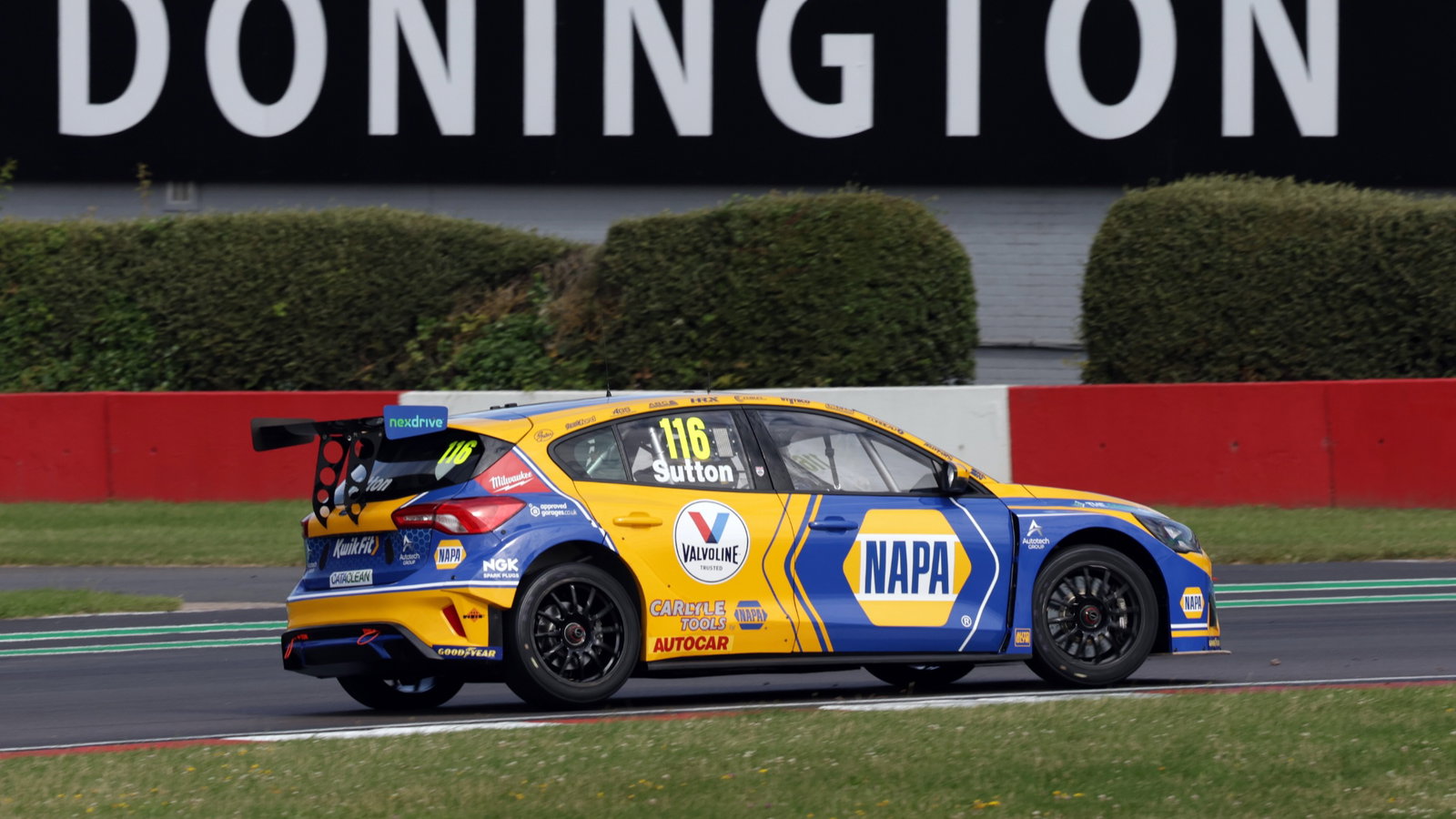
Donington Park GP BTCC 2026 Qualifying Results:
Group Times, Full Order & Qualifying Race Grid
The official GP qualifying session is scheduled for 14:05–14:40 BST on Saturday. This page contains the confirmed event format, championship context, lap-record benchmarks and publication-safe result tables that remain pending until the session is completed.
The Donington Park GP BTCC 2026 qualifying results do not exist yet at publication time early on Saturday, August 22. The official BTCC Donington Park GP results page currently lists no classification for the event, while qualifying is scheduled for later in the afternoon.
That matters because the 2026 format is unlike a traditional one-session shootout. Free Practice creates two groups, each group runs for 15 minutes, and the faster group earns the odd-numbered positions on the Race for Pole grid. The nine-lap Saturday race then decides the Race 1 starting order for Sunday.
Rather than fill this article with guessed lap times or reuse the April National-circuit results, every current-session table below is clearly marked pending. The confirmed data around those tables — event timing, track length, lap records, rules and pre-event standings — comes from official BTCC material.
Current Status: Donington GP Qualifying Has Not Started
BTCC Free Practice begins at 11:00 BST. Qualifying follows at 14:05 BST, and the nine-lap Race for Pole starts at 15:05 BST. Until those sessions happen, there is no legitimate 2026 Donington GP qualifying result to publish.
06:00 ET
09:05 ET
09:40 ET
10:05 ET
This distinction is especially important at Donington. The championship already visited the venue in April, but that meeting used the shorter 1.98-mile National circuit. The August event uses the 2.49-mile Grand Prix layout with 12 corners.
Any 2026 timing page showing laps around 1:07 belongs to the April National configuration, not this GP weekend. A genuine GP qualifying benchmark sits around the 1:33 range in representative dry conditions, with Ashley Sutton’s official qualifying record standing at 1:33.154.
That makes circuit identification the first quality check when reading BTCC timing. Our race timing explainer covers how lap times, gaps and classifications should be read once the sessions begin.
How Donington Park GP BTCC Qualifying Works in 2026
How are the Donington Park BTCC qualifying groups decided?
The Free Practice finishing order is split between odd and even positions. Those drivers form two separate 15-minute qualifying groups. The group producing the fastest outright lap gets the odd-numbered Race for Pole grid positions, while the other group receives the even-numbered positions.
The structure means Free Practice has more strategic value than its name suggests. It does not set a grid directly, but it determines who each driver must face in the short qualifying session.
For example, the first, third, fifth and other odd-numbered practice finishers go into one group. The second, fourth, sixth and other even-numbered finishers form the other group.
Each group then gets only 15 minutes. That leaves little margin for traffic, yellow flags, tyre preparation or a deleted lap. A driver who misses the best track window may not get enough time to recover.
The faster group earns the preferred grid sequence
After both groups finish, the fastest outright qualifying lap decides which group receives the odd-numbered grid positions. The winner of that faster group takes P1, its second-fastest driver takes P3 and its third-fastest driver takes P5.
The other group fills P2, P4, P6 and the remaining even-numbered positions. Therefore, a driver can be quickest in his group yet still start second if the other group produces the faster overall lap.
This merging system makes track evolution crucial. If conditions improve between groups, one half of the field can gain a structural advantage. If rain arrives, the opposite can happen.
For readers new to the concept, our guide to how racing drivers qualify explains the purpose of one-lap speed, while what pole position means covers why the first grid slot remains so valuable.
Qualifying does not directly set Sunday Race 1
This is one of the biggest changes for 2026. Saturday qualifying sets the starting order for the Race for Pole, not for Sunday’s opening championship race.
The Race for Pole runs for nine laps. Its finishing order becomes the Race 1 grid, and the top 15 drivers also score championship points.
That means a driver can top qualifying and still lose Sunday pole through a poor start, contact, mechanical trouble or a penalty in the Qualifying Race.
The extra race is why the Donington qualifying story cannot end at 14:40 BST. The complete Saturday picture is only settled after the Race for Pole finishes.
Donington Park BTCC Group 1 Qualifying Times
The drivers in this group cannot be known until Free Practice has finished because the group is built from the practice order.
No Group 1 lap time has been published for the 2026 Donington GP event at the time this article was prepared.
| Pos | No. | Driver | Team | Best Lap | Gap | Status |
|---|---|---|---|---|---|---|
| — | — | Awaiting Group 1 session | — | — | — | Pending |
What will matter most in Group 1?
The first priority is a clean representative lap. With only 15 minutes available, the drivers cannot afford to spend half the session recovering from a traffic problem or an invalidated lap.
Tyre choice is also open. Donington GP’s event allocation permits free compound choice in qualifying, so teams can make different decisions about peak grip and tyre preparation.
TOCA Turbo Boost adds another layer. The system is position-based, meaning championship leader Sutton receives a much smaller qualifying allocation than drivers lower in the standings.
If Sutton lands in Group 1, he will have only one second of TTB per lap under the P1 scale. Ingram receives three seconds, Cammish five, while drivers eighth and lower receive 20 seconds per lap.
That is why a lower-ranked driver can become a genuine group winner even when the title leaders have the stronger season record.
Donington Park BTCC Group 2 Qualifying Times
| Pos | No. | Driver | Team | Best Lap | Gap | Status |
|---|---|---|---|---|---|---|
| — | — | Awaiting Group 2 session | — | — | — | Pending |
Why comparing Group 1 and Group 2 requires care
The stopwatch is not the only variable. Track temperature, wind, traffic and rubber evolution can change in the gap between the two sessions.
That is why the regulations do not simply merge all times from fastest to slowest. Instead, the faster group receives one side of the grid and the other group receives the opposite side.
The rule protects each group from being completely disadvantaged by a small condition change. However, it also makes the identity of the faster group extremely important.
A driver who is second-fastest in the faster group can start third, while the quickest driver in the slower group starts second. This pattern continues down the order.
Traffic management will be difficult on a short session
The Donington GP lap is 2.49 miles and typically takes around one minute 33 seconds in strong dry qualifying conditions. That gives drivers only a limited number of serious attempts inside a 15-minute session.
Out-lap preparation also matters. A driver who begins the flying lap too close to another car may lose front-end grip through the fast section, while a driver who leaves too large a gap can run out of time for another attempt.
Teams will therefore watch the timing gaps constantly. That is where a simple understanding of sector timing and gaps becomes useful for viewers.
Full Donington Park GP BTCC 2026 Qualifying Order
What is the full Donington Park BTCC qualifying order?
The full 2026 qualifying order is not available yet. It can only be formed after both 15-minute groups have completed their sessions. The faster group takes P1, P3, P5 and the other odd-numbered positions, while the slower group fills P2, P4, P6 and the even-numbered positions.
| Grid | Driver | Group | Group Position | Best Lap | Gap | Status |
|---|---|---|---|---|---|---|
| P1 | Pending | — | — | — | — | Awaiting qualifying |
| P2 | Pending | — | — | — | — | Awaiting qualifying |
| P3+ | Pending | — | — | — | — | Awaiting qualifying |
The merged order should not be confused with a simple fastest-lap ranking. Two drivers can have times that would place them differently on a normal combined sheet because the group-merging rule controls grid position.
This is also why any result article needs to show both the group classification and the final Race for Pole grid. Publishing only one table would hide an important part of the 2026 format.
The April Donington result must not be reused here
The official website also contains a separate “Donington Park” results page from the April season opener. That event ran on the National layout and produced lap times around 1:07.
The August Grand Prix meeting has its own separate results page. At the time of publication, that GP page states that results are not available yet.
This is a crucial distinction for search readers because both event names contain Donington Park. The layout length and lap-time range make it easy to identify which result belongs to which weekend.
For comparison with recent BTCC result formatting, see our Knockhill practice results, Knockhill race results and Thruxton practice results.
Donington Park GP Race for Pole Grid
What is the Donington Park Race for Pole grid?
The Race for Pole grid will be created from the two qualifying groups. The faster group gets the odd-numbered positions and the other group gets the even-numbered positions. The grid remains unknown until both qualifying groups have completed their 15-minute sessions.
| Grid | No. | Driver | Team | Qualifying Source | Status |
|---|---|---|---|---|---|
| 1 | — | Pending | — | Faster group winner | Pending |
| 2 | — | Pending | — | Other group winner | Pending |
| 3+ | — | Pending | — | Merged group order | Pending |
Why P1 in qualifying is only the first half of Saturday
In previous seasons, qualifying success directly created the first race grid. In 2026, the quickest Saturday driver still needs to survive a race start and nine laps of touring-car contact.
That changes the meaning of pole. The driver starting the Race for Pole from P1 has the best track position, but the Sunday Race 1 pole belongs to whoever wins the short race.
The top 15 also score points in the Qualifying Race: 10 for first, nine for second, eight for third, seven for fourth and progressively smaller awards down to one point for 14th and 15th.
There is no extra point for qualifying pole, fastest lap or leading the Race for Pole. The value comes from the race finish itself and the Sunday grid position it creates.
That makes the first lap unusually important. A driver can lose both points and Sunday track position in the same incident.
Donington GP Lap Records & Historical Qualifying Benchmarks
| Record | Driver | Time | Average Speed | Year |
|---|---|---|---|---|
| Qualifying | Ashley Sutton | 1:33.154 | 96.12 mph | 2023 |
| Race | Tom Ingram | 1:33.621 | 95.64 mph | 2025 |
Sutton’s 2023 qualifying record gives Saturday a clear benchmark. A dry lap near 1:33 is realistic GP pace, while a 1:07 lap is an immediate sign that someone is looking at the National circuit instead.
Last year’s GP qualifying session also showed why raw historical times need context. Tom Chilton took pole in changing conditions, with the final Q3 times much slower than the outright record.
Weather, tyre temperature and track evolution can move the benchmark by several seconds. Therefore, the record is useful as context rather than a prediction.
Ingram’s race record adds another useful reference. Qualifying should be faster than race pace in comparable conditions because drivers can prioritize a short tyre window and an attacking lap.
However, the 2026 group system can make traffic more decisive than the theoretical record. A driver may have the car for a record challenge but never get a completely clean lap.
Championship Order Before Donington Qualifying
| Pos | No. | Driver | Points | Gap | Wins | 2nds | 3rds |
|---|---|---|---|---|---|---|---|
| 1 | #116 | Ashley Sutton | 327 | — | 7 | 6 | 0 |
| 2 | #80 | Tom Ingram | 246 | -81 | 2 | 3 | 3 |
| 3 | #27 | Dan Cammish | 233 | -94 | 1 | 2 | 3 |
| 4 | #11 | Ricky Collard | 180 | -147 | 0 | 3 | 3 |
| 5 | #99 | Charles Rainford | 169 | -158 | 2 | 0 | 1 |
| 6 | #88 | Mikey Doble | 167 | -160 | 1 | 0 | 1 |
| 7 | #66 | Josh Cook | 164 | -163 | 1 | 1 | 1 |
| 8 | #33 | Adam Morgan | 161 | -166 | 1 | 1 | 0 |
| 9 | #32 | Daniel Rowbottom | 161 | -166 | 0 | 2 | 1 |
| 10 | #52 | Gordon Shedden | 150 | -177 | 1 | 0 | 2 |
Sutton’s 81-point advantage changes how he can approach the session. He does not need to chase every marginal gain, but he also has the smallest TTB allowance in qualifying because the system is based on championship position.
Ingram sits second on 246 points and receives more boost per qualifying lap. Cammish is only 13 points behind Ingram, so Saturday’s Race for Pole can immediately affect their fight for second.
Cook is seventh on 164 points and receives a much larger TTB qualifying allocation than the title leaders. Speedworks also arrives with confidence after showing strong Donington pace on the National circuit in April.
For the season’s earlier trajectory, see the BTCC standings after Thruxton. Our Knockhill preview and Knockhill strategy analysis provide the most recent pre-Donington form context.
Qualifying Analysis: What to Watch When the Session Starts
Sutton gets only one second of qualifying boost per lap. Drivers eighth and lower receive 20 seconds per lap.
Donington GP allows free compound choice in qualifying, creating another setup and warm-up decision.
The single fastest lap decides which group receives every odd-numbered Race for Pole grid position.
Ashley Sutton: fastest benchmark, smallest boost allocation
Sutton holds the official GP qualifying record, so nobody needs to prove that he understands this circuit. The challenge is the 2026 success-balancing system.
As championship leader, Sutton’s TTB qualifying allowance is just one second per lap with a 140 km/h minimum deployment speed. That is far less than most of the field.
His route to the front therefore depends on mechanical balance, confidence through Craner and a clean lap. He cannot expect the boost system to repair a mediocre sector.
Tom Ingram: the strongest direct challenger on GP evidence
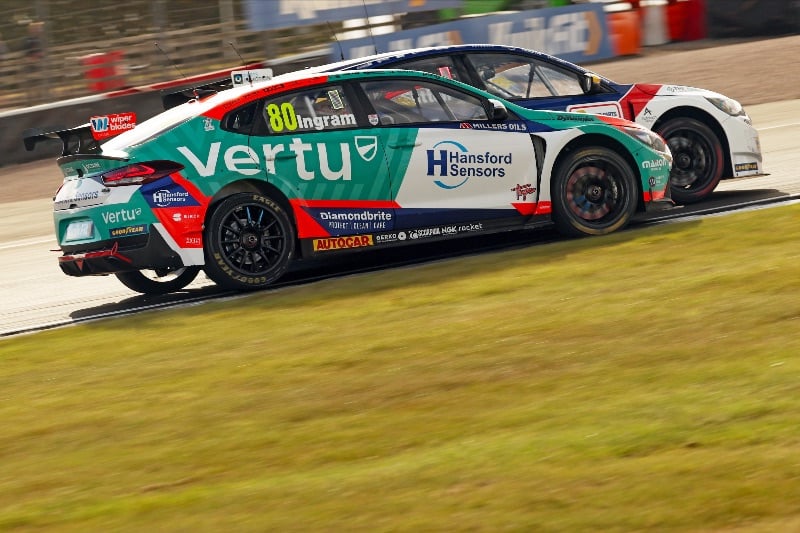
Ingram holds the race lap record and won the final Donington GP race in 2025. He also showed strong one-lap form at the April National meeting.
His P2 championship position gives him three seconds of qualifying TTB per lap. That is still restrictive, but it is triple Sutton’s time allowance.
If Ingram lands in the opposite group from Sutton, comparing their raw times may become one of the most interesting parts of the afternoon.
Dan Cammish: a qualifying specialist with more TTB
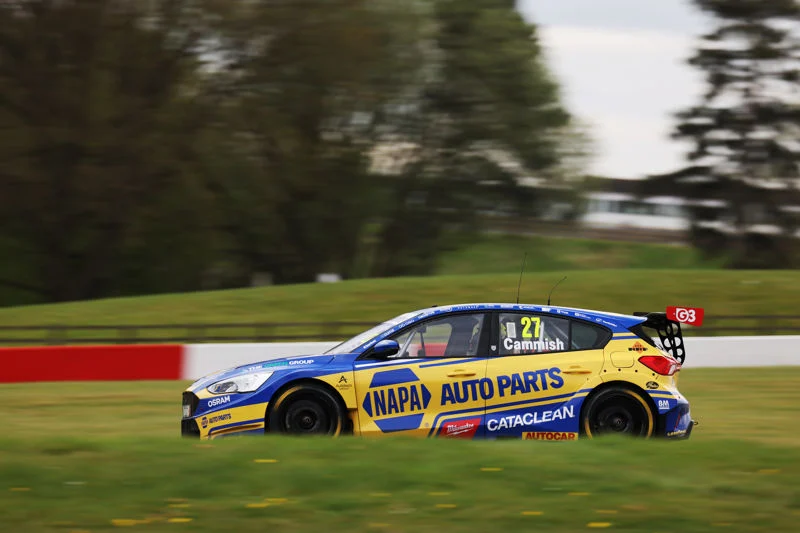
Cammish has a strong Donington qualifying history and sits third in the championship. His five-second qualifying boost allocation gives him another reason to be a front-row threat.
The group format can amplify that advantage. If Cammish tops the faster group, he can earn the front row even if another title contender has a similar raw lap.
Josh Cook and Adam Morgan can upset the title trio
Cook’s seventh-place championship position gives him 15 seconds of TTB per qualifying lap. Speedworks also says his April Donington pace was stronger than the final results showed.
Morgan sits eighth and therefore falls into the largest published qualifying allocation: 20 seconds per lap with a lower deployment threshold.
That does not guarantee a faster lap because extra power must be used effectively. Still, it makes the midfield much more dangerous in a short session.
Recent form supports Morgan as well. He won the Knockhill Race for Pole and Race 1, then finished second in Race 3.
Deleted laps and technical compliance can change the order late
The 2026 season has already shown how technical monitoring can alter a Saturday result. Drivers need to finish qualifying laps within the permitted boost limits, while track limits can also remove a time.
This means the first timing-screen order may not be the final grid. Teams and viewers should wait for the official classification before treating a lap as secure.
That same caution applies to results across the season. Our Thruxton race results, Thruxton strategy analysis and Thruxton preview show how race-weekend context can change the meaning of a simple finishing order.
What Saturday Qualifying Means for the Rest of the Weekend
The Race for Pole is not a demonstration run. It awards points and creates the Race 1 grid, so the qualifying result is only an intermediate step.
Saturday’s winner scores 10 points, while second scores nine and third eight. The scale continues through the top 15.
Sunday then contains three 14-lap races. Race 1 starts at 11:45 BST, Race 2 at 14:45 and Race 3 at 17:30.
For U.S. viewers, those starts are 6:45 a.m., 9:45 a.m. and 12:30 p.m. ET. The Saturday qualifying broadcast window begins at 9:00 a.m. ET in North America.
The Knockhill schedule and TV guide and Thruxton schedule guide show how the championship’s recent weekends have been structured for viewers.
Because the Race for Pole sets Sunday Race 1, Saturday contact can have a two-day consequence. A driver who starts from P2 in the Qualifying Race but finishes 15th after contact also starts Race 1 from that lower position.
That creates an unusual balance between aggression and preservation. Qualifying is about extracting maximum speed; the Race for Pole is about converting that speed without destroying the weekend.
Donington Park GP BTCC 2026 Qualifying FAQ
Conclusion: The Real Donington GP Qualifying Story Starts at 14:05 BST
The correct Donington Park GP BTCC 2026 qualifying result is currently a blank sheet. That is not a data problem; it is simply the event timeline. The session has not happened yet.
What is already known is important. The GP layout is 2.49 miles with 12 corners, Sutton’s qualifying record is 1:33.154, and the 2026 format splits the field into two 15-minute groups based on Free Practice.
The faster group will earn the odd grid positions for the Race for Pole. The other group will fill the even positions. Then the nine-lap Saturday race will finally decide who starts Race 1 from pole on Sunday.
Sutton enters as championship leader with 327 points, but his TTB allocation is the smallest. Ingram and Cammish have more boost, while Cook, Morgan and other lower-ranked drivers receive a substantially larger qualifying allowance.
That gives Saturday the potential to produce a mixed order even before the Race for Pole begins. Tyre choice, group conditions, traffic and technical compliance can all move a driver several positions.
The key rule for this page is simple: National-circuit April data must never be presented as August GP data. Once official GP timing exists, genuine leading laps should look like GP times, not the 1:07 range from the shorter layout.
Until the chequered flag falls in qualifying, the tables above remain pending by design. That keeps the article accurate, useful and ready for a clean result update when the official classification is released.