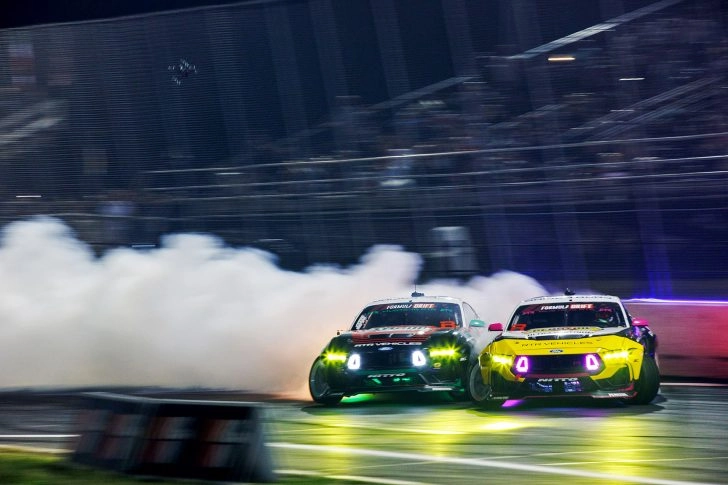
Formula DRIFT Indianapolis 2026 Strategy Analysis: Hard Tyres, Turbo Boost & Race Position
A rule-accurate analysis of approved 200-UTQG tires, new-asphalt grip, turbo response, UDSM qualifying, bracket seed, lead-and-chase responsibilities, tandem contact and the championship fight at Midwest Mayhem.
The Formula DRIFT Indianapolis 2026 strategy starts with an important correction. There is no mandatory “hard tyre” for Midwest Mayhem. There is also no push-to-pass boost allocation, and race position does not mean first car to the finish.
Instead, tire strategy means balancing approved 200-UTQG rubber, measured rear width, pressure, heat and two-run consistency. Turbo strategy means shaping torque and wheel speed. Position means qualifying seed, bracket order and the alternating lead-and-chase roles.
Indianapolis is a genuine unknown. Formula DRIFT has added paving and created a new course through site visits, driver input, judge input and simulator testing. Therefore, the winning setup may change between Thursday practice and Saturday’s Top 16.
This article uses the official event schedule, 2026 sporting rules, judging regulations, technical regulations and post-Stafford standings available on July 22, 2026. Strategic forecasts remain editorial analysis.
Formula DRIFT Indianapolis 2026 Strategy: The Quick Answer
What will decide Formula DRIFT Indianapolis 2026?
Track evolution, repeatable rear-tire grip, smooth turbo response and clean two-role execution should decide Indianapolis. Drivers must learn a new paved layout, score strongly in telemetry-assisted qualifying, lead without becoming unchaseable and follow close enough to show control without creating avoidable contact.
Indianapolis rewards the team that learns fastest. Every driver receives limited official practice, and the sporting regulations cap PRO practice before qualifying. Consequently, each run must answer a clear setup question.
The first question concerns grip. Fresh pavement can begin dusty and inconsistent. It then gains rubber in the outside zones. A pressure setting that works Thursday afternoon may create too much grip Saturday night.
The second question concerns power delivery. Peak horsepower attracts attention, but a sudden torque spike can widen the line. It can also force a chase driver to make unnecessary corrections.
The third question concerns position. A high qualifying seed creates a favorable bracket and gives the driver the first lead run. However, it does not create an automatic judging advantage. Both roles remain equally important.
Finally, reliability may separate the finalists. Drivers complete two consecutive runs in each battle. Teams cannot change tires, pressure, suspension, fuel or cooling settings between those two runs.
Indianapolis will not reward the largest dyno number. It will reward the car that repeats the same angle, speed and tire behavior under changing grip.
World of Speed strategy deskWhat “Hard Tyres, Turbo Boost and Race Position” Really Mean
Are hard tires mandatory at Formula DRIFT Indianapolis?
No. Formula DRIFT does not select one hard compound for Indianapolis. PRO competitors must use an approved DOT tire with at least a 200 UTQG rating. Tire width is linked to vehicle weight, while warmers, shaving, grooving and chemical traction treatments are prohibited.
The requested title uses familiar circuit-racing language. Yet judged drifting applies those words differently. Keeping that distinction clear prevents a technically false article.
“Hard Tyres” Means Durability Versus Usable Grip
UTQG is not a direct soft-medium-hard race-compound scale. Formula DRIFT requires a minimum rating of 200, but the approved list includes several manufacturers and models.
Therefore, teams are not choosing from a series-issued compound range. They are choosing how to exploit an approved commercial tire within the weight-to-width rule.
A durable tire can maintain behavior across a tandem pair. However, insufficient grip may reduce speed and proximity. Maximum grip can create the opposite problem by loading the drivetrain and making transitions harder to repeat.
“Turbo Boost” Means Response, Not Allocation
Formula DRIFT does not give the championship leader fewer boost seconds. It does not give a lower-ranked driver extra push-to-pass.
Instead, boost is a setup variable. Engineers tune spool, torque rise, throttle response and wheel speed. Drivers then use the throttle, clutch and left-foot brake to keep that response inside the available grip.
World of Speed’s guides to turbocharged and naturally aspirated engines, torque and horsepower provide the mechanical background.
“Race Position” Means Seed, Bracket and Role
Formula DRIFT is not decided by elapsed time. Qualifying position creates a bracket number. That position controls the path through the Top 32 and determines who leads first.
Each battle contains two runs. Driver A leads Run 1 and chases Run 2. Judges compare the complete performance rather than simply awarding the run to the car in front.
As a result, “track position” becomes tactical control. The lead driver sets a chaseable reference. The chase driver must match line, pace, angle and transitions while remaining close.
Midwest Mayhem: Event Format and Strategy Schedule
When is Formula DRIFT Indianapolis 2026?
Midwest Mayhem runs July 30 through August 1 at Indianapolis Raceway Park. Thursday features PRO practice and qualifying. Friday carries the PROSPEC Top 32 and Top 16. Saturday contains PRO warm-up, the Top 32 and the evening Top 16 through the final.
Indianapolis hosts Round 5 of the eight-round PRO season. It also hosts the third PROSPEC round. Both championships compete at a venue Formula DRIFT has never used before.
The local schedule is already in Eastern Time. Therefore, U.S. East Coast viewers can use the published clock without conversion.
| Day | Session | Eastern Time | Strategic purpose |
|---|---|---|---|
| Thursday, July 30 | PRO Practice | 11:15 a.m.–12:45 p.m. | Map grip, gears, initiation and pressure |
| Thursday, July 30 | PROSPEC Seeding Bracket | 3:00–5:30 p.m. | Set Friday’s PROSPEC order |
| Thursday, July 30 | PRO Warm-Up | 6:00–7:00 p.m. | Prepare for cooler qualifying conditions |
| Thursday, July 30 | PRO Qualifying | 7:00–10:00 p.m. | Create the Top 32 bracket and score bonus points |
| Friday, July 31 | PROSPEC Top 32 | 2:00–5:00 p.m. | First elimination phase |
| Friday, July 31 | PROSPEC Top 16 to Final | 7:00–10:00 p.m. | Decide the PROSPEC winner |
| Saturday, August 1 | PRO Warm-Up | 12:30–2:00 p.m. | Confirm tandem setup and tire behavior |
| Saturday, August 1 | PRO Top 32 | 2:30–5:30 p.m. | First five-figure championship swing |
| Saturday, August 1 | PRO Top 16 to Final | 7:00–10:00 p.m. | Night battles decide Round 5 |
The time split matters. PRO qualifies Thursday night, then returns Saturday afternoon. That gap gives teams more than a day to inspect data and repair damage.
However, Saturday warm-up lasts only 90 minutes. A team cannot rebuild its entire concept during that session. The core setup must already be correct.
Track temperature should also move substantially. Afternoon Top 32 battles may create more surface heat than the evening Top 16. Therefore, teams need a pressure plan for both conditions.
Thursday rewards learning speed. Saturday rewards adaptability. The best teams will prepare two pressure and power maps before the first tandem battle begins.
The Redesigned Indianapolis Course: Seven Zones and No History Book
Why was the Indianapolis Formula DRIFT course redesigned?
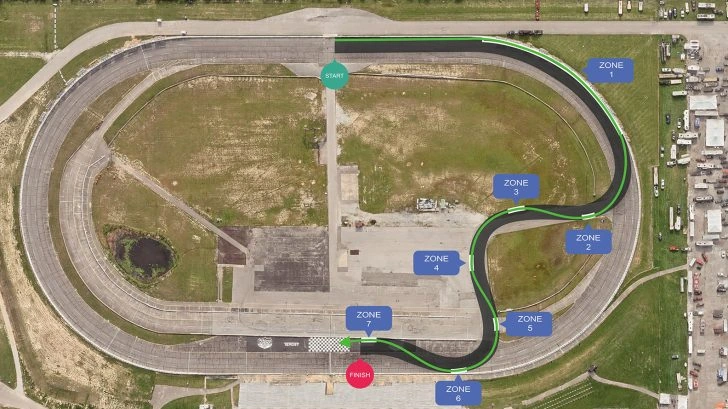
Formula DRIFT and Indianapolis Raceway Park added paving to create a more suitable competition course. Driver liaisons, judges and series officials developed the layout through site visits and Drift SIM testing, then published a seven-zone route and ideal line before Round 5.
The venue opened in 1960 and is best known for drag racing and oval competition. Formula DRIFT needed a course that produced sustained angle, visible zones and meaningful tandem transitions.
The project involved driver liaisons Ryan Litteral, Ken Gushi and Matt Field. Judges Brian Eggert, Reese Marin, Robbie Nishida and Vernon Zwaneveld also contributed with the competition department.
The Opening Section: Speed Before Data
The route begins near the oval and carries drivers into a long first zone. Drivers must commit before they possess years of historical reference.
Entry speed must be high enough to fill the outside zone. Yet excessive speed can force a correction before the first major transition. The safest approach is not necessarily the highest qualifying score.
The Middle Complex: Transition Quality Over Smoke
Zones two through five bend through the newly configured infield area. This section should reveal steering response and torque control.
A driver who waits for boost may transition in steps. A driver with too much immediate torque may rotate faster than the chase car can match.
Therefore, teams should study transition rate rather than tire smoke alone. Smoke can hide the car, but UDSM telemetry still records line, angle and off-course tires.
The Finish: Grip Changes the Last Impression
The final zones return toward the frontstretch. A driver needs enough rear grip to carry speed without straightening before the finish line.
This phase will become harder during consecutive tandem runs. Rear temperature rises, pressure changes and the tire must complete both roles without service.
Fresh Asphalt Creates a Moving Target
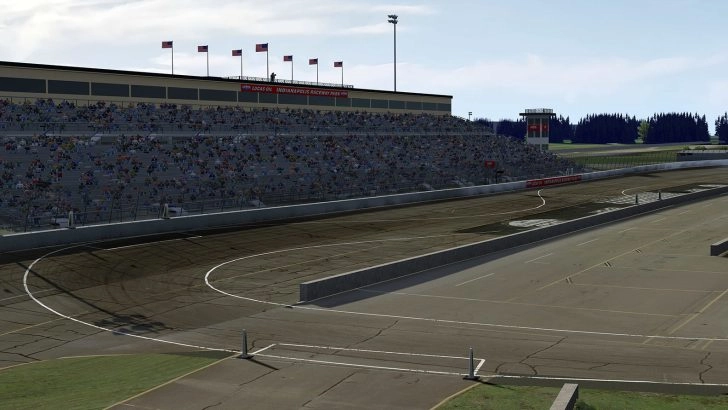
New pavement usually changes as rubber accumulates. Early runs can feel dusty or green. Later runs can gain grip in the preferred line while remaining slippery outside it.
That evolution affects every setup choice. More grip can improve speed and proximity. However, it can also create abrupt transitions and additional drivetrain load.
Drivers who compete late in qualifying may see a different surface from early runners. Since qualifying order is reverse championship order, the leaders run later and can watch the first group.
World of Speed explains the basic forces in its guides to grip, car handling and common causes of motorsport crashes.
Tire Strategy: 200 UTQG, Measured Width and Two-Run Consistency
What tires are legal in 2026 Formula DRIFT PRO?
PRO cars must use a listed tire with at least a 200 UTQG rating. Rear tires must fit a DOT-standard 18-inch wheel. Approved 2026 suppliers include GT Radial, Kenda, Kumho and Nitto, with legal models and sizes specified in the technical regulations.
The tire rule is designed to control cost and performance without creating a spec tire. It also connects tire capacity to vehicle mass.
Cars must weigh between 2,700 and 3,400 pounds with the driver and required equipment. Maximum measured rear width rises by ten millimeters for every 100-pound class.
| Minimum vehicle weight | Maximum measured rear width | Strategic effect |
|---|---|---|
| 2,700 lb | 260 mm | Low mass, but the smallest legal contact patch |
| 2,800 lb | 270 mm | Modest grip increase with limited weight penalty |
| 2,900 lb | 280 mm | Common compromise between rotation and traction |
| 3,000 lb | 290 mm | More tire capacity for higher torque |
| 3,100 lb | 300 mm | Stronger acceleration with added inertia |
| 3,200 lb | 310 mm | Large grip window and heavier transitions |
| 3,300 lb | 320 mm | High traction for powerful builds |
| 3,400 lb | 330 mm | Maximum legal width and maximum legal mass |
The official tool measures the contact patch rather than trusting the sidewall label. Therefore, a nominal tire size does not guarantee compliance.
Podium cars are impounded for weight and width checks. Random inspections can also occur during the weekend.
Why “Harder” Is Not Automatically Safer
A tire with lower grip may reduce drivetrain load and last longer. However, it can increase wheel speed and reduce forward drive.
That loss becomes serious in chase position. A slower car cannot maintain proximity after initiation, even if it produces large smoke.
Conversely, very high grip can pull the car straight during transition. It can also make the lead pace difficult for a lower-grip opponent to follow.
Pressure Is the Main Trackside Tuning Tool
Teams cannot use warmers or chemical treatments. Therefore, pressure, burnout length and setup become the legal methods for shaping initial behavior.
Lower pressure generally increases the working contact patch and sidewall movement. Higher pressure can free the rear, increase wheel speed and reduce rolling resistance.
The exact target depends on the tire, car, track temperature and role. Teams should record cold pressure, post-burnout pressure and post-run pressure rather than relying on one number.
World of Speed’s tire-pressure guide explains the basic relationship between temperature and pressure, although competition targets differ from road-car recommendations.
No Service Between Tandem Runs
The two runs in a battle are consecutive. Teams cannot change tires, alter pressure, adjust suspension, refuel or cool the car between them.
Rear tires must complete both runs. That rule makes consistency more important than a one-run peak.
A driver may lead first on the freshest tire, then chase with more temperature. The opponent faces the reverse order. Both teams must predict how the tire changes across the pair.
Debead and Damage Risk
High angle and side load can unseat a bead. Contact can also damage the wheel. Formula DRIFT permits a Run 1 tire change through the timeout process only when the debead results from contact-related rim or tire damage.
A car cannot start with a currently or previously debeaded tire. Therefore, wheel protection matters as much as tread life.
The ideal Indianapolis tire does not merely survive two runs. It must give similar acceleration, angle support and transition timing in both the lead and chase roles.
Turbo Boost Strategy: Build Response the Driver Can Repeat
Does Formula DRIFT regulate turbo boost like push-to-pass?
No. Formula DRIFT does not assign boost by championship position and has no push-to-pass button. Teams manage turbo response through engine calibration, boost control, gearing and driver technique. The goal is repeatable wheel speed and acceleration rather than a temporary overtaking advantage.
Turbocharged drift cars need immediate response after initiation and during each transition. However, instant response is useful only when the rear tire can convert it into controlled speed.
A sudden boost spike can force the car beyond the intended zone. It can also create a correction that UDSM or the judges identify.
Initiation Boost
The car must be sideways by the latest initiation point. The driver needs enough torque to rotate the rear without arriving unstable.
A boost map that reaches peak torque too early can create excess angle. A slow-spooling setup may require a clutch kick, adding another variable.
Teams should tune the response around the selected initiation method. The engine map, final drive and chosen gear must work together.
Transition Boost
Transitions reveal the quality of the torque curve. The driver briefly unloads one direction, then asks the rear tires to accept power in the other.
If boost falls too far during the transition, the car may hesitate. If it returns violently, the rear can snap past the target angle.
Therefore, a broad and predictable torque curve often beats the largest peak number. Read World of Speed’s guides to how engines work, how a clutch works and manual gearboxes.
Lead-Run Power Delivery
The lead driver must create a chaseable run. Acceleration should follow the momentum map and the line described in the driver briefing.
Using power to escape while sacrificing line, angle or style is a lead compromise. Judges can punish a driver who makes the run unnecessarily difficult to chase.
Consequently, the lead map should prioritize consistent pace. Smooth torque allows the chase driver to react while still demanding commitment.
Chase-Run Power Delivery
The chase car needs rapid response when the lead accelerates. Yet it also needs fine control when the gap closes.
Drivers often use left-foot braking to manage distance while keeping the engine loaded. This technique can preserve turbo response, but pronounced braking can hurt style or reveal a pace mismatch.
A chase map may therefore favor finer throttle resolution. Maximum boost remains available, but the pedal should not behave like an on-off switch.
Heat and Reliability
Indianapolis runs in summer heat, with evening sessions after afternoon warm-up. Intake temperature, coolant temperature and differential temperature can build across repeated battles.
An OMT adds two more runs. A deep bracket run can add several OMTs and burnouts. Cooling must handle the unexpected rather than the minimum schedule.
Boost leaks, wastegate problems and heat-soaked intercoolers change torque delivery. Even a small response difference can widen a chase gap.
Fast, not violent
Reach angle before the latest point without overshooting the first zone.
Keep torque connected
Prevent a dead pause or sudden surge as the chassis changes direction.
Prioritize pedal resolution
Close the gap without forcing repeated corrections or contact.
UDSM Qualifying Strategy: 80 Percent Telemetry, 20 Percent Judges
How does Formula DRIFT PRO qualifying work in 2026?
PRO drivers receive two non-consecutive solo runs in reverse championship order. UDSM telemetry awards up to 40 points for line and 40 for average angle. Three judges award up to 20 style points, creating a 100-point total.
The system changes the risk calculation. Line and angle are no longer broad visual estimates. Sensors measure the car continuously and compare each driver on the same weekend scale.
Style remains human. Judges assess front-wheel control, pace, initiation, transitions, throttle use and tire position outside the telemetry-scored zones.
First Run: Establish a Bracket
The first run should create a score that safely enters the Top 32. A clean line with controlled angle protects the weekend.
However, playing too safe can create a difficult seed. A low seed places the driver against a stronger opponent and removes first-run lead position.
The correct approach is a complete run, not a conservative parade. Drivers should fill zones, maintain angle and avoid an incomplete.
Second Run: Attack the Missing Category
The runs are non-consecutive, giving teams time to read the first score. If line was weak, the second attempt can prioritize zone fill. If angle was low, the driver can carry more rotation.
Yet the second run must still finish. A spin, opposite drift, three tires off or loss of control at the line creates an incomplete.
James Deane’s Stafford weekend demonstrated the trade-off. A spin on his second qualifying run lowered his starting position, but he still recovered to win the event.
Line: Forty Telemetry Points
UDSM calculates the percentage of each zone filled. It also subtracts overfill into virtual no-go areas.
Therefore, “more wall” is not always better. The target is the defined zone. Crossing beyond it can reduce the score or produce an off-course result.
Angle: Forty Telemetry Points
The system samples angle throughout the judged course. It then calculates average angle against a weekend-specific maximum scale.
A single dramatic moment cannot carry a weak run. Drivers need sustained angle without losing pace or line.
Style: Twenty Judge Points
Style rewards rapid initiation, rapid transitions, controlled front wheels, consistent pace and heavy but precise throttle use.
Judges deduct for choppy throttle, stepped transitions, shallow angle, unstable steering and excessive handbrake or left-foot brake use.
World of Speed’s qualifying guide and grid-position explainer cover general concepts, although Formula DRIFT uses judged scoring rather than lap time.
The Indianapolis pole should go to a driver who balances zone fill with repeatable angle. A wild high-angle run can lose more through line errors than it gains through spectacle.
Lead and Chase Strategy: Two Different Jobs, One Judging Decision
What is the difference between lead and chase strategy?
The lead driver must follow the judged line, angle, initiation, transitions and momentum map while producing a chaseable pace. The chase driver must initiate no later, maintain close proximity, match or improve angle and mimic the lead car’s line and transitions.
Each battle consists of two runs. Drivers switch positions after Run 1. Judges then decide which competitor performed better overall.
This format prevents a specialist from relying on one role. A strong lead run creates pressure, but a distant chase can still lose the battle.
Lead Strategy: Set a Fair but Difficult Reference
The perfect lead run resembles a qualifying run. It fills the zones, maintains angle and follows the defined pace.
However, the lead driver must remain chaseable. Artificial slowing, unexpected deceleration or a compromised line can create a deduction.
The best lead driver creates separation through execution. A faster transition and better exit are legitimate. A poor line used only to escape is not.
Chase Strategy: Close the Gap Before the First Transition
Entry proximity shapes the entire run. A car that initiates late often spends the remaining course recovering distance.
The chase driver may leave the start slightly earlier when necessary to maintain proximity before initiation. That procedure is built into the rules.
Once sideways, the chase car must mimic timing and rotation. Matching position without matching angle creates a weak visual and telemetry comparison.
Do Not Copy a Bad Lead Mistake
The chase driver should mimic the intended line, not every error. If the lead car loses angle, the chase car can show dominance by maintaining better angle while remaining close.
Yet adaptation must be realistic. Cause-and-effect judging considers whether the lead mistake forced the chase mistake.
A chase driver can receive protection when the lead creates an unavoidable problem. However, the chase must still make reasonable adjustments when time and space allow.
Contact Without an Incomplete
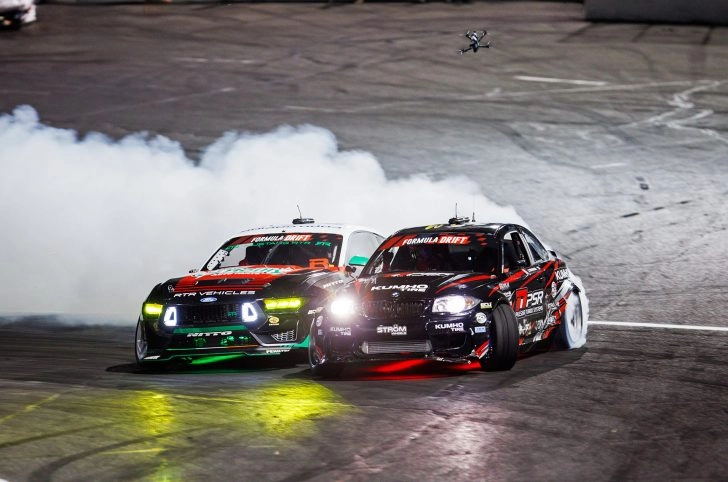
Light contact can occur without ending the run. In 2026, judges do not automatically assign fault for Run 1 contact when both cars continue without an incomplete.
Both drivers may receive up to five minutes for repairs without using the regular competition timeout. The competition director can also inspect the cars.
This rule rewards continued control. Nevertheless, repeated contact can bend steering, puncture tires or create a later incomplete.
Contact With an Incomplete
When contact causes an incomplete, judges determine fault using available evidence. The not-at-fault vehicle may receive repair time.
UDSM data adds another tool. It can show deceleration, angle, speed, proximity and off-course tires even when smoke hides the incident.
Legal Passing
Passing is allowed, but only under specific conditions. The lead driver must be offline or off course, while the chase driver passes on the inside at an inside clipping point.
The pass becomes complete when the chase car fully clears the lead car. The passing car then assumes lead responsibilities for the rest of the run.
Therefore, an aggressive dive is not automatically legal. Position, line and the lead driver’s error all matter.
Bracket Position, Championship Points and OMT Strategy
Why does qualifying position matter in Formula DRIFT?
Qualifying position sets the Top 32 bracket and determines the first lead run. The higher bracket position always leads first. It also influences event ranking among drivers eliminated in the same round and can decide a result when both cars suffer independent first-run failures.
The first qualifying score receives four championship points. Second receives three, third receives two and fourth through 32nd receive one.
Each declared main-event battle win is worth ten points. A driver who qualifies first and wins five battles can score 54 points.
| Achievement | Points | Cumulative maximum | Strategic meaning |
|---|---|---|---|
| Qualify first | 4 | 4 | Best bracket position and first lead run |
| Win Top 32 | 10 | 14 | Advance to Top 16 |
| Win Top 16 | 10 | 24 | Advance to Great 8 |
| Win Great 8 | 10 | 34 | Advance to Final Four |
| Win Final Four | 10 | 44 | Reach the final |
| Win Final | 10 | 54 | Maximum possible Round 5 score |
The 54-point figure is calculated from the official 2026 points structure: four qualifying points plus five ten-point main-event wins.
Why Leading First Can Help
The higher seed sets the first reference. A clean lead run can place immediate pressure on the lower seed.
The opponent must then chase closely without knowing how the higher seed will behave under pressure. However, the advantage disappears if the leader makes an incomplete.
Why Leading First Can Hurt
Fresh rear tires may provide more grip on the first run. That can be helpful in lead position, but it leaves the driver to chase on the hotter second run.
Meanwhile, the lower seed chases first and leads second. Some drivers prefer that sequence because they can study the opponent’s pace before setting their own lead.
One More Time
An OMT occurs when judges cannot produce a majority decision or consider the battle genuinely undecidable. The drivers repeat both roles.
OMTs are intended for strong, close battles rather than two poor runs. Nevertheless, they create a major strategic cost.
Two extra runs increase tire use, drivetrain heat and repair risk. A team that survives three OMTs may enter the next round with less time and fewer fresh tires.
Competition Timeout
Teams can request a five-minute competition timeout for necessary repairs. It cannot be used for strategic service.
The team representative must request it through an official, and the competition director decides whether it is justified.
A deep Indianapolis run may depend on efficient repair work. World of Speed’s guides to transmission types and limited-slip differentials explain two components that face heavy drift loads.
Championship Contenders Before Indianapolis
Who leads Formula DRIFT before Indianapolis?
James Deane leads with 149 points after winning Round 4 at Stafford. Aurimas Bakchis is second with 127. Branden Sorensen has 107, Jack Shanahan 106 and Conor Shanahan 105, creating a tight three-driver group behind the leading pair.
| Pos. | Driver | Points | Gap | Indianapolis strategic need |
|---|---|---|---|---|
| 1 | James Deane | 149 | — | Protect the lead without sacrificing qualifying seed |
| 2 | Aurimas Bakchis | 127 | -22 | Return to the final and pressure Deane directly |
| 3 | Branden Sorensen | 107 | -42 | Convert consistent points into a first 2026 final |
| 4 | Jack Shanahan | 106 | -43 | Carry Stafford runner-up speed through a full event |
| 5 | Conor Shanahan | 105 | -44 | Combine qualifying aggression with mechanical completion |
| 6 | Dylan Hughes | 87 | -62 | Repeat Stafford’s top qualifying performance |
| 7 | Fredric Aasbo | 85 | -64 | Avoid another mechanical failure and build continuity |
| 8 | Ryan Tuerck | 64 | -85 | Use adaptability to create a new-venue upset |
James Deane: The Complete-Role Favorite
Deane finished second in Atlanta and Orlando, then won Stafford. That sequence gives him the strongest recent bracket form.
He also proved that a poor seed does not end a weekend. His second qualifying run at Stafford included a spin, yet he defeated five opponents.
Indianapolis should reward his adaptability. However, the championship lead means he qualifies late, after the surface has evolved and pressure has increased.
Aurimas Bakchis: The Grip and Consistency Threat
Bakchis led the standings before Stafford. He then lost to Conor Shanahan in the Great 8 and dropped 22 points behind Deane.
His GT Radial-shod Subaru remains a title-level package. A new course can favor a driver who builds a predictable grip map quickly.
Bakchis does not need to win the championship in Indianapolis. He needs to stop Deane from opening a final-round-sized margin.
Branden Sorensen: The Quiet Third-Place Pressure
Sorensen sits third after another solid Stafford result. He is only one point ahead of Jack Shanahan and two ahead of Conor.
That group can change order in one qualifying run. Reaching the Great 8 may not be enough if both Shanahans advance further.
Jack Shanahan: Stafford Momentum
Jack reached the Stafford final and moved from sixth to fourth in the standings. A steering problem ended his second final run against Deane.
Indianapolis offers immediate redemption. The challenge is reliability across a surface that may load the steering and front tires differently.
Conor Shanahan: Championship Upside and Mechanical Risk
Conor completed the all-Irish Stafford podium. Yet a technical issue prevented his second semifinal run against Jack.
His aggressive style should suit the visible seven-zone layout. The car must survive consecutive runs and possible OMTs.
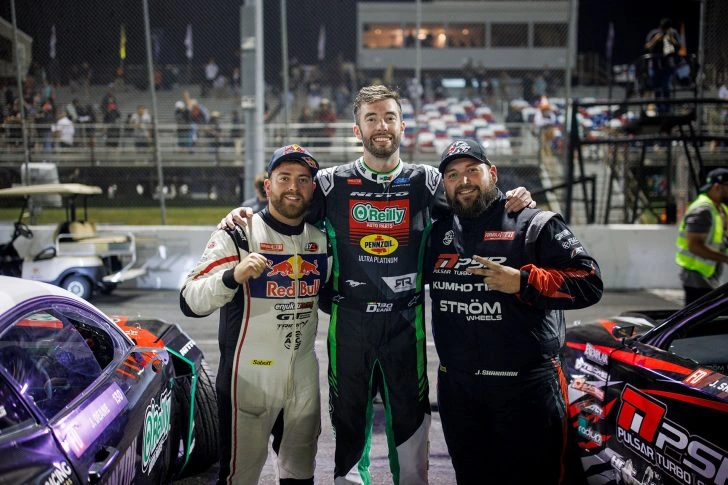
Dylan Hughes and the Qualifying Question
Hughes qualified first at Stafford and moved to sixth in points. That result makes him a serious Indianapolis pole candidate.
UDSM rewards repeatable line and angle, areas where a data-focused team can excel. The remaining task is turning the seed into five clean battle wins.
Fredric Aasbo and Ryan Tuerck
Aasbo’s Stafford event ended with a broken axle in the Top 16. His season has been inconsistent, but his experience on unknown layouts remains valuable.
Tuerck lost to Deane in the Great 8 and sits eighth. New asphalt can create a bracket where experience and car control overcome a points deficit.
Indianapolis Setup Priorities
Steering and Front Grip
The car needs enough front response to place the rear tire in each zone. Excessive steering effort can slow transitions and overheat components.
Ackermann, caster and toe influence how the front tires behave at angle. Teams must avoid a setup that creates dramatic lock but poor control.
Rear Alignment and Squat
Rear toe and camber influence forward drive. More traction can improve pace, but it may increase the energy required to transition.
Anti-squat also shapes how quickly the tire accepts torque. The correct setting depends on the new asphalt and the engine’s response.
Final Drive and Gear Selection
The course needs a gear that covers initiation, transitions and the finish without repeated shifts. Hitting the limiter can interrupt acceleration and damage style.
A taller gear may smooth torque. A shorter gear may improve response but create excessive wheel speed.
Differential Behavior
The differential must keep the rear tires working together while allowing the car to rotate predictably. Inconsistent lock can produce a step during transition.
Higher grip increases differential load. Therefore, fluid temperature and mechanical condition need close monitoring.
Cooling for Night Competition
Evening air may be cooler, but repeated burnouts and OMTs still build heat. Teams need airflow while moving slowly in staging.
Fans often focus on engine coolant. However, steering, transmission and differential temperatures can also end an event.
Qualifying Setup Versus Tandem Setup
Qualifying rewards maximum zone fill and sustained angle. Tandem rewards repeatability and responsiveness to another car.
A sharp solo setup may be difficult to chase. Teams should avoid creating a car that scores 95 points but cannot follow an unpredictable lead.
World of Speed’s drivetrain-layout guide explains why Formula DRIFT competition cars use rear-wheel drive, while differential behavior adds useful context.
Formula DRIFT Indianapolis 2026 Strategic Predictions
Who is favored to win Formula DRIFT Indianapolis 2026?
James Deane is the overall favorite after two runner-up finishes and a Stafford victory. Dylan Hughes is the qualifying pick, Aurimas Bakchis is the title-pressure pick and Jack Shanahan is the strongest momentum challenger. A new course keeps the upset probability high.
Prediction 1: The Qualifying Winner Will Score Above 90
The seven-zone course appears designed for measurable line performance. UDSM should reward a driver who fills the route without entering no-go areas.
Hughes is the preferred pole pick after topping Stafford qualifying. Deane, Bakchis and Aasbo remain realistic alternatives.
Prediction 2: Thursday and Saturday Tire Pressures Will Differ
The surface will gain rubber and change temperature. Teams that copy Thursday numbers into Saturday night should lose consistency.
A pressure reduction or increase will depend on the tire and car. The important prediction is that the target moves.
Prediction 3: At Least One Top-10 Driver Will Lose in the Top 32
New layouts increase uncertainty. A lower seed may discover a better grip window during Saturday warm-up.
One incomplete can erase a large championship advantage. Therefore, a bracket upset is highly likely.
Prediction 4: An OMT Will Decide a Great 8 Battle
The leading group is tightly matched. Deane, Bakchis and the Shanahans can produce close two-role comparisons.
The new course also creates uncertain cause-and-effect situations. Judges may need an OMT when both drivers execute strongly.
Prediction 5: Deane Leaves Indianapolis With the Lead
A 22-point margin provides some protection. Deane also has the strongest sequence of recent finishes.
Bakchis can reduce the gap by qualifying higher and reaching the final. However, Deane should remain first unless he exits before the Great 8.
James Deane
Three consecutive finals and Stafford recovery make him the safest full-bracket forecast.
Dylan Hughes
Stafford pole and a data-friendly driving style fit the seven-zone UDSM challenge.
Aurimas Bakchis
He needs a final appearance to stop Deane from building a major Round 5 cushion.
Jack Shanahan
Stafford proximity and runner-up momentum make him the leading upset pick.
What Could Change the Predictions?
Rain would rewrite the grip map and reduce smoke. Judges can adjust criteria when weather changes without canceling competition.
A wet sighting lap may precede competition. Teams would then need a low-grip pressure and power plan with almost no real practice.
Mechanical issues can also reshape the bracket. Steering failures, broken axles and tire damage affected leading Stafford contenders.
Finally, the course may drive differently from the simulator. New paving, barriers and real tire rubber can change the ideal line.
Formula DRIFT Indianapolis 2026 Strategy FAQ
Conclusion: Indianapolis Will Reward Repeatability, Not a Single Spectacular Run
The Formula DRIFT Indianapolis 2026 strategy cannot be copied from a lap-time championship. There is no mandatory hard tire, no push-to-pass boost and no conventional race position.
Tires remain central. The approved 200-UTQG rule creates variety, while the weight-to-width table controls maximum rear grip.
Pressure and temperature will move as new asphalt gains rubber. Therefore, teams need a live grip model rather than one fixed setup.
Turbo response is equally important. Smooth torque should improve initiation, transition timing and chase proximity.
Peak power only helps when the tire can use it. A violent boost spike can damage line, angle and style at the same moment.
Qualifying creates the first championship opportunity. UDSM measures line and angle for 80 points, while judges award the remaining 20 for style.
A high seed controls the bracket and earns the first lead run. However, both roles carry equal weight once tandem competition begins.
The lead driver must produce a fast, chaseable reference. The chase driver must match line, pace, angle and transitions without avoidable contact.
Two consecutive runs make tire and heat consistency decisive. Teams cannot adjust pressure, suspension or cooling between the lead and chase runs.
James Deane arrives as the favorite after three straight finals and a Stafford victory. Bakchis remains the main title threat, while Hughes is the qualifying pick and Jack Shanahan the leading battle dark horse.
The new Indianapolis course removes historical certainty. Every team begins with simulations, renders and assumptions rather than previous event data.
That uncertainty is the attraction. The Round 5 winner should be the driver who learns the surface fastest, repeats the car’s behavior and completes both roles under pressure.
Sources & Verification
Event dates, session times, course-development details, tire rules, qualifying format, tandem criteria, points and championship standings were checked against official Formula DRIFT material available on July 22, 2026. Predictions are editorial analysis.
- Formula DRIFT — official Midwest Mayhem event page and Indianapolis schedule
- Formula DRIFT — official Indianapolis course-redesign report and seven-zone layout
- Formula DRIFT — 2026 Judging Regulations covering UDSM, tandem roles, contact and OMT
- Formula DRIFT — 2026 PRO Technical Regulations covering approved tires and weight-to-width limits