Black Flag in Formula 1 Explained
What the most serious on-track flag means, who orders it, what a driver must do, why it is rare, and how famous cases involving Schumacher, Mansell and Montoya shaped its reputation.
A black flag in Formula 1 orders the named driver to stop at the pits or another designated place on the next approach. The flag appears with the car number. In practice, the driver’s session is over, and the decision normally means disqualification.
Few signals in motorsport carry more finality than a plain black flag beside a driver’s number.
Yellow flags warn of danger. A red flag stops the whole session. However, the black flag targets one competitor.
The driver must report to the pits or another designated location. Continuing at racing speed is not an option.
The decision belongs solely to the stewards under the FIA flag code. Moreover, the team must be informed immediately.
If the driver fails to respond, officials may continue showing the flag for up to four consecutive laps. Further non-compliance can create additional disciplinary consequences.
Modern Formula 1 rarely uses the black flag. Radio communication, dashboard messages and electronic panels allow officials to warn teams earlier.
Many disqualifications also happen after the race. Technical scrutineering may reveal an underweight car, excessive plank wear or another breach.
Those post-race cases remove the result without requiring a black flag during the event. Therefore, “disqualified” and “black-flagged” are related but not identical.
This guide explains the current FIA procedure, famous incidents, related flags, appeals, championship effects and why the signal remains Formula 1’s ultimate on-track order.
What Is a Black Flag in Formula 1?
Yes, in normal Formula 1 use. The plain black flag tells the named driver to stop and report to the pits or another designated place. The driver cannot continue competing, so the result is effectively disqualification from that session or race.
The black flag is a direct instruction. It is not a general warning for every driver.
A black board with white numbers identifies the car. Therefore, the affected driver and team should have no doubt about the order.
Officials may display it at the start-finish line or another approved location. Electronic panels can also reproduce flag signals when the event regulations permit.
Why Is the Car Number Important?
Several cars may pass the flag point together. The number board prevents confusion.
In addition, the team receives direct notice. Radio communication then reinforces the visual signal.
Does the Flag Mean the Car Is Dangerous?
Not necessarily. A plain black flag concerns the competitor’s right to continue.
A dangerous mechanical condition normally uses the black-and-orange flag. That signal orders the driver to pit for repairs.
Is the Black Flag the Harshest Flag?
For one driver, it is the most decisive on-track flag. It ends participation immediately.
However, the FIA can impose further sanctions later. Those may include grid penalties, championship-point deductions, suspensions or fines.
Our guides to F1 flags and how racing flags work explain the full signal system.
What Do the FIA Black Flag Regulations Say?
The FIA’s 2026 Appendix H states that the black flag informs the driver to stop at the pits or another designated place on the next approach to pit entry. If the driver fails to comply, the flag is shown for no more than four consecutive laps. Only the stewards may order it.
The exact procedure appears in Appendix H to the FIA International Sporting Code.
The rule gives the driver one clear instruction: stop on the next approach to the pit entrance or designated location.
The flag is not supposed to remain on display indefinitely. If the driver ignores it, officials can show it for a maximum of four consecutive laps.
Meanwhile, the team receives immediate notice of the decision. This prevents a driver from claiming that the pit wall lacked information.
Decision
The stewards alone decide that the plain black flag will be displayed.
Identification
A black board with white figures shows the car number beside the flag.
Response
The driver must stop at the pits or another designated location on the next approach.
Can Race Control Show It Without the Stewards?
Race Control manages the signal system. However, the formal decision belongs solely to the stewards.
This separation matters because the black flag is disciplinary. It is more than a routine operational message.
Can Electronic Panels Replace the Physical Flag?
FIA Appendix H allows lights and light panels to represent flag signals when the event’s supplementary regulations permit it.
Nevertheless, the traditional flag and car-number board remain the clearest public image of the order.
Why Is the Team Informed Immediately?
The driver may miss one marshal post while fighting or passing traffic. Team radio provides a second route.
Moreover, the engineers must prepare a safe pit entry and explain where the car should stop.
The key FIA instruction is not “slow down.” It is “stop at the pits or designated place on the next approach.”
What Must a Driver Do After Receiving a Black Flag?
The driver must stop competing and enter the pit lane on the next approach. The car then stops at the team’s garage or another location named by officials. The driver should not complete extra racing laps or continue fighting for position.
The correct response begins before the car reaches pit entry. The driver acknowledges the radio message and avoids unnecessary battles.
Next, the driver follows the pit-entry line and speed limit. The black flag does not cancel ordinary pit-lane safety rules.
Once stopped, the car remains under official control. Scrutineers may inspect it, or the team may be told to retire it immediately.
Can the Driver Complete the Current Lap?
The driver must reach pit entry safely, so some track distance is unavoidable.
However, the driver should not intentionally continue for another full competitive lap after passing an available pit entrance.
Does the Driver Park in the Team Garage?
Usually, the team brings the car into the garage. Yet officials can designate another stopping place.
The decision may depend on safety, evidence preservation or the nature of the breach.
Can the Driver Rejoin Later?
A plain black flag ends the driver’s participation. Rejoining would require an extraordinary reversal by officials before the car returns.
That differs from the black-and-orange mechanical flag, which may allow the car to continue after repairs.
What If the Driver Ignores the Flag?
Ignoring it creates a separate and serious breach. The signal may continue for up to four consecutive laps.
Furthermore, the FIA can add sanctions beyond the original disqualification. Michael Schumacher’s 1994 British Grand Prix case shows that risk.
Why Would an F1 Driver Receive a Black Flag?
No single list covers every possible reason. The stewards can use the black flag when a competitor must stop immediately.
Historically, famous cases have involved ignoring penalties, breaching pit-exit controls, reversing illegally and continuing after direct instructions.
Ignoring a Time or Stop-and-Go Penalty
A driver who fails to serve a penalty within the required period can face escalation.
That was central to Schumacher’s 1994 Silverstone controversy. The dispute began with a formation-lap offense and developed through missed penalty instructions.
Leaving the Pit Lane Against a Red Light
The pit-exit light controls whether a car may rejoin.
Juan Pablo Montoya left while the red light was illuminated in Canada in 2005. Officials later black-flagged him.
Dangerous or Prohibited On-Track Conduct
Severe dangerous driving can justify removal from the event.
However, many incidents receive time penalties, drive-throughs or stop-and-go penalties instead. The exact sanction depends on severity and context.
Our guide to what causes racing crashes explains why officials distinguish mistakes from reckless conduct.
Repeated Failure to Obey Officials
A driver cannot negotiate indefinitely from the cockpit.
Teams may challenge a ruling afterward. Nevertheless, the driver must comply with the live instruction.
Administrative or Eligibility Problems
In theory, officials could stop a competitor whose participation has become invalid during the session.
Modern systems usually identify such problems before the car starts. Therefore, this route is uncommon.
Black Flag vs Red, Black-and-Orange and Black-and-White Flags
A black flag targets one named driver and orders that driver to stop. A red flag suspends the entire session for every car. The black-and-orange flag concerns a dangerous mechanical issue, while the black-and-white flag is a warning for unsporting behavior.
| Flag | Who It Applies To | Meaning | Can the Driver Continue? |
|---|---|---|---|
| Plain black | One named car | Stop at the pits or designated place; participation ends. | No, unless officials reverse the decision before a return. |
| Red | Every car | The session is suspended. | Possibly, after a restart. |
| Black with orange disc | One named car | The car has a mechanical problem likely to endanger the driver or others. | Yes, after repairs if officials permit. |
| Black and white diagonal | One named car | A once-only warning for unsporting behavior. | Yes, but repetition may lead to a stronger penalty. |
| Black with white number board | One named car | Identifies the driver ordered to stop. | No. |
Why Is the Black-and-Orange Flag Called the Meatball Flag?
The orange circle resembles a meatball. Therefore, paddock slang uses that nickname.
Its purpose is mechanical safety, not immediate sporting disqualification. A loose wing, damaged bodywork or fluid leak can trigger it.
What Does the Black-and-White Flag Warn About?
It is a warning for unsporting behavior. The driver may continue.
However, repeating the behavior can lead to a penalty. The warning is shown once, with the car number.
Why Is a Red Flag Not a Punishment?
A red flag normally responds to weather, debris, barriers or another unsafe condition.
It stops everyone equally. A black flag instead removes one competitor.
Read our guide to the F1 red flag for the restart procedure.
Is a Post-Race Disqualification the Same as a Black Flag?
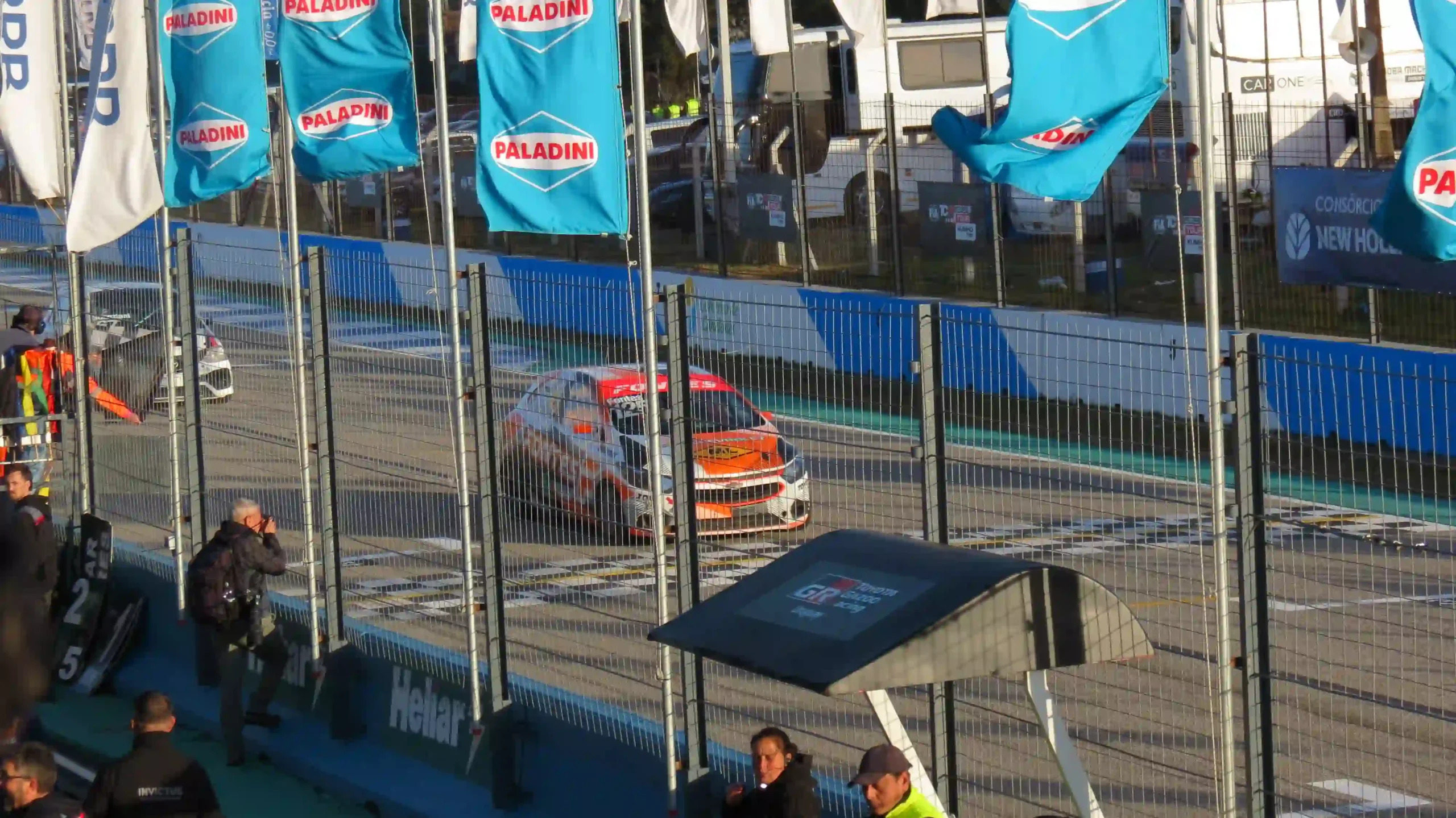
No. A black flag is an on-track order to stop during the session. A post-race disqualification removes a result after the event, usually following technical inspection, a protest or a steward investigation. No black flag needs to appear.
This distinction explains why many modern disqualifications happen without dramatic trackside signals.
Technical inspectors need accurate measurements. Those checks often occur after the car reaches parc fermé.
An underweight car, excessive plank wear or illegal component may not be confirmed during the race.
What Happens to the Result?
The driver is removed from the classification. Cars behind move up accordingly.
Championship points, trophies and prize consequences follow the revised result.
Can a Race Winner Be Disqualified After the Podium?
Yes. George Russell lost victory at the 2024 Belgian Grand Prix after his Mercedes was found underweight.
The podium ceremony had already happened. Nevertheless, the official classification changed after scrutineering.
Why Was No Black Flag Shown?
Officials did not have a confirmed live-session basis to order the car to stop.
The weight violation became clear after the race. Therefore, the correct process was post-race disqualification.
Can a Driver Be Black-Flagged and Later Face More Sanctions?
Yes. The live removal deals with immediate participation.
Stewards or the FIA can later add suspensions, fines or other consequences for the underlying behavior.
Famous Black Flag Incidents in Formula 1
The black flag is rare, so every appearance becomes part of F1 history.
Three cases stand out for different reasons. Mansell continued after the signal, Schumacher’s flag became tangled in an appeal dispute, and Montoya breached the pit-exit red light.
| Event | Driver | Trigger | Outcome |
|---|---|---|---|
| 1989 Portuguese Grand Prix | Nigel Mansell | Reversing in the pit lane after overshooting his stop. | Black flag, continued racing, later collided with Ayrton Senna. |
| 1994 British Grand Prix | Michael Schumacher | Penalty dispute after passing on the formation lap and missing the required response. | Black flag shown, later withdrawn during race; result subsequently disqualified and followed by a ban. |
| 2005 Canadian Grand Prix | Juan Pablo Montoya | Leaving the pit lane while the red exit light was illuminated. | Black-flagged and removed from the race. |
Why Do These Cases Still Matter?
Each shows a different path to the same signal. The black flag is not reserved for one type of offense.
Moreover, each case demonstrates that teams must understand both sporting rules and live Race Control instructions.
Has Ayrton Senna Been Associated With Black Flag History?
Yes. Official Formula 1 historical features include Senna among notable black-flag moments.
His era relied more heavily on physical boards and flags, before today’s dense radio and electronic-warning network.
Are Historic Cases Directly Comparable to Modern Rules?
Not always. Regulations, communication systems and penalty procedures have changed.
However, the essential meaning remains recognizable: the named driver must stop and cannot continue competing.
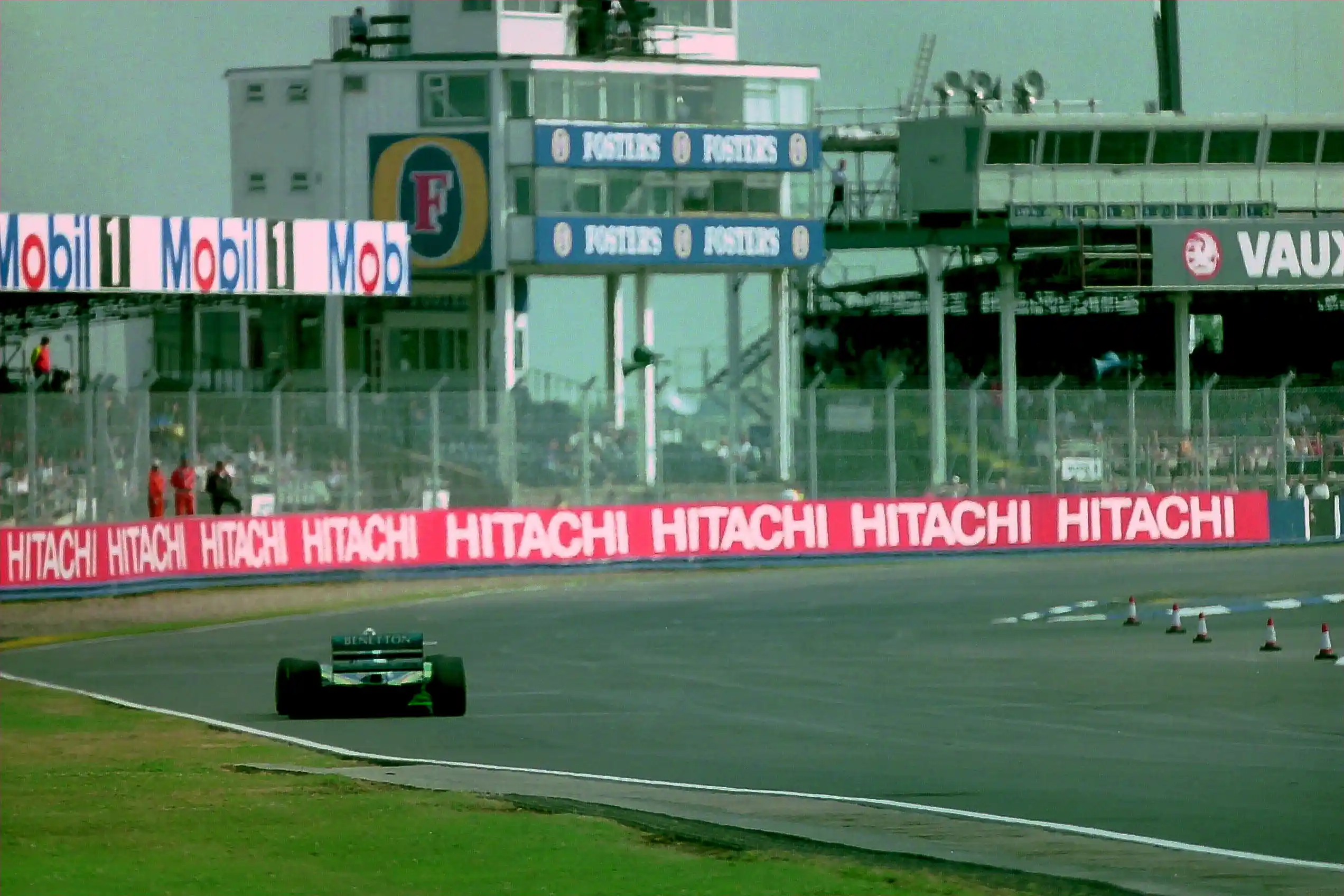
Michael Schumacher’s 1994 British Grand Prix Black Flag
Schumacher passed Damon Hill during the formation lap. Officials imposed a stop-and-go penalty, but the required response became disputed and delayed. A black flag was shown. It was later withdrawn during the race, yet Schumacher was subsequently disqualified and received a two-race ban.
The Silverstone case remains the most complicated black-flag story in Formula 1.
Schumacher overtook pole-sitter Hill during the formation lap. Although he restored position before the start, officials treated the move as an offense.
A five-second stop-and-go penalty followed. Benetton disputed how the instruction was communicated and did not serve it within the required period.
Officials then displayed the black flag. However, discussions continued while Schumacher remained on track.
The flag was withdrawn during the race after claims of a misunderstanding. Schumacher eventually served a stop-and-go penalty and finished second.
Why Was He Still Disqualified?
The post-race process examined the full failure to follow instructions.
Schumacher lost the result. In addition, the case led to a two-race suspension.
Can a Black Flag Be Withdrawn?
The Silverstone episode proves that officials can reverse or supersede a live signal in exceptional circumstances.
However, a driver and team should never assume that an argument cancels the flag. They need explicit confirmation.
What Did F1 Learn From the Incident?
Clear communication matters as much as the rule itself.
Modern Race Control uses electronic messages and direct team channels. Consequently, a similar misunderstanding should be easier to document.
Silverstone 1994 was not a simple “flag shown, driver stops” case. It became a dispute over communication, timing and authority. That is precisely why modern officials emphasize immediate written and radio notification.
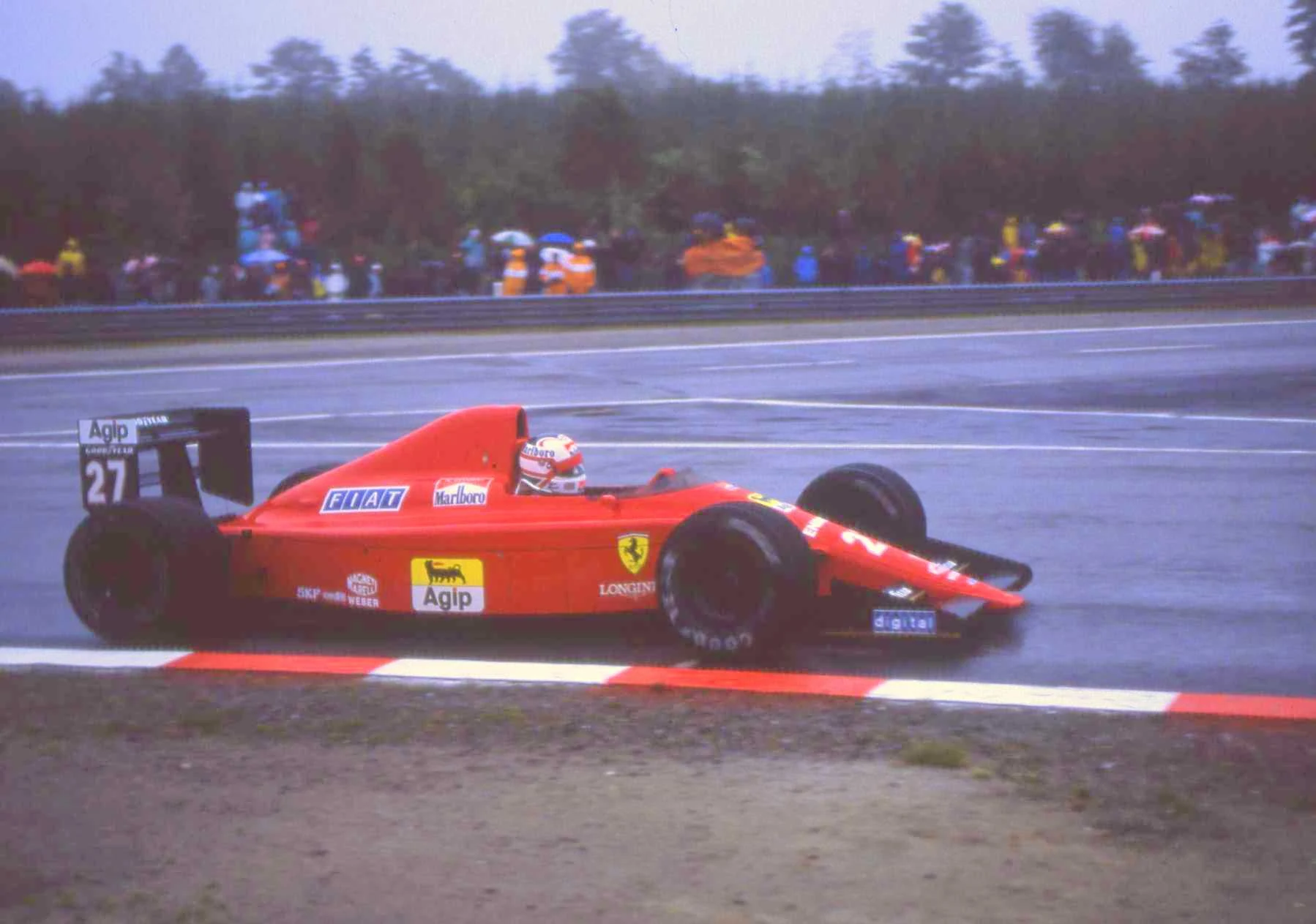
Nigel Mansell’s 1989 Portuguese Grand Prix Black Flag
Nigel Mansell entered the Estoril pit lane while leading. He overshot his Ferrari pit box.
He then reversed into position. Reversing in the pit lane breached the rules and created a serious safety concern.
Officials displayed the black flag. However, Mansell continued racing.
He later attempted to pass Ayrton Senna, and the two collided. Both retired.
Why Was Reversing So Serious?
The pit lane contains mechanics, equipment and cars moving in one expected direction.
A Formula 1 car reversing unexpectedly creates risks for everyone nearby. Therefore, the offense justified immediate removal.
Did Mansell See the Flag?
Historical accounts have long debated what he saw and what Ferrari communicated.
Regardless, the official order applied. Continuing placed the driver in further breach.
Why Is the Senna Collision Remembered?
Senna was fighting for the championship. The contact therefore carried consequences beyond Mansell’s own race.
The incident remains a classic example of why an excluded driver must leave the competition promptly.
Juan Pablo Montoya’s 2005 Canadian Grand Prix Black Flag
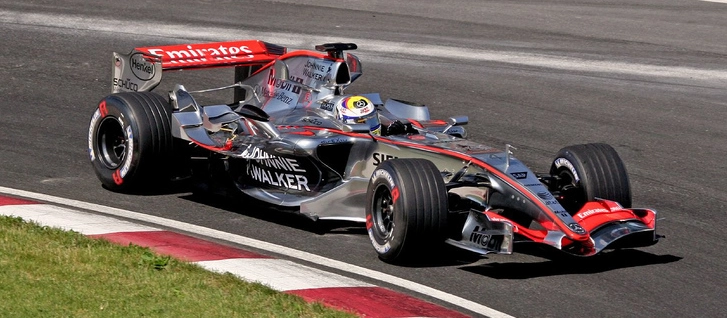
Juan Pablo Montoya left the pit lane while the red pit-exit light was illuminated during a Safety Car period. That light prohibited him from joining the circuit. Officials showed the black flag, ending his race.
The Montreal incident involved a clear pit-exit control.
During the Safety Car period, the red light prevented cars from entering the track at an unsafe or prohibited moment.
Montoya crossed the exit despite the signal. Consequently, officials removed him from the race.
Why Is a Pit-Exit Red Light So Important?
The light protects cars on the circuit and controls the field order.
Ignoring it can put a car directly into traffic or disrupt Safety Car procedures.
Could a Time Penalty Have Been Enough?
Officials treated the breach as more serious than a routine time loss.
The black flag reinforced that a red pit-exit light is a direct prohibition, not advice.
How Does This Differ From an Unsafe Release?
An unsafe release normally concerns a team sending a car into another pit-lane competitor’s path.
Montoya’s breach involved the official red light at the end of the pit lane.
Our guide to the F1 pit-lane speed limit covers the rules surrounding entry, transit and exit.
Can a Technical Problem Cause a Black Flag?
A confirmed illegal car can be disqualified. Yet the plain black flag is not the normal first signal for visible damage.
The black-and-orange flag is designed for a mechanical problem that may endanger the driver or others.
What If a Wing Is Loose?
Officials may show the black-and-orange flag and order repairs.
If the team fixes the problem to the required standard, the driver can usually continue.
What If the Car Is Underweight?
Weight normally requires scrutineering equipment. Therefore, the breach is often discovered after qualifying or the race.
The result is then removed through a steward decision rather than a live black flag.
What If the Plank Is Too Worn?
The same principle applies. The skid block must be measured after running.
Michael Schumacher lost victory at the 1994 Belgian Grand Prix after excessive plank wear. That was a post-race technical disqualification.
Can Officials Black-Flag a Car They Know Is Illegal During the Race?
Yes, if reliable information shows the competitor must stop immediately.
However, officials must be certain. A premature decision could remove a legal car before complete evidence exists.
Our guide to F1 parc fermé explains how cars enter controlled inspection conditions.
What Happens to Points, Trophies and Classification?
A black-flagged driver does not keep the race result.
The official classification records the car as disqualified or excluded according to the event documents.
Are Championship Points Removed?
Yes. A disqualified result earns no points.
Drivers behind may move up and score more. Therefore, the decision can change both championships.
What Happens to a Podium Trophy?
If the disqualification happens after the ceremony, the trophy and official position must be reassigned.
The physical handover may take time. Nevertheless, the official result changes immediately after the ruling becomes effective.
Can a Disqualification Decide a Championship?
Yes. Losing a win removes 25 points under the standard modern system and also changes countback records.
The effect can extend to the Constructors’ Championship because the team loses the same result.
Read our guide to how racing championships are scored.
Can a Team Appeal a Black Flag?
A team may have legal routes to challenge the underlying steward decision, depending on the regulation and type of penalty. However, the driver must obey the live black flag. An appeal does not authorize the car to continue racing while the dispute is unresolved.
Motorsport appeals happen after or through formal procedures. They do not operate like an instant pause button.
The driver must follow the signal first. The team can then use the available protest, review or appeal process.
Why Must the Driver Obey Before Challenging?
Track safety and sporting control require immediate compliance.
If every driver could remain on track while arguing, Race Control would lose authority during the event.
Can the Flag Be Withdrawn?
Yes, an official correction is possible. Schumacher’s 1994 British Grand Prix provides a historic example.
However, withdrawal must come from the officials. A team cannot declare the signal invalid on its own.
What Is a Right of Review?
A right of review asks stewards to reconsider when significant new evidence becomes available.
It is not guaranteed to reopen the case. Strict procedural tests apply.
Our guide to appeals in Formula 1 explains the available routes.
Can a Black Flag Be Shown in Qualifying or a Sprint?
The FIA flag meaning is not limited to a Grand Prix race. It can be used during circuit sessions when officials need a named driver to stop.
Therefore, qualifying, practice or a Sprint can theoretically produce a black flag.
What Would Happen in Qualifying?
The driver would stop participating and report as instructed.
Any lap-time consequences would depend on the underlying offense and the steward decision.
What Would Happen in a Sprint?
The driver would leave the Sprint and lose the result.
Further Grand Prix grid or championship consequences could follow if the stewards add separate sanctions.
Why Are Race Examples More Famous?
A race black flag unfolds in front of a large audience and immediately changes the result.
Qualifying offenses are more often handled through lap deletions, grid penalties or exclusion after the session.
For session structure, read how F1 qualifying works and our F1 Sprint weekend guide.
Why Are Black Flags Rare in Modern Formula 1?
Modern race control has more tools than officials used in earlier decades.
Teams receive written messages, direct radio communication and dashboard information. As a result, most penalties are served before escalation becomes necessary.
Drivers Usually Obey Earlier Penalties
A five-second, drive-through or stop-and-go penalty is costly. However, ignoring it risks total exclusion.
Teams therefore calculate the deadline and bring the car in at the correct time.
Technical Problems Use a Different Flag
Visible damage normally brings the black-and-orange mechanical flag.
That allows repair instead of immediate sporting exclusion.
Many Decisions Wait Until After the Session
Officials can investigate data and hear the drivers after the race.
This reduces the risk of ending a competitor’s event before the facts are complete.
Electronic Communication Reduces Confusion
Teams now receive formal Race Control messages that create a clear record.
Moreover, onboard radio recordings show what the driver was told.
Does Rarity Make the Flag Less Important?
No. Its rarity gives it more authority.
Every driver knows that a plain black flag means the normal penalty ladder has reached its endpoint.
Our guide to Formula 1 marshals explains how trackside officials deliver signals.
Common Misunderstandings About the F1 Black Flag
“Every Disqualification Includes a Black Flag”
False. Many disqualifications happen after qualifying or the race, without a live black flag.
“The Black Flag Stops Every Car”
False. It targets the car number shown beside it. A red flag stops the entire session.
“A Mechanical Problem Always Means a Plain Black Flag”
False. Dangerous mechanical issues normally use the black-and-orange flag.
“A Driver Can Keep Racing While the Team Appeals”
False. The live instruction must be obeyed. Legal challenges follow through formal channels.
“The Flag Must Be Waved Forever Until the Driver Stops”
False. The FIA procedure limits continued display after non-compliance to four consecutive laps.
“The Race Director Alone Decides”
False. Under Appendix H, the decision belongs solely to the stewards.
“A Black-and-White Flag Is the Same Thing”
False. The diagonal black-and-white flag is a warning for unsporting conduct.
“Historic Cases Prove Modern Procedure Is Identical”
False. Communication and regulations have evolved, although the core order to stop remains.
Black Flag in Formula 1 FAQs
What does a black flag mean in Formula 1?
It orders the named driver to stop at the pits or another designated location on the next approach. The driver’s participation ends, and the result is normally disqualified.
What happens if an F1 driver ignores a black flag?
The driver breaches a direct steward instruction. The flag may be shown for up to four consecutive laps, while further sanctions can follow after the event.
Is a post-race disqualification the same as a black flag?
No. A black flag stops a driver during the session. A post-race disqualification removes the result after technical checks or a steward investigation.
What is the difference between black and black-and-orange flags?
The plain black flag ends the driver’s participation. The black-and-orange flag orders a car to pit for a dangerous mechanical issue and may allow a return after repairs.
Conclusion: What the Black Flag Really Means in Formula 1
The black flag in Formula 1 is a direct order for one named driver to stop competing.
It appears with a car-number board so the affected competitor is clear.
Under the 2026 FIA procedure, the driver must stop at the pits or another designated place on the next approach.
If the driver fails to comply, officials may display the signal for up to four consecutive laps.
The stewards alone make the decision. Race Control then informs the team immediately.
A plain black flag differs from a red flag, which suspends the session for everyone.
It also differs from the black-and-orange mechanical flag. That signal may allow the car to return after repairs.
The diagonal black-and-white flag is only a warning for unsporting behavior.
Historic cases show the range of conduct that can trigger removal.
Mansell reversed in the pit lane in Portugal in 1989. Schumacher became involved in a disputed penalty sequence at Silverstone in 1994.
Montoya left the pits against a red light in Canada in 2005.
However, many modern disqualifications happen after the race. Technical inspectors may discover an underweight car or excessive plank wear.
Those rulings remove the result without a live black flag.
Teams can challenge some decisions through formal procedures. Nevertheless, the driver must obey the flag while the session is active.
Modern communication has made the signal rare. Its meaning, though, remains absolute: the named driver’s race is over.
Sources and Verification
This article was checked against official FIA and Formula 1 material available on July 23, 2026. This is a static source list and contains no interactive verification feature.