Why Did F1 Ban Refuelling?
Cost cutting drove the 2010 decision, but fire risk, complex fuel strategy and a changing view of racing also mattered.
Formula 1 banned in-race refuelling from 2010 mainly to reduce costs. Safety risks and concern that fuel strategy moved too much overtaking into the pit lane also strengthened the case.
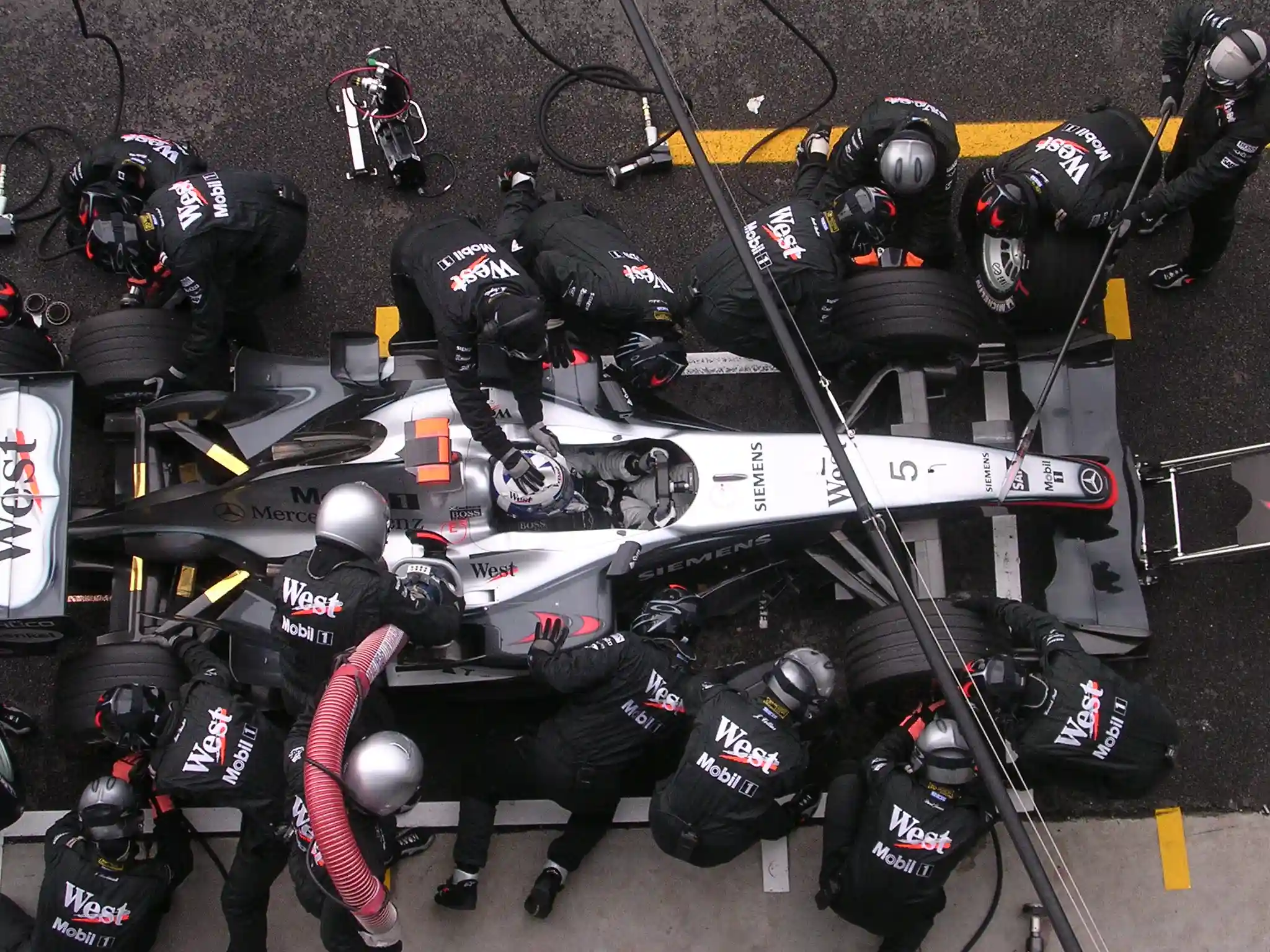
For sixteen seasons, an F1 pit stop could combine new tires with fuel delivered under pressure. Then, in 2010, the hose disappeared.
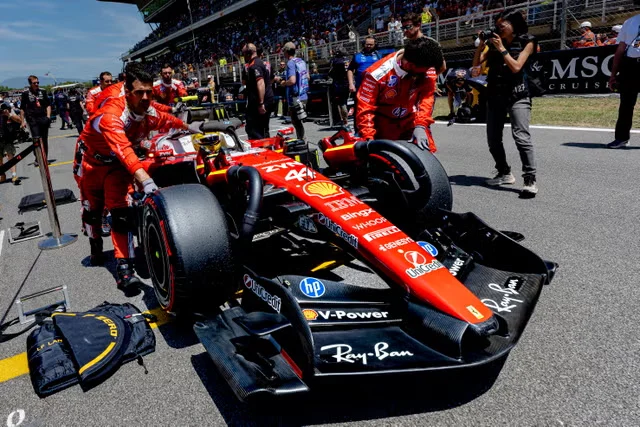
The change looked simple on television. However, it altered car design, qualifying, race strategy and the work of every pit crew.
Teams could no longer start with a small fuel load and sprint between stops. Instead, each car had to carry enough fuel for the race from the start.
That required larger fuel cells and heavier opening laps. Consequently, drivers had to manage a car whose weight changed dramatically as fuel burned away.
Many fans assume a single pit fire caused the ban. That explanation is too neat.
The formal decision belonged to a wider cost-cutting push before the 2010 season. Removing refuelling equipment reduced hardware, staffing, maintenance and freight.
Safety still mattered. Pressurized fuel, hot exhausts and hurried pit releases created risks that tire-only stops avoid.
Sporting concerns mattered too. During the refuelling era, teams could pass rivals through fuel windows rather than wheel-to-wheel racing.
However, banning refuelling did not solve every overtaking problem. Aerodynamics, tires and circuit design continued to shape the spectacle.
This guide explains the complete F1 refuelling history. It covers the 1994 return, the 2010 ban and the current 2026 rule.
It also explains famous incidents, fuel-rig operation and modern race management. Therefore, the answer goes far beyond “because it was dangerous.”
The Direct Answer: Cost Was the Main Policy Reason
Cost reduction was the central policy reason for the 2010 ban. Safety and sporting concerns supported the decision, but no single fire or fuel-hose incident triggered it alone.
Formula 1 entered the late 2000s under strong pressure to reduce spending. The global financial crisis made that pressure more urgent.
Refuelling required standardized rigs, specialist staff and detailed inspection. In addition, teams transported heavy equipment around the world.
Removing the system saved money throughout the season. It also simplified garages and reduced dangerous-goods handling around the pit box.
Yet cost was not the only argument. Team leaders also questioned whether refuelling improved the racing.
A driver could qualify light, stop early and gain position through a fuel-adjusted pace difference. Therefore, the timing screen sometimes mattered more than an on-track pass.
Safety provided another clear benefit. Tire changes still carry risk, but mechanics no longer stand beside pressurized fuel transfer during every scheduled stop.
The best description is a three-part decision. Cost supplied the official momentum, safety made the change easier to defend, and sporting concerns made the old system less attractive.
F1 Refuelling History: A Simple Timeline
Routine in-race refuelling ended after the 2009 season. Formula 1 introduced the current ban for 2010, after fuel stops had been permitted from 1994 through 2009.
| Period | Rule Position | What It Meant for Racing |
|---|---|---|
| Early championship decades | Fuel stops appeared in different forms under changing regulations. | Long races and limited tank range sometimes made fuel management central. |
| 1984–1993 | In-race refuelling was prohibited after the 1983 season. | Cars generally carried their race fuel from the start. |
| 1994–2009 | Refuelling returned with controlled equipment and procedures. | Teams used short fuel stints, multiple stops and fuel-adjusted qualifying tactics. |
| 2010–present | Fuel may not be added or removed during a race. | Cars start heavy, while strategy centers on tires, track position and energy management. |
Why Refuelling Returned in 1994
Formula 1 wanted more strategic variation and a new pit-lane spectacle. Smaller starting loads also produced faster cars during each stint.
However, the return introduced new risks immediately. The equipment transferred large fuel quantities beside hot racing machinery.
Why the Era Lasted Sixteen Seasons
Teams became highly skilled at fuel-window strategy. Television audiences also understood the drama of a long stop or failed nozzle.
Meanwhile, engineers integrated fuel load into qualifying and race models. The system became part of competitive identity.
Why 2010 Became the Break Point
Formula 1 needed visible cost reduction. Refuelling hardware offered a removable expense without eliminating the pit stop itself.
Tires still required service. Consequently, pit-lane strategy survived, but the fuel rig did not.
What the 2010 Refuelling Ban Actually Changed
Cars received much larger fuel cells, started races substantially heavier and could no longer use fuel quantity to create short strategic sprints.
The rule affected far more than pit-stop duration. Designers had to package a full-race fuel load behind the driver.
That changed wheelbase, cooling and weight distribution. Moreover, suspension had to work across a wider mass range.
Opening Laps Became a Different Test
A car on full fuel accelerates and brakes differently. Tire loads also increase during the heaviest phase.
Drivers therefore protected brakes and tires early. Later, the car became more responsive as fuel burned.
Race Setups Needed a Wider Operating Window
A setup that felt perfect at low fuel could be unstable at the start. Teams had to compromise.
Consequently, practice programs included both heavy and light runs. Long-run data became even more valuable.
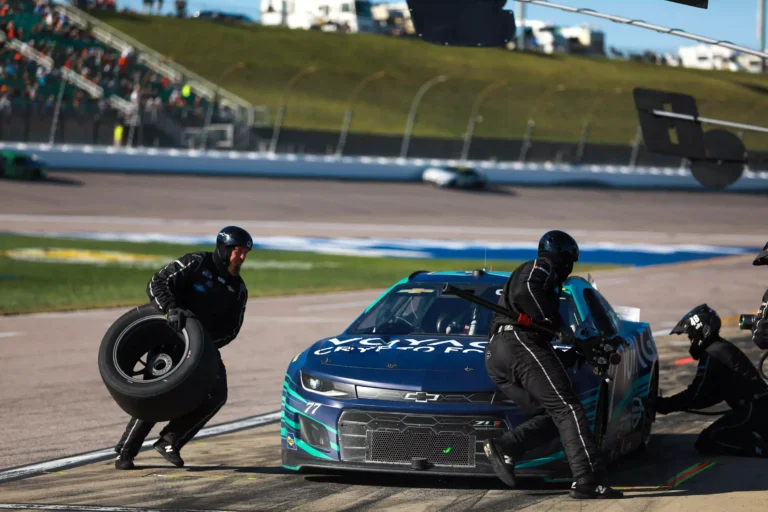
The Pit Stop Became Tire-Only
Crews could complete a stop as soon as four wheels were secure. They no longer waited for a set fuel quantity.
That opened the path toward sub-two-second stops. It also placed greater emphasis on wheel-gun precision.
See what happens during an F1 pit stop for the modern sequence.
Reason One: Refuelling Equipment Cost Money Everywhere
Yes. The ban formed part of a broader effort to reduce Formula 1 operating costs before the 2010 season.
A fuel rig was not a simple gas pump. It required approved components, calibration, maintenance and trained operators.
Teams also needed backup procedures and fire equipment. Therefore, the expense continued even when the rig worked perfectly.
The Rig Had to Travel to Every Race
Formula 1 crosses continents throughout the season. Heavy pit equipment consumes freight space and handling time.
Removing it cut transport needs across every team. The saving repeated at every flyaway event.
Specialist Labor Added Operating Cost
Fuel handling required trained personnel and strict processes. Teams rehearsed connections, emergency release and fire response.
Those roles supported safety, but they also increased staffing. A tire-only stop needs fewer hazardous systems.
Inspection and Maintenance Never Stopped
Seals, couplings and hoses had to function under pressure. Any leak could become a major incident.
As a result, teams invested time before every session. The ban removed an entire inspection category.
Cost Saving Did Not Mean Cheap Racing
Formula 1 remained expensive after 2010. Teams redirected resources toward aerodynamics, simulation and tire performance.
However, that does not make the saving meaningless. Removing one unnecessary system still reduced baseline expense.
Reason Two: Pressurized Fuel Added an Avoidable Pit-Lane Risk
It carried a real fire and spill risk because fuel moved rapidly beside hot engines, brakes and exhausts during hurried pit stops.
F1 cars use safety fuel cells and dry-break couplings. Even so, no mechanical connector eliminates every failure mode.
A small release can create vapor around ignition sources. Meanwhile, a premature release can pull the hose or nozzle from the rig.
Speed Increased the Risk
Every second in the pits costs track position. Teams therefore trained crews to connect and disconnect at the limit.
Pressure creates mistakes. Consequently, a green release signal at the wrong moment can become a serious hazard.
Hot Components Surround the Fuel Port
Exhausts, brakes and bodywork retain heat after racing laps. Escaping fuel can ignite immediately.
Fire-resistant clothing limits injury, but it cannot make a fire harmless. The safer system is one that avoids the transfer during races.
More Equipment Creates More Failure Points
A refuelling stop involves hoses, valves, sensors and release mechanisms. Each part must work correctly.
Tire-only stops remain dangerous around moving cars and wheel guns. However, removing fuel eliminates the highest-energy fluid hazard.
Modern crews still rely on protective equipment explained in the guide to Nomex in Formula 1.
Reason Three: Fuel Strategy Could Replace On-Track Racing
It sometimes encouraged teams to pass through pit timing instead of attacking on track. However, aerodynamics and tires also played major roles in low overtaking totals.
Fuel created a hidden performance variable. A lighter car could appear faster even when its underlying pace was weaker.
That made strategy interesting for specialists. However, it could confuse viewers who did not know each car’s fuel load.
Short-Fuelling Created Artificial Pace Gaps
A team could add less fuel and rejoin sooner. The car then carried less mass and gained lap time.
However, it had to stop again earlier. Therefore, the apparent advantage depended on the complete fuel cycle.
Passing Often Happened During Pit Windows
A driver could remain behind a rival and wait for the stop sequence. Clean-air laps then created the overtake.
That was legitimate racing strategy. Yet it reduced the need to attempt a difficult pass on track.
Fuel-Corrected Pace Was Hard to Read
Commentators estimated how much fuel each car carried. Teams guarded the exact numbers.
Consequently, qualifying results did not always show true speed. The grid mixed car performance with chosen first-stint length.
The Ban Did Not Automatically Fix Overtaking
Cars still struggled in turbulent air after 2010. Tire behavior and circuit layout also limited passing.
Later changes, including DRS and revised aerodynamics, had a larger direct effect. Refuelling was only one part of the sporting picture.
How Formula 1 Refuelling Rigs Worked
The 2009 technical rules capped the standardized race rig at 12.1 liters per second, making fuel quantity the usual limit on pit-stop duration.
The rig delivered fuel through a large hose and a dry-break coupling. That connector opened only when correctly attached to the car.
A vent system managed displaced air and vapor. Meanwhile, sensors helped control the transfer and release sequence.
The Equipment Was Standardized
Teams could not design unlimited high-speed pumps. A common specification controlled flow and reduced a dangerous development race.
However, standardized equipment still needed team preparation. Connection technique and signaling remained competitive.
Fuel Usually Set the Stop Time
Tire crews could often finish before the required fuel entered. The car therefore waited on the hose.
A large fuel load produced a longer stop. Conversely, a splash-and-dash could be much shorter.
The Release Sequence Was Critical
The nozzle had to close before separation. The crew then cleared the hose and signaled the car to leave.
A premature release risked dragging equipment into the lane. The 2008 Singapore incident showed that danger clearly.
Fire Crews Stood Ready
Extinguishers were positioned beside the pit box. Crew members wore fire-resistant overalls, gloves and helmets.
Those precautions reduced consequences. They did not remove the basic risk of rapid fuel transfer.
The 1994 German Grand Prix Pit Fire
Fuel sprayed during Verstappen’s stop and ignited around the hot Benetton. The event led to an investigation and controversy over the team’s refuelling rig.
Jos Verstappen stopped for fuel at Hockenheim in July 1994. During the connection, fuel escaped and spread over the car and crew.
The fuel ignited almost instantly. Television images showed a large fireball surrounding the cockpit.
Protective Equipment Prevented a Worse Outcome
Fire-resistant suits and rapid extinguisher use limited the injuries. Verstappen escaped without a life-threatening injury.
Several crew members suffered burns. The incident demonstrated how quickly a routine stop could turn dangerous.
The Fuel-Rig Filter Became Controversial
Investigators examined the equipment and Benetton’s removal of a filter. Contemporary accounts disagreed about whether that change caused the spill.
Therefore, the safest wording is precise. The removal triggered major controversy, but direct causation remains disputed in historical reporting.
The Incident Did Not End Refuelling
Formula 1 continued using fuel stops for fifteen more seasons. Rules and procedures received closer attention.
That timeline matters. The 1994 fire became a powerful safety warning, not the sole cause of the 2010 ban.
Felipe Massa’s 2008 Singapore Fuel-Hose Incident
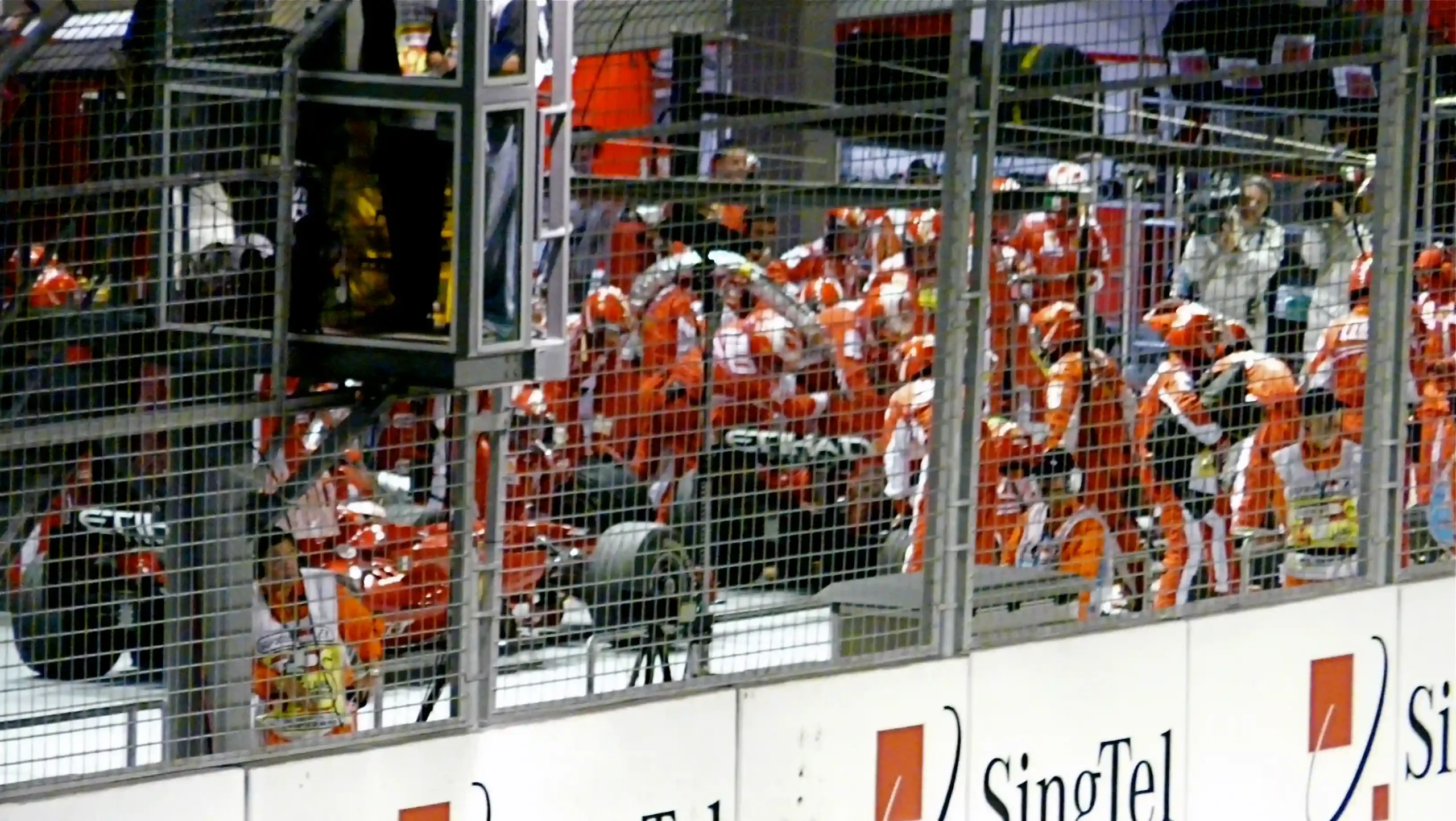
Ferrari released Massa before the fuel hose had been removed. He drove into the pit lane with the hose attached and stopped near its exit.
The 2008 Singapore Grand Prix was Formula 1’s first night race. It also produced one of the refuelling era’s defining mistakes.
Ferrari used an electronic release light rather than a traditional lollipop. Massa received the signal while the hose remained connected.
The Hose Was Pulled From the Rig
Massa accelerated, dragging the hose and knocking crew members aside. He stopped farther down the pit lane.
Mechanics then ran to remove the equipment. The delay destroyed his race from pole position.
The Incident Combined Human and System Failure
The car moved because the release signal arrived too early. Therefore, the dry-break hardware alone could not prevent the error.
The episode also showed how teams pushed pit procedures to save fractions of a second. A small signaling mistake produced a large consequence.
It Strengthened the Argument Against Refuelling
Singapore did not independently create the 2010 rule. However, it supplied a recent and highly visible example of the system’s danger.
By then, Formula 1 was already debating costs and future regulations. The hose incident made the old approach harder to defend.
Modern release rules are explained in the unsafe-release guide.
Why No Single Accident Explains the Ban
No. Formula 1 continued refuelling after several serious incidents, and the 2010 prohibition arrived through a broader cost and sporting-policy process.
Historical explanations often search for one dramatic trigger. The real decision developed over years.
The 1994 Hockenheim fire exposed fire risk. Later spills, hose failures and premature releases reinforced that concern.
However, the championship still considered refuelling manageable with procedures and protective equipment. That is why it remained legal through 2009.
The decisive opportunity came when Formula 1 wanted to cut costs. At that point, safety and sporting objections aligned with the financial case.
Policy Decisions Usually Combine Pressures
One argument rarely changes Formula 1 alone. Teams, the FIA and commercial stakeholders weigh expense, entertainment and risk.
Consequently, the 2010 ban should be understood as a package decision. It removed cost while also eliminating a visible hazard.
Later Discussions Prove the Point
Refuelling was proposed for a possible return in later rule debates. That would be unlikely if one accident had created an absolute safety prohibition.
Instead, the return proposals failed because the full cost-benefit case remained weak. Lighter cars were attractive, but added complexity was not.
How Do F1 Cars Finish a Race Without Refuelling?
Teams load enough fuel before the start, calculate expected consumption and monitor the car throughout the race. Drivers adjust pace when necessary.
Modern Formula 1 does not rely on guesswork. Engineers model fuel use for every lap before the race begins.
Weather, traffic and safety-car probability affect the target. Teams then choose a starting quantity that balances weight against risk.
Telemetry Tracks Consumption
Sensors and engine data show fuel use in real time. The race engineer compares the actual number with a planned target.
If consumption runs high, the driver receives instructions. Those messages may include a fuel-saving delta or specific corners.
Lift-and-Coast Saves Fuel
The driver lifts the throttle before the normal braking point. The car then coasts before braking.
This reduces fuel use and can lower brake temperatures. However, it costs some lap time.
Short Shifting Reduces Engine Demand
A driver can change gear earlier and avoid the highest engine speeds. That may improve efficiency and protect traction.
Hybrid energy can also support acceleration. Therefore, fuel management now works alongside electrical deployment.
Safety Cars Create Unexpected Savings
Cars consume less fuel at controlled speed. A long safety-car period can erase an early fuel deficit.
Conversely, an uninterrupted race may require more active saving. Teams constantly update the calculation.
The hybrid side is covered in the ERS explainer and the energy-store guide.
How Fuel Weight Changes an F1 Car
More fuel increases braking distance, tire load and inertia. As the fuel burns, the car becomes faster and more responsive.
Fuel sits inside the survival cell area behind the driver. Its mass stays near the car’s center, but it still changes total weight significantly.
A heavier car needs more force to accelerate and stop. Consequently, opening laps demand careful brake and tire management.
Braking Points Move During the Race
Drivers brake earlier on full fuel. Later, they can attack the same corner with a lighter car.
The balance may also change as fuel level drops. Engineers tune suspension and aerodynamics for the complete range.
Tires Carry More Load at the Start
Heavy fuel increases vertical and lateral stress. Sliding then creates more heat and degradation.
Therefore, aggressive early laps can damage a stint. Drivers often build pace as the car lightens.
More Fuel Is Not Always Safer Strategically
Extra fuel protects against high consumption. However, every unnecessary kilogram slows the car.
Teams aim for a precise margin. Under-fuelling can require costly saving, while over-fuelling gives away lap time.
The Fuel Cell Shapes the Chassis
A full-race load requires space and strong containment. Designers package the tank within the monocoque.
That relationship is covered in the F1 monocoque guide.
How the Ban Changed Formula 1 Race Strategy
Tire life, pit timing, track position, traffic and energy management replaced fuel quantity as the main strategic variables.
The pit lane remained important after 2010. However, the reason for stopping changed.
Teams now pit mainly because tire performance falls or a new compound creates an advantage. The fuel tank no longer dictates the window.
The Undercut Became Easier to Read
A driver stops first for fresh tires and tries to gain lap time. The rival responds before the position changes.
Because fuel is not added, the comparison is clearer. Both cars continue with the fuel they already carried.
The Overcut Still Has Value
A driver may remain out on older tires to gain clean air or exploit improving conditions. Track position can also justify the risk.
Learn both concepts in the overcut and undercut guide.
Double-Stacking Became More Practical
Teams can service two cars in quick succession because stops are shorter. However, the second car may still wait behind the first.
Timing remains critical. See why F1 teams double-stack.
Safety Cars Reshaped the Calculation
A stop costs less time when the field moves slowly. Therefore, teams react immediately to safety-car and virtual-safety-car periods.
Fuel saving is an added benefit. Yet tire opportunity usually drives the decision.
The Refuelling Ban Also Changed Qualifying
During part of the refuelling era, cars qualified with the fuel intended for their opening race stint, linking grid position to strategy.
A light car could set a faster lap but needed an early stop. A heavier car qualified slower but gained strategic flexibility.
That made the result difficult to interpret. Fans often waited for estimated fuel corrections before judging true pace.
Low-Fuel Qualifying Returned in 2010
With no race refuelling, the old race-fuel format lost its purpose. Cars could qualify with minimal fuel for timed laps.
Therefore, the grid became a cleaner measure of one-lap performance. Strategy still mattered through tires and session timing.
Parc Fermé Still Connects Saturday and Sunday
Teams cannot freely rebuild the car after qualifying. Setup choices still balance one-lap speed against race performance.
The rule is explained in the F1 parc fermé guide.
Fuel Sampling Remains Important
Cars must finish qualifying with enough fuel for required procedures. A team that cannot provide the sample risks exclusion.
Thus, fuel remains part of qualifying legality. It simply no longer defines the first race stint.
Why Modern F1 Pit Stops Became So Fast
Race refuelling is prohibited, so crews only need to change tires and complete permitted repairs or adjustments.
Fuel stops commonly lasted eight to twelve seconds during the refuelling era. The exact time depended on quantity.
Once fuel disappeared, the wheel change became the entire timed operation. Teams then optimized every movement.
More Crew Members Specialize Around Four Wheels
Each corner has dedicated wheel-gun and tire personnel. Front and rear jack operators coordinate the lift.
The release arrives only when every wheel is secure. A single slow nut decides the stop.
Practice Turns Movements Into Routine
Teams rehearse hundreds of stops away from race pressure. Repetition removes unnecessary steps.
Read why F1 teams practice pit stops.
Pit-Lane Time Still Exceeds Stationary Time
A two-second stop does not mean only two seconds are lost. Cars slow for the pit-lane limit and travel through the lane.
That full loss is explained in why drivers lose time in the pit lane and the pit-lane speed-limit guide.
The Modern F1 Fuel Cell Is Built for Containment
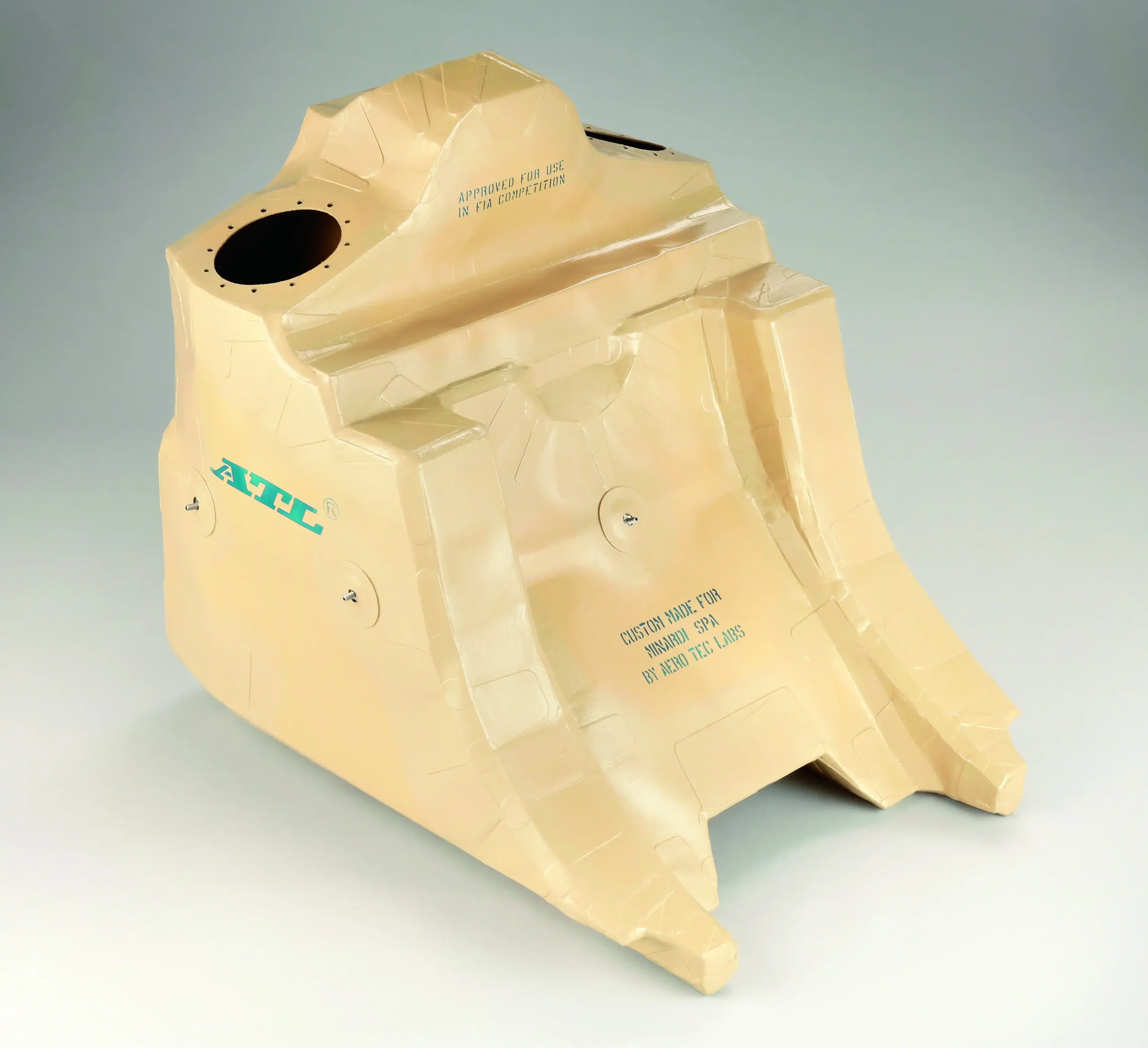
Fuel sits in a flexible, impact-resistant bladder inside the survival cell area behind the driver and ahead of the engine.
The tank is not a rigid road-car container. It is a specialized bladder designed to resist puncture and deformation.
Its protected position reduces exposure during a crash. Moreover, the surrounding carbon structure helps maintain survival space.
Flexible Construction Helps Absorb Deformation
A rigid tank can rupture when the chassis changes shape. A bladder can move while remaining sealed.
However, it still needs careful installation and inspection. Connections and internal collectors must remain secure.
Refuelling Ban and Fuel-Cell Safety Are Separate Issues
The car still carries a large energy load at the start. Therefore, strong containment remains essential.
The ban removes repeated race-time transfer. It does not remove the need for safe storage.
Post-Race Checks Protect Sporting Fairness
The FIA can inspect fuel quantity and composition. Teams must meet sampling and legality requirements.
Fuel is therefore both a safety item and a regulated performance material. The no-refuelling rule does not make it technically simple.
What the Current 2026 FIA Rules Say
Not during a race. The 2026 Technical Regulations state that fuel may not be added to or removed from a car during a race.
The current rule remains direct. A team cannot top up a car during a scheduled pit stop.
However, controlled refuelling is permitted in designated garage conditions outside the race. Those procedures are much slower than the old race rigs.
Garage Refuelling Has Strict Conditions
The 2026 Sporting Regulations set a maximum rate of 0.8 liters per second. The engine must be stopped.
Personnel need suitable fireproof clothing. A fire extinguisher must be ready, and grounding requirements apply.
The Rule Distinguishes Preparation From Racing
Teams need to add or remove fuel during practice operations and car preparation. That work happens in a controlled garage environment.
A race pit stop is different. The car arrives hot, the crew works at speed and traffic moves nearby.
No Approved Return Exists
Refuelling proposals have appeared in previous discussions. None became a lasting regulation.
Therefore, any claim that race fuel stops are “coming back” needs an official FIA rule change. The 2026 documents do not provide one.
For broader governance context, readers can review how race timing and official procedures work in the race-timing guide.
Could Formula 1 Bring Refuelling Back?
It remains technically possible, but current rules prohibit it and previous return proposals have failed to gain enough support.
Supporters argue that fuel stops would let cars start lighter. Lower weight could improve responsiveness and reduce tire stress.
They also believe varied fuel strategies might create uncertainty. However, the old disadvantages would return with the spectacle.
Modern Equipment Could Reduce Some Risk
Better sensors and automated release logic may improve safety. Yet no system removes spills, heat and human error completely.
A modern rig would also require testing and certification. That recreates cost.
Sustainable Fuel Does Not Solve Pit-Lane Fire Risk
Advanced sustainable fuel reduces lifecycle carbon impact. It is still a high-energy liquid designed for combustion.
Therefore, its environmental origin does not make a hot pit-lane spill harmless. Fire protection would remain essential.
More Freight Conflicts With Efficiency Goals
Teams would need rigs, spares, hoses and specialist support. That equipment would travel to every race.
Formula 1 now emphasizes lower-carbon logistics. Added freight would need a strong sporting justification.
Lighter Cars Can Be Pursued Through Other Rules
Designers can reduce dimensions, component mass and fuel demand. Formula 1 used that approach in the 2026 reset.
Consequently, refuelling is not the only route to a more agile car. It may not be the most efficient one.
F1 Refuelling: Pros and Cons
Refuelling created strategic variety and lighter stints, but it also added cost, fire risk and pit-lane passing. Whether it was better depends on what a fan values.
| Possible Advantage | Possible Disadvantage |
|---|---|
| Lighter cars during each stint | Pressurized fuel transfer beside hot machinery |
| More fuel-window strategy | Greater cost, staffing and freight |
| Potentially shorter tire life from faster stints | More passing decided in the pits |
| Different first-stint approaches | Harder for fans to judge true pace |
| Longer, more dramatic service stops | Fuel-hose and premature-release failures |
The Best Feature Was Lighter Stints
Drivers could attack with less fuel mass. Cars felt more responsive from the opening lap.
However, the advantage came from stopping more often. It did not make the complete race distance lighter.
The Biggest Weakness Was Hidden Strategy
A fast qualifying lap might reflect low fuel rather than superior performance. Viewers needed estimates to interpret the grid.
Modern qualifying is clearer. Meanwhile, tire strategy still gives teams tactical freedom.
Safety and Cost Remain Linked
Safer refuelling requires more equipment, inspection and staff. That increases expense.
Reducing cost can tempt teams to simplify systems. Therefore, the two concerns cannot be separated easily.
Common Myths About the F1 Refuelling Ban
“The Jos Verstappen Fire Directly Caused the Ban”
False. The fire happened in 1994, while refuelling continued through 2009.
“Felipe Massa’s Singapore Incident Was the Only Reason”
False. It strengthened safety concerns, but the 2010 change belonged to a wider cost-cutting program.
“F1 Cars Never Receive Fuel During a Weekend”
False. Teams can refuel under controlled garage conditions. They cannot add fuel during the race.
“The Ban Removed Fuel Strategy”
False. Teams still choose starting fuel and manage consumption. They simply cannot correct the quantity with a pit stop.
“No Refuelling Means Every Car Starts With the Same Amount”
False. Teams choose their starting load within the rules and expected needs. The exact quantity can differ.
“Bringing It Back Would Guarantee More Overtaking”
False. Fuel strategy may create position changes, but on-track passing still depends on tires, aerodynamics and circuit layout.
F1 Refuelling FAQs
Why did F1 ban refuelling?
Formula 1 banned it mainly to reduce costs. Safety concerns and a desire to reduce pit-lane fuel strategy also supported the decision.
When did Formula 1 stop refuelling during races?
The final refuelling season was 2009. The current no-refuelling era began with the 2010 season.
How do F1 cars finish a race without refuelling?
Teams start with enough fuel and monitor consumption. Drivers can use lift-and-coast, short shifting and energy recovery when saving is required.
Will Formula 1 bring refuelling back?
No return has been approved. The 2026 rules still prohibit adding fuel to or removing fuel from a car during a race.
Conclusion: The Ban Removed More Than a Fuel Hose
So, why did F1 ban refuelling?
The main policy answer is cost. Formula 1 wanted to reduce the equipment and spending required at every race.
Fuel rigs needed transport, maintenance and specialist staff. Removing them created a repeated saving across the calendar.
Safety provided another strong argument. Fuel moved rapidly beside hot engines, brakes and exhausts.
The 1994 Hockenheim fire showed the worst possible outcome. Several later hose and spill incidents kept that risk visible.
Felipe Massa’s 2008 Singapore stop became the clearest recent example. His car left before the hose had been removed.
However, neither incident alone caused the ban. Refuelling continued for years after the Hockenheim fire.
The 2010 decision arrived when financial, safety and sporting concerns aligned. That distinction matters.
Sporting quality also influenced the debate. Fuel windows could move passing from the circuit into the pit lane.
A light car looked quick, but its pace depended on another stop. Therefore, qualifying and race order were often difficult to read.
The ban made qualifying more direct. It also shifted race strategy toward tires, traffic and track position.
Cars then needed larger fuel cells. Opening laps became heavier and harder on brakes and tires.
Drivers adapted through careful management. Teams used telemetry to track every change in consumption.
Lift-and-coast became a familiar instruction. Hybrid energy later added another efficiency tool.
Pit stops changed dramatically too. Without fuel, crews could focus entirely on four wheels.
That created the modern sub-two-second target. Yet the full pit-lane loss remains far larger than the stationary time.
Modern fuel cells are also highly specialized. Flexible bladders sit inside the protected survival structure.
The current 2026 regulations keep the race ban in place. Fuel cannot be added or removed during the race.
Controlled garage refuelling remains legal under strict conditions. The maximum rate is far below the old race-rig flow.
Formula 1 could revisit the subject in a future regulation cycle. Lighter opening stints remain attractive.
However, a return would recreate hardware, freight and safety burdens. Sustainable fuel would not eliminate fire risk.
Refuelling therefore remains a fascinating part of F1 history rather than current race procedure. Its removal simplified the pit lane and clarified competition.
The hose disappeared in 2010. The strategic consequences still shape every Grand Prix today.
Sources and Fact-Checking
This article was checked against current FIA regulations and historical Formula 1 reporting available on July 28, 2026. The formal 2010 rationale is presented as a cost-reduction measure, while safety and sporting concerns are described as supporting factors rather than a single-cause explanation.
- FIA: 2026 Formula 1 Technical Regulations, including the race refuelling prohibition
- Formula 1: history of the pit stop and the 2010 no-refuelling transition
- Motor Sport Magazine: Formula 1 cost-cutting measures and the planned refuelling ban
- Formula 1: official history of the 2008 Singapore Grand Prix and Massa’s fuel-hose incident