VIR IMSA 2026 Track Guide: Esses, Oak Tree, Elevation & Overtaking Zones
A corner-by-corner look at Virginia International Raceway’s 3.27-mile Full Course, why its climbing Esses demand commitment, how Oak Tree shapes the back straight, and where IMSA GT drivers can actually make a pass.
Virginia International Raceway is not difficult because it has one impossible corner. It is difficult because the 3.27-mile Full Course repeatedly asks a driver to change priorities: high-speed commitment into the Climbing Esses, precision through blind elevation changes, mechanical grip in slower corners, and then clean exits that determine how the next straight can be used.
For IMSA, that combination matters even more because VIR’s main WeatherTech event is a GT-focused contest. Drivers are not only racing the stopwatch; they are managing traffic, tire temperatures, braking stability and the compromises that come from sharing the circuit with another GT class. The quickest car is not necessarily the car that makes the most aggressive move. It is often the car that preserves the best exit while forcing the opponent to compromise theirs.
The 2026 Michelin GT Challenge at VIR runs August 21–23 on the historic Full Course. IMSA lists the circuit at 3.27 miles, while VIR’s own configuration guide lists a 130-foot elevation change and a 4,000-foot back straight.
What Is the VIR IMSA Track Layout?
The IMSA WeatherTech SportsCar Championship uses Virginia International Raceway’s Full Course, which IMSA lists at 3.27 miles. VIR’s official configuration page also identifies the Full Course as 5.26 kilometers and lists a 3,000-foot front straight, a 4,000-foot back straight and 130 feet of elevation change. The layout is run clockwise for IMSA competition.
Those numbers tell only part of the story. VIR is a classic American road course where the track width, fast corners and changing gradients create a rhythm that is very different from a modern, heavily runoff-dependent circuit. Drivers can attack a corner aggressively, but the consequences of a small mistake may extend several turns because one exit often becomes the entry speed for the next section.
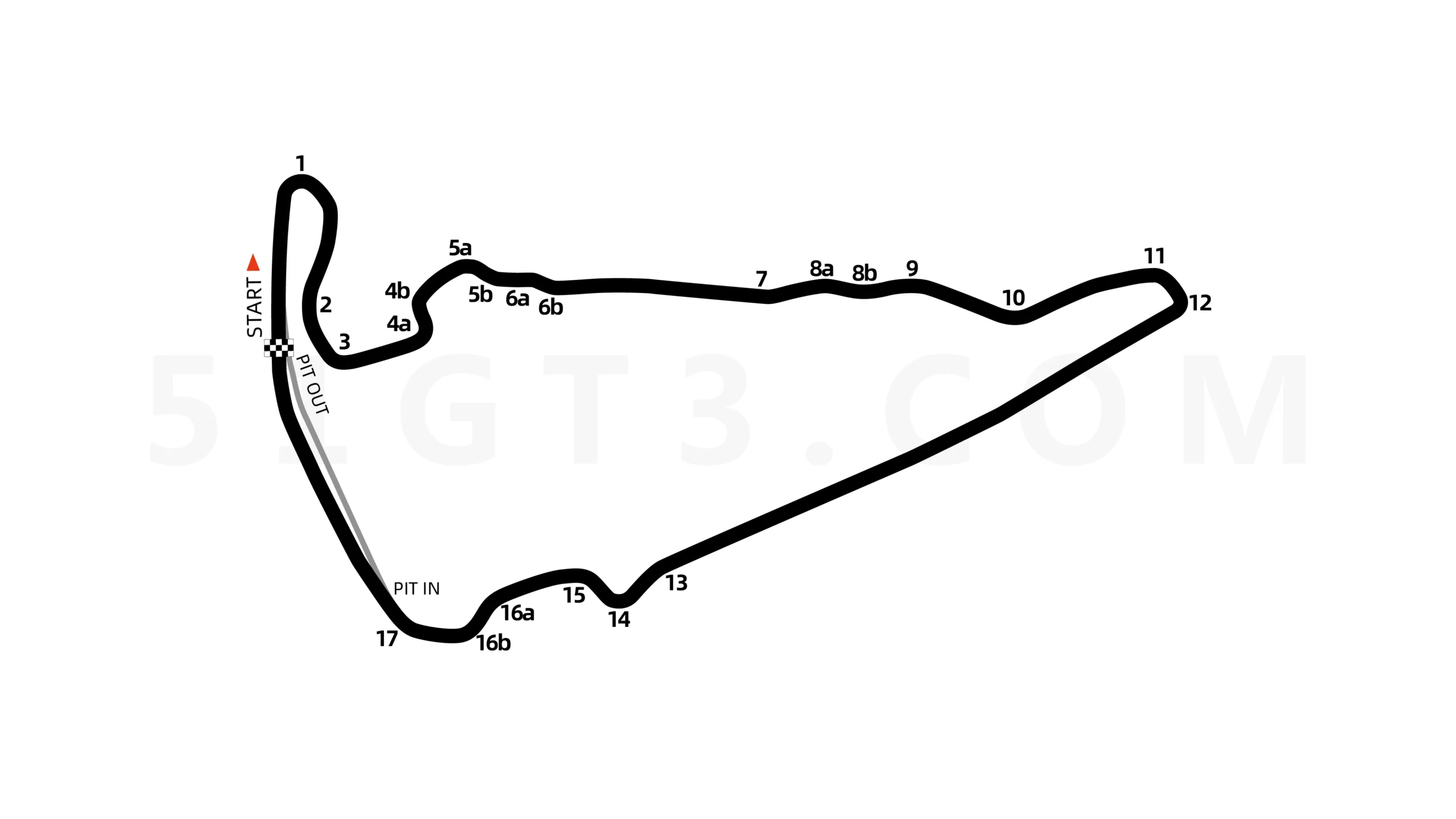
For a fan watching IMSA, the easiest way to understand VIR is to split the lap into a series of linked problems rather than seventeen isolated corners. The opening section builds speed and positioning. The middle of the lap becomes a test of high-speed commitment and precision through the Climbing Esses and South Bend. The Oak Tree section then turns driver confidence into straight-line opportunity. Finally, the Roller Coaster and Hog Pen bring the car back toward the front straight, where a pass can become a completed move or a setup for the next lap.
Why VIR rewards a complete car
A car that is brilliant in only one type of corner will struggle here. The best IMSA GT setup needs enough aerodynamic and mechanical confidence to attack the fast sections while retaining compliance and traction in the slower parts of the lap. Too much low-speed rotation can make the car nervous in the fast changes of direction. Too much stability can cost the driver time when the lap turns technical.
That compromise is central to VIR. Drivers need a car that changes direction without punishing them for using the curbs, but they also need traction out of the slower corners because those exits feed long stretches of full throttle. The stopwatch therefore rewards balance more than any single headline setup number.
At VIR, a corner is rarely just one corner. The exit you protect now is often the overtaking opportunity you create several seconds later.
What Are the Esses at VIR?
The Climbing Esses are the section that gives VIR much of its reputation among professional drivers. IMSA’s own event coverage describes the sequence as an initial uphill left, followed by a right that crests, then another left and a final right. The sequence is conventionally discussed as Turns 7 through 9, followed immediately by the blind South Bend at Turn 10.
The key is not simply speed. It is the way speed interacts with elevation. The driver approaches the section carrying substantial momentum, then asks the car to change direction while the road rises and crests repeatedly. The horizon moves, the available visual references change, and the car can feel lighter over the top of the rises.
How drivers approach the Climbing Esses
In a GT3 car, the priority is a clean initial placement. The driver wants the first change of direction to put the car on the correct trajectory for the next one rather than using excessive steering angle and asking the tires to absorb the mistake. The faster the car, the more important this becomes because the Esses punish over-correction.
The sequence is a classic example of a section where a small steering input can be worth more than a dramatic one. A driver who is smooth can keep the platform settled while maintaining speed. A driver who is busy with the wheel may generate unwanted tire slip, especially as the car crests and unloads.
The Esses are not dangerous because drivers cannot see the road. They are difficult because the road changes faster than the driver’s reference points do. That makes consistency a major part of performance.
Why the Esses matter in IMSA traffic
Multi-class traffic changes the risk calculation. A GTD PRO or GTD driver may be approaching the Esses while another car is closing from behind or a faster class car is arriving from the other direction in the same traffic picture. The best defensive line is not necessarily the fastest qualifying line, and drivers have to preserve enough margin to avoid compromising the car in a section where a large correction can carry consequences into South Bend.
That is one reason VIR can produce deceptively large differences between qualifying pace and race pace. In a clear lap, a driver can commit to a precise line and extract every bit of the car. In traffic, the driver must constantly judge how much commitment is appropriate and where to place the car without creating unnecessary risk.
What Is Oak Tree Corner at VIR?
Oak Tree Curve is one of VIR’s most recognizable corners and one of its most strategically important. The original oak tree that gave the corner its name became part of VIR’s visual identity, and the corner remains a reference point on the modern circuit. The tree itself is gone, but the name and the character of the turn remain.
Oak Tree is important because of what happens after the corner. The exit feeds the long back straight, so the driver is not simply trying to minimize the time spent in the corner. The deeper objective is to maximize the quality of the exit while protecting traction and minimizing wheelspin.
Why the Oak Tree exit matters more than the entry
That distinction is crucial for racecraft. A driver can gain a few feet under braking, but if the car exits the corner poorly, that advantage can disappear over the length of the straight. Conversely, a driver who accepts a slightly conservative apex can sometimes leave the corner with a better trajectory and then use the straight to create a stronger attacking position.
IMSA’s recent VIR race coverage has repeatedly highlighted Oak Tree as a key part of the lap. During the 2026 VP Racing SportsCar Challenge round at VIR, IMSA reported a full-course caution after two cars reached the tire barriers at the track’s famed Oak Tree turn. That incident is a useful reminder that the corner combines heavy racing consequences with high-speed momentum immediately afterward.
Oak Tree and passing strategy
For the following straight, slipstream becomes part of the equation. A driver that exits Oak Tree directly behind another GT car can remain close enough to benefit from reduced drag, but the following driver must still decide whether the attack is best made immediately or staged for the next braking zone.
The strongest drivers often think one corner ahead. Rather than forcing an ambitious move at the first available braking point, they may prioritize the car’s exit, maintain pressure, and make the opponent defend in a way that costs speed. That turns the straight into a strategic tool rather than simply a place to go flat out.
How Much Elevation Change Does VIR Have?
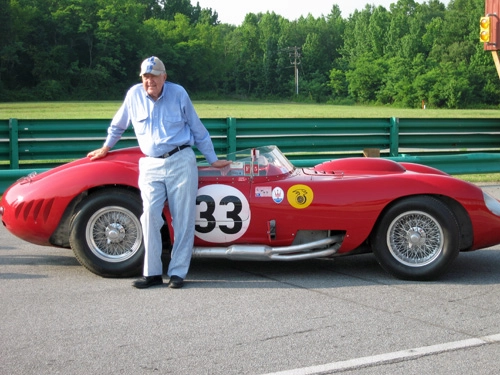
Virginia International Raceway’s Full Course has approximately 130 feet of elevation change. VIR’s official configuration page lists that figure, while the track’s own materials also show the Full Course as the highest-elevation configuration among its principal layouts.
That number matters because elevation changes alter more than what the driver can see. They change the load on the car. When the track rises, the car effectively gains an uphill resistance and the suspension responds differently to the surface. When it drops away, the car can become lighter. Over a crest, the aerodynamic platform may experience a momentary change in load just when the driver is asking for a directional input.
Elevation and braking at VIR
Braking downhill is particularly important because the car arrives with a different weight distribution and a different margin for locking a tire. The driver has to understand not only the braking marker but the surface gradient between the marker and the corner.
South Bend is an excellent example. IMSA describes Turn 10 as a cresting blind left that finishes with a steep downward slope. That combination creates a very specific challenge: the driver has to commit to the entry with limited visibility and then manage the car as the road falls away.
What elevation changes affect
- Braking stability and tire loading
- Visibility at crests
- Ride height and aerodynamic platform
- Traction on uphill exits
- Reference points for the driver
Why fans notice it
- Cars disappear over crests
- High-speed sections look more dramatic
- Errors can compound over linked corners
- Traffic timing changes through blind sections
- Driver commitment is easier to see on camera
The elevation profile is part of the setup
Engineers cannot treat VIR as a flat sheet of asphalt. The car must remain predictable while moving through compressions, crests and downhill braking zones. That makes ride control and mechanical balance particularly important. A setup that looks strong on a static alignment sheet can behave very differently once the driver is attacking the fast parts of the circuit at race pace.
Where Are the Overtaking Zones at VIR?
VIR is not a circuit where every passing opportunity is identical. The best moves are usually created by combining one of three things: a strong exit from the previous corner, a speed differential created by traffic, or a braking advantage into a slower section.
For IMSA GT cars, the most obvious racecraft zones are the end-of-straight braking areas and the slower corners that follow them. But because the lap is so connected, drivers will often begin a passing sequence one or two corners earlier than the eventual move.
Turn 1 and the front-straight braking zone
The front straight is one of the most useful places to build an attack. A driver who exits the final section well can use the approach to Turn 1 to draft, pull alongside and then brake for the corner. The important point is that the driver behind needs enough overlap before the braking phase. A late dive without meaningful overlap tends to become a defensive move rather than a sustainable pass.
The middle of the lap: pressure rather than desperation
The high-speed middle sector is less attractive for low-percentage overtakes because the car is heavily loaded and the consequences of contact are greater. That does not mean passing is impossible. It means the driver often gains more by forcing the car ahead to defend, lose momentum, or compromise its tire usage.
Oak Tree to the back straight
This is one of the most important sequences for a GT driver. A strong exit from Oak Tree can create a drag advantage all the way down the straight. The driver can then judge whether the closing speed is sufficient for a pass at the next braking opportunity. In multi-class racing, the timing can become even more complicated because a prototype or faster car may arrive at the same time.
Hog Pen and the run to the front straight
The final part of the lap is equally important because a driver can build an attack for the next lap. Rather than treating the final corners as a purely defensive section, experienced drivers use them to create a better run onto the front straight. That can turn one lap of pressure into a move at Turn 1 on the following lap.
| Zone | Primary objective | Passing potential | Key risk |
|---|---|---|---|
| Turn 1 | Late braking and track position | High | Out-braking the car beyond the apex |
| Climbing Esses | Maintain momentum and commitment | Low | Unstable car over crests |
| South Bend | Manage blind crest and downhill braking | Situational | Limited visibility |
| Oak Tree / back straight | Maximize exit and draft | High | Exit traction and traffic |
| Hog Pen / front straight | Build next-lap attack | Situational | Compromised line and tire wear |
The best VIR pass is usually the one the driver prepares before the camera shows the move.
How VIR Changes IMSA Race Strategy
Track layout and strategy are inseparable at VIR. Because the course mixes long straights with fast and slow corners, a team is always balancing two forms of performance: the speed needed to attack and defend, and the stability needed to make that speed repeatable across a stint.
Tire management
High-speed corners place sustained energy through the tires, while traction zones punish excessive wheelspin. That means the fastest opening laps of a stint are not necessarily representative of the best long-run pace. A driver who is too aggressive with corner entry can create temperatures that change the car’s balance later in the stint.
For GTD and GTD PRO teams, the goal is not simply to keep the tires alive. It is to keep the car’s balance predictable. Predictability lets the driver attack the same reference point repeatedly, which is critical when the race turns into a sequence of traffic-management decisions.
Track position versus raw pace
Because passing often depends on exits and braking zones, a small amount of track position can be valuable. A driver stuck behind another car may have enough pace to follow but not enough room to pass without taking a large risk. That can make a clean pit-stop cycle or a well-timed undercut more valuable than a marginal advantage in clear-air lap time.
Multi-class traffic
Although the Michelin GT Challenge is built around IMSA’s two GT categories, the wider VIR weekend includes multiple support categories. During shared-track sessions and multi-class running, drivers are constantly calculating closing speeds. GT cars must be aware of faster traffic while also managing their own class battles.
That is where VIR’s blind corners become strategically significant. A driver cannot always see a faster car early enough to react. Spotters, radio communication and disciplined racecraft therefore matter as much as the raw speed of the car.
Weather sensitivity
Southern Virginia weather can change the grip equation quickly. At VIR, a wet or partially wet surface does not merely reduce the cornering limit; it changes which lines work, where the grip is and how much throttle the driver can use on exits. Historic IMSA events at VIR have shown how mixed conditions can turn tire strategy into the decisive factor.
A useful VIR setup is one that leaves the driver confidence at the high-speed entries without sacrificing the traction needed to turn Oak Tree and the final section into straight-line speed.
Corner-by-Corner VIR Guide for Race Fans
Why VIR Is Such a Difficult IMSA Circuit
VIR’s difficulty comes from its lack of an obvious rhythm break. There are places to slow the car, but the circuit quickly asks for another change in direction, another acceleration zone or another elevation transition. The driver is therefore rarely allowed to reset completely.
That is why experienced drivers often describe the circuit in terms of confidence. The car needs to give the driver enough trust to commit at high speed. Once that trust is lost, lap time disappears quickly because the driver has to introduce margin at exactly the places where the circuit rewards commitment.
VIR also exposes weaknesses in car setup. A car that understeers through the fast turns will cost time on every high-speed approach. A car that is too loose may produce a spectacular qualifying lap but become difficult to manage over a long stint. The best race car often looks less dramatic because it lets the driver hit the same line repeatedly.
The difference between a fast lap and a race lap
A qualifying lap can be built around maximum commitment. A race lap must account for tire degradation, fuel load, traffic and the possibility of being attacked. At VIR, that distinction is particularly clear. The track’s blind and high-speed sections reward precision, but a race driver has to preserve the car for the full stint.
This also explains why VIR can produce long periods in which two cars appear evenly matched before one suddenly gains an advantage. The difference may come from tire temperature, a cleaner traffic window, a stronger exit or a driver choosing a different risk level rather than from a dramatic change in raw pace.
VIR 2026: What IMSA Fans Should Watch
The 2026 Michelin GT Challenge at VIR is scheduled for August 21–23 at Virginia International Raceway. IMSA’s official event page lists the WeatherTech race on Sunday, August 23, with the race scheduled from 12:00 p.m. to 3:00 p.m. ET. The event is centered on the two GT classes, GTD PRO and GTD.
For fans watching the 2026 race, the most useful way to follow the action is to watch the sections that reveal why the circuit is difficult. The Esses show driver commitment. South Bend shows how elevation changes influence braking and confidence. Oak Tree shows who can create a run. The final sector shows who is thinking one lap ahead.
IMSA’s official TV and streaming schedule lists the Michelin GT Challenge for Sunday, August 23, from 12:00 p.m. to 3:00 p.m. ET, with Peacock Premium streaming in the United States and television coverage scheduled through the NBC family of platforms. Coverage details can change, so the official IMSA broadcast page remains the best final reference on race day.
Sunday, August 23, 2026 — 12:00 p.m.–3:00 p.m. ET. IMSA lists the Michelin GT Challenge at VIR in its official TV and streaming schedule, with Peacock Premium streaming in the U.S.
What Should Fans Remember About VIR?
The simplest way to understand VIR is to stop thinking of it as a list of seventeen turns. It is a sequence of linked compromises. Brake for one corner while thinking about the next. Carry speed through the fast section without unsettling the car. Protect the Oak Tree exit because the straight matters. Survive the elevation changes with the car stable. Then use the final sector to create the next attack.
The Climbing Esses are the clearest expression of VIR’s character: high speed, elevation and commitment layered together. Oak Tree shows the circuit’s strategic side because the exit determines the quality of a long acceleration zone. The 130-foot elevation change makes the lap feel three-dimensional rather than flat. And the overtaking zones reward preparation rather than desperation.
That is why VIR remains such a valuable IMSA circuit. It tests the driver, the car and the pit-wall plan at the same time. A strong lap is not one spectacular corner. It is a chain of decisions made correctly for almost three and a quarter miles.
VIR IMSA 2026 Track Guide: FAQs
Conclusion: Why VIR Still Rewards the Complete Driver
Virginia International Raceway remains one of the clearest examples of an American road course where technical understanding directly affects racecraft. The 3.27-mile Full Course combines long straights with high-speed direction changes, blind corners and 130 feet of elevation variation. For IMSA GT teams, that produces a circuit where a car can be excellent in one section and still lose the battle through compromises elsewhere.
The Climbing Esses remain the headline challenge, but Oak Tree may be the corner that best explains VIR’s strategic character. The driver who exits correctly gains an opportunity that can be realized many seconds later. That same principle carries through the final sector and back to Turn 1.
For the 2026 IMSA season, that is what makes VIR worth watching closely. Do not only watch the leader’s position. Watch how cars approach the Esses, how much speed they carry through South Bend, which driver gets the better Oak Tree exit and whether the final corner sequence produces a run onto the front straight. Those details are where the race is often won.
Sources & References
- IMSA — 2026 VIRginia International Raceway event page
2026 event dates, circuit length, classes and race information - IMSA — VIRginia International Raceway track information and history
Track length and historical background - VIRginia International Raceway — Track Configurations
Full Course dimensions, straight lengths and 130-foot elevation change - IMSA — What to Watch For: Michelin GT Challenge at VIR
Climbing Esses, South Bend, Roller Coaster and driver analysis - IMSA — 2026 VIR race report
Recent 2026 racing context and Oak Tree incident reference - IMSA — TV and Streaming Schedule
Official 2026 race-day broadcast and streaming listing - VIR — Track Map PDF
Official spectator map identifying the Full Course and major named sections - Wikimedia Commons — VIR Full Course map
CC BY 3.0 track map by Will Pittenger - Wikimedia Commons — Carroll Shelby at VIR
Historical VIR image used for educational context - Wikimedia Commons — Virginia International Raceway category
Additional openly licensed VIR imagery
Editorial note
This guide is written for fans who want to understand how VIR works as a racing circuit, not just memorize corner names. Circuit dimensions and event information are based on IMSA and VIR materials available for the 2026 event period. Racing-line and strategy observations are analytical explanations of how the layout influences IMSA-style GT racing.