Portland INDYCAR 2026: Full Schedule, Race Time, TV Coverage & Streaming Guide
The complete U.S. viewing guide for the August 7–9 Portland weekend, plus the verified schedule, track details, qualifying story, and post-race update after Alex Palou’s victory.
The 2026 NTT INDYCAR SERIES returned to Portland International Raceway for a three-day weekend from Friday, August 7 through Sunday, August 9. For U.S. viewers, the headline was straightforward: the race was scheduled for 4:00 p.m. ET on Sunday, August 9 on FOX, with the practice and qualifying sessions spread across FOX Sports channels and the broader FOX/INDYCAR digital ecosystem.
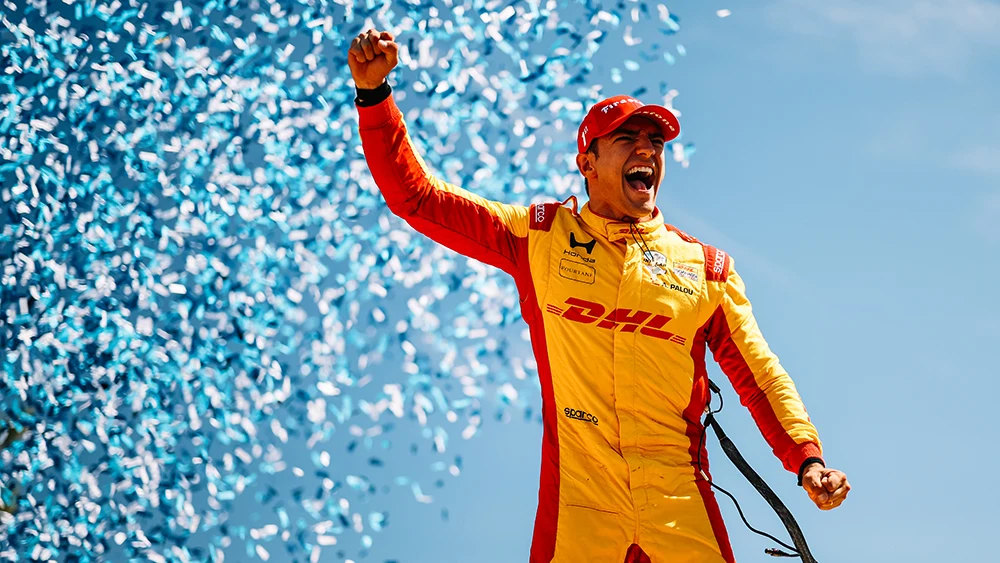
The weekend ultimately became more than a TV-guide entry. Felix Rosenqvist produced a late qualifying lap to beat Alex Palou to pole, but Palou answered on Sunday with a controlled, tire-management-driven victory. The Chip Ganassi Racing driver won by 4.1167 seconds, scored his sixth victory of the season and moved 110 points clear in the championship after Round 13.
If you came here looking for the Portland INDYCAR schedule, race start time, TV channel, streaming options, track facts or the final result, everything is collected below in Eastern Time first for a U.S.-based audience.
What time was the Portland INDYCAR race in 2026?
The 2026 OnlyBulls Grand Prix of Portland was scheduled for Sunday, August 9 at 4:00 p.m. ET (1:00 p.m. PT) at Portland International Raceway. The race aired nationally on FOX. The official race distance was 110 laps and 216.04 miles.
One detail matters if you are reading this after race weekend: the event is no longer upcoming. The official INDYCAR schedule now lists Alex Palou as the 2026 Portland winner. That means an accurate guide should not still talk about predictions as if the green flag is in the future. Instead, the useful approach is to keep the complete schedule intact while adding what actually happened.
Portland INDYCAR 2026 Full Weekend Schedule
The official INDYCAR event page listed the weekend from August 7–9. Practice 1 opened the NTT INDYCAR SERIES program Friday afternoon, Saturday carried Practice 2 and knockout qualifying, and Sunday featured a morning warmup before the 4 p.m. ET race broadcast.
| Date | Session | Eastern Time | Pacific Time | U.S. Coverage |
|---|---|---|---|---|
| Fri., Aug. 7 | Practice 1 | 5:30 p.m. ET | 2:30 p.m. PT | FS2 / FOX One / INDYCAR Radio |
| Sat., Aug. 8 | Practice 2 | 1:00 p.m. ET | 10:00 a.m. PT | FOX Sports coverage / FOX One / INDYCAR Radio |
| Sat., Aug. 8 | NTT P1 Award Qualifying | 7:00 p.m. ET | 4:00 p.m. PT | FS1 / FOX One / INDYCAR Radio |
| Sun., Aug. 9 | Warmup | 1:00 p.m. ET | 10:00 a.m. PT | FOX ecosystem / INDYCAR Radio |
| Sun., Aug. 9 | OnlyBulls Grand Prix of Portland | 4:00 p.m. ET | 1:00 p.m. PT | FOX, FOX Deportes, FOX One, INDYCAR Radio |
World of Speed serves a broad U.S. audience, so ET is the cleanest national reference point. Portland itself is on Pacific Time, making the Sunday race a 1:00 p.m. local start.
Friday: Practice 1 set the baseline
Alex Palou immediately showed that Chip Ganassi Racing had arrived with a strong package. His best lap was 58.5716 seconds, narrowly ahead of Kyle Kirkwood at 58.6602. Rinus VeeKay, Will Power and Louis Foster completed the top five. That first session also supplied a warning about Portland’s opening chicane: Marcus Armstrong and Pato O’Ward both made contact with the barrier around Turn 1 in separate incidents.
Portland is one of those tracks where a Friday practice time can be useful without being definitive. The lap is short, traffic changes rapidly, and the Firestone primary and alternate tires create very different single-lap behavior. A driver can look average on the primary compound and suddenly jump toward the top when the higher-grip alternate comes into play.
Saturday: Practice 2 revealed the alternate-tire speed
Marcus Armstrong demonstrated that point perfectly. He led Practice 2 with a 58.2981, the fastest lap of the weekend at that stage, and he did it on the alternate tire. Palou remained second at 58.6106, Scott Dixon was third, Rosenqvist fourth and David Malukas fifth. The data strongly suggested the red-sidewall alternate would be the weapon of choice for a qualifying push, even if the primary tire remained attractive for longer race stints.
Saturday evening: qualifying decided the front row
At 7 p.m. ET, the focus shifted from long-run balance to pure speed. Portland qualifying uses INDYCAR’s road-course knockout format, moving through groups and the final Firestone Fast Six. If you want a broader explanation of how drivers advance through qualifying, see our guide to how racing drivers qualify and our explainer on pole position.
How to Watch Portland INDYCAR 2026 on TV and Streaming
What channel was the Portland INDYCAR race on?
The 2026 Portland race aired live in the United States on FOX at 4:00 p.m. ET on Sunday, August 9. Spanish-language television coverage was available on FOX Deportes, while FOX One and INDYCAR Radio powered by OnlyBulls were also listed by INDYCAR as weekend coverage options.
FOX remains the central U.S. home for NTT INDYCAR SERIES race broadcasts in 2026. For Portland, the network race window was particularly easy to identify because the official INDYCAR schedule and FOX’s season broadcast schedule both listed Sunday, August 9 at 4 p.m. ET.
Practice and qualifying are more fragmented than the race itself. The key Saturday qualifying session aired on FS1, and Friday Practice 1 was carried on FS2. The INDYCAR event notes also pointed fans toward FOX One and INDYCAR Radio for session-by-session access. Because platform entitlements can vary by subscription package, viewers using streaming services still need a service that carries the relevant FOX network feed or the applicable FOX streaming product.
Can you stream the Portland Grand Prix online?
Yes. The 2026 event was available through FOX’s digital ecosystem, while INDYCAR also directs international viewers to its official streaming service where rights permit. U.S. fans should remember that streaming availability can depend on their television provider, subscription tier and location. A streaming service carrying FOX, FS1 or FS2 can also provide access when the corresponding television session is included in the customer’s plan.
For fans outside the United States, rights are country-specific. INDYCAR’s global distribution reaches a large number of territories, but the local rights holder differs by market. The safest route is to check the official INDYCAR “How to Follow” page or the local broadcaster rather than assuming a U.S. FOX feed will be available internationally.
What about INDYCAR Radio?
INDYCAR Radio remains a useful alternative for fans who are driving, working, traveling or following timing data without a television screen. Radio commentary is especially valuable at Portland because strategy can become complicated when primary and alternate tires create overlapping pit windows. A good radio call helps explain whether a driver is truly leading on strategy or simply has not made the next stop yet.
Readers who follow several series can compare this viewing setup with our broader INDYCAR schedule and INDYCAR racing guide. Those pages are useful for understanding where Portland sits within the wider championship calendar.
Portland International Raceway: What Makes the Track Different?
Portland International Raceway is a natural road course built on land once occupied by the city of Vanport. INDYCAR’s 2026 event page lists the track at 1.967 miles for race-distance calculation and the event at 110 laps, totaling 216.04 miles. The same page’s circuit description refers to the familiar 12-turn, roughly 1.964-mile layout used in track descriptions.
The visual character of Portland is different from a street race. It is flat, fast enough to reward aero efficiency, and surrounded by the Pacific Northwest landscape rather than concrete downtown canyons. Yet the opening sequence can feel every bit as unforgiving as a street circuit because the field arrives at the Turn 1 chicane tightly packed.
Turn 1 is the weekend’s pressure point
Drivers brake hard at the end of the front straight and funnel into a quick right-left chicane. On the opening lap, that creates a classic accordion effect: the cars at the front can choose a normal braking point, while the middle and back rows react to traffic compressing in front of them. A small lockup can force a driver across the escape route or create contact. That is why starting position still matters even in an INDYCAR race where strategy can move cars through the field.
Understanding grid position is useful here. Our guide to what grid position means in racing explains why a front-row start gives a driver much more than a statistical advantage: it also reduces exposure to opening-lap traffic and contact.
Passing opportunities go beyond the first chicane
INDYCAR highlights the braking zone at Turn 7 and the final complex leading back toward the front straight as other important places where drivers can attack. Slipstream, push-to-pass deployment, tire condition and corner-exit traction all matter. For readers who want the physics behind the tow, our slipstream explainer breaks down why the following car can gain speed on a straight.
Portland also makes downforce a compromise rather than a simple “more is better” decision. Teams want enough aerodynamic load to keep the car secure through the faster corners, but too much drag makes defending and attacking on the straights more difficult. Our guide to what downforce is provides the broader engineering background.
A race with genuine history
The first top-level INDYCAR race at Portland was won by Al Unser Jr. in 1984. One of the circuit’s defining historical moments came in 1997, when Mark Blundell beat Gil de Ferran by 0.027 seconds and Raul Boesel by 0.055 seconds in an extraordinary three-wide road-course finish. The modern era has produced another strong pattern: Alex Palou won in 2021 and 2023, Will Power won in 2024 and 2025, and Palou returned to Victory Lane in 2026.
2026 Portland Qualifying: Rosenqvist Beat Palou to Pole
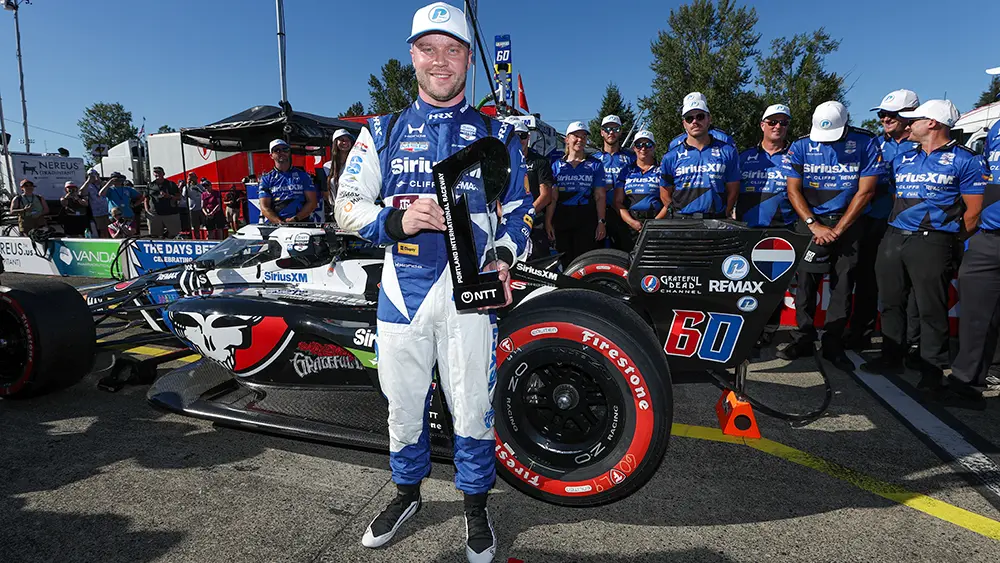
Felix Rosenqvist’s pole was one of the weekend’s best moments. With only three seconds remaining in the Firestone Fast Six, he completed a 58.4828-second lap in the No. 60 Meyer Shank Racing Honda. Palou’s 58.5012 was only 0.0184 seconds slower, putting the championship leader alongside Rosenqvist on the front row.
| Qualifying Pos. | Driver | Best Lap | Note |
|---|---|---|---|
| 1 | Felix Rosenqvist | 58.4828 | Pole; second pole of 2026 |
| 2 | Alex Palou | 58.5012 | Front row |
| 3 | Will Power | 58.5130 | Two-time defending Portland winner |
| 4 | Marcus Ericsson | 58.6729 | Andretti Global |
| 5 | Rinus VeeKay | 58.7701 | Fastest Chevrolet in Fast Six |
| 6 | Kyffin Simpson | 59.0841 | First Fast Six appearance of season |
Honda dominated the qualifying order, putting ten cars inside the first 12 positions. David Malukas qualified ninth but carried a six-place grid penalty for an unapproved engine change from the previous Nashville round. Kyle Kirkwood qualified seventh, while Christian Lundgaard endured a difficult session and ended up 25th after mechanical problems.
A qualifying result is not always the final grid. Engine-change and other sporting penalties can move a driver backward after the timing session. That distinction matters when you are building a race prediction from the published times.
For new fans, qualifying is where the weekend’s raw speed is easiest to compare because every contender is trying to maximize one lap. Race pace is different: fuel load, tire saving, traffic and pit windows can overturn the hierarchy. That difference between single-lap speed and race execution became the central story on Sunday.
Portland INDYCAR 2026 Result: Alex Palou Won the Race
Who won the Portland INDYCAR race in 2026?
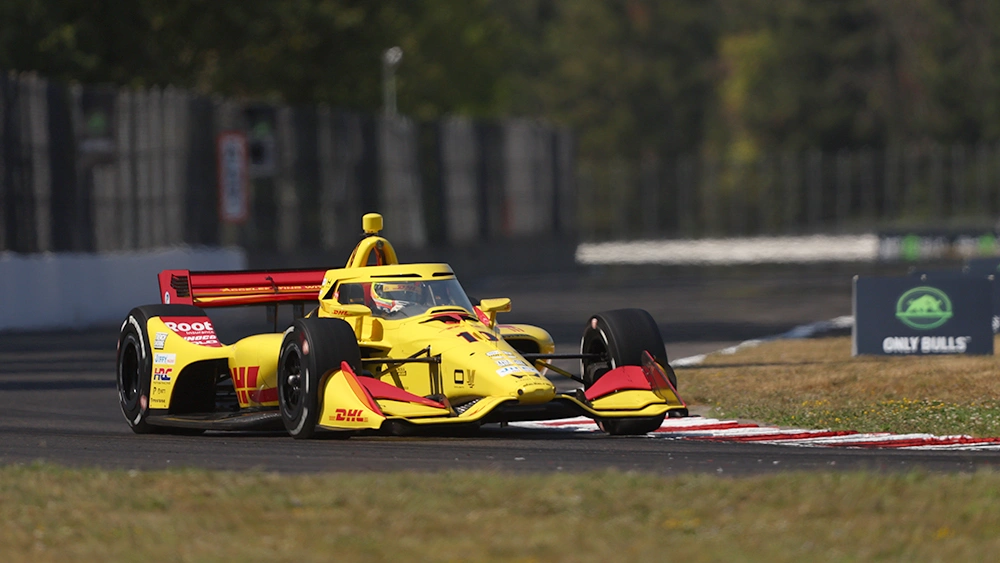
Alex Palou won the 2026 OnlyBulls Grand Prix of Portland. He beat pole sitter Felix Rosenqvist by 4.1167 seconds. Will Power finished third, Rinus VeeKay fourth and Kyle Kirkwood fifth.
The final result was built on timing rather than a spectacular late pass. Rosenqvist led the first 30 laps from pole, with Power and Palou in the leading group. Rosenqvist and Power stopped at the end of Lap 30/31 sequence while Palou stayed out one lap longer. That extra lap became decisive.
Palou’s pace before his stop made the overcut work. When he exited the pits after switching to the alternate tires on Lap 32, he had moved ahead of Rosenqvist and Power. From that point onward, the No. 10 Chip Ganassi Racing Honda controlled the strategic center of the race.
If you are unfamiliar with the mechanics of strategy calls like this, our guide to how pit stops work in racing explains why one additional lap before a stop can be either a gift or a disaster. Track position, tire warm-up and traffic all have to line up.
Why Palou’s overcut worked
The primary reason was that his old tires still had enough performance to produce a strong in-lap while Rosenqvist was dealing with the early phase of a new stint and the time loss of pit entry, service and pit exit. Portland’s short lap makes these margins brutally clear. A fraction of a second in the box, a small delay launching from the pit stall or one compromised corner can change the order when the two cars rejoin.
Palou eventually led a race-high 60 laps. Rosenqvist closed the gap to under a second around Lap 80 when the alternate tire gave him extra grip, but Palou managed traffic and rebuilt the margin. Palou made his final stop at the end of Lap 82 and stayed on scuffed primary tires.
Power’s chance was hurt by a missed pit call
Will Power had a faster alternate tire available for the final stint and appeared positioned to challenge Rosenqvist, perhaps even apply pressure to Palou. But he did not hear the call to pit at the end of Lap 86. The additional lap left him in traffic, and the delay effectively ended his realistic chance of fighting the top two. He still finished third, continuing an impressive Portland record after winning the previous two editions.
Top five finishers
| Finish | Driver | Team / Car | Key takeaway |
|---|---|---|---|
| 1 | Alex Palou | Chip Ganassi Racing Honda | Won by 4.1167 seconds; led 60 laps |
| 2 | Felix Rosenqvist | Meyer Shank Racing Honda | Started from pole and led opening 30 laps |
| 3 | Will Power | Andretti Global Honda | Third after late pit-call issue |
| 4 | Rinus VeeKay | Juncos Hollinger Racing Chevrolet | Strong weekend for top Chevrolet runner |
| 5 | Kyle Kirkwood | Andretti Global Honda | Top five moved him to second in points |
The race had only one caution period lasting two laps. That low-caution pattern made tire life, in-laps, out-laps and pit execution more important because teams had fewer opportunities to receive a “free” strategic reset under yellow. When cautions do appear, the field can compress and the strategy tree changes instantly; our safety-car explainer covers the basic concept, while racing flags explained is useful for understanding the signals around incidents.
What the win did to the championship
Portland was Round 13 of the 2026 season. After the victory, Palou stood on 510 points with six wins and a 110-point advantage over Kyle Kirkwood, who moved into second with 400. David Malukas was third with 392, Christian Lundgaard fourth with 375 and Pato O’Ward fifth with 355.
| Rank after Portland | Driver | Points | Gap |
|---|---|---|---|
| 1 | Alex Palou | 510 | — |
| 2 | Kyle Kirkwood | 400 | -110 |
| 3 | David Malukas | 392 | -118 |
| 4 | Christian Lundgaard | 375 | -135 |
| 5 | Pato O’Ward | 355 | -155 |
That gap is enormous in INDYCAR terms. It gave Palou breathing room heading into the remaining five races and pushed him closer to a fifth career championship. If you want to follow how those points are accumulated across the season, see our guide to how racing championships are scored.
Why Portland Rewards Strategy as Much as Speed
The 2026 race is a useful case study in why INDYCAR road-course racing cannot be reduced to qualifying order. Rosenqvist had the fastest car over one lap on Saturday. Palou’s own qualifying speed was almost identical. The difference on Sunday came from keeping the tires alive, creating a fast in-lap at the right moment and executing the pit sequence cleanly.
Firestone’s primary and alternate compounds intentionally create contrasting performance profiles. The alternate generally offers more grip but wears faster, while the primary sacrifices some immediate speed for durability. The trick is not simply choosing the “faster” tire. Teams decide when its grip advantage will matter most and whether traffic will allow the driver to exploit it.
That is why the opening stint became so important. Rosenqvist, Palou and Power all began on the primary tire. That decision gave them a stable opening phase and delayed the need to expose the alternate tire to a long stint. Once the leaders began stopping, the race became a sequence of overcuts, warm-up laps and attempts to avoid slower traffic.
Race timing is what makes those strategy calls visible. If you want to understand how official gaps, laps and positions are tracked during pit cycles, see how race timing works and how laps are counted in racing.
The “short lap” effect
A sub-minute qualifying lap compresses the field. On a longer circuit, a driver might find several seconds of clean air before reaching traffic. At Portland, catching a slower car happens quickly, so pit strategists constantly evaluate whether one more lap on old tires is worth the risk. Palou’s Lap 32 stop worked because his pace remained strong and the traffic picture allowed him to use the extra lap.
Why a clean race can favor the strongest long-run car
With only one two-lap caution, randomization was limited. Cautions often wipe out gaps and let teams change tires under reduced race speed. Without repeated interruptions, the leaders had to win the race through sustained pace and pit-stop execution. That generally rewards a car with consistent tire behavior rather than one that only has a sharp qualifying peak.
For fans comparing INDYCAR with other open-wheel series, our IndyCar vs. F1 guide explains some of the broader sporting and technical differences. The strategic themes are familiar across both championships, but the spec-based INDYCAR field often produces much tighter performance windows.
What Fans Should Watch for at Portland
Although the 2026 event is complete, the same fundamentals will matter when INDYCAR returns to Portland. The first thing to watch is the start. The field fans out under braking, drivers try to protect the inside, and the chicane can punish anyone who arrives with too much speed or too little space.
Next, pay attention to which tire compound the front runners choose. If several leaders start on the primary while a car deeper in the field starts on the alternate, they may be running different races even while separated by only a few positions. The alternate starter wants to use early grip to move forward; the primary starter may be protecting flexibility for a longer opening stint.
The third signal is the gap around pit windows. If a driver is within one or two seconds of a rival, the timing of the stop can become more important than the raw pace difference. A fast in-lap, clean service and strong out-lap can create a position change without an on-track pass.
Finally, watch traffic. The leaders do not race in isolation. A slower car can help a trailing driver close the gap, or it can break the momentum of the chasing car. Palou’s management of traffic late in the 2026 race was one of the subtle reasons Rosenqvist could not sustain his attack.
For a broader introduction to racecraft, our how car racing works guide provides the basics, while our INDYCAR hybrid system update gives additional context on the technology used by the current field.
Portland INDYCAR 2026 FAQ
Conclusion
Portland delivered the complete INDYCAR road-course test
The 2026 Portland weekend had almost everything a road-course event needs: a close qualifying fight, a pole decided by hundredths of a second, contrasting tire strategies and a race won through execution rather than chaos. The simple viewing headline was Sunday at 4 p.m. ET on FOX. The sporting headline was Alex Palou turning second on the grid into a 4.1167-second victory.
Rosenqvist proved he had the single-lap speed. Power again showed why Portland suits him. VeeKay delivered another strong result for Juncos Hollinger Racing. But Palou’s tire management and the Lap 32 overcut defined the race and pushed his championship lead to 110 points.
For future Portland weekends, keep the same priorities in mind: check the official session times, confirm the FOX/FS1/FS2 channel assignment, watch the Turn 1 chicane on Lap 1, and follow the primary-versus-alternate tire choices as the first pit window approaches.
Sources
- INDYCAR — 2026 OnlyBulls Grand Prix of Portland event page
- INDYCAR — Alex Palou Draws Closer to Fifth Title With Masterful Portland Win
- INDYCAR — Felix Rosenqvist wins Portland pole
- INDYCAR — Portland Practice 1 report
- INDYCAR — Portland Practice 2 report
- INDYCAR — Portland warmup report
- INDYCAR — 2026 championship standings
- FOX Sports — 2026 INDYCAR broadcast start times
- Race Portland — official event website