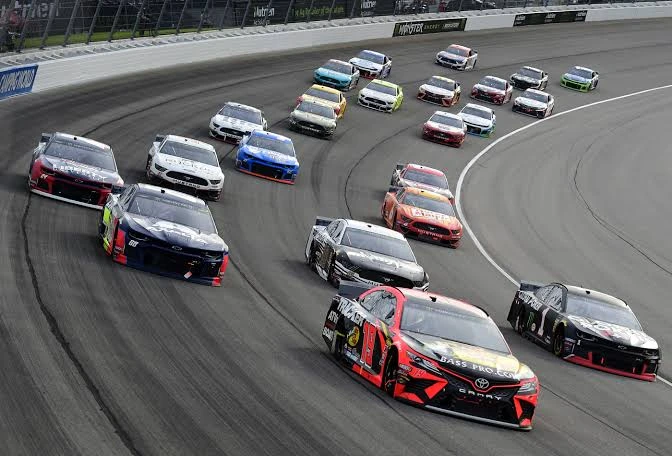
Chicagoland NASCAR 2026 Preview:
Favorites, Track Guide & Predictions
NASCAR returns to Joliet’s 1.5-mile oval for the first time in seven years. Denny Hamlin qualifies on pole at 178.241 mph. The eero 400 goes green at 6:00 p.m. ET on TNT Sports — here is everything you need to know before the flag drops.
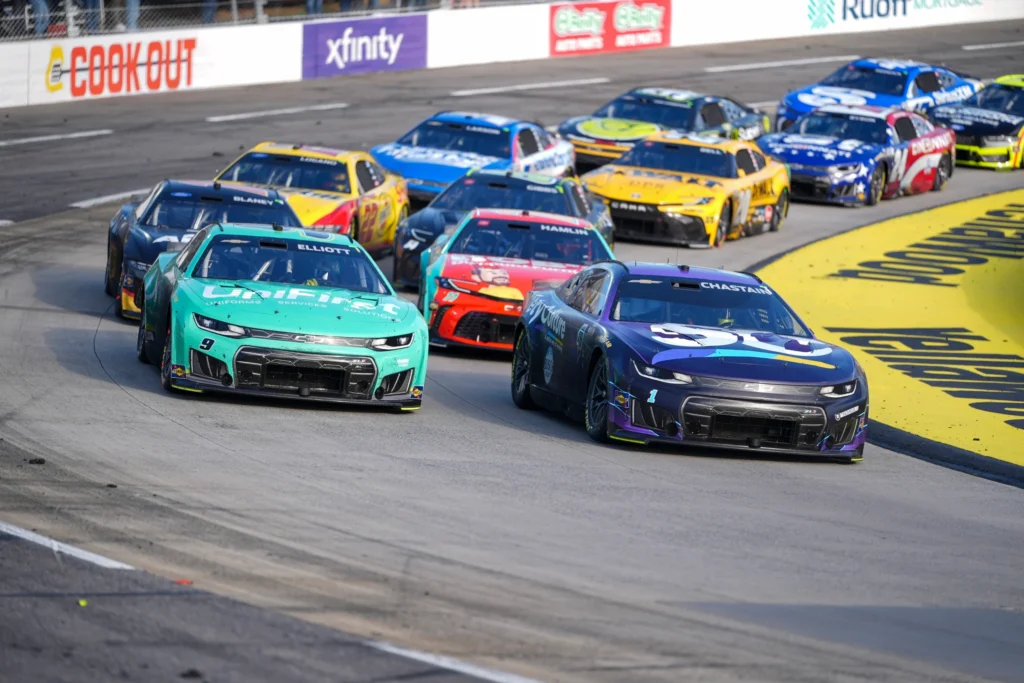
After a seven-year absence, NASCAR is back in Joliet, Illinois. The Cup Series’ 20th visit to Chicagoland Speedway arrives on a Fourth of July weekend packed with championship stakes, a red-hot points leader starting from pole, and a Midwest crowd that has been waiting for exactly this moment since 2019.
Denny Hamlin put his No. 11 Joe Gibbs Racing Toyota on pole by the slimmest margin of the season — 0.001 seconds over Kyle Larson. That is how tight the competition at Chicagoland is going to be. This preview covers everything from the track’s history and layout to the drivers who should win, the strategies that will decide it, and where the Chicagoland NASCAR 2026 race fits in the playoff picture.
The 2026 NASCAR Cup Series eero 400 at Chicagoland Speedway runs 267 laps / 400 miles on July 5, starting at 6:00 p.m. ET on TNT Sports. Denny Hamlin (No. 11 Toyota) starts from pole at 178.241 mph. The race is round 2 of the In-Season Challenge and the 20th Cup race at Joliet’s 1.52-mile tri-oval.
The Setup: Why This Race Matters
NASCAR announced the return of Chicagoland Speedway on August 20, 2025, as part of the full 2026 schedule release. The sanctioning body pointed to three driving factors: fan demand for traditional intermediates in the Midwest, the proven competitiveness of the Next Gen car on 1.5-mile ovals, and a gap left by the Chicago Street Race going on hiatus after three years on Grant Park’s public roads.
The result is a weekend that feels genuinely historic. The three-day Independence Day celebration includes the ARCA Menards Series on Friday, July 3; the Cuervo 300 O’Reilly Auto Parts Series on Saturday, July 4, starting at 5:30 p.m. ET; and the Cup Series eero 400 on Sunday, July 5 at 6:00 p.m. ET. It is the first full NASCAR race weekend at the Joliet facility since 2019. Moreover, this is round 2 of the In-Season Challenge on TNT Sports, adding a $1 million bracket prize on top of the regular points implications.
Chicagoland is the second stop in NASCAR’s 2026 In-Season Challenge, a five-race bracket on TNT Sports running Sonoma → Chicagoland → Atlanta → North Wilkesboro → Indy oval. Denny Hamlin (No. 2 seed) faces Erik Jones. Kyle Larson faces William Byron. Ty Gibbs takes on Chase Briscoe. A race win here carries both points and bracket advancement.
Chicagoland Speedway: A Real History
Chicagoland Speedway opened in 2001, the same year NASCAR first staged the Brickyard 400 at Indianapolis Motor Speedway under its current format. The 1.52-mile tri-oval in Joliet was built as a destination track — 930 acres of land so massive that, per the circuit itself, 42 United Center arenas could fit inside the infield. From the moment it opened, the track produced close racing. Intermediate ovals of this size reward setup, tire management, and precise line-selection over raw horsepower, which tends to keep the field competitive across all 267 laps.
Over 19 Cup Series events, Chicagoland built a meaningful winners’ list. Jeff Gordon won the inaugural race in 2001. Tony Stewart holds the track record with three victories, making him the only driver to win at Joliet more than twice. Brad Keselowski owns two wins — the most of any active driver on the 2026 grid entering this race. Kyle Busch won the 2018 race in dramatic fashion, pulling off a slide job on Kyle Larson that became one of the most talked-about moments of that era of NASCAR racing.
| Year | Winner | Team | Manufacturer | Notes |
|---|---|---|---|---|
| 2001 | Jeff Gordon | Hendrick | Chevrolet | Inaugural Race |
| 2002 | Kevin Harvick | RCR | Chevrolet | First Win of Career at Joliet |
| 2004 | Tony Stewart | JGR | Chevrolet | 1st of 3 Chicagoland Wins |
| 2015 | Denny Hamlin | JGR | Toyota | Pole Sitter Returns in 2026 |
| 2016 | Brad Keselowski | Penske | Ford | Win No. 1 at Chicagoland |
| 2018 | Kyle Busch | JGR | Toyota | Famous slide job on Larson |
| 2019 | Alex Bowman | Hendrick | Chevrolet | Last Race Before 7yr Gap |
The most meaningful note heading into 2026: Alex Bowman won the last Chicagoland race in 2019 and returns to the grid for Sunday’s eero 400. He qualified 12th. Meanwhile, Denny Hamlin — who won at Chicagoland in 2015 and starts from pole — arrives as points leader by a single point over Tyler Reddick. The history of this track intersects directly with the present-day title fight in a way that doesn’t happen very often.
“This track is going to race so well that it will be hard to say, ‘Let’s go back and take it off the schedule.'”
— Denny Hamlin, July 4, 2026 (post-qualifying)Chicagoland Speedway Track Guide
Chicagoland is a 1.52-mile tri-oval — not a perfect oval, but not a D-shaped layout either. The front stretch runs longer than the back, and the entry to Turns 1 and 2 drops slightly, helping cars carry speed into the banking. The turns feature 18 degrees of banking, while the backstretch runs at 5 degrees. That combination rewards high-entry, momentum-based setups rather than brute-force downforce.
Historically, the outside lane at Chicagoland has been the dominant racing line in traffic, which means a strong starting position directly influences how easy it is to get into clean air early in a run. Therefore, Hamlin’s pole starting position gives him a meaningful structural advantage heading into Sunday. Furthermore, the track tends to groove up — meaning multiple lanes become viable as rubber builds across all 267 laps — which historically opens overtaking opportunities late in long runs that don’t exist in the opening stints.
Four turns, two long straightaways. Front stretch slightly longer. Tri-oval shape creates a distinct entry challenge into Turn 1 after the start-finish line. Track sits on 930 acres — one of the largest footprints of any NASCAR oval.
18 degrees in the turns is on the higher end for an intermediate track — comparable to Kansas and Charlotte. This naturally aids side-by-side racing through the turns and typically produces the clearest drafting effect on the frontstretch.
What Makes Chicagoland Race Well
The Next Gen car has been genuinely excellent on 1.5-mile tracks since its 2022 introduction. Tracks like Las Vegas, Charlotte, and Kansas have produced multiple lead changes and legitimate multicar battles that the older Generation 6 car sometimes could not deliver at Chicagoland’s style of circuit. This is precisely why NASCAR brought Joliet back — the sanctioning body has confidence that the current car package will deliver the kind of racing the track historically struggled to produce in its final years on the schedule before 2019. Read our guide on how NASCAR championship scoring works to understand why track type matters for points strategy.
With no tire test conducted at Chicagoland prior to race day and a seven-year gap in data, tire degradation is the biggest wildcard of the weekend. Teams with strong sim data on comparable 1.5-mile tracks — and Toyotas dominated Saturday’s practice — will have a meaningful edge when it comes to judging the crossover point between short-run pace and long-run management. How pit stops work in racing — timing and tire choice — will be critical here.
eero 400 Starting Lineup — Official Qualifying Results
Denny Hamlin beat Kyle Larson by 0.001 seconds to claim the pole position, turning a lap of 30.296 seconds at 178.241 mph. Larson ran later in the qualifying order and fell just short at 178.235 mph. That one-thousandth of a second is the narrowest pole margin of the entire 2026 season. Chris Buescher qualified third at RFK Racing, Brad Keselowski fourth, and Ty Gibbs fifth. Christopher Bell and Chase Briscoe took sixth and seventh. Bubba Wallace, Chase Elliott, and William Byron completed the top ten.
Toyota dominated Saturday’s qualifying session, earning 5 of the top 7 starting spots. However, dominant practice runner Tyler Reddick — who was fastest on Friday — qualified only 13th. His late-race pace may be stronger than his grid position suggests. Michael McDowell (No. 71) failed inspection three times and must start from the rear, plus serve a pass-through penalty on lap one.
| Pos | Driver | No. | Team | Speed (mph) | Notes |
|---|---|---|---|---|---|
| 1 | Denny Hamlin | #11 | JGR Toyota | 178.241 | POLE — 52nd Career |
| 2 | Kyle Larson | #5 | Hendrick Chevrolet | 178.235 | 0.001s behind |
| 3 | Chris Buescher | #17 | RFK Ford | 178.153 | |
| 4 | Brad Keselowski | #6 | RFK Ford | 178.089 | 2× Chicagoland Winner |
| 5 | Ty Gibbs | #54 | JGR Toyota | — | Sonoma Pole Sitter |
| 6 | Christopher Bell | #20 | JGR Toyota | — | |
| 7 | Chase Briscoe | #19 | JGR Toyota | — | |
| 8 | Bubba Wallace | #23 | 23XI Toyota | — | |
| 9 | Chase Elliott | #9 | Hendrick Chevrolet | — | |
| 10 | William Byron | #24 | Hendrick Chevrolet | — | |
| 12 | Alex Bowman | #48 | Hendrick Chevrolet | — | 2019 Chicagoland Winner |
| 13 | Tyler Reddick | #45 | 23XI Toyota | — | Practice Pace Leader |
| 14 | Shane van Gisbergen | #97 | Trackhouse Chevrolet | — | Sonoma Winner |
| 30 | Shane van Gisbergen | #97 | Trackhouse | — | Official start: 30th |
| Rear | Michael McDowell | #71 | Spire Chevrolet | — | Failed Inspection ×3 |
Source: NASCAR.com official qualifying results, July 4, 2026 · Full 39-car grid available at nascar.com
Drivers to Watch in the eero 400
The Next Gen car era has produced a fairly consistent pool of intermediate oval winners — but Chicagoland’s seven-year absence from the schedule means there is no recent data to sort through. What we do have is practice pace, qualifying results, and each driver’s record at comparable 1.5-mile tracks in the last three seasons. Together, those filters narrow the field considerably.
Despite all eight of van Gisbergen’s official NASCAR wins coming on road courses, he won on an oval in the Summer Shootout at Charlotte Motor Speedway last July. He starts 30th after a 14th-place qualifying run but enters on the back of his consecutive Sonoma wins. His oval average finish has improved from 24.8 in 2025 to 20.9 through 14 oval races in 2026. He knows himself: “It certainly helps us, but this is an oval championship.” Not a win candidate, but a potential top-15 result from the back that adds value to the Trackhouse effort.
Race Strategy: What Wins at Chicagoland
A 267-lap, 400-mile race on a 1.52-mile track breaks down into roughly four to five green-flag pit stop cycles under normal conditions. The math on a typical fuel window at an intermediate gives teams approximately 55–65 laps between stops under green, meaning the window to make a strategic call opens and closes multiple times across the afternoon. Consequently, the team that reads caution timing correctly — and avoids getting caught in a wave with the wrong sequence — typically ends up in a stronger track position than the cars they couldn’t outrun on raw pace.
Tire degradation is the most significant unknown heading in. With no Cup test at Chicagoland in 2026 and a seven-year gap in race data, every team is extrapolating from comparable tracks. Toyota’s dominance in Saturday’s practice suggests JGR and 23XI may have found a setup that manages front-tire wear particularly well — which historically determines who holds the dominant line on the outside in the final 50 laps at this style of circuit. For a broader understanding of how pit strategy shapes championship results, our explainer covers the key principles that apply at every oval.
At 400 miles, this race will almost certainly see at least one segment where teams gamble on fuel mileage to avoid an extra stop. The driver who can stretch a tank under caution without falling a lap down is in a position to gain positions without racing for them — a tactic that has decided Chicagoland races before.
At most 1.5-mile intermediates, the tire that degrades slowest wins. This race will be 267 laps of data collection. Tyler Reddick’s practice pace suggests 23XI may have found something on long-run tire life. If that advantage is real over a full stint, he starts 13th but realistically competes for a top-five finish.
One further strategic factor: the In-Season Challenge bracket matchups. Hamlin (vs. Jones) and Larson (vs. Byron) are paired against drivers who start far back in the grid. In practice, both Hamlin and Larson can afford to race conservatively for track position knowing their In-Season Challenge opponents are unlikely to threaten them unless a caution scrambles the field. Conversely, Gibbs and Briscoe are paired as teammates — making their internal JGR battle the most compelling subplot of the day. Read our piece on how safety cars affect oval racing strategy for a full breakdown of how cautions reshape the race order at tracks like Chicagoland.
2026 NASCAR Cup Series Standings — Championship Context
The 2026 season has been one of the most competitive points battles in recent NASCAR history. Heading into Chicagoland, Denny Hamlin leads by just one point over Tyler Reddick — a margin so thin that a single stage point, a single lap led, or a single position change in the closing laps at Joliet could flip the standings. Both drivers have been consistently fast. Hamlin leads in stage points and laps led. Reddick leads in average finishing position.
| Pos | Driver | Team | Points | Gap |
|---|---|---|---|---|
| 1 | Denny Hamlin | JGR Toyota | Leader | — |
| 2 | Tyler Reddick | 23XI Toyota | -1 | 1 point back |
| 3 | Kyle Larson | HMS Chevrolet | — | Reigning champion |
| 4 | Shane van Gisbergen | Trackhouse Chev. | — | Sonoma back-to-back |
| 5 | Christopher Bell | JGR Toyota | — | Consistent scorer |
The 16-driver playoff field is still being decided. With eight regular-season races remaining after Chicagoland, drivers currently on the edge of the cut need points finishes, not just clean runs. A bad day at Joliet can effectively end a driver’s playoff chances if they fall further behind the cars sitting just inside the bubble. Additionally, the current 2026 NASCAR Cup Series points standings give context for exactly who is safe and who is fighting for their playoff life heading into Independence Day weekend.
Furthermore, it is worth noting the broader 2026 season context: Kyle Busch’s death on May 21 — the first active full-time Cup driver to pass away during a season since Dale Earnhardt in 2001 — cast a profound shadow over the first half of the year. The sport continues to race in his memory, and the return to Chicagoland on a holiday weekend carries an emotional weight that extends well beyond the championship mathematics.
Frequently Asked Questions
Final Take: What to Expect on July 5
NASCAR’s return to Chicagoland carries everything a great race weekend needs. A genuine points leader on pole who is one point ahead of his closest rival. A reigning champion starting right beside him on the front row. A multiple past winner of this specific track starting fourth. And a practice-pace leader starting 13th who could realistically hunt down the leaders if his long-run tire advantage holds.
The most likely outcome, based on qualifying results, practice data, and comparable intermediate form, is a Denny Hamlin or Kyle Larson victory — with Tyler Reddick as the most probable third name to enter the conversation in the closing laps. Brad Keselowski’s two Chicagoland wins give him a legitimate dark-horse case that numbers alone don’t fully capture. And somewhere in there, Alex Bowman’s 2019 win creates at least a small psychological variable that cannot be entirely dismissed.
However, the wildcard that nobody can fully plan for is the tire degradation unknown. Seven years without race data at this track means the team whose engineers guessed correctly about Goodyear compound behavior on Saturday will have an advantage nobody else saw coming. That kind of information edge has decided Chicagoland races before — and it will likely play a role in deciding this one too.
Win: Denny Hamlin — pole, points lead, 2015 Chicagoland win, peak oval form. Second: Kyle Larson — the best car on the track by his own teammate’s assessment. Third: Tyler Reddick — practice leader starting 13th with a real long-run tire edge. Dark Horse: Brad Keselowski — two Chicagoland wins, starting fourth.
Whatever the result, NASCAR made the right call bringing Chicagoland back. As Hamlin said Saturday after claiming pole: “This track is going to race so well that it will be hard to say, ‘Let’s go back and take it off the schedule.'” Get to your TV at 6:00 p.m. ET on TNT Sports. This one should be worth every lap.