Formula DRIFT Indianapolis 2026 Results: Winner, Podium, Full Classification & Key Takeaways
The official PRO result remains pending. This report publishes every result Formula DRIFT has confirmed so far, including Jack Shanahan’s qualifying win, the complete 29-driver order, the Top 32 bracket and the preliminary championship picture.
The Formula DRIFT Indianapolis 2026 results page does not yet contain an official PRO winner, podium or completed main-event classification.
Formula DRIFT’s official Indianapolis page currently shows “Results pending.” Saturday’s warm-up is scheduled from 12:30 to 2:00 p.m. ET. The Top 32 livestream is scheduled from 2:30 to 5:30 p.m. ET, followed by the Top 16 and final rounds from 7:00 to 10:00 p.m. ET.
However, the weekend has already produced a complete qualifying order. Jack Shanahan is the confirmed top qualifier with 84.63 points. Matt Field qualified second, Aurimas Bakchis third and championship leader James Deane fourth. Those four drivers received direct passage into the Top 16 because only 29 drivers recorded classified qualifying positions.
Editorial status: This is an honest live-results article, not a fictional final report. Winner, runner-up, third place and the full PRO finishing order remain undetermined until Formula DRIFT completes and publishes the Saturday competition.
Formula DRIFT Indianapolis 2026 Official Result Status
What has been decided and what remains openNo official PRO winner has been declared yet. Formula DRIFT’s results page still lists the Indianapolis main competition as pending. The confirmed headline result is Jack Shanahan’s qualifying victory, while the Top 32, Top 16, Great 8, Final Four and final battle remain ahead.
The PRO main competition has not produced an official winner.
The final battle has not taken place at the time of publication.
The lower podium position depends on the completed Final Four.
Shanahan scored 84.63 and received four championship points.
The title of this article reflects the information fans will look for during and after the Indianapolis round. Nevertheless, a results article must separate an active event from a finished event. Publishing a guessed winner would create a false record and could mislead readers, search engines and future historical summaries.
The confirmed competition data starts with qualifying. Formula DRIFT published 29 numbered drivers, their best qualifying scores and the initial bracket. Four additional roster names appeared as TBD, but they did not receive classified positions. Jeff Jones was listed 29th with 0.0 after practice damage prevented a successful qualifying run.
The official schedule makes the timing clear. Saturday’s PRO warm-up opens the day. The first judged tandem competition follows at 2:30 p.m. ET. After the halftime period, the Top 16 session begins at 7:00 p.m. ET and is scheduled to continue through the final.
qualifying score
qualifiers
Top 16 byes
Deane and Bakchis
time in ET
Why the official page can show qualifying points before event results
Formula DRIFT separates qualifying from the main competition. Drivers can earn a small number of championship points before any tandem battle. Shanahan received four points for first, Field three, Bakchis two and the remaining listed drivers one.
Those points appear in the event-result area even though the final finishing order is still empty. Therefore, a number beside a driver’s name does not mean that driver has finished the Indianapolis round. It currently reflects qualifying credit only.
This distinction is similar to other motorsport formats where qualifying, stages or sprints award points before the main race. Our guide to how racing championships are scored explains why organizers sometimes reward more than the final result.
Indianapolis is a new Formula DRIFT venue
Round 5 is the series’ first event at Indianapolis Raceway Park. Formula DRIFT and the venue added pavement to create a dedicated layout. Driver Liaisons Ryan Litteral, Ken Gushi and Matt Field helped develop the course alongside the judges and competition department.
A new venue makes early data more important. Teams cannot rely on years of tire-pressure notes, gearing references or battle footage. Practice and qualifying become the first reliable evidence of how each car responds to the surface and geometry.
The challenge became more complex after several practice incidents. Formula DRIFT changed an Outside Zone to an Inside Clip and delayed qualifying by one hour. As a result, drivers had to learn a revised visual target before their two scored runs.
Full Confirmed Indianapolis Classification Before the Main Event
The complete official qualifying orderThe only complete PRO classification currently available is qualifying. Jack Shanahan leads Matt Field, Aurimas Bakchis and James Deane. Twenty-nine drivers received numbered positions. Jeff Jones is 29th with 0.0, while Federico Sceriffo, Hiroya Minowa, Diego Higa and Simen Olsen remain listed as TBD.
The following table uses the one-decimal scores displayed on Formula DRIFT’s official results page. The official qualifying report gave selected precise figures, including 84.63 for Shanahan and 83.55 for Field. The order remains the same.
| Pos. | Driver | Best score | Qualifying points | Main-event position |
|---|---|---|---|---|
| 1 | Jack Shanahan | 84.6 | 4 | Top 16 bye |
| 2 | Matt Field | 83.5 | 3 | Top 16 bye |
| 3 | Aurimas Bakchis | 82.7 | 2 | Top 16 bye |
| 4 | James Deane | 82.5 | 1 | Top 16 bye |
| 5 | Chris Forsberg | 82.5 | 1 | Top 32 |
| 6 | Tommy Lemaire | 81.7 | 1 | Top 32 |
| 7 | Branden Sorensen | 81.6 | 1 | Top 32 |
| 8 | Cole Richards | 80.9 | 1 | Top 32 |
| 9 | Adam LZ | 80.1 | 1 | Top 32 |
| 10 | Conor Shanahan | 79.9 | 1 | Top 32 |
| 11 | Ryan Tuerck | 79.8 | 1 | Top 32 |
| 12 | Ben Hobson | 79.6 | 1 | Top 32 |
| 13 | Dylan Hughes | 79.0 | 1 | Top 32 |
| 14 | Ken Gushi | 77.6 | 1 | Top 32 |
| 15 | Wataru Masuyama | 76.3 | 1 | Top 32 |
| 16 | Trenton Beechum | 76.0 | 1 | Top 32 |
| 17 | Cody Buchanan | 75.8 | 1 | Top 32 |
| 18 | Connor O’Sullivan | 75.3 | 1 | Top 32 |
| 19 | Rome Charpentier | 75.1 | 1 | Top 32 |
| 20 | Fredric Aasbo | 74.3 | 1 | Top 32 |
| 21 | Daniel Stuke | 71.2 | 1 | Top 32 |
| 22 | Dan Burkett | 71.1 | 1 | Top 32 |
| 23 | Nate Chen | 70.0 | 1 | Top 32 |
| 24 | Andy Hateley | 68.5 | 1 | Top 32 |
| 25 | Ryan Litteral | 67.8 | 1 | Top 32 |
| 26 | Rudy Hansen | 67.1 | 1 | Top 32 |
| 27 | Derek Madison | 61.8 | 1 | Top 32 |
| 28 | Jhonnattan Castro | 58.0 | 1 | Top 32 |
| 29 | Jeff Jones | 0.0 | 1* | Unable to start |
The asterisk beside Jones reflects the official site’s qualifying-point display. Formula DRIFT’s event report states that his practice crash prevented a successful qualifying run and that he would not compete Saturday. His sporting position is therefore different from the drivers who completed valid scored runs.
Why Shanahan starts as the form favorite
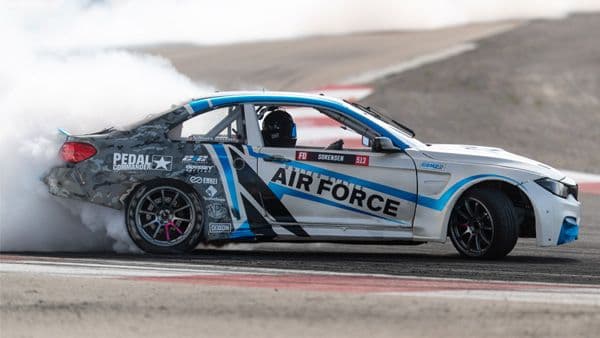
Shanahan did more than claim first place. He improved on his second attempt and produced a run that Formula DRIFT praised for precise placement and flair. His 900-horsepower BMW beat several cars with higher published power figures.
That result continues a strong sequence. Shanahan finished third at Long Beach and second at Stafford. Qualifying first at another new venue confirms that his team can reach a competitive setup quickly.
Nevertheless, solo scoring does not guarantee a tandem win. The chase driver must respond to another car’s speed, angle and corrections. A clean qualifying line is the best starting point, but Saturday adds smoke and proximity.
Matt Field’s repair recovery
Field qualified second after heavy practice contact with Adam LZ. The official report did not assign fault, so the important result is the recovery. The Corvette returned with enough accuracy to lead most of qualifying.
After a major impact, teams inspect suspension links, wheel bearings, steering alignment and chassis reference points. A car can look repaired while remaining slightly asymmetric. Field’s 83.55 suggests the crew restored the platform to a high level.
Bakchis gained one point on Deane
Bakchis qualified third and received two points. Deane qualified fourth and received one. Therefore, Bakchis reduced the championship gap by one before the main event.
The difference is small, but the strategic position is useful. Both drivers received byes, so neither must risk an opening battle. The title fight will effectively resume in the Top 16.
Cole Richards led the rookies
Richards placed eighth in the Richards Racing Toyota GT86. Formula DRIFT identified him as the leading rookie. His official vehicle page lists 750 horsepower, significantly less than many front-running entries.
That gap reinforces a central drift principle. Usable grip and accurate placement can outperform a larger peak-power number. The same concept appears in our guides to torque and horsepower.

Formula DRIFT Indianapolis Top 32 Bracket
Confirmed pairings before the first tandem battlesJack Shanahan, Matt Field, Aurimas Bakchis and James Deane received direct passage into the Top 16. The Indianapolis bracket had fewer than 32 active starters, and Jeff Jones could not compete after his practice crash.
The bracket pairs higher seeds against lower seeds, but four empty positions create byes. The qualifying winner does not need to battle the 32nd seed. Field and Bakchis also have empty slots, while Deane’s bracket position is opposite Jones.
Why a bye is more valuable than it looks
A bye removes one set of lead and chase runs. That saves a tire cycle and reduces the chance of contact. It also gives mechanics more time to inspect the car before the Top 16.
The disadvantage is reduced competitive track time. Drivers emerging from the Top 32 will already have experienced current grip and smoke conditions. The bye drivers must rely on warm-up data and adapt immediately.
The most dangerous lower seed
Aasbo is the obvious threat from the lower half. His twentieth qualifying position is poor by his standards, but his record includes three Formula DRIFT championships and extensive event-winning experience.
Dylan Hughes cannot treat the matchup as a normal 13-versus-20 battle. Aasbo’s Toyota GR Supra may perform better in tandem than its solo score suggests. This is a strong example of why qualifying position shapes a contest without deciding it.

How Formula DRIFT decides tandem battles
The lead driver must run the required line with strong angle and style. The chase driver must imitate that performance while maintaining proximity. Judges compare both runs before choosing a winner or calling One More Time.
Proximity alone is not enough. A chase driver who closes the gap because the lead car makes a large mistake may still be rewarded. However, a chase driver who cuts the course or causes avoidable contact can lose the battle.
Readers new to drifting can use our guides to how car racing works and what causes racing crashes for broader context. Formula DRIFT adds the special challenge of two cars operating at high slip angles.
Winner and Podium Contenders Before Competition
Analysis based on confirmed qualifying and season formThe following section is analysis, not a final result. It identifies the strongest cases based on qualifying position, championship form and bracket structure.
Jack Shanahan: strongest starting case
Shanahan has the number-one seed, a Top 16 bye and recent podium momentum. His BMW produced the best judged solo run. Those factors make him the logical favorite before the battles begin.
However, he still needs to prove the car can chase through the revised infield. Qualifying measures control without another car. A close tandem battle can expose a different weakness, especially if the opponent uses an unusual pace.
Matt Field: the recovery candidate
Field’s second-place score came after a difficult practice collision. The repair performance suggests strong team execution. His Corvette also has substantial forward drive, which can make it dangerous in chase.
Field’s bye gives the crew extra time to inspect the car. That may be more valuable for him than for any other top-four qualifier. Hidden damage often becomes more serious after repeated heat cycles.
Aurimas Bakchis: the title challenger
Bakchis entered the event 22 points behind Deane and gained one in qualifying. His new Subaru BRZ placed third, continuing the progress shown by his Orlando victory.
The title situation creates a clear objective. Bakchis needs to advance farther than Deane. Equal finishes allow the leader to preserve most of his advantage.
James Deane: the championship reference
Deane qualified fourth and received the final bye. His Mustang RTR has the highest published horsepower among the leading four, but his greater advantage is experience under pressure.
At Stafford, Deane started twelfth and won. That result warns against treating qualifying as a complete measure of his event potential. Fourth is already a stronger starting position.
Chris Forsberg: fifth with a favorable first battle
Forsberg’s displayed 82.5 matched Deane to one decimal place. The three-time champion missed the bye but drew 28th qualifier Jhonnattan Castro. That creates a clear route into the Top 16 if Forsberg avoids an unforced mistake.
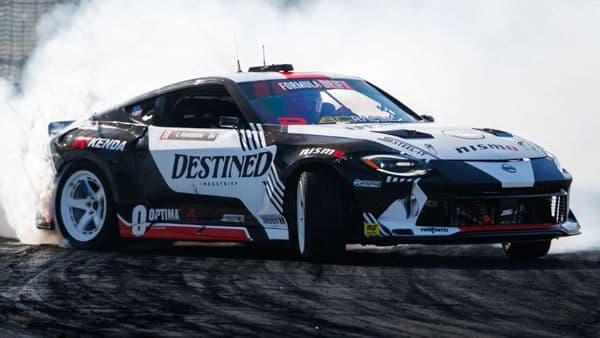
His Nissan Z is officially listed at 1,200 horsepower with Kenda tires and a MoTeC ECU. A stable first battle could make him a serious podium candidate.
Branden Sorensen: championship pressure without a bye
Sorensen qualified seventh and entered the weekend third in the standings. Jack and Conor Shanahan were only one and two points behind after qualifying. Therefore, every bracket round can change three positions.
Sorensen must first beat Rudy Hansen. The pairing looks favorable on qualifying score, but he cannot afford early contact or a mechanical problem.
Cole Richards: rookie upside
Richards begins eighth against Ryan Litteral. The rookie’s GT86 produced a clean qualifying result despite its lower published horsepower. A Top 16 appearance would strengthen his Rookie of the Year position.
His challenge is chase experience. Veteran competitors often use small pace changes to test younger drivers. Richards must remain close without arriving too quickly at the transition.
The best pre-event evidence points toward Shanahan, Field, Bakchis and Deane, but Indianapolis remains open because tandem competition rewards reactions that solo qualifying cannot measure.
Technical diversity among the contenders
The leading cars include BMW, Chevrolet, Subaru, Ford, Nissan and Toyota platforms. Their engines, wheelbases and suspension concepts differ, yet all must follow the same judged line.
This diversity is central to Formula DRIFT. Power is only one part of the result. Gearing, differential behavior, steering geometry and tire grip determine whether the driver can use that power.
Our technical guides explain how car engines work, the difference between turbocharged and naturally aspirated engines, and the purpose of a limited-slip differential.
Preliminary Championship Standings Before the Main Event
Qualifying points included, final Indianapolis points not includedJames Deane remains first in the preliminary PRO standings with 149 points. Aurimas Bakchis is second on 127. Branden Sorensen has 107, Jack Shanahan 106 and Conor Shanahan 105. The main event can substantially change those totals.
| Rank | Driver | Points | Gap to leader | Indianapolis seed |
|---|---|---|---|---|
| 1 | James Deane | 149 | — | 4 |
| 2 | Aurimas Bakchis | 127 | -22 | 3 |
| 3 | Branden Sorensen | 107 | -42 | 7 |
| 4 | Jack Shanahan | 106 | -43 | 1 |
| 5 | Conor Shanahan | 105 | -44 | 10 |
| 6 | Dylan Hughes | 87 | -62 | 13 |
| 7 | Fredric Aasbo | 85 | -64 | 20 |
| 8 | Ryan Tuerck | 64 | -85 | 11 |
| 9 | Chris Forsberg | 58 | -91 | 5 |
| 10 | Cole Richards | 55 | -94 | 8 |
Deane versus Bakchis
The 22-point gap gives Deane room, but not safety. A poor Indianapolis result combined with a Bakchis victory could compress the title race. Their direct Top 16 paths depend on the opening bracket.
Both drivers have byes, so neither can lose in the Top 32. That reduces the probability of a major early swing. The first meaningful difference will arrive once their Top 16 opponents are known.
The three-driver fight for third
Sorensen, Jack Shanahan and Conor Shanahan are separated by two points. Jack has the best seed and a bye. Branden and Conor must complete opening battles.
Therefore, the qualifying result gives Jack the clearest opportunity to move into third. A deep run could also bring him closer to Bakchis.
Auto Cup and Tire Cup context
Ford leads the preliminary Auto Cup with 243 points. Toyota follows on 169, BMW has 110, Nissan 72 and Chevrolet 45. Those totals reflect the season before the Indianapolis main event.
GT Radial leads the Tire Cup with 286. Nitto has 243, Kenda 183, Kumho 130 and Tire Streets 24. The final Indianapolis order will add a new set of points.
These championships reward depth. One victory matters, but several cars advancing into the Great 8 can be more powerful over a season. For a broader explanation, see how racing points systems work.
Key Takeaways From the Confirmed Indianapolis Results
What the weekend has already established1. The PRO winner and podium remain open
The most important takeaway is also the simplest. No official PRO final result exists yet. The results page still marks the main competition as pending.
Any article naming a winner before the battles would be speculation. The correct record currently contains a qualifying winner, not an event winner.
2. Shanahan produced the best solo performance
Shanahan’s 84.63 is the leading confirmed score. He beat Field by 1.08 points and earned the number-one seed.
The run added four points and a bye. That combination makes qualifying first especially valuable at a short field event.
3. Field’s team completed the strongest repair recovery
Field’s practice contact could have ended his weekend. Instead, the Corvette qualified second. The result highlights the importance of mechanics and setup measurement.
Drift cars operate with extreme steering angle and high drivetrain loads. Small alignment errors can change a whole run. Guides to clutch operation and manual versus automatic performance provide useful mechanical background.
4. The championship fight remains centered on Deane and Bakchis
Bakchis gained only one qualifying point on Deane. The gap remains 22. Both start directly in the Top 16.
That means Indianapolis will not create an opening-round shock for either driver. Their championship result will depend on later battles.
5. The fight for third is extremely close
Branden Sorensen has 107 points, Jack Shanahan 106 and Conor Shanahan 105. Jack’s number-one seed gives him the best immediate position.
However, Branden and Conor can answer through the bracket. One judge decision may change the order of all three.
6. Qualifying power did not follow horsepower rankings
Shanahan’s 900-horsepower BMW beat cars listed above 1,000 horsepower. Richards placed eighth with 750 horsepower. Therefore, the result confirms that controllability matters as much as output.
Rear-wheel-drive drift cars need a predictable connection between throttle and tire behavior. Our AWD, RWD and FWD guide explains the basic layouts, while paddle-shifter technology shows how modern control systems can influence gear changes.
What must be added after the final
A finished results article will need the winner, runner-up, third place, Final Four, Great 8, full Top 16 order, championship totals and final Auto Cup and Tire Cup standings. None of those should be presented as settled before the competition ends.
Formula DRIFT Indianapolis Results FAQ
Four direct answers based on the official statusConclusion: The Confirmed Record Ends With Qualifying—for Now
The Formula DRIFT Indianapolis 2026 results remain incomplete because the PRO main event has not yet been contested. Therefore, there is no official winner, podium or final classification to publish at this stage.
What is confirmed already tells a strong story. Jack Shanahan delivered the best solo run with 84.63 points. Matt Field recovered from practice contact to take second. Aurimas Bakchis and James Deane completed the top four and received direct passage into the Top 16.
The bracket gives Shanahan the strongest starting position, while Bakchis and Deane remain the center of the championship fight. Branden Sorensen and the Shanahan brothers are separated by only two points in the battle for third. Cole Richards leads the rookie story, and Fredric Aasbo faces a difficult route from twentieth.
The correct final article must wait for the battles. Once Formula DRIFT publishes the completed result, the winner, podium, full classification and final championship totals can replace the current pending status without rewriting the confirmed qualifying record.
Sources
- Formula DRIFT Indianapolis PRO results page — official pending status, full qualifying order, displayed scores and opening bracket.
- Formula DRIFT Midwest Mayhem schedule — official Indianapolis event dates and Eastern Time session schedule.
- Formula DRIFT 2026 PRO standings — preliminary driver, Auto Cup and Tire Cup totals before the Indianapolis main event.
- Formula DRIFT Indianapolis course report — venue debut, additional paving and course-development background.
The article was prepared before the scheduled PRO Top 32 start on August 1, 2026. Main-event winner, podium and classification claims are intentionally excluded because Formula DRIFT had not published them.