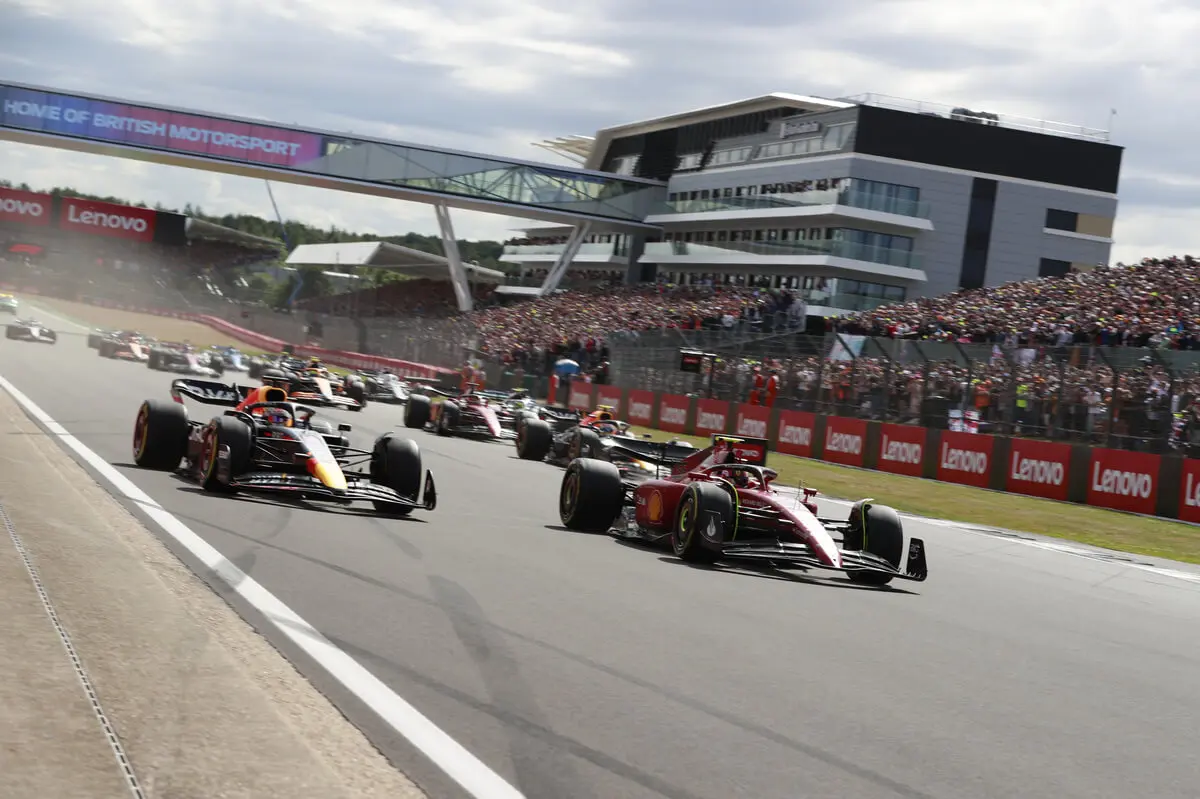
Silverstone Formula 2 2026 Strategy Analysis: Tyres, Pit Stops, Safety Cars & Overtaking Problems
The highest-energy circuit on the F2 calendar. Two championship contenders separated by two points. And a tyre strategy fight that turned the British Grand Prix weekend into a tactical chess match nobody could entirely predict.
The fastest theoretical Silverstone Formula 2 2026 Feature Race strategy was Soft → Hard, pitting between laps 7 and 9. Soft tyre degradation was expected to be high across Silverstone’s high-lateral-load corners. Drivers who managed the Soft inside the window and emerged on Hard tyres with clean track position held the decisive advantage in the race’s final phase.
Silverstone demands more from Formula 2 tyres than almost any other circuit on the calendar. The near six-kilometre lap features high-speed sequences at Abbey, Copse, Maggotts, Becketts and Stowe that generate continuous lateral loading — corner after corner punishing anyone who asked too much of the rubber in the opening stint. The 2026 British Grand Prix weekend brought all of that together with a title fight cut to two points and a Sprint format that compressed every strategic decision into three short, relentless days.
This analysis covers every layer of the strategy picture from Round 7: the tyre compounds selected, qualifying positions that shaped the grid, Sprint Race tactics and result, Feature Race pit window analysis, the overtaking problem at Silverstone that makes track position so valuable, and the championship implications of how it all played out.
Why Silverstone Is the Hardest Circuit for F2 Tyres
Silverstone first hosted a motor race in 1947, converted from a Royal Air Force bomber station used throughout World War II. The circuit that emerged from those perimeter roads has grown into one of the sport’s most technically demanding venues — and for Formula 2, its character is particularly unforgiving. The near six-kilometre lap is high-speed, flowing, and continuous. There is almost no genuine rest for the tyres anywhere around the lap.
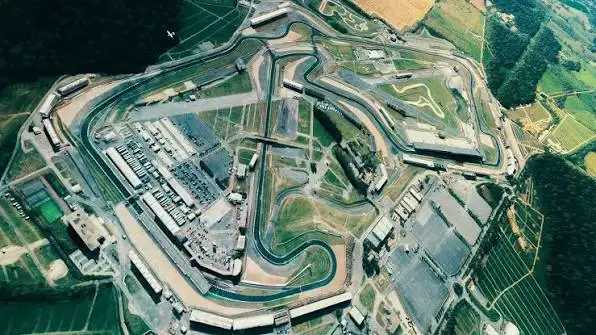
The Maggotts–Becketts–Chapel complex is the most distinctive section. Lateral G-forces exceed 5G through this sequence, which drivers navigate at close to 300 km/h in a relentless left-right-left-right arc. Copse, taken flat by most drivers, and Stowe, where the braking zone feeds into Turn 15 — one of the two DRS zones — are the other highest-energy points. Together, these corners make Silverstone one of the most aerodynamically demanding tracks on the calendar. Moreover, they impose a tyre degradation rate that is simply higher than at most other F2 venues.
Circuit length: 5.891 km · Sprint Race: 21 laps (123.711 km) · Feature Race: 29 laps (170.839 km) · F2 Fastest Lap Record: 1:38.182 (216.002 km/h) — Zhou Guanyu, UNI-Virtuosi, 2019 · DRS Zones: 2 (Luffield / Stowe) · First F2 race here: 2017
Tyre Compound Analysis — Soft vs Hard at Silverstone
Pirelli selected just Hard and Soft compounds for the Silverstone F2 round — a choice that reflects the extreme tyre stress the circuit generates. No Medium compound was available for this weekend. That binary selection shapes the entire strategic picture: drivers had to manage a high-degradation Soft tyre for as long as possible in the opening stint, then transition to a Hard tyre capable of completing the remaining distance to the flag.
The FIA Formula 2 technical preview was direct about the challenge: “Degradation of the softer compound is expected to be high, given the significant lateral forces acting on the tyres around the Silverstone circuit.” Furthermore, the aerodynamic performance dependency at Silverstone amplifies the picture — as the Soft compound degrades, the car loses mechanical grip and begins to push or snap through the fast corners, forcing drivers to reduce pace to protect the tyre from complete failure.
The Hard (white) compound. Pirelli’s compound selection for Silverstone covered only Hard and Soft. The Hard offered significantly greater longevity — it was designed to run from approximately lap 8 through to the end of the 29-lap Feature Race. The Soft’s high degradation on Silverstone’s lateral-load corners made it unsuitable for a long stint, with the optimal window to pit sitting between laps 7 and 9.
| Compound | Colour | Estimated Stint Length | Primary Role | Degradation Driver |
|---|---|---|---|---|
| Soft (C4–C5) | RED | 7–9 laps max | Opening Feature Race stint | Lateral load at Maggotts–Becketts; Copse and Stowe high speed |
| Hard (C1–C2) | WHITE | 20–22 laps | Long final stint to the flag | Sustained high speed; lower lateral load per corner |
The thermal and mechanical forces at Silverstone affect the right-front tyre most acutely in the opening Soft stint — the sustained left-hand loading through the long Maggotts–Becketts sequence puts repeated stress on the right-front, which then carries into Copse, another high-load right-hander. Drivers who applied too much energy to their Soft in the early laps reported snap oversteer on exit from Becketts as the compound lost its peak working window. This is precisely why the official pit window of laps 7–9 was set conservatively tight. For more on how tyre grip works at the limit, see our racing physics explainer.
Qualifying Results — Câmara Takes Pole, Minì Starts P10
Rafael Câmara stormed to pole position for the F2 Feature Race at the British Grand Prix, posting a lap of 1:39.690 to head the field. Alex Dunne qualified second and Kush Maini third. DAMS Lucas Oil driver Roman Bilinski will start fourth, with Nikola Tsolov — the championship co-leader — rounding out the top five in a promising position for the Feature Race.
However, the real story of qualifying was the position of Gabriele Minì. The championship leader heading into the weekend qualified tenth — a result that handed Tsolov a significant strategic advantage heading into Sunday. With the Sprint Race using a reversed-grid format for the top 10, Minì started from pole for Saturday’s shorter race. However, for Sunday’s Feature Race, starting tenth means exposure to traffic, potential incidents in the early laps, and a much harder path to accumulating the points he needs to hold off Tsolov’s charge.
| Pos | Driver | Team | Lap Time | Notes |
|---|---|---|---|---|
| P1 | Rafael Câmara 🏆 | Invicta Racing | 1:39.690 | Pole + 2 bonus pts for Feature Race |
| P2 | Alex Dunne | Rodin Motorsport | — | Sprint pole reversed to P9 |
| P3 | Kush Maini | ART Grand Prix | — | — |
| P4 | Roman Bilinski | DAMS Lucas Oil | — | — |
| P5 | Nikola Tsolov | Campos Racing | — | Title co-leader; Sprint reversed P6 |
| P9 | Ritomo Miyata | Hitech TGR | — | Sprint front row |
| P10 | Gabriele Minì | MP Motorsport | — | Sprint pole position (reversed); Feature Race P10 |
Championship leader Gabriele Minì was noted by the stewards for a potential unsafe release during the 30-minute qualifying session. However, after review, the stewards decided no further action was necessary. The incident did not affect his grid position — but it underlined the pressure-cooker conditions Minì was operating under heading into the most important weekend of the title fight so far.
Sprint Race — Tsolov’s Last-Lap Overtake Changes Everything
Tsolov drew level with Minì on points; leads on countback by virtue of more wins
The Sprint Race told a story that the raw result can barely contain. Minì started from pole — the reversed grid putting him in the best possible position for the shorter race. Tsolov, starting from the reversed P6, had to fight his way through the field. For most of the 21-lap race, Minì defended with precision and appeared to be heading toward a valuable Sprint Race win that would have extended his championship lead heading into Sunday.
Then came the final lap. Tsolov, who had been stalking Minì for several laps, found the gap he needed into Stowe — one of the circuit’s two DRS zones. He completed the pass with enough conviction to pull clear by the flag. The margin at the finish was 1.2 seconds — a comfortable win built on one decisive, perfectly timed commitment into a corner that Silverstone presents as one of the very few genuine passing opportunities around the lap.
Tsolov’s last-lap overtake on Minì at Stowe was the defining moment of the Silverstone F2 weekend — and perhaps the defining moment of the 2026 title fight so far.
Rafael Villagomez completed the podium for a second-successive Sprint Race rostrum appearance. Kush Maini and Tasanapol Inthraphuvasak came home fourth and fifth. Dino Beganovic, Roman Bilinski and Joshua Dürksen rounded out the points-paying positions. Rafael Câmara earned the extra point for fastest lap among those finishing in the top 10 during the 21-lap race.
Championship Impact After the Sprint Race
The standings after Saturday’s Sprint Race represented the most dramatic shift of the entire 2026 FIA Formula 2 season. Tsolov drew level with Minì — both on the same points total — but took the championship lead on countback, by virtue of more feature race wins (three to Minì’s one). Going into Sunday’s Feature Race, Tsolov held the psychological and statistical edge. Minì, starting P10 for the Feature Race, would need an extraordinary drive simply to recover the position he held at the start of the weekend.
| Pos | Driver | Team | Points After Sprint | Status |
|---|---|---|---|---|
| 1st | Nikola Tsolov | Campos Racing | Equal (countback leader) | 3 Feature Race wins — leads on countback |
| 2nd | Gabriele Minì | MP Motorsport | Equal | 1 Feature Race win; P10 for Feature Race |
| 3rd | Rafael Câmara | Invicta Racing | 82 (before pole pts) | Pole + fastest lap — best Feature Race position |
Feature Race Strategy — The Pit Window, Undercut & Overcut Explained
The Silverstone F2 Feature Race covers 29 laps — 170.839 km — with a mandatory single pit stop requiring drivers to use both available compounds (Soft and Hard) at some point during the race. The strategic question is not whether to pit, but precisely when to make that stop, and whether an aggressive undercut or a more patient overcut approach best fits a driver’s position in the race order.
The Optimal Strategy: Soft → Hard, Laps 7–9
The official FIA Formula 2 pre-race analysis was clear: “The theoretically quickest strategy involves starting on the red-marked tyre. The pit window, should drivers succeed in managing the compound, is between laps 7 and 9.” Therefore, most front-running drivers were expected to start on Soft tyres, push hard in the opening seven to nine laps to build a gap over those behind, then pit for Hard tyres and run to the finish on the more durable compound. The Hard’s low degradation at Silverstone makes it manageable for 20-plus laps in the closing phase of the race.
The optimal pit window for the Silverstone Formula 2 Feature Race was laps 7 to 9, according to the FIA Formula 2 official pre-race strategy guide. Drivers starting on Soft tyres targeted this window to prevent the compound from degrading beyond its performance cliff, emerging on Hard tyres with enough race distance remaining to manage the gap to trailing cars.
The Undercut Threat at Silverstone
The undercut works by pitting slightly earlier than a competitor, gaining the benefit of fresh tyres to set faster laps while the rival remains on worn rubber. At Silverstone, the undercut carries even greater potency than at most circuits — because overtaking on track is limited to two DRS zones, converting a tyre performance advantage into track position through the pit stop is often the only realistic way to gain ground on a similar-pace car. Drivers who could not find a way past at Stowe in the Sprint Race would specifically be targeting the undercut window in the Feature Race as their primary route to position gain.
Furthermore, the compressed pit window between laps 7 and 9 means the undercut has a very short usable timeframe. A team that reacts one lap too late to a rival pitting — or loses two seconds in the pit lane through a slow stop — often finds the undercut nullified entirely. This places enormous pressure on pit crew execution. For more detail on how the undercut and overcut work mechanically, see our strategy explainer.
The Overcut: When Staying Out Pays
The overcut — staying out on older tyres while rivals pit, building clean-air pace, and pitting later — is less common at Silverstone than the undercut because the Soft tyre’s degradation cliff arrives so sharply. However, a driver caught in traffic who cannot benefit from the undercut may deliberately extend their Soft stint beyond lap 9. They sacrifice optimal pace but potentially gain track position over a driver who has pitted and is held up by slower cars on the Hard compound.
Câmara and Tsolov: Contrasting Positions
Starting from pole, Rafael Câmara had the cleanest strategic picture of any driver in the Feature Race. Leading into Turn 1, he could dictate the pace in the opening stint, targeting the lap 7–9 window without reference to any car ahead, and emerging from his pit stop in a position to control the race from the front. Tsolov starting P5 presented a different calculation — he needed to either follow the optimal window closely or respond to whatever Câmara’s team chose. Any divergence in their strategies would create the strategic battle the Feature Race needed to deliver.
Minì’s position at P10 was the most complex of all. Starting outside the top nine means no obligation to use the Sprint Race starting compound, giving him full freedom of tyre choice. However, the priority for Minì’s team was simply to gain as many positions as possible — and a bold alternative strategy, perhaps starting on Hard tyres to run long and pit very late, could have been the only realistic route to passing the cars ahead without relying on the two DRS zones.
The Overtaking Problem — Why Silverstone’s Speed Creates a Passing Paradox
Silverstone looks like it should produce overtaking. It is fast. It has two DRS zones. It has clear braking zones at Luffield and Stowe. And yet, the reality of racing there in Formula 2 is that following another car closely through the circuit’s best sections is genuinely difficult — and that difficulty directly raises the value of qualifying position and tyre offset as strategic tools.
The problem is in the physics of downforce and dirty air. Through the Maggotts–Becketts–Chapel complex, cars are generating their maximum aerodynamic load while simultaneously following the wake of the car ahead. The turbulent, low-energy air shed by the leading car disrupts the following car’s front wing performance, reducing front-end downforce precisely where the circuit demands the most grip. Consequently, a car that is theoretically 0.3 seconds per lap faster than the car ahead often finds itself unable to close the gap through the complex — only recovering proximity on the straights before the DRS detection points.
Silverstone’s high-speed layout generates maximum dirty-air disruption for the following car through the Maggotts–Becketts–Chapel complex — taken at close to 300 km/h. The aerodynamic interference reduces front downforce in the section that requires the most grip, making it nearly impossible to close in for a pass. The two DRS zones at Luffield and Stowe provide opportunities, but only when a driver can get close enough through the technical sections to activate DRS within the one-second window.
The Sprint Race demonstrated this perfectly. Tsolov spent most of Saturday’s race within striking distance of Minì but unable to find the decisive gap into Luffield because Minì’s defence was structured around the Maggotts–Becketts complex — keeping Tsolov far enough back that the dirty air penalty was maximum by the time they reached the DRS detection point. Only on the final lap, with a slight error from Minì through the complex and Tsolov carrying full momentum, did the gap open at Stowe for the decisive move.
Because overtaking on track is so difficult, the Feature Race strategic battle is largely decided in the pit lane. Teams managing a tyre offset advantage will specifically target the undercut window to convert raw pace into track position, rather than trying to replicate Tsolov’s Stowe pass multiple times per race. The pit stop execution therefore becomes the single most important variable in the race result for any driver not able to qualify inside the top five.
Safety Car Strategy — The Variable That Rewrites Everything
No strategy piece is complete without accounting for the Safety Car. At Silverstone, where the opening laps through Turn 1 at Copse and the Luffield complex can produce contact, the likelihood of a Safety Car in the Feature Race is real enough that every strategist builds a contingency into their model before lights go out.
A Safety Car or Virtual Safety Car in the laps 5–9 window is the single biggest strategic wildcard at Silverstone. Deployed before the primary pit window, it offers any driver yet to stop a near-free pit stop — eliminating the time cost of the undercut calculation entirely and allowing them to emerge on Hard tyres with the field bunched up behind the Safety Car. Conversely, a driver who has already pitted under green, expecting to benefit from fresh-tyre pace, suddenly sees their track position advantage neutralised as the field closes up at reduced speed.
Furthermore, late Safety Cars — appearing after lap 15 in a 29-lap race — benefit drivers on alternate strategies who have deliberately extended their Soft stint. They can pit under the caution, collect fresh Hard tyres at minimal position cost, and emerge with substantially better tyre life than everyone around them. This scenario is rare but not uncommon at Silverstone, where contact from tyre failures in the high-speed sections can bring out the Safety Car without warning.
Championship Context — How Silverstone Reshaped the 2026 F2 Title Fight
The championship picture entering Silverstone was already tense. Mini held 108 points, Tsolov 106 — a two-point gap after Tsolov’s Spielberg Feature Race win had sliced Minì’s lead almost to nothing. Rafael Câmara sat third on 82 points, still mathematically very much in the fight with seven rounds remaining after Silverstone.
The F2 2026 calendar runs 14 rounds total across the season. Silverstone was Round 7, meaning exactly half of the season remained after this weekend. With maximum points available in each subsequent round’s Sprint Race and Feature Race, any of the top three could still mathematically win the title from Silverstone’s result — but the psychological dynamic of who leads on countback matters enormously in a fight this tight.
After Silverstone, the FIA Formula 2 championship moves to Spa-Francorchamps (July 17–19, Round 8) and then Budapest (July 24–26, Round 9). Spa-Francorchamps is the longest circuit on the F2 calendar — an entirely different strategic challenge to Silverstone, with tyre wear dominated by the Raidillon–Eau Rouge sequence and a high-speed layout that rewards power over precision. For context on what that means strategically, see our Belgian Grand Prix 2026 strategy analysis — the circuits share the same track and many of the same characteristics.
| Pos | Driver | Team | Feature Race Wins | Championship Status |
|---|---|---|---|---|
| 1st | Nikola Tsolov | Campos Racing | 3 | Leads on countback post-Sprint · Racing Bulls F1 links |
| 2nd | Gabriele Minì | MP Motorsport | 1 | Equal points; Feature Race P10 start — difficult Sunday |
| 3rd | Rafael Câmara | Invicta Racing | ? | Pole + fastest lap — best placed outside top 2 heading in |
Tsolov’s F1 future is also woven into this title fight in a way that sharpens every result. RacingNews365 reported that Tsolov is heavily linked with a move to Racing Bulls in F1 — making his 2026 F2 championship the most high-profile feeder series title race since Oscar Piastri’s 2021 campaign. Winning the championship could accelerate his path to an F1 seat for 2027. Moreover, Minì’s ability to respond in the Feature Race and the rounds ahead would define whether this fight extends all the way to Yas Island in December, or whether Tsolov’s Silverstone momentum proves the turning point the title race needed.
Frequently Asked Questions — Silverstone F2 2026 Strategy
The Verdict — What Silverstone Told Us About the 2026 F2 Season
Silverstone’s Round 7 delivered exactly what the 2026 FIA Formula 2 season needed at its midpoint: clarity on who leads the title fight, and a result dramatic enough to change the narrative. Tsolov’s last-lap overtake at Stowe in the Sprint Race was the kind of defining moment that championship seasons are built on — a moment of commitment under pressure that rivals remember for every subsequent round of the year.
The strategy picture at Silverstone was shaped by the circuit’s unforgiving tyre demands. Hard and Soft only, a tight seven-to-nine-lap pit window, and the relentless difficulty of following another car through Maggotts–Becketts made track position the premium. Whoever left the pit lane first after executing cleanly in that window held an advantage that was genuinely difficult to overturn on track — regardless of the pace delta between the two cars.
With Spa-Francorchamps next, the strategic template shifts again. Longer stints, higher straight-line speeds, and rain risk in the Ardennes create a completely different set of tactical questions for Tsolov and Minì to solve. But Silverstone’s lesson holds: in Formula 2, the driver who manages the situation — tyres, pit timing, overtaking risk — more intelligently than the driver alongside them, more often than not, wins the race and edges the championship fight in their direction. Follow the full season on our 2026 Formula racing calendar.
- FIA Formula 2 — Official Silverstone Round 7 Preview (tyre strategy, pit window, compound notes)
- RacingNews365 — 2026 Silverstone F2 Sprint Race Full Results
- RacingNews365 — 2026 Silverstone F2 Qualifying Full Results & Grid
- FIA Formula 2 — Official Round 7 Silverstone Results Page (Sprint, Qualifying, Feature)