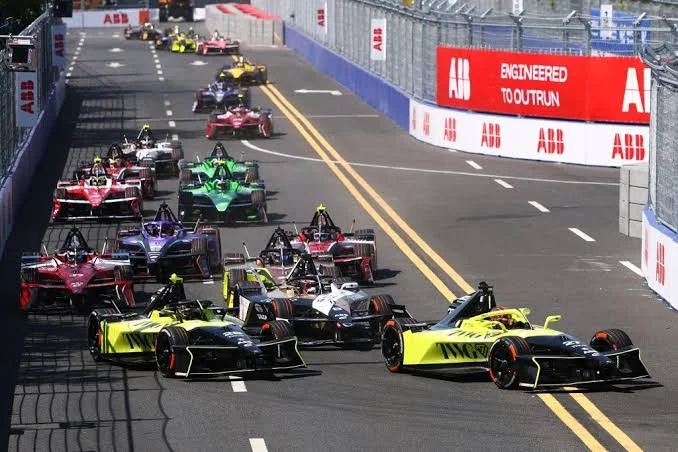
Sanya E-Prix 2026:
Preview, Race Report & Championship Impact
Formula E returned to Hainan Island after seven years away on June 20, 2026. Jake Dennis won from pole in a chaotic, red-flagged race — and the title fight just got a whole lot more interesting.
Sanya E-Prix 2026:
Preview, Race Report & Championship Impact
Jake Dennis won from pole in a chaotic, red-flagged race. Formula E’s title fight now has four genuine contenders with six rounds left.
The Sanya E-Prix 2026 delivered everything Formula E does best — and a few things only Formula E can produce. A seven-year absence from Hainan Island. Tropical heat, thunderstorm threats, and a street circuit layout nobody on the current grid had referenced data for. Then 39 laps of racing so chaotic that all four championship contenders failed to score significant points.
Jake Dennis took pole and converted it into victory for Andretti Formula E — the first time anyone had done that in Season 12 from a genuine qualifying fastest lap. The final podium, after post-race penalties reshaped the order, read Dennis, Pepe Martí, and Nyck de Vries. However, the story of the race belongs as much to those who lost as those who won. Below is the full picture: track analysis, pre-race storylines, the race itself, and what the standings mean as the Asian leg continues toward Shanghai and Tokyo.
Event Overview — What Is the Sanya E-Prix?
The 2026 Sanya E-Prix — officially the Lianxin Sanya E-Prix — took place on Saturday, June 20, 2026, on the Sanya Street Circuit on China’s Hainan Island. It was Round 11 of the 2025/26 Formula E World Championship, which runs to 17 races total. The race distance was 37 laps of the 2.52km circuit, with a scheduled start of 15:05 local time (08:05 BST). Formula E last raced here in March 2019, making this the series’ first return to Sanya since the inaugural Gen2 season.
Formula E is the FIA’s all-electric single-seater racing series. The Gen3 Evo cars used in Season 12 produce around 350kW in race mode, with up to 400kW available under Attack Mode — Formula E’s unique power boost activation, which forces drivers off the racing line to collect it. To understand the basics of how Attack Mode works in Formula E, see our dedicated explainer. The series is more tactically layered than any other major single-seater championship — energy management, Attack Mode timing, and qualifying strategy matter as much as outright car speed.
Only eight drivers on the 2026 grid had previously raced at the Sanya Street Circuit, and none had reference data for the Gen3 Evo car there. The track had a modified layout compared to 2019, with altered Turn 1–3 configurations and an extended pit exit. Furthermore, tropical conditions in June — temperatures above 32°C, high humidity, storm risk — created energy management variables unlike any other stop on the calendar. This wasn’t just a new venue for most drivers. It was uncharted territory for every team.
Track Analysis — What Makes the Sanya Street Circuit Unique?
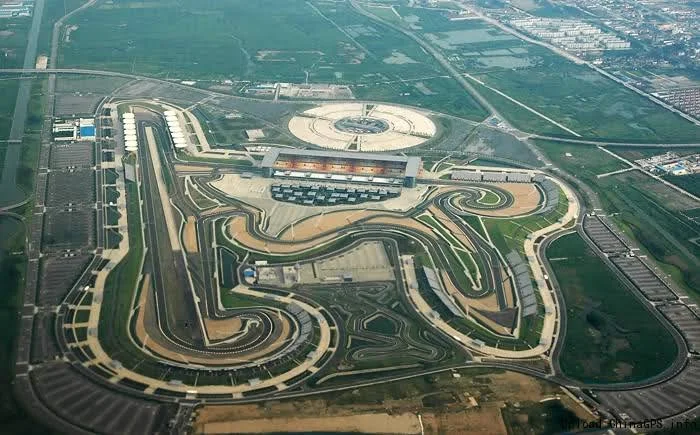
The Sanya Street Circuit doesn’t look particularly daunting on paper. At 2.52km per lap it’s one of the shorter stops on the Formula E calendar, and the layout has a relative simplicity to it compared to Monaco’s walls or Berlin’s angled concrete. However, that simplicity is deceptive. What Sanya offers is a genuinely mixed-demand circuit — fast enough to stress energy deployment, technical enough to reward mechanical precision, and wide enough in its key corners to produce real racing.
The Layout — Corner by Corner
The 2026 layout altered the Turn 1–3 sequence compared to 2019. Previously a tight sequence of three left-handers, the revised layout opens them out slightly to increase track length and, more importantly, improve the pit exit — which in 2019 was dangerously narrow. Drivers then flow into the wide Turn 5 hairpin, which became the race’s principal overtaking zone. The apex is approachable from multiple angles, and the braking zone is long enough for Gen3 Evo regenerative braking to create meaningful differentiation between drivers.
From Turn 5, a long straight runs to Turns 6 and 7 before a sweeping run down to the tight Turn 9 hairpin, which requires precise trail-braking and typically sees energy-depleted cars exposed on the exit. A slight kink before Turn 11 sets up the final 90-degree left that leads onto the start-finish straight. On paper, three genuine overtaking opportunities per lap — Turn 5, Turn 9, and occasional late-braking moves at Turn 11. In practice, the circuit’s 37-lap race distance creates enough compression in energy state that strategic position matters far more than pure track position by the race’s midpoint.
Race day temperatures reached 33°C with humidity above 80% — the hottest conditions of the 2025/26 season. In Formula E, heat directly affects battery performance. Higher ambient temperatures reduce the thermal headroom available during high-power phases. Teams that pushed hard in early Attack Mode activations found their energy windows tightened faster than projected in the second half of the race. The thunderstorm risk that had been forecast for race day did not materialise, but the overcast sky kept track surface temperatures lower than feared — actually a slight advantage for energy management.
What This Track Punishes — And Rewards
Sanya punishes greedy energy deployment and rewards conservative early-race management. The drivers who won here historically — and Jean-Éric Vergne’s 2019 win remains the reference — built an energy buffer by not chasing Attack Mode early. Consequently, they deployed it late in clean air to build a gap the chasing pack couldn’t recover. In 2026, that pattern held broadly, though the red flag interventions scrambled energy states and gave every team a reset that compressed the field at critical moments.
Furthermore, the circuit’s tropical surface conditions mean grip levels shift session to session. Free practice data is therefore unreliable as a race day reference. Teams that managed this uncertainty best — notably Andretti — came out ahead. Those who based race strategy on aggressive FP models found themselves exposed when grip conditions changed under the afternoon sun.
In Formula E, every car starts with a fixed usable energy allocation per race. Managing that energy — deciding when to deploy it, when to harvest it, and how to time Attack Mode — is as important as outright car performance. Attack Mode gives a temporary power boost (around +50kW) but must be collected by driving over a designated activation zone off the racing line. Timing the activation — relative to the safety car, traffic, and your own energy state — is one of the most tactically complex decisions in any form of racing. Want to understand the full picture? Read our guide on what makes Formula E a serious racing series.
Key Storylines Heading Into Sanya
No Formula E round arrives in isolation. Sanya was Round 11 of 17 — the exact midpoint of the final stretch, the opening round of a five-race Asian leg, and the first genuine test of whether the form book from Europe translated to a circuit where nobody had recent reference data. Four distinct storylines defined the weekend before a wheel turned.
1. The Championship — A Genuine Four-Way Fight
Heading into Sanya, Mitch Evans (Jaguar TCS Racing) led the Drivers’ Championship by 19 points from Oliver Rowland (Nissan Formula E Team). Behind them, Edoardo Mortara (Mahindra Racing) and Pascal Wehrlein (Porsche Formula E Team) had 34 and 36 points respectively to make up. In a series where a race win is worth 25 points, a gap of 19 points is genuinely marginal. The top four were separated by fewer than two race wins.
Moreover, the season’s pattern made the standings look tighter than they might in another year. No driver had won consecutive races. Eight different drivers had won from nine rounds. The competitive spread across the field meant that a poor weekend from the leader — the kind where you finish outside the points while a rival wins — could reshape everything. Sanya, with its unknown quantities, was exactly the sort of race where that scenario felt plausible.
“Eight different winners from nine rounds. In Sanya, with no one’s reference data trusted, a ninth different winner was entirely on the cards.”
— Season 12 context heading into Round 11
2. Da Costa’s Winning Run — Could It Continue?
António Félix da Costa (Jaguar TCS Racing) had won three of the five races preceding Sanya. His Madrid double — including the inaugural Formula E race at the Circuito del Jarama — had cemented Jaguar’s status as the fastest car in the field for that mid-season stretch. Da Costa’s fifth win for his fifth different manufacturer made for a compelling narrative: a driver finally in a car that matched his talent, at a team whose racecraft under pressure had become the benchmark for the season.
However, Sanya presented da Costa with a specific challenge. His three recent wins had come on circuits where Jaguar had setup data and recent race history. Sanya offered none of that. Furthermore, his teammate Evans held the championship lead — meaning Jaguar had to manage two objectives simultaneously: put Evans in position to extend his points advantage, and give da Costa the freedom to win if the car and strategy aligned.
3. Mitch Evans — Farewell Tour at Peak Pressure
The broader narrative of Season 12 carries a weight that extends beyond the championship table. Mitch Evans confirmed on April 27 that he would leave Jaguar TCS Racing at the end of the season by mutual agreement — the end of a partnership that produced 15 Formula E victories, the all-time wins record for any driver in the series, and one World Championship (2023). Evans is racing his farewell season at the team he’s spent a decade with. He is also, simultaneously, its championship contender.
That dual pressure — saying goodbye while fighting for a title — defines his 2026 season more than any individual result. At Sanya, he arrived as the series leader. He left without scoring a point. The circumstances were not of his making, but the sport rarely honours context.
4. Oliver Rowland — All or Nothing
Oliver Rowland (Nissan Formula E Team) arrived at Sanya with a statistical quirk that captured his season perfectly: in 2026, he had either scored a podium or not scored at all. There was nothing in between. The reigning champion’s year had been defined by moments of absolute precision — including a Monaco win built on a masterclass Attack Mode split — and sequences where that precision tipped into the margins and produced nothing. Sanya felt like an event that could go either way.
Qualifying had been a consistent Nissan strength. At every round, at least one Nissan had advanced to the qualifying duels. The problem was converting front-row pace into race points. Moreover, Nissan had used the four-week break since Madrid to identify the source of their race-day struggles. Whether that work had translated into a solution was, pre-Sanya, the team’s key internal question. It also happened to be one of the bigger variables in the title fight. A Rowland win at Sanya, combined with Evans failing to score, would have sliced the championship gap almost in half.
Race Report — What Actually Happened in Sanya
Jake Dennis took pole position for Andretti Formula E and lined up alongside his rookie teammate Felipe Drugovich on the front row. Mitch Evans started third. Behind them, the field was compressed — exactly the configuration that historically produces chaos at a tight street circuit in tropical heat.
Qualifying — Dennis Takes Pole
The qualifying format in Formula E pits drivers against each other in head-to-head duels after group sessions establish the bracket. Dennis was fastest in the group stage and converted that into pole through the duel rounds, making him the first driver in Season 12 to take a genuine fastest-lap pole and start from the front without penalty assistance. Drugovich, in only his second season in the series, qualified second — matching his best grid result of the year. The Andretti front row felt like an opportunity. However, front rows at Sanya meant navigating Turn 5 without being mugged from behind first.
For a full breakdown of how Formula E qualifying works, including the duel format, see our explainer on racing qualification systems.
The Race — 37 Laps, Two Red Flags, Chaos
Dennis led from the green flag with Drugovich tucked in behind. Pascal Wehrlein made an immediate move up the field, passing Evans for third on Lap 6 and beginning to close on the Andretti pair. By Lap 8, Wehrlein held second after using his Attack Mode aggressively — however, that early energy spend would cost him dearly by the race’s midpoint.
Dennis reclaimed the lead on Lap 10 after his own Attack Mode deployment. What followed was a sequence of lead changes that illustrated precisely why Sanya’s energy management was so demanding. By Lap 13, Nick Cassidy had moved into first for Citroën Racing, with Edoardo Mortara climbing from eleventh to take over on Lap 15. The top five had changed multiple times without a safety car intervention — pure tactical racing in its most complex form.
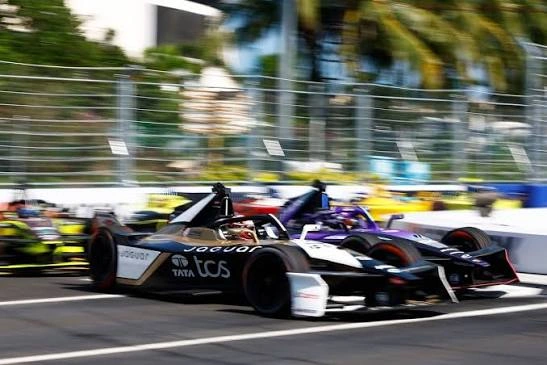
The first red flag of the race came at the start of Lap 19. Dan Ticktum had already clipped Evans at Turn 7 on Lap 16, damaging his own front wing. Three laps later, the pair made contact again — this time triggering a significant pile-up that collected da Costa’s Jaguar, Zane Maloney’s Lola Yamaha, and Sébastien Buemi’s Envision Racing car. Evans sustained rear wing damage that ultimately ended any chance of a points finish. The race was stopped for extensive barrier repairs.
The restart gave Dennis his lead back. However, the race remained unsettled. On Lap 23, Oliver Rowland moved through the field to take first place. Nico Müller climbed into podium contention. With ten laps remaining, Norman Nato made contact with Wehrlein at the barriers — an incident that ended Nato’s race and triggered a full course yellow. Da Costa received a five-second time penalty for a separate collision incident during this phase of the race.
Dennis resumed at the front following the full course yellow and held position. On the final lap, Rowland — who had been battling for the podium — made contact with the wall and was removed under a full course yellow with two corners remaining. The race finished under green flag conditions, with Dennis crossing the line first by a margin that would subsequently be reshaped by the penalty sheet.
The Podium — And Then the Penalties
On the road, Dennis won with Drugovich second and Pepe Martí third — it appeared to be an Andretti one-two, which would have been the first in Formula E history. However, Drugovich received a post-race five-second penalty for contact with Wehrlein, dropping him to fifth. Simultaneously, a five-second time penalty for de Vries that had been under review was rescinded. The final classified result, with all penalties applied:
Full Race Classification — Top 10
| Pos | Driver | Team | Gap / Note | Status |
|---|---|---|---|---|
| 1 | Jake Dennis | Andretti Formula E | Winner | POLE + WIN |
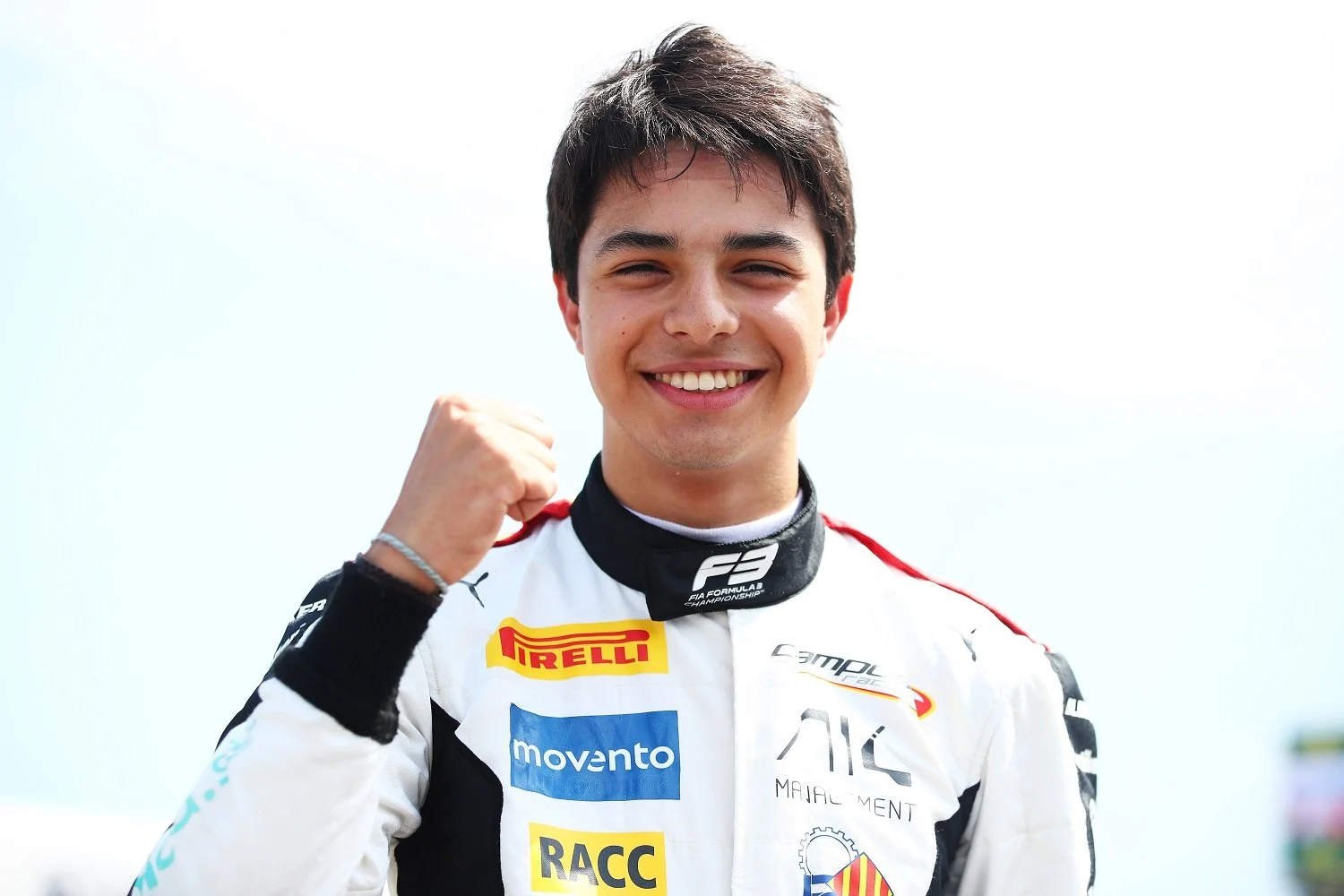
| 2 | Pepe Martí | Cupra Kiro | +2.104s | From P18 on grid |
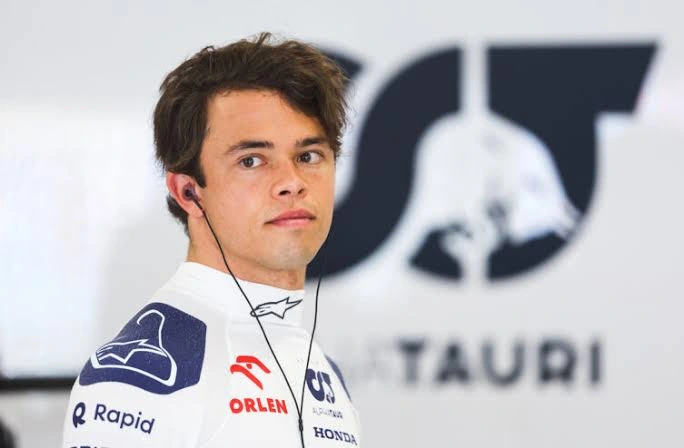
| 3 | Nyck de Vries | Mahindra Racing | +2.885s | Penalty rescinded |
| 4 | António Félix da Costa | Jaguar TCS Racing | +5.702s | 5-sec penalty applied |
| 5 | Felipe Drugovich | Andretti Formula E | +7.8s est. | 5-SEC PENALTY |
| 8 | Jean-Éric Vergne | DS Penske | — | 2019 Sanya winner scores |
| 10 | Lucas di Grassi | Lola Yamaha ABT | — | 3rd consecutive points finish |
| 14 | Pascal Wehrlein | Porsche Formula E | — | 5-SEC PENALTY |
| 17 | Mitch Evans | Jaguar TCS Racing | — | Rear wing damage, Ticktum collision |
| DNF | Oliver Rowland | Nissan Formula E | — | WALL CONTACT, FINAL LAP |
For only the second time in Formula E history, all four championship contenders failed to score points in the same race. The last occasion was the 2021 Valencia E-Prix. In Sanya: Evans finished 17th due to Ticktum’s collision, Rowland crashed on the final lap, Mortara retired due to a mechanical issue, and Wehrlein’s penalty dropped him to 14th. The championship leader’s 19-point advantage therefore survived completely intact — a genuinely extraordinary situation given how chaotic the race was.
Championship Standings & Title Implications
The 2026 Formula E World Championship has six races remaining after Sanya — a Shanghai double-header (Rounds 12 and 13), a Tokyo double-header (Rounds 14 and 15), and the London season finale double-header (Rounds 16 and 17). A maximum of 150 points remain available, meaning every driver in the top six is mathematically still in contention. However, the realistic picture is sharper than the mathematics suggest.
Drivers’ Championship Standings — After Sanya
| Pos | Driver | Team | Points | Gap to Lead |
|---|---|---|---|---|
| 1 | Mitch Evans | Jaguar TCS Racing | 128 | — |
| 2 | Oliver Rowland | Nissan Formula E | 109 | -19 |
| 3 | Edoardo Mortara | Mahindra Racing | ~94 | -34 |
| 4 | Pascal Wehrlein | Porsche Formula E | ~92 | -36 |
| 5 | Jake Dennis | Andretti Formula E | ~94 | -34 |
| 6 | António Félix da Costa | Jaguar TCS Racing | ~92 | -36 |
Points for positions 3–6 are approximate pending full official standings confirmation. Evans (128pts) and Rowland (109pts) confirmed via multiple sources post-Sanya. The top four failed to score, meaning positions 3–6 are closely compressed.
What Sanya Changed — And What It Didn’t
The headline is clear: Evans’ lead survived intact at 19 points over Rowland. However, the race reshaped the lower half of the title picture significantly. Dennis and da Costa are now both within 36 points of the lead — close enough that a run of results across the Shanghai and Tokyo double-headers could make them genuine contenders heading into London. In a double-header format, where two races are available per weekend, the points swing potential is 50 per round. Sanya reminded the championship what kind of day can happen when all four leaders fail simultaneously.
Moreover, the teams’ championship took a specific shift. Jaguar TCS Racing extended their lead over Porsche by 28 points — da Costa’s fourth place added points while Wehrlein scored nothing. Andretti climbed to fourth in the teams’ standings after Dennis and Drugovich’s initial one-two, and the penalty-adjusted result still left them better positioned than before the race. For a full breakdown of the Formula E teams, including 2026 lineup and season form, see our dedicated teams page.
Shanghai hosts Rounds 12 and 13 (July 4–5, 2026) on a shortened version of the Formula 1 Shanghai International Circuit. Tokyo follows with Rounds 14 and 15 (July 25–26). The full Formula E 2026 schedule is on our dedicated schedule page. Six races remain. One hundred and fifty points are on offer. The gap from first to sixth is 36 points.
The Historical Weight — Formula E Returns to China
This is worth pausing on. Formula E held its first race in Beijing in 2014 — a genuinely significant moment for the series’ identity and its claim to global relevance in the electric mobility conversation. The return to China in 2026 via Sanya and Shanghai carries that weight forward. For Envision Racing, a Chinese-owned team, the Asian leg carries particular significance beyond results. Their driver Sébastien Buemi — who arrived at Sanya with his 150th Formula E race start — was one of the drivers caught in the Ticktum/Evans pile-up, a frustrating day for a team that had been building momentum.
Furthermore, the Sanya track’s history reflects how Formula E navigates geopolitics and logistics in ways that other series rarely have to. Hainan Island is technically a special administrative region rather than part of the People’s Republic of China — a distinction that allowed Formula E to schedule two separate “China” rounds (Sanya and Shanghai) without the regulatory complications that a strict PRC calendar might create. Understanding how the FIA structures its global calendar helps explain why these decisions matter beyond race strategy.
Frequently Asked Questions — Sanya E-Prix 2026
Sources & External References
This article draws on verified information from Formula E’s official race reports and the FIA ABB Formula E World Championship website at fiaformulae.com. Championship standings are cross-referenced against RacingNews365’s post-Sanya standings report and Crash.net’s race results. Race incident detail and penalty information sourced from The Race and RaceTrackMasters. Statistical context from DiveBomb’s post-race stats analysis. Circuit details confirmed via the official FIA Formula E circuit page.
Shanghai (Rounds 12–13) is next on July 4–5. The championship fight has six races left and 19 points covering the top two drivers. It is not settled yet.