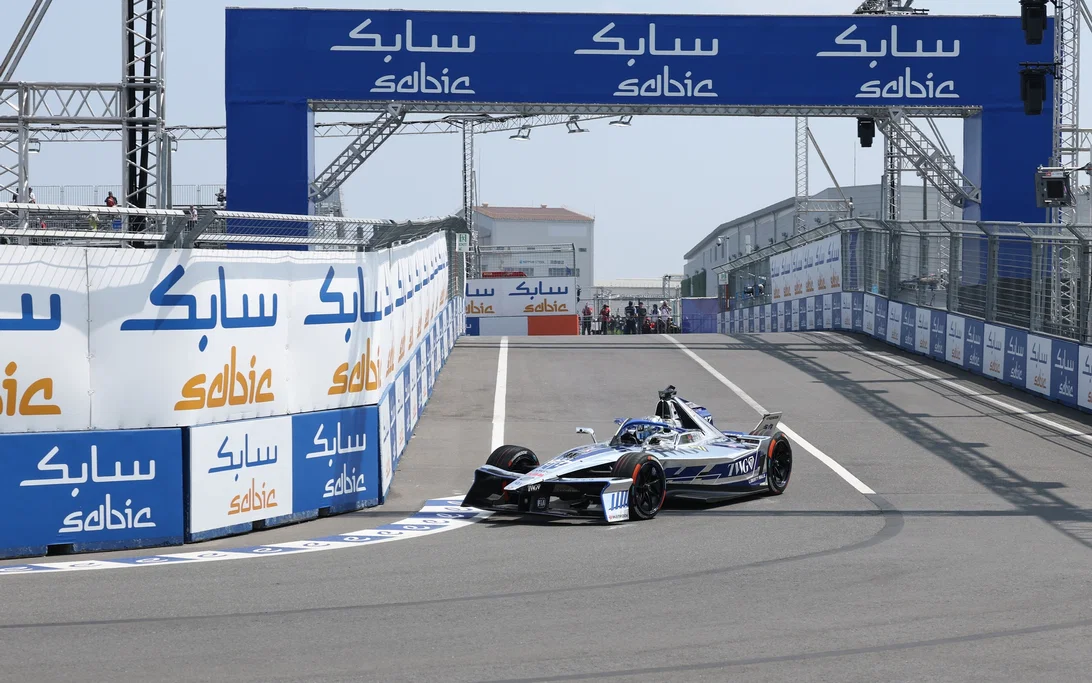
Tokyo Formula E 2026 Qualifying Results: Jake Dennis Takes Pole in Duels Thriller
Full Group A and Group B classification, every knockout Duel, pole lap time, complete qualifying order and expert analysis from Formula E’s first Tokyo night-race weekend.
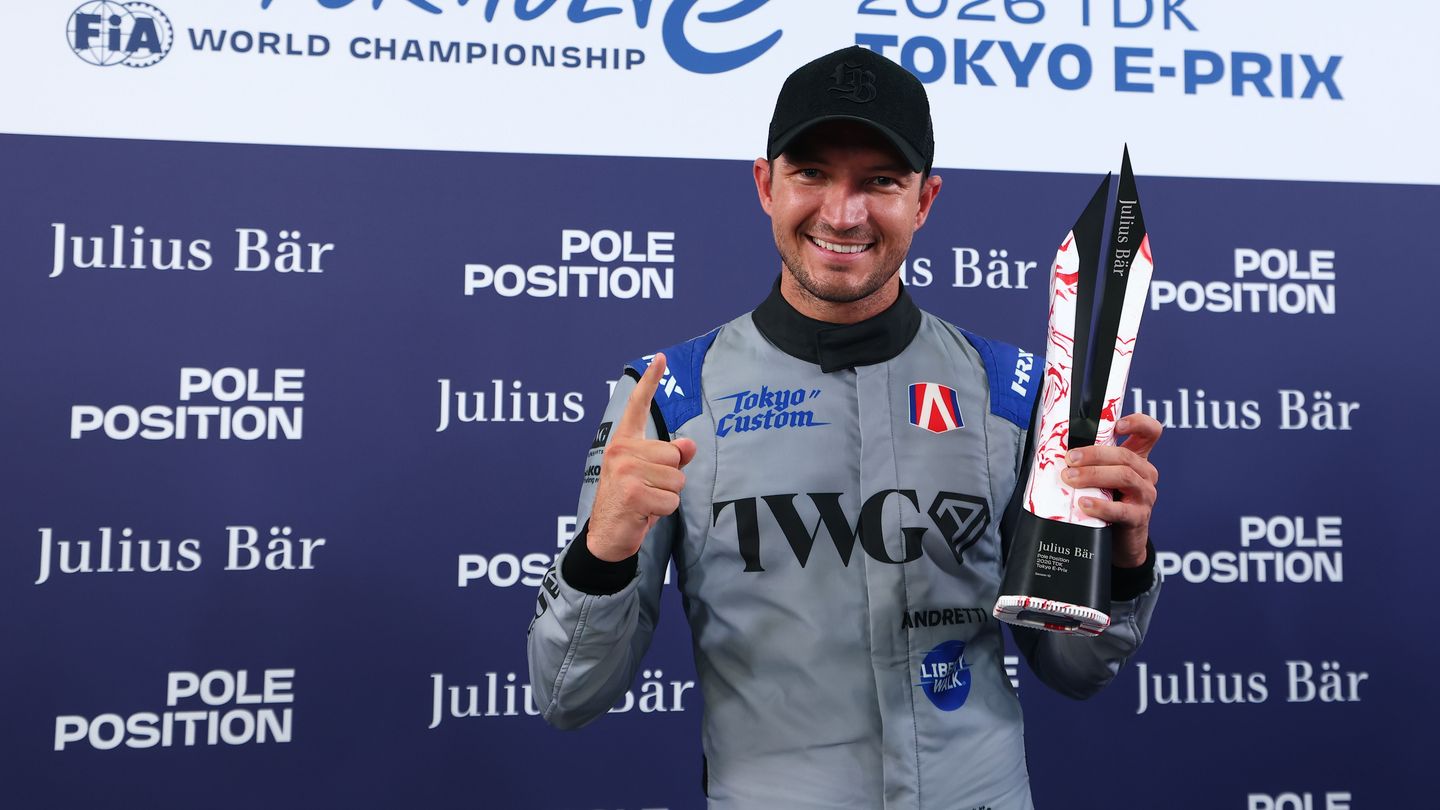
Jake Dennis won pole position for the opening 2026 Tokyo E-Prix race, defeating Edoardo Mortara by only 0.052 seconds in the Final Duel. The Andretti driver produced a 1:11.863 lap when it mattered most, overturning Mortara’s early advantage and earning three championship points before the race even began.
The session was far more than a simple pole shootout. Nico Müller crashed in the semi-final, Felipe Drugovich did not take part after his heavy FP2 accident, and the three leading championship contenders—Pascal Wehrlein, Oliver Rowland and Mitch Evans—were all eliminated in the group phase. That combination produced one of the most strategically important Formula E grids of the 2025/26 season.
Jake Dennis took pole for Andretti with a 1:11.863 in the Final Duel. Edoardo Mortara was second on 1:11.915, only 0.052 seconds behind. António Félix da Costa qualified third and Nico Müller fourth.
The headline result came from Dennis, but the shape of the session was created in the group stage. Formula E qualifying rewards drivers who can first survive a crowded multi-car session and then immediately switch to one-lap, head-to-head execution. Dennis handled both parts. He topped Group A with a 1:13.719 before eliminating Taylor Barnard and progressing through a semi-final disrupted by Müller’s crash.
Mortara looked like the driver to beat for much of the day. He had led both practice sessions and carried that speed into the knockout phase. In the Final Duel he was approximately two tenths quicker than Dennis in the opening sector, but a small mistake late in the lap changed the result. Dennis stayed cleaner over the full lap, found time in the final sector and took pole by the smallest meaningful margin of the session.
Full Tokyo Formula E 2026 Qualifying Classification
The table below combines the final qualifying order with the quickest published time associated with each driver’s decisive stage. Duel times determine the top eight, while group times determine positions nine downward. Because drivers ran in different groups and at different stages, the times should not be treated as one continuous fastest-lap ranking.
| Pos. | Driver | Team | Time | Stage |
|---|---|---|---|---|
| 1 | Jake Dennis | Andretti | 1:11.863 | Pole |
| 2 | Edoardo Mortara | Mahindra Racing | 1:11.915 | Final |
| 3 | António Félix da Costa | Jaguar TCS Racing | 1:11.963 | Semi-final |
| 4 | Nico Müller | Porsche | No time | Semi-final |
| 5 | Taylor Barnard | DS Penske | 1:12.359 | Quarter-final |
| 6 | Dan Ticktum | CUPRA KIRO | 1:12.427 | Quarter-final |
| 7 | Jean-Éric Vergne | Citroën Racing | 1:12.522 | Quarter-final |
| 8 | Nick Cassidy | Citroën Racing | 1:12.574 | Quarter-final |
| 9 | Pascal Wehrlein | Porsche | 1:14.051 | Group A |
| 10 | Maximilian Günther | DS Penske | 1:13.960 | Group B |
| 11 | Norman Nato | Nissan | 1:14.095 | Group A |
| 12 | Nyck de Vries | Mahindra Racing | 1:14.026 | Group B |
| 13 | Joel Eriksson | Envision Racing | 1:14.127 | Group A |
| 14 | Sébastien Buemi | Envision Racing | 1:14.029 | Group B |
| 15 | Oliver Rowland | Nissan | 1:14.744 | Group A |
| 16 | Mitch Evans | Jaguar TCS Racing | 1:14.043 | Group B |
| 17 | Lucas di Grassi | Lola Yamaha ABT | 1:14.810 | Group A |
| 18 | Pepe Martí | CUPRA KIRO | 1:14.061 | Group B |
| 19 | Felipe Drugovich | Andretti | No time | Did not run |
| 20* | Zane Maloney | Lola Yamaha ABT | 1:14.541 | Group B / penalty |
Penalty note: Zane Maloney carried a 20-place grid penalty following a gearbox change. Felipe Drugovich was classified without a qualifying time because Andretti was still repairing the car after his major crash in Free Practice 2.
One timing detail deserves explanation. Some published result summaries list group-session times in an order that appears inconsistent at first glance—for example, a driver in 10th can show a numerically quicker time than a driver in ninth. That happens because Formula E’s two groups run separately, and grid positions nine through 20 are interleaved according to the qualifying rules rather than sorted as one combined timing sheet. Track evolution, traffic and group allocation all matter.
Tokyo E-Prix 2026 Duels Classification
Final: Jake Dennis beat Edoardo Mortara
The final was a direct test of composure. Mortara had been the benchmark through practice and began the lap as though pole was his. Formula E’s official report noted that the Mahindra driver was around two tenths ahead in the first sector. That is a significant advantage on a lap lasting less than 72 seconds. Yet Tokyo’s closing section punishes a driver who asks too much from the car while the rear tires and brakes are already under load.
Mortara’s small final-sector error opened the door. Dennis did not need a spectacular rescue; he needed a complete lap. His 1:11.863 beat Mortara’s 1:11.915 by 0.052 seconds. In practical terms, that gap is shorter than the blink of an eye, but in Formula E qualifying it separated three championship points and first place on the grid from the outside of the front row.
Dennis did not win pole by dominating every sector. He won it by making fewer costly mistakes across the only lap that decided the front row.
Semi-final 1: Dennis advanced after Nico Müller crashed
The first semi-final ended under red-flag conditions when Müller hit the barriers on his flying lap. The Porsche driver had looked fast enough to challenge Dennis, especially after producing a 1:12.109 to defeat Cassidy in the quarter-final, but the crash left him without a semi-final time and placed him fourth in the classification.
Dennis still had to complete the required timed run to secure his place in the final. The interruption also changed the rhythm of qualifying. Drivers normally build a precise sequence around tire preparation, brake temperature and a single release point from the garage. A red flag breaks that rhythm and gives teams more uncertainty about surface temperature and tire readiness.
Semi-final 2: Mortara defeated António Félix da Costa
Mortara produced the fastest semi-final time reported by Motorsport Week, a 1:11.889, to eliminate da Costa. That lap confirmed the Mahindra was not merely quick in the group phase; it had genuine pole speed. Da Costa’s 1:11.963 was still strong enough to secure third, giving Jaguar a valuable front-two-row starting position even as teammate Mitch Evans struggled in Group B.
Quarter-final results
| Duel | Winner | Eliminated | Key detail |
|---|---|---|---|
| QF1 | Nico Müller | Nick Cassidy | Müller advanced with 1:12.109 |
| QF2 | Jake Dennis | Taylor Barnard | Dennis kept his title push alive |
| QF3 | Edoardo Mortara | Jean-Éric Vergne | Mortara converted practice pace |
| QF4 | António Félix da Costa | Dan Ticktum | Jaguar driver reached semi-finals |
For readers more familiar with Formula 1, the Duels are the biggest structural difference. Formula 1 uses three elimination sessions based on a shared timing order. Formula E first uses group sessions and then converts qualifying into a knockout bracket. Our guides to how racing drivers qualify, what pole position means and why grid position matters provide useful background across series.
Group A and Group B: How the Duels Field Was Set
Group A: Dennis led as Wehrlein and Rowland missed out
Dennis set the pace in Group A with a 1:13.719. Müller joined him in second, Cassidy took third and Barnard secured the fourth and final Duel place. The result immediately altered the championship picture because Pascal Wehrlein finished fifth in the group and therefore ninth overall. On a conventional road course, ninth can be repaired through strategy. On a narrow street track with walls, short braking zones and limited clean passing opportunities, it is a much more serious starting position.
Oliver Rowland’s elimination was even more surprising in local context. The Nissan driver had entered the weekend with a perfect Tokyo pole record across the venue’s previous Formula E visits. He made mistakes on his decisive lap and finished eighth in Group A, which placed him 15th on the qualifying classification. Both Nissan cars missed the Duels, despite the importance of a strong home result for the Japanese manufacturer.
Drugovich did not leave the garage. His FP2 crash caused extensive damage, and the Andretti mechanics were still rebuilding the car during qualifying. This created a sharp contrast inside the team: Dennis stood on pole while the second car had no representative time.
Group B: Da Costa fastest, Evans only eighth
Da Costa led Group B, closely followed by Mortara. Vergne qualified third and Ticktum took the final knockout position. The lap times in this group were tightly compressed, which made preparation and track position critical. A driver could lose several places through one compromised corner or a badly timed traffic encounter.
Mitch Evans finished only eighth in the group and 16th overall. He reported dissatisfaction with his tire preparation and setup. That left Jaguar with opposite outcomes: da Costa started third after reaching the semi-finals, while the driver carrying major championship expectations began from the lower half of the grid.
Vergne’s session also came with scrutiny. Formula E reported that he was investigated for impeding Zane Maloney and was also examined for pit-lane speeding. He still reached the Duels, but Mortara eliminated him in the quarter-finals. These details matter because Formula E street qualifying depends not only on pure pace but on pit release timing, traffic management and respecting narrow operational limits.
Group A and Group B do not run under perfectly identical conditions. Track grip, temperature, traffic and yellow flags can change. The correct reading is who finished inside the top four of each group—not simply which group produced the lowest raw time.
How Formula E Duels Qualifying Works
Formula E divides the field into two initial groups, normally based on championship position. Each group has a limited session in which drivers can complete preparation laps and timed laps. The four quickest drivers from Group A and the four quickest from Group B progress to the Duels.
- Group stage: Two groups compete separately. Four drivers from each group advance.
- Quarter-finals: Eight drivers are paired into four head-to-head Duels.
- Semi-finals: The four quarter-final winners compete in two more head-to-head runs.
- Final: The two semi-final winners fight for pole position.
The format rewards two different skill sets. A driver must first manage traffic and timing in a group session, then deliver a clean lap without the reference of multiple rivals setting times at the same moment. The knockout bracket also makes errors more expensive. In a conventional session, a driver may have another run. In a Duel, one lock-up, track-limits infringement or wall contact can end the session immediately.
The pole winner receives three championship points. That means qualifying is not merely a route to the best starting position; it is a points-scoring event in its own right. Dennis therefore left qualifying with a direct championship gain before the race began.
Formula E’s format also explains why the top eight are ordered by how far they progress rather than by a single universal timing list. A driver who loses in the final is second; semi-final losers fill third and fourth; quarter-final losers are fifth through eighth. The best group-stage non-qualifiers then fill the remaining positions according to the regulations.
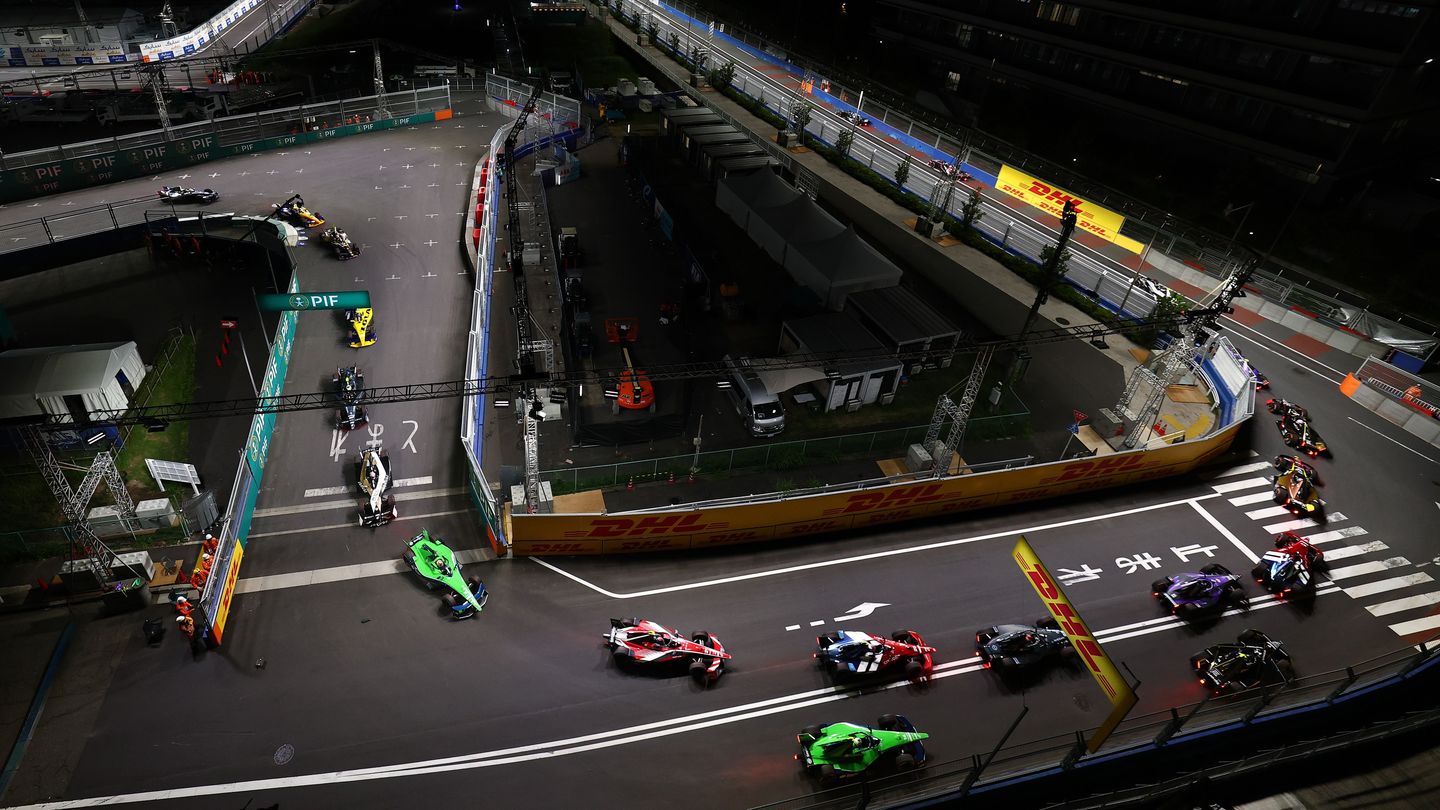
What the Tokyo Qualifying Results Meant for the Race
Dennis gained more than a front-row starting spot
Dennis’s pole carried three separate benefits. First, he collected the three points awarded for pole. Second, he started in clean air, which gives the driver control over the first braking phase and early energy-management rhythm. Third, he placed himself ahead of the main title leaders on a day when Wehrlein, Rowland and Evans all started outside the top eight.
Formula E races can be highly tactical, and pole is not always the easiest position from which to manage the opening phase. A leader may be forced to spend more energy defending or may become the first car exposed when others activate Attack Mode. However, Tokyo’s narrow layout made track position especially valuable. Starting first allowed Dennis to choose when to dictate pace and reduced his exposure to the midfield congestion that threatened the championship leaders.
Mortara confirmed Mahindra’s one-lap speed
Mortara’s second place was disappointing only because pole looked so close. Across practice and qualifying, Mahindra demonstrated a car that could switch on the tires quickly and remain stable through Tokyo’s stop-start sequence. His 1:11.889 semi-final lap was quicker than the time he set in the final, showing that the ultimate pace was present.
The decisive issue was execution. A Formula E Duel is not an average of several runs; it is one lap under pressure. Mortara’s error in the closing sector did not erase the quality of the weekend, but it did hand Dennis the inside line and the psychological advantage.
Da Costa gave Jaguar a strategic anchor
Da Costa’s third place mattered because Evans started 16th. Jaguar could approach the race with one car near the front to fight for victory and another attempting a recovery strategy. That split can be useful. The leading car protects immediate points, while the deeper car can gamble on Attack Mode timing, energy saving or an alternative pace profile.
It also highlighted how sensitive Formula E cars are to setup and tire preparation. Two teammates in the same machinery can qualify 13 places apart when one driver enters the correct operating window and the other does not.
Müller’s crash created both opportunity and risk
Müller qualified fourth because he reached the semi-finals, but his Porsche suffered substantial damage in the crash. A high grid position has limited value if the mechanics must rebuild critical parts under time pressure. The team’s immediate concern was not strategy but whether the car could be returned to a safe and competitive condition for the night race.
The incident also removed a genuine pole threat. Müller’s quarter-final pace indicated he had the speed to challenge Dennis. His elimination shows why street-circuit qualifying rewards precision as much as aggression. The walls define the limit, and crossing that limit ends the session instantly.
The championship leaders faced a traffic problem
Wehrlein in ninth, Rowland in 15th and Evans in 16th faced more than a simple overtaking challenge. Formula E traffic changes energy consumption. A driver following closely can gain aerodynamic help on straights but may have fewer options for Attack Mode activation, may be forced into inefficient acceleration patterns and can lose time when a group stacks up into a narrow braking zone.
Starting deep also increases incident risk. The opening laps of a street race compress 20 cars into limited space, and drivers at the back cannot always choose a clean line. A title contender may need to balance urgency with survival. One aggressive move can recover two positions; one damaged front wing can destroy the entire race.
Why pole does not guarantee a Formula E win
Formula E is shaped by usable energy, Attack Mode, safety-car timing and the changing incentives of pack racing. A pole sitter may lead but intentionally reduce pace to avoid spending too much energy in clean air. Rivals can use the slipstream and delay their attacks. If the leader activates Attack Mode, the extra power can help recover positions, but leaving the racing line to pass through the activation zone can also cost track position.
That is why the starting grid should be read as a platform rather than a prediction. Dennis had the best platform. Mortara, da Costa and Müller had strong ones. Barnard and Ticktum remained close enough to attack. The championship contenders had more difficult jobs, but Formula E’s strategic volatility meant none of them was automatically out of contention.
For more background, see our explainers on Attack Mode in Formula E, how fast Formula E cars go, how race timing works and how racing championships are scored.
Tokyo Weekend Timing for U.S. Viewers
Round 14 qualifying took place on Saturday, July 25 at 3:40 p.m. in Tokyo. Japan Standard Time is 13 hours ahead of U.S. Eastern Daylight Time in July, so the session began at approximately 2:40 a.m. ET. The Round 14 race began at 8:05 p.m. local, which converted to approximately 7:05 a.m. ET.
| Session | Tokyo time | Eastern Time |
|---|---|---|
| Round 14 qualifying | Sat., July 25 · 3:40 p.m. JST | Sat., July 25 · 2:40 a.m. ET |
| Round 14 race | Sat., July 25 · 8:05 p.m. JST | Sat., July 25 · 7:05 a.m. ET |
| Round 15 qualifying | Sun., July 26 · 3:40 p.m. JST | Sun., July 26 · 2:40 a.m. ET |
| Round 15 race | Sun., July 26 · 8:05 p.m. JST | Sun., July 26 · 7:05 a.m. ET |
Broadcast availability varies by country and platform. Our Formula E viewing guide explains the main options, while the official championship site provides country-specific listings.
Five Key Takeaways from Tokyo Qualifying
- Jake Dennis delivered under pressure. His final-sector execution turned a Mortara advantage into pole by 0.052 seconds.
- Mahindra had genuine front-row pace. Mortara topped practice and produced the fastest reported semi-final lap.
- The championship leaders were vulnerable. Wehrlein, Rowland and Evans all failed to reach the Duels.
- Street-circuit risk shaped the top four. Müller was quick enough to threaten but crashed in the semi-final.
- Tokyo’s first night-race grid created strategic uncertainty. Clean air favored Dennis, but energy management and Attack Mode still had the power to reorder the field.
Tokyo Formula E 2026 Qualifying FAQ
Conclusion
The Tokyo Formula E 2026 qualifying results produced a deserved pole winner and a grid full of championship consequences. Jake Dennis combined group-stage pace with the cleanest final lap, beating Edoardo Mortara by 0.052 seconds and placing Andretti at the front for Tokyo’s first night race. Mortara confirmed Mahindra’s speed, da Costa secured third for Jaguar, and Müller’s crash froze him in fourth after a promising run.
The deeper story was the failure of the championship leaders to reach the Duels. Wehrlein started ninth, Rowland 15th and Evans 16th, leaving each driver exposed to traffic and forcing them into recovery mode. Formula E qualifying is designed to reward precision under changing conditions, and Tokyo demonstrated exactly why: one mistake, one poorly prepared tire set or one wall contact can reshape both the starting grid and the championship fight.
Sources
This report was checked against official Formula E event coverage and independent results listings available after the Round 14 session.