Magny-Cours GT World Challenge Europe 2026 Analysis: Winners, Losers & Championship Impact
Verstappen Racing’s breakthrough, Lionspeed’s pit-stop masterclass, Team WRT’s costly Sunday collapse, a Silver Cup car on the overall podium and a Sprint title fight compressed to just 2.5 points.
The Magny-Cours GT World Challenge Europe 2026 analysis begins with two different routes to victory. Jules Gounon and Dani Juncadella controlled Saturday night’s opening race from pole for Mercedes-AMG Team Verstappen Racing. On Sunday, Bastian Buus and Ricardo Feller turned fourth place before the pit window into victory through a lightning Lionspeed GP stop and a composed final stint.
The weekend’s championship story was even sharper. Charles Weerts and Kelvin van der Linde arrived with a 14-point Sprint Cup lead. They left still in front, but their advantage fell to only 2.5 points after seventh place in Race 1, a deleted Q2 pole and retirement from Race 2. Feller and Buus moved into second, while Juncadella’s win and eighth place kept him within five points of the leaders.
Mercedes-AMG Team Verstappen Racing won Race 1 with Jules Gounon and Dani Juncadella, finishing 2.597 seconds ahead of the AF Corse Ferrari. Lionspeed GP won Race 2 with Bastian Buus and Ricardo Feller, 2.120 seconds ahead of the Silver Cup Team WRT BMW of Matisse Lismont and Ignacio Montenegro.
What Happened at Magny-Cours 2026?
Magny-Cours hosted the third Sprint Cup weekend of the 2026 season and Round 6 of the wider GT World Challenge Europe campaign. Both races began with 44 cars, a record number for the championship’s short-format competition. The size of the grid amplified every qualifying error, slow pit stop and penalty because a small time loss could place several cars between title rivals.
Race 1 followed the cleaner sporting pattern. Gounon converted pole into an early gap, Juncadella survived a late full-course-yellow restart and the #3 Mercedes-AMG scored a controlled victory. Race 2 was much less orderly. A technical infringement removed the fastest qualifying time, the inherited polesitter received a jump-start penalty, a major Bronze Cup accident caused a red flag, and the delayed pit window created a compressed strategic shootout.
The weekend also produced a strong manufacturer spread. Mercedes-AMG and Porsche won the two races. Ferrari and Aston Martin reached the Race 1 podium. BMW placed a Silver Cup car second overall in Race 2, and Lamborghini earned the Temerario GT3’s first GT World Challenge podium. Audi and McLaren also finished inside the Race 2 top seven.
Verstappen Racing
Gounon created the first-stint margin; Juncadella managed the restart and delivered the team’s first overall GT World win.
Lionspeed GP
The #80 Porsche crew gained three places during the stop and gave Buus the race lead for the final stint.
Team WRT title leaders
Seventh on Saturday, sent to the rear on Sunday and retired after contact—their 14-point lead nearly disappeared.
Magny-Cours Race 1 Analysis: How Verstappen Racing Broke Through
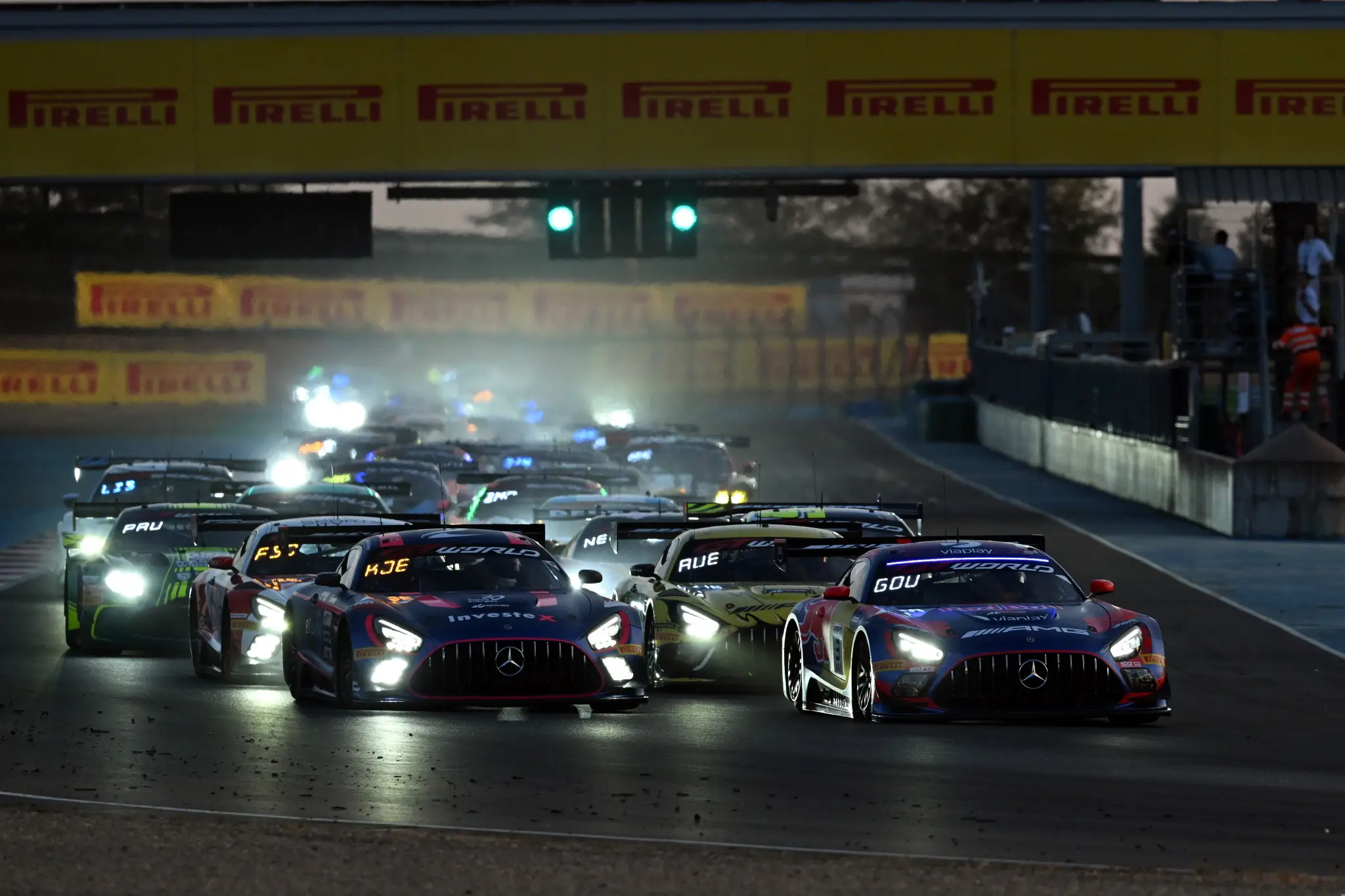
Race 1 began shortly before sunset with Jules Gounon on pole in the #3 Mercedes-AMG Team Verstappen Racing entry. It was his second consecutive Sprint Cup pole after Misano. The difference in France was that the Mercedes-AMG did not spend the first stint under constant pressure from the championship-leading BMW.
Gounon protected the inside through the opening sequence, settled into rhythm and steadily separated himself from the chasing group. Kiern Jewiss initially ran second in the Bronze Cup #222 2Seas Motorsport Mercedes-AMG, with Lucas Auer behind in the #48 Winward Racing car. That class mix was important: because the #222 had to meet a longer minimum pit-stop time, the overall order was likely to change once the window opened.
Gounon won the race before the driver change
The opening stint did not decide the final classification, but it established the cushion Verstappen Racing needed. Gounon’s gap reduced the pressure on the driver change, allowed the team to prioritize accuracy and gave Juncadella a clean track after the stop. This was a direct correction of the crew’s Misano disappointment, where a leading position had been lost during the pit sequence.
Winward should have been the natural beneficiary of the #222 car’s longer Bronze stop. Instead, the #48 lost several seconds during its own service. That single operational weakness changed the podium. Arthur Leclerc emerged second in the #50 AF Corse Ferrari, while Nicki Thiim moved into third in the #7 Comtoyou Racing Aston Martin.
The full-course yellow created one final test
A multi-car collision left the #84 Eastalent Racing Audi stranded on the infield and triggered a full-course yellow with roughly 20 minutes remaining. The race did not require a safety car, but the neutralization removed much of Juncadella’s comfortable margin.
Leclerc reacted sharply when green-flag racing resumed and took a large amount of time from the leader. For a brief period, the Ferrari appeared capable of turning the finish into a direct fight. Juncadella then rebuilt his rhythm, stabilized the gap at approximately 2.5 seconds and completed the team’s first overall victory.
| Pos. | Car | Drivers | Team | Class | Time / gap |
|---|---|---|---|---|---|
| 1 | #3 | Jules Gounon / Dani Juncadella | Mercedes-AMG Team Verstappen Racing | Pro | 1:00:13.636 |
| 2 | #50 | Thomas Neubauer / Arthur Leclerc | AF Corse | Pro | +2.597 |
| 3 | #7 | Kobe Pauwels / Nicki Thiim | Comtoyou Racing | Pro | +3.395 |
| 4 | #48 | Lucas Auer / Maro Engel | Winward Racing | Pro | +15.118 |
| 5 | #59 | Dean MacDonald / Marvin Kirchhöfer | Garage 59 | Pro | +15.419 |
| 6 | #46 | Max Hesse / Valentino Rossi | Team WRT | Pro | +18.765 |
| 7 | #32 | Charles Weerts / Kelvin van der Linde | Team WRT | Pro | +19.513 |
| 8 | #10 | Gilles Magnus / Robin Knutsson | Boutsen VDS | Gold | +21.052 |
Nicki Thiim recorded the fastest lap at 1:37.922, but the result’s deeper value came from Comtoyou Racing’s first Sprint Cup podium and Aston Martin’s first series podium in seven years. AF Corse also gained heavily: Neubauer’s opening-lap progress and Leclerc’s restart pace transformed ninth on the grid into second.
Why the championship leaders could accept seventh
Weerts and van der Linde never looked capable of matching the leading Mercedes-AMG in Race 1. The #32 BMW started outside the immediate podium fight and had to recover positions in traffic. Van der Linde’s decisive second-stint passes limited the loss to three championship points rather than a complete non-score.
At the time, seventh appeared disappointing but manageable. The leaders still held a seven-point advantage after Saturday. Only Sunday revealed how valuable those three points would become.
Verstappen Racing combined pole position, superior first-stint pace and a clean stop. The late full-course yellow created pressure, but the team had already built enough performance margin to absorb it.
Magny-Cours Race 2 Analysis: Lionspeed Wins the Pit-Lane Contest
The second race began changing shape hours before the green flag. Kelvin van der Linde initially produced a dominant Q2 performance in the #32 Team WRT BMW, recording a 1:35.927. The lap—and every other time set by the car—was later deleted because of an overboost technical infringement. The championship leaders were sent from provisional pole to the rear of the 44-car grid.
Nicki Thiim inherited pole in the #7 Comtoyou Racing Aston Martin with a 1:36.154, only 0.043 seconds ahead of Christopher Haase’s Eastalent Audi. Marvin Kirchhöfer qualified third for Garage 59, while Ricardo Feller placed the Lionspeed Porsche fourth. The revised order appeared to favor Aston Martin and McLaren more than Porsche.
Thiim’s jump-start penalty removed the inherited advantage
Thiim led from pole but was quickly handed a 10-second penalty for jumping the start. That meant Comtoyou’s apparent control was temporary. Kirchhöfer remained close in the #59 McLaren and appeared positioned to inherit the net lead, while Haase held third and Feller waited in fourth.
The leading Aston Martin and McLaren pulled away from the chasing pack before the stop. Under normal conditions, that gap should have protected Garage 59. The race then changed through an incident in the Bronze Cup battle.
The red flag erased the leaders’ advantage
Dustin Blattner’s #74 Kessel Racing Ferrari received contact from Rinat Salikhov’s #87 Winward Racing Mercedes-AMG approaching the Adelaide hairpin. The Ferrari struck the inside wall and crossed the gravel, causing extensive barrier damage. Blattner was taken to hospital for checks, while race control stopped the contest so the circuit could be repaired.
The red flag eliminated the gap built by the front two and delayed the pit window. When racing resumed behind the safety car, the strategic contest had become compressed: the leading teams would enter the pits with little separation, placing maximum weight on crew execution.
Lionspeed’s stop was one second faster than every rival
Feller brought the #80 Porsche into the pit lane from fourth. The Lionspeed crew completed the service approximately one second faster than any other team, a significant margin in Sprint Cup competition. When Bastian Buus rejoined, he led the race.
Team WRT produced an equally important gain for the Silver Cup #30 BMW. Ignacio Montenegro handed over to Matisse Lismont, and the car emerged second overall. Rutronik Racing placed the #96 Lamborghini in fourth before Luca Engstler overtook Thomas Neubauer’s AF Corse Ferrari for the final podium position.
| Pos. | Car | Drivers | Team | Class | Time / gap |
|---|---|---|---|---|---|
| 1 | #80 | Bastian Buus / Ricardo Feller | Lionspeed GP | Pro | 1:29:26.089 |
| 2 | #30 | Matisse Lismont / Ignacio Montenegro | Team WRT | Silver | +2.120 |
| 3 | #96 | Luca Engstler / Patric Niederhauser | Rutronik Racing | Pro | +2.610 |
| 4 | #50 | Thomas Neubauer / Arthur Leclerc | AF Corse | Pro | +5.173 |
| 5 | #84 | Simon Reicher / Christopher Haase | Eastalent Racing | Pro | +6.733 |
| 6 | #111 | James Kell / Arthur Rougier | CSA Racing | Gold | +13.741 |
| 7 | #59 | Dean MacDonald / Marvin Kirchhöfer | Garage 59 | Pro | +14.301 |
| 8 | #3 | Jules Gounon / Dani Juncadella | Mercedes-AMG Team Verstappen Racing | Pro | +15.763 |
| 9 | #46 | Max Hesse / Valentino Rossi | Team WRT | Pro | +17.104 |
| 10 | #51 | Tommaso Mosca / Matias Zagazeta | AF Corse | Gold | +19.658 |
Buus also set the fastest race lap at 1:37.209. The Porsche did not dominate qualifying or the opening stint; it won because Lionspeed remained close enough to exploit the reset and then executed the fastest stop. That distinction is why the victory mattered so much to the championship. It demonstrated that the #80 crew could win through operations as well as raw pace.
What happened behind the podium
AF Corse completed a strong weekend with fourth after finishing second on Saturday. Eastalent converted front-row pace into fifth, though the Audi lost its best chance of victory during the stop sequence. CSA Racing won the Gold Cup from sixth overall, and Garage 59 finished seventh after seeing its pre-red-flag advantage erased.
The #3 Verstappen Racing Mercedes-AMG fell to eighth after a delayed stop, while the #48 Winward Racing car dropped to 19th following an even slower service. The #7 Aston Martin finished 18th after its start penalty. The #32 BMW retired after 10 laps following contact during its recovery drive.
Lionspeed did not need the fastest starting car. It needed to remain within the lead group, react cleanly to the red flag and complete the quickest driver change. The pit crew converted fourth place into first.
The Biggest Winners from Magny-Cours 2026
Lionspeed GP, Ricardo Feller and Bastian Buus
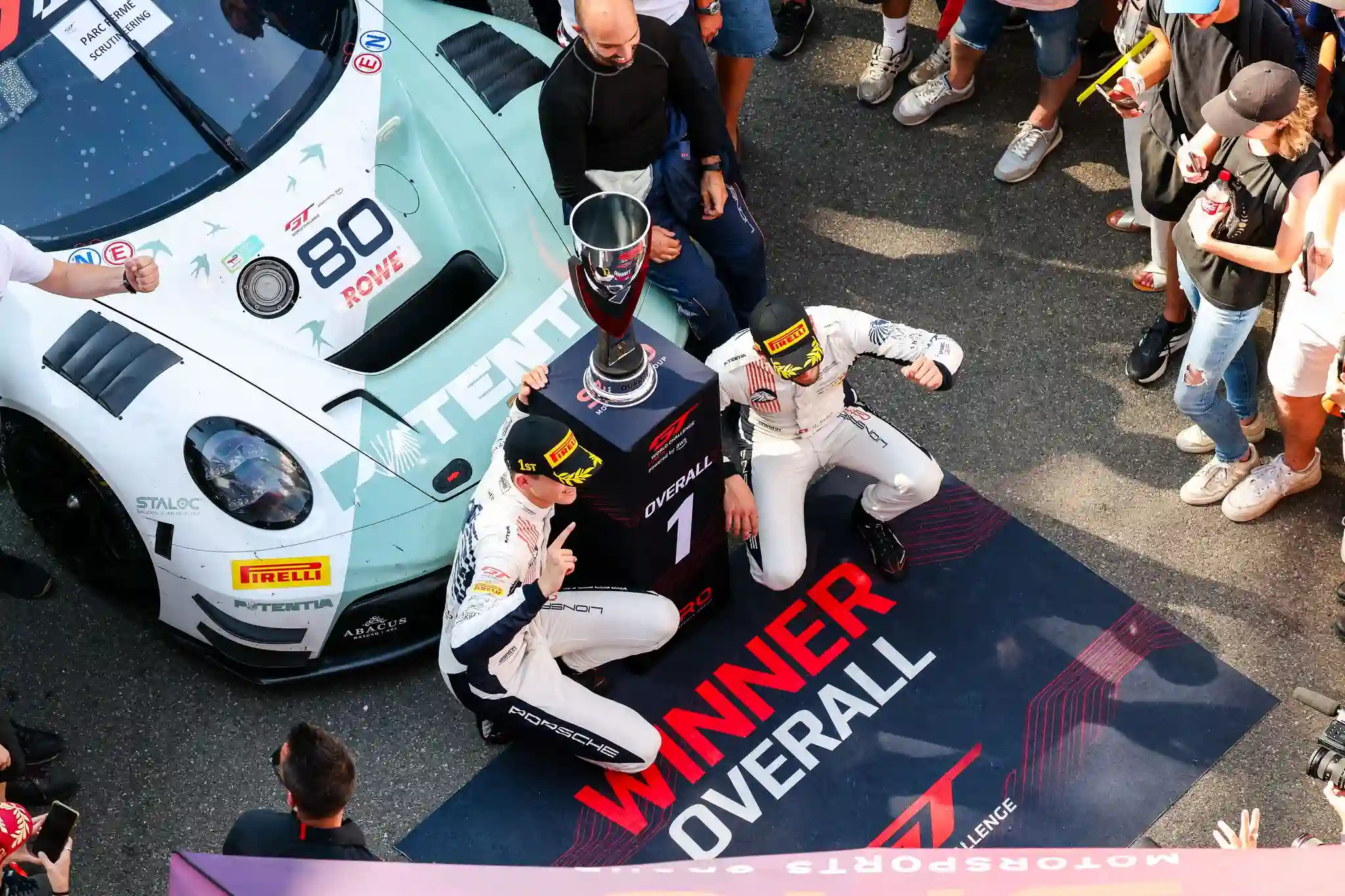
The #80 Porsche entered Sunday after finishing only 11th in Race 1. Instead of allowing that result to damage its title campaign, the crew converted fourth before the pit stops into victory. The win moved Feller and Buus to 47 points, only 2.5 behind the leaders.
The most impressive part was repeatability. Lionspeed had already won at Brands Hatch and conquered the 24 Hours of Spa. Magny-Cours added a different type of success: a short race decided by a precise stop under changing circumstances.
Mercedes-AMG Team Verstappen Racing
Race 1 was the project’s first overall GT World Challenge victory. Gounon’s pole and first-stint control demonstrated qualifying speed, while Juncadella’s response after the full-course yellow showed the crew could close a race under pressure.
Sunday’s eighth place prevented a perfect weekend, but Juncadella still left third in the Sprint driver standings on 44.5 points. Because his teammates changed during the opening rounds, his individual points position is particularly important.
Matisse Lismont, Ignacio Montenegro and the #30 Team WRT BMW
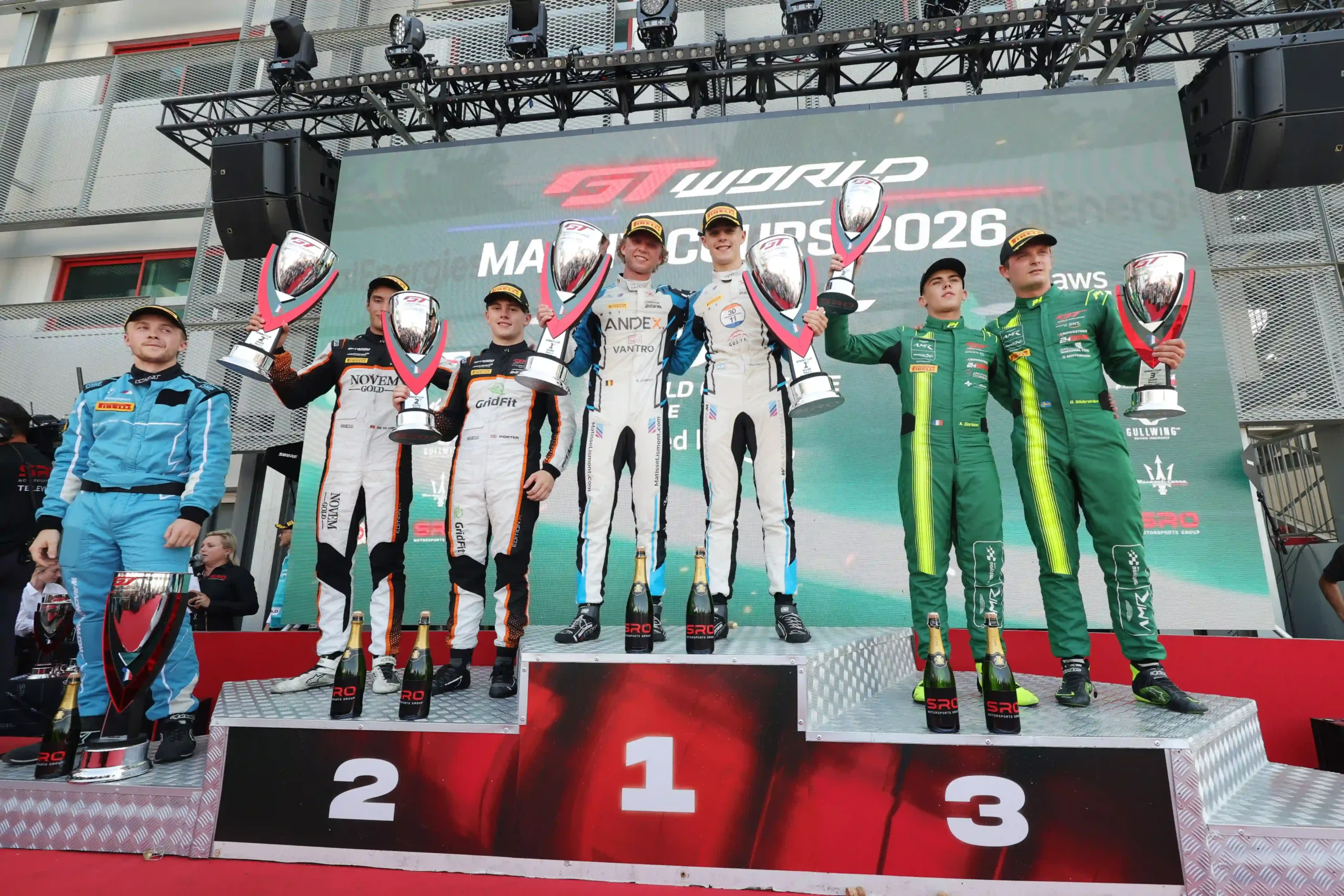
The Silver Cup leaders won their class in both races. Their Sunday performance was much larger than a class victory: Lismont finished second overall, only 2.120 seconds behind the winning Porsche.
The result showed that a Silver entry could compete directly with the Pro field when qualifying, pit work and race pace aligned. It also gave Team WRT a major success on a weekend when its championship-leading Pro car failed.
Rutronik Racing and the Lamborghini Temerario GT3
Patric Niederhauser and Luca Engstler delivered the new Temerario’s first GT World Challenge podium. The car qualified sixth after an uncertain early season, ran inside the lead group and completed the result with Engstler’s decisive pass on the AF Corse Ferrari.
This was more valuable than a fortunate third place. The Lamborghini displayed qualifying pace, race stability and enough braking confidence to attack for position.
AF Corse, Thomas Neubauer and Arthur Leclerc
Second and fourth made the #50 Ferrari the most consistent Pro entry of the weekend. Neubauer’s Race 1 start gained four places, Leclerc pressured for victory after the restart, and the crew remained in the Sunday podium battle until Engstler passed.
The 19.5 points scored across the two races moved the pair to 41, only 8.5 behind the championship leaders.
Comtoyou Racing and Aston Martin
Saturday’s third place was Comtoyou’s first Sprint Cup podium and Aston Martin’s first in seven years. Thiim then inherited Sunday pole, proving the car had front-running speed in both qualifying sessions.
The jump-start penalty prevented the weekend from becoming exceptional, but the underlying performance was a major improvement.
The Biggest Losers from Magny-Cours 2026
The #32 Team WRT BMW
No crew lost more championship leverage. Weerts and van der Linde arrived 14 points clear after sweeping Misano. They scored only three points in France, despite initially producing the fastest Q2 lap.
The overboost infringement converted pole into last place. Van der Linde made rapid early progress, but the recovery ended through contact and retirement. The pair remained leaders because of Saturday’s seventh place, yet their margin fell to 2.5.
Winward Racing’s #48 Pro entry
Auer and Engel were second in the standings before the weekend. Fourth in Race 1 provided 7.5 points, but the result should have been better. Their stop cost the car the likely second position behind Verstappen Racing.
Sunday was worse. Another slow service left the Mercedes-AMG 19th and outside the points. The pair dropped behind Feller and Buus, Juncadella, Neubauer and Leclerc in the Sprint order.
Comtoyou’s Sunday conversion
Inheriting pole gave Thiim and Pauwels a major opportunity. The jump-start penalty removed it almost immediately. Eighteenth place did not reflect the Aston Martin’s speed, but points are awarded for execution rather than potential.
The positive Saturday podium kept the weekend from being a failure. Still, turning pole into a non-score was one of Sunday’s largest missed chances.
Garage 59’s Race 2 opportunity
Kirchhöfer ran close behind Thiim and built a large gap over the cars behind. With the Aston Martin facing a 10-second penalty, the McLaren appeared to hold the strongest net position.
The red flag erased the gap, and the pit stop did not match Lionspeed’s speed. Seventh was still useful, but it was far below the victory available before the interruption.
2Seas Motorsport’s lost Bronze Cup win
Jewiss and Charles Dawson ran near the front of the overall order in Race 1 and crossed the line first in Bronze. A post-race penalty for exceeding the speed limit during the full-course-yellow period transferred victory to Winward Racing.
The speed was real; the result was lost through compliance during a neutralized phase.
The weekend’s most costly incident
The contact between Salikhov and Blattner was more serious than an ordinary “loser” label can express. It caused a heavy accident, damaged the barrier and stopped the race. Blattner was taken for medical checks, while the #87 Winward car received a 20-second penalty and lost its chance of another Bronze Cup win.
From a sporting perspective, the collision also altered the overall contest. The red flag erased the advantage held by the Aston Martin and McLaren, reset the field and created the conditions for Lionspeed’s pit-stop victory. One Bronze Cup incident therefore changed the Pro race and the championship.
Magny-Cours punished controllable errors more severely than a small pace deficit. Technical compliance, start procedure, pit-stop execution and race-control discipline decided more points than a few tenths of lap time.
Strategy Analysis: Why the Pit Lane Decided Both Races Differently
The two winners reached the same result through opposite strategic shapes. Verstappen Racing used track position and first-stint speed to protect its stop. Lionspeed used a compressed field and superior pit work to gain the lead during its stop.
Race 1: build the margin before the pit window
Gounon’s objective was straightforward: clear the cars behind and remove pressure from the driver change. The #222 Bronze Mercedes complicated the visual order because its minimum stop time was longer, but the #3 did not need to react aggressively. It simply needed to execute without surrendering the lead.
Winward’s slow stop proved the value of that margin. Auer had positioned the #48 to move forward once the Bronze car completed its longer service. Losing several seconds transformed a likely second place into fourth.
Race 2: stay close enough to exploit the reset
Feller did not need to pass the Aston Martin, McLaren and Audi before the red flag. Lionspeed’s crucial achievement was remaining inside the lead group. Once the race was stopped and the gap neutralized, the value of track position narrowed and the value of pit execution increased.
The crew’s one-second advantage was enormous in a field where cars were separated by tenths. It moved the Porsche from fourth to first and placed Buus in control of a shortened final stint.
Why Team WRT’s Silver car gained as its Pro car failed
The #30 BMW demonstrated the quality of WRT’s pit operation. Montenegro entered the window in a strong class position, and the team released Lismont second overall. This was not simply the result of a class handicap. The stop was fast enough to beat most Pro teams on equal operational terms.
The contrast with the #32 BMW was sharp. The leading Pro car had the pace for pole but failed technical inspection and then became exposed to traffic. The Silver car had less headline expectation but converted every stage of the weekend.
How the red flag changed tire and restart decisions
The stopped race extended the total elapsed time to almost 90 minutes, even though the classification covered 34 laps. Teams had to manage tire temperature and driver readiness through a delay that was not part of the original one-hour plan.
The restart behind the safety car reduced the immediate attacking opportunity. The delayed pit window then compressed the second stint. That favored a driver who could reach full pace quickly without abusing the tire. Buus executed that requirement and also set the fastest lap.
Race 1 was won by creating time on the circuit. Race 2 was won by removing time in the pit lane.
Championship Impact: The Sprint Cup Is Now a Five-Crew Fight
The official pre-event standings and the final Magny-Cours classifications produce a dramatically tighter Sprint Cup table. The championship uses a 16.5–12–9.5–7.5–6–4.5–3–2–1–0.5 race-points scale, with one additional point for qualifying pole.
Weerts and van der Linde added three points for seventh in Race 1 and none for their Race 2 retirement, moving from 46.5 to 49.5. Feller and Buus added 16.5 for Sunday’s victory after failing to score on Saturday, moving from 30.5 to 47.
Juncadella gained the Q1 pole point, 16.5 for Race 1 victory and two for eighth in Race 2. That raised him from 25 to 44.5. Neubauer and Leclerc added 19.5 through second and fourth, while Auer and Engel earned 7.5 for fourth on Saturday and no Sunday points.
| Pos. | Drivers | Before Magny-Cours | Magny-Cours gain | After Magny-Cours | Gap to lead |
|---|---|---|---|---|---|
| 1 | Charles Weerts / Kelvin van der Linde | 46.5 | +3.0 | 49.5 | Leader |
| 2 | Ricardo Feller / Bastian Buus | 30.5 | +16.5 | 47.0 | −2.5 |
| 3 | Dani Juncadella | 25.0 | +19.5 | 44.5 | −5.0 |
| 4 | Thomas Neubauer / Arthur Leclerc | 21.5 | +19.5 | 41.0 | −8.5 |
| 5 | Lucas Auer / Maro Engel | 32.5 | +7.5 | 40.0 | −9.5 |
Post-event totals are calculated from the official pre-Magny-Cours standings, the official final classifications and the 2026 Sprint Cup points scale. Juncadella is listed individually because the #3 car used different Sprint teammates during the season.
Why the #32 BMW is still in the strongest position
A 2.5-point lead is small, but the defending champions retain one advantage: they do not need to overhaul anyone. Two clean weekends at Zandvoort and Barcelona can still secure the title. Team WRT also proved in Misano that the #32 can win both races in one meeting.
The danger is that Magny-Cours exposed two different failure modes. The technical infringement was preventable, while the recovery retirement demonstrated the risk of starting at the rear of a 44-car field. WRT must restore operational discipline as well as speed.
Why Lionspeed now has a realistic title route
Feller and Buus have won two of the six Sprint races completed so far: Brands Hatch Race 2 and Magny-Cours Race 2. They have also shown front-row qualifying pace and the strongest pit crew under pressure. At only 2.5 points back, they no longer need the leaders to suffer a major failure; they can take control through ordinary podium gains.
Juncadella’s unusual but serious championship position
Juncadella has shared the #3 with different teammates, which separates the drivers in the standings. His individual total nevertheless places him only five points from the lead. Verstappen Racing has now shown the pace to earn poles and the execution to win.
The team’s challenge is Sunday consistency. Misano and Magny-Cours both demonstrated that the #3 can lead one part of a weekend and then lose positions during the pit phase of another.
AF Corse has entered the title conversation
Neubauer and Leclerc gained more points than any paired crew except Lionspeed. Their 12 points for second and 7.5 for fourth moved them to 41. With four races remaining, 8.5 points is recoverable.
Ferrari’s advantage is consistency: the #50 was the only Pro entry to finish inside the top four in both Magny-Cours races. Its weakness is qualifying variation. Starting ninth on Saturday required a high-risk recovery that will not work every weekend.
Winward’s position is worse than the raw gap suggests
Auer and Engel remain only 9.5 points behind, but their Magny-Cours pattern was concerning. They had enough car speed to score heavily and lost positions during both stops. Unlike a one-off collision, repeat pit losses indicate a process that needs correction before Zandvoort.
What remains on the Sprint Cup calendar
The Sprint Cup resumes at Zandvoort on September 18–20, followed by the Barcelona finale on October 2–4. Four one-hour races remain, plus qualifying points. The championship can therefore swing several times before the final flag.
Magny-Cours changed the title from a controlled WRT defense into a multi-team contest. Only 9.5 points separate the top five, which is less than the value of a second-place finish.
Class Championship Impact: Silver Nears a Decision, Gold Tightens
Silver Cup: Lismont and Montenegro dominate the weekend
The #30 Team WRT BMW won Silver in Race 1 after the class-pole #21 Comtoyou Aston Martin could not reach the grid because of a technical issue. On Sunday, Montenegro earned the official class pole and the crew converted it into victory plus second overall.
Using the official pre-event total, race points and Q2 pole point, the pair’s calculated Silver Cup score rose from 56.5 to 90.5. The championship report described them as being within touching distance of the title, and the performance justified that language. They have combined class speed with the ability to finish among the leading Pro cars.
Gold Cup: AF Corse scores, CSA wins, Boutsen delivers emotion
Boutsen VDS won Race 1 with Gilles Magnus and Robin Knutsson, the Belgian team’s first victory since the death of patron Marc van der Straten. CSA Racing responded in Race 2 as Arthur Rougier and James Kell qualified on class pole and finished sixth overall.
AF Corse did not win either race with the #51 Ferrari, but two second-place class finishes protected its championship position. The Gold battle therefore tightened rather than producing a new dominant favorite.
Bronze Cup: two winners created by penalties and incident management
The #222 2Seas Mercedes-AMG crossed the line first in Race 1 but lost the result through an FCY speeding penalty. Salikhov and Marvin Dienst inherited victory for Winward Racing.
On Sunday, the same #87 Winward car received a 20-second penalty for the contact that sent Blattner into the barrier. Paradine Competition’s Darren Leung and Augusto Farfus claimed the class win with the #991 BMW.
The contrast is important. Bronze Cup racing is not decided only by the professional driver’s lap time. Minimum stop requirements, amateur-driver consistency, neutralization rules and incident responsibility can reorder the class after the flag.
Manufacturer Performance: What Magny-Cours Revealed
Mercedes-AMG: fastest package, uneven execution
Mercedes-AMG placed three cars inside the first four during the early stages of Race 1 and won with the #3. The model’s braking stability and traction clearly suited Magny-Cours. Yet Winward’s slow stops and the #3’s delayed Sunday service prevented the brand from maximizing its pace.
The conclusion is not that Mercedes lacked operational quality across every team. Verstappen Racing executed Race 1 cleanly. The result showed that customer-team performance can vary even when the underlying car is strong.
Porsche: the most complete winning operation
Lionspeed finished only 11th on Saturday and still became the weekend’s most important championship winner. The Porsche’s Sunday pace was combined with the fastest stop and Buus’ fastest lap. Boutsen VDS added a Gold victory and a ninth-place Pro finish on Saturday.
Porsche’s slow-corner traction remained useful, but the decisive advantage came from a team that repeatedly performs under pressure.
BMW: one title leader struggled, another car starred
The #32 BMW had the speed to claim Q2 pole before the technical deletion. The #30 BMW then demonstrated outstanding race pace and stop execution. Rossi and Hesse added sixth and ninth, providing a stable if unspectacular weekend for the #46.
BMW therefore left with conflicting evidence. The car was clearly competitive, and Team WRT’s depth remained strong. The championship-leading crew lost points through compliance and contact rather than a basic lack of pace.
Ferrari: consistency without the final podium on Sunday
AF Corse’s #50 finished second and fourth. That was the best two-race average among the Pro entries. The Ferrari also demonstrated strong starts, braking confidence and restart pace.
The missing piece was control of track position. Starting ninth in Race 1 forced Neubauer to take risks, while losing third to Engstler on Sunday cost another 2.0 championship points.
Lamborghini: the first true performance marker for the Temerario
The #96 Rutronik car qualified sixth and finished third. This was the first GT World Challenge podium for the Temerario and a sign that its early development curve was moving forward.
Engstler’s pass on Neubauer mattered because it showed the result was not merely inherited. The Lamborghini had enough race balance and braking performance to attack a proven Ferrari package.
Five Key Takeaways from Magny-Cours 2026
The title leader no longer controls the championship
Weerts and van der Linde remain first, but a 2.5-point margin changes the strategic mindset. Finishing ahead of Lionspeed is now more important than protecting a large cushion.
Lionspeed can win in more than one way
The Porsche crew has won from pole-like control and from pit-lane execution. That versatility makes Feller and Buus the most dangerous challengers.
Verstappen Racing has championship-level speed
Back-to-back poles and the Magny-Cours Race 1 victory prove the #3 can lead. The remaining question is whether it can complete both races without a pit-related loss.
Silver Cup traffic can become overall podium traffic
The #30 BMW was not a slower class car blocking Pro contenders. It was the second-fastest complete race operation on Sunday.
Technical and procedural details will decide the final rounds
The Q2 overboost deletion, jump-start penalty, FCY speeding and slow stops changed more championship points than any single overtaking move.
Magny-Cours also succeeded as an event. More than 27,000 spectators attended, almost 6,000 more than in 2025. The 44-car race grid set a Sprint Cup record, while the support program produced 17 races across the weekend.
That crowd and entry growth matter because the weekend delivered a strong competitive product: two different winners, six manufacturers inside the Race 2 top seven and a title fight that became significantly closer.
Magny-Cours GT World Challenge Europe 2026 Analysis FAQ
Conclusion: Magny-Cours Turned a Comfortable Lead into a Sprint Cup Shootout
The Magny-Cours GT World Challenge Europe 2026 analysis is not simply a story of two race winners. It is the weekend that changed the shape of the championship. Verstappen Racing proved it could convert pole into victory. Lionspeed proved its crew could win a race in the pit lane. Team WRT proved the fastest qualifying car can leave with almost nothing when technical and traffic risks combine.
Weerts and van der Linde remain leaders, but the advantage built through their Misano sweep has nearly vanished. Feller and Buus are only 2.5 points behind, Juncadella is five back, and AF Corse plus Winward remain within the value of one strong race.
The winners from France leave with momentum, but the larger lesson is that no team can rely only on speed. Zandvoort and Barcelona will reward the crews that combine qualifying, compliance, pit work and incident avoidance across four separate races. Magny-Cours showed exactly how quickly one weakness can change a title.
Sources & Official References
- GT World Challenge Europe — official Race 1 report
- SRO — Magny-Cours Race 1 final classification
- GT World Challenge Europe — official Race 2 report
- SRO — Magny-Cours Race 2 final classification
- GT World Challenge Europe — official Q2 penalty and revised pole report
- GT World Challenge Europe — official weekend review and attendance report
- GT World Challenge Europe — official Sprint Cup driver standings
- SRO — 2026 GT World Challenge Europe sporting regulations and points scale
- GT World Challenge Europe — Zandvoort event information, September 18–20
- GT World Challenge Europe — Barcelona Sprint Cup finale, October 2–4
Results and penalties reflect the published final classifications and official post-race reports available on August 3, 2026. Post-event Sprint Cup totals are calculated from the official pre-event standings, final results, qualifying pole point and the championship’s official scoring scale.