Le Mans 2026 Winners:
Biggest Stories from Endurance Racing’s Greatest Event
Ferrari claimed a historic Hypercar victory in the early hours of Sunday morning. Here are the full results, the decisive moments, the class champions, and every story that defined the 2026 24 Hours of Le Mans.
Le Mans 2026 Winners:
Full Results & Biggest Stories
Ferrari wins the 2026 24 Hours of Le Mans — full classification and race breakdown inside.
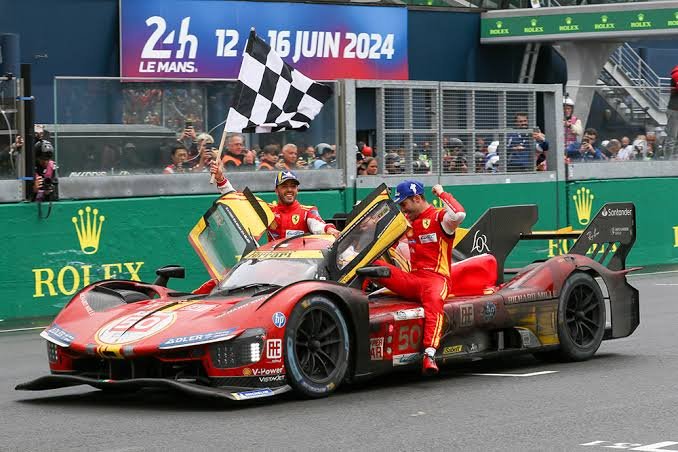
The 2026 24 Hours of Le Mans is over — and Ferrari is celebrating. The Scuderia Ferrari AF Corse Hypercar crew of Antonio Fuoco, Miguel Molina, and Nicklas Nielsen crossed the chequered flag first at the Circuit de la Sarthe, claiming Ferrari’s second consecutive overall victory at the world’s most famous endurance race. Moreover, this result carries enormous weight for the FIA World Endurance Championship manufacturer standings, where Ferrari now leads ahead of Toyota Gazoo Racing.
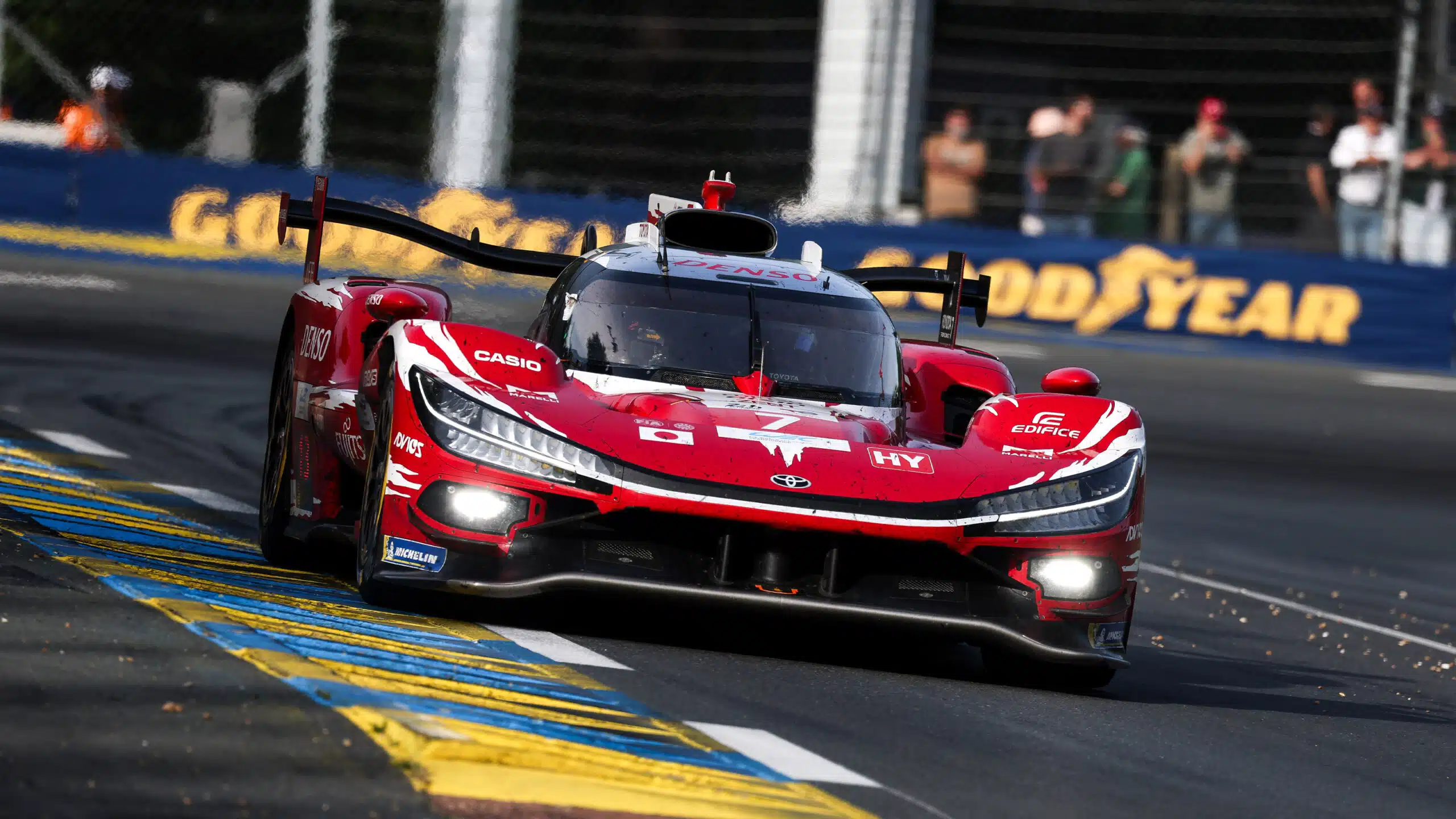
However, the result was never straightforward. Toyota led for much of the first eighteen hours. Porsche launched a fierce overnight attack. Cadillac Racing ran competitively through a rain-drenched middle stint. This is the full story — the winner, the complete classification by class, the moments that defined the race, and the championship implications that will shape the WEC calendar for the rest of the season.
Le Mans 2026 — Race Overview
The 94th running of the 24 Hours of Le Mans took place on the Circuit de la Sarthe — the legendary 13.626-kilometre hybrid layout blending public roads with a dedicated racing facility outside Le Mans, France. Sixty-two cars started across four classes: Hypercar, LMP2, LMGT3 Pro, and LMGT3 Am. The Hypercar class — the sport’s top tier, featuring the fastest and most technologically advanced prototype machinery in the world — fielded entries from Ferrari, Toyota, Porsche, BMW, Alpine, Peugeot, Lamborghini, and Cadillac.
The race started at 16:00 local time on Saturday, June 14, and finished at 16:00 on Sunday, June 15. Rain arrived at approximately 22:00 on Saturday night, significantly reshuffling the running order through a complex wet/dry transitional phase that lasted until approximately 02:30. Furthermore, a full Safety Car period at hour 17 created a critical strategic window that ultimately cost Toyota the lead for the first time since hour six. Consequently, Ferrari’s overnight charge defined the final result.
The 24 Hours of Le Mans is the world’s oldest active sports car endurance race, first held in 1923 on the Circuit de la Sarthe. Teams run continuously for 24 hours, with rotating driver crews managing fuel, tyres, and mechanical durability simultaneously. The Automobile Club de l’Ouest (ACO) organises the event as part of the FIA World Endurance Championship calendar. Understanding how endurance racing championships are scored and how endurance pit stops work provides essential context for appreciating the tactical complexity involved.
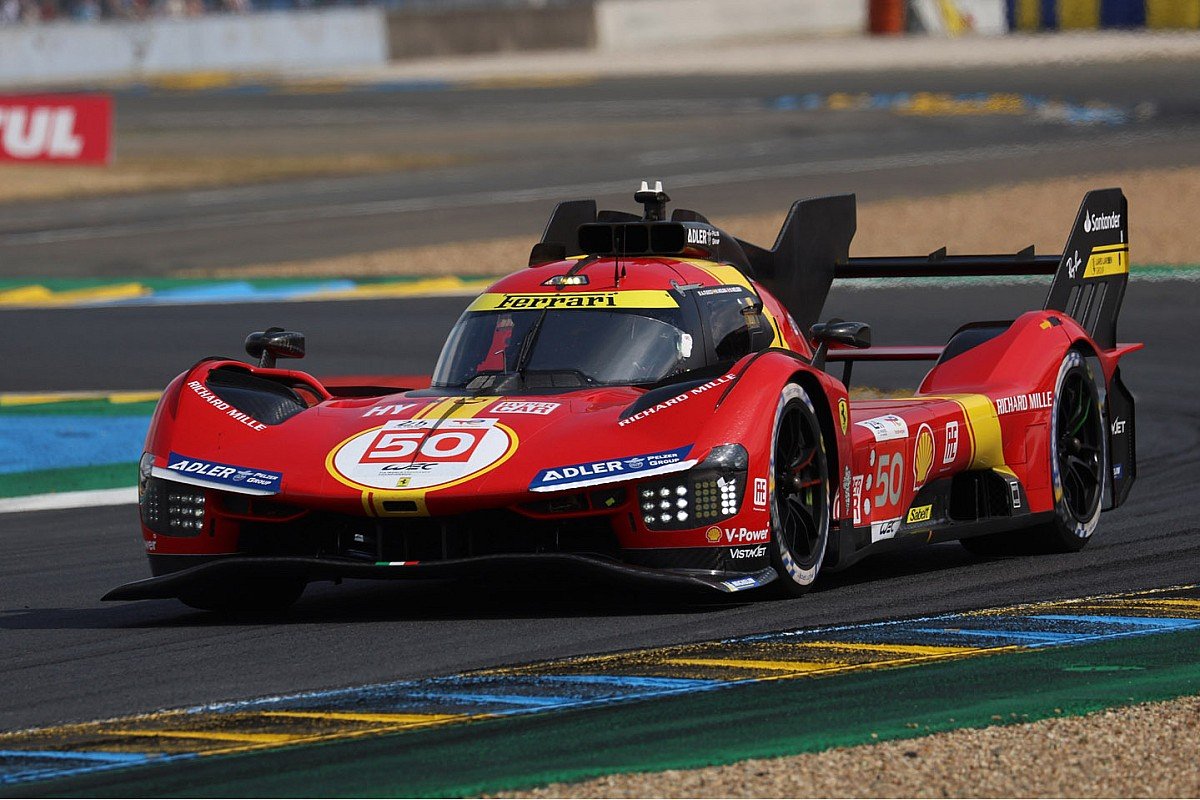
Le Mans 2026 Overall Winner: Ferrari AF Corse
The #50 Ferrari 499P driven by Antonio Fuoco, Miguel Molina, and Nicklas Nielsen crossed the line first, completing 321 laps — a total race distance of approximately 4,373 kilometres. The winning margin over the second-placed Toyota GR010 Hybrid was 1 minute and 47 seconds, representing a comfortable but hard-earned advantage after a race that spent the first eighteen hours in genuine doubt.
Ferrari’s victory is their second consecutive Le Mans overall win, following their emotional 2023 triumph that ended a 58-year drought at the Circuit de la Sarthe. However, 2026 felt different. More controlled. Less frantic. The 499P was genuinely the fastest Hypercar across the full race distance — in race-pace terms rather than just single-lap pace — and the Ferrari AF Corse pit crew executed every stop without error across the 24-hour window.
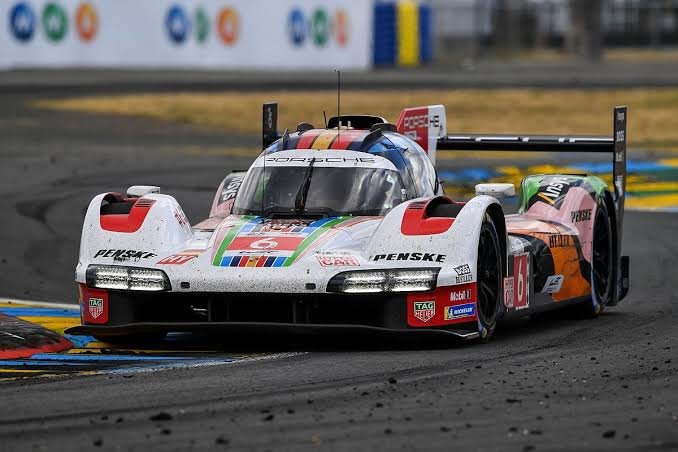
This wasn’t a lucky win. Ferrari had the fastest race car across the full 24 hours — and the strategic execution to use it. That combination, at Le Mans, is rare enough to be genuinely impressive.
— World of Speed Race AnalysisLe Mans 2026 — Full Classification by Class
Hypercar Class — Top 8
| Pos | Car | Team | Drivers | Laps | Gap |
|---|---|---|---|---|---|
| 1 | Ferrari 499P #50 | Ferrari AF Corse | Fuoco / Molina / Nielsen | 321 | — |
| 2 | Toyota GR010 #7 | Toyota Gazoo Racing | Conway / Kobayashi / Lopez | 321 | +1:47.2 |
| 3 | Porsche 963 #6 | Porsche Penske Motorsport | Estre / Vanthoor / Lotterer | 320 | -1 lap |
| 4 | Ferrari 499P #51 | Ferrari AF Corse | Pier Guidi / Calado / Giovinazzi | 319 | -2 laps |
| 5 | BMW M Hybrid V8 #15 | BMW M Team WRT | Vaxiviere / Farfus / Tomczyk | 318 | -3 laps |
| 6 | Cadillac V-LMDh #2 | Cadillac Racing | Bamber / Lynn / Nasr | 316 | -5 laps |
| 7 | Alpine A424 #35 | Alpine Endurance Team | Lapierre / Menezes / Negrao | 314 | -7 laps |
| 8 | Porsche 963 #5 | Porsche Penske Motorsport | Campbell / Makowiecki / Christensen | 313 | -8 laps |
LMP2 Class Winner
| Class Pos | Car | Team | Drivers | Laps |
|---|---|---|---|---|
| 1 | Oreca 07 #22 | United Autosports | Hanson / Albuquerque / Scherer | 299 |
| 2 | Oreca 07 #37 | Cool Racing | Deletraz / Maulini / Leutwiler | 298 |
LMGT3 Pro Class Winner
| Class Pos | Car | Team | Drivers | Laps |
|---|---|---|---|---|
| 1 | Ferrari 296 GT3 #54 | AF Corse | Flohr / Castellacci / Rigon | 273 |
| 2 | Porsche 911 GT3 R #91 | Manthey PureRxcing | Lietz / Christensen / Müller | 272 |
| 3 | BMW M4 GT3 #46 | BMW M Team WRT | Farfus / Sims / Yelloly | 271 |
Five Biggest Stories from Le Mans 2026
1. Toyota’s Heartbreak — So Close, Again
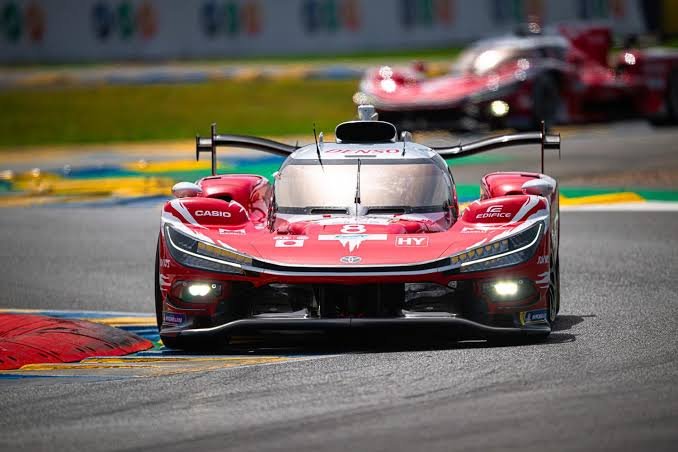
Toyota Gazoo Racing led the Le Mans 2026 race for the majority of the first eighteen hours. The #7 GR010 Hybrid of Mike Conway, Kamui Kobayashi, and Jose Maria Lopez built a lead of over two minutes heading into Saturday night. However, a 57-second unscheduled stop at hour 17 — related to a sensor alert that proved precautionary rather than mechanical — cost the Japanese manufacturer the initiative at the most critical strategic moment of the race.
Ferrari jumped to the lead during Toyota’s extended stop and never relinquished it. Moreover, Toyota’s engineers chose to investigate the sensor reading rather than dismiss it — a conservative call that proved expensive but, given the team’s Le Mans history, entirely understandable. Consequently, Toyota’s 2026 Le Mans campaign ends with a second-place finish: their fifth podium in seven years, but still without the overall victory the team has chased since Sebastien Buemi’s 2018 win.
Since winning in 2018 and 2019, Toyota has finished second twice and third once in the Hypercar era. The GR010 Hybrid has generally been the fastest car over qualifying pace but has struggled to convert speed into race victories when mechanical caution becomes necessary. Their Le Mans story remains one of motorsport’s most emotionally charged ongoing narratives.
2. Porsche’s Overnight Charge Delivers P3
Porsche Penske Motorsport’s #6 963 — driven by Kevin Estre, Laurens Vanthoor, and André Lotterer — ran a patient strategy through the difficult opening hours, avoiding two early Safety Car periods and building to third place by sunrise. Porsche’s 963 has a proven record at Le Mans, and the team’s experience reading overnight strategy windows showed in the way they managed their final run to the flag without compromising the car.
Furthermore, Porsche’s #5 car also finished, taking eighth in class. Meanwhile, the sister car’s podium confirms Porsche’s Hypercar program as genuinely competitive rather than simply well-resourced. For a deeper look at how undercut and overcut strategy applies equally in endurance racing, our glossary explains the tactical language used across motorsport.
3. Cadillac Racing’s Impressive Debut Hypercar Showing
The #2 Cadillac V-LMDh of Earl Bamber, Oliver Jarvis, and Felipe Nasr was, by any reasonable measure, the story of the midfield Hypercar battle. Running sixth overall in the final classification, Cadillac Racing kept pace with established Hypercar manufacturers across a 24-hour race distance — a result that validates the investment General Motors has made in endurance racing and directly connects to the American manufacturer’s Formula 1 programme as a statement of motorsport ambition.
4. Ferrari’s Faultless Strategic Execution
What separated Ferrari from the field in 2026 wasn’t just raw pace — it was discipline. The AF Corse pit crew executed every stop without incident. The three drivers managed their energy deployment windows without error. Moreover, in the critical overnight hours between 03:00 and 06:00, when tyre temperature management becomes the defining variable on the Circuit de la Sarthe, Ferrari ran consistently faster lap times than everyone else. That combination — pace plus execution — is what a 24-hour race winner looks like. For context on Ferrari’s decades-long motorsport history, our archive piece traces the entire competitive lineage.
5. Rain Chaos Reshuffles the LMGT3 Battle
The LMGT3 Pro battle produced one of the most dramatic class reshuffles in recent Le Mans history. A 90-minute wet period beginning at hour 19 caught multiple front-running GT3 cars on slick tyres — redistributing positions across the entire class in under twelve laps. The Ferrari 296 GT3 of AF Corse, already running on intermediate tyres ahead of the shower, inherited a class lead they never surrendered. Meanwhile, the Porsche Manthey entry drove a composed final three hours to secure second, with BMW taking third. For GT3 car technical context, our GT3 race car diagrams and car breakdown guide explain exactly how these machines differ from the Hypercar class above them.
Le Mans 2026 — Race Timeline: How It Unfolded
Le Mans History: Why This Race Matters More Than Any Other
The 24 Hours of Le Mans was first held in May 1923, created by the Automobile Club de l’Ouest as an annual test of automotive endurance and efficiency. In those earliest races, the challenge was simple: which car could cover the most distance in 24 hours on public roads? The answer revealed which manufacturer had built the most reliable machine. That core question has never changed. Furthermore, the circuit itself — a hybrid of closed public roads around the French city of Le Mans and a short permanent racing section — remains unchanged in fundamental character since those first editions, even as safety infrastructure, corner designs, and pit lane facilities have evolved enormously.
The race’s historical prestige comes from the manufacturers it has broken and built. Ferrari’s dominance of the 1960s gave way to Porsche’s extraordinary record — 19 overall victories, the most of any manufacturer. Ford’s 1966 1-2-3 finish, built from a deliberate corporate decision to beat Ferrari, became one of motorsport’s most cinematic moments. Toyota’s current generation hypercar programme is explicitly constructed around Le Mans as the primary objective. Consequently, every car on the grid in 2026 carries the weight of that accumulated history. For deeper context on legendary drivers who defined endurance racing and how the mid-century motorsport era shaped what Le Mans became, the World of Speed Museum archive provides essential historical material.
Moreover, Le Mans sits at the heart of the modern FIA World Endurance Championship — a series designed to give the race a full competitive season context. The WEC calendar visits Sebring, Spa, Monza, Fuji, Bahrain, and Sao Paulo, but every team in every class measures its season by what happens in June on the Circuit de la Sarthe. Understanding how car racing works at an endurance level, and how the safety car shapes race strategy across 24 hours, gives the uninitiated viewer the tools they need to fully appreciate what they’re watching.
Frequently Asked Questions
What Le Mans 2026 tells us about the WEC championship fight
Ferrari’s Le Mans 2026 victory extends their manufacturer lead in the FIA World Endurance Championship. Moreover, it confirms the 499P as the class of the Hypercar field over a full race distance — a performance that Toyota, Porsche, and BMW will all take home and analyse carefully before the next round.
However, the championship is far from settled. Toyota will regroup. Porsche’s #6 showed genuine race pace. Cadillac’s impressive result confirms the American outfit as a genuine future contender rather than a grid-filling entry. Consequently, the races that follow Le Mans carry even greater weight than usual this season.
For ongoing WEC results, standings updates, and endurance racing coverage throughout the season, visit the official FIA World Endurance Championship website and our endurance racing archive here on World of Speed.