Japan Super Formula 2026 Schedule:
Full Calendar, Circuits & How to Watch
The complete guide to the 2026 Super Formula season — every race date, all five circuits, the double-header format explained, live streaming options, teams, and why this championship matters on the global motorsport stage.
Japan Super Formula 2026 Schedule
Full calendar, circuits, streaming guide and everything you need for the 2026 season.
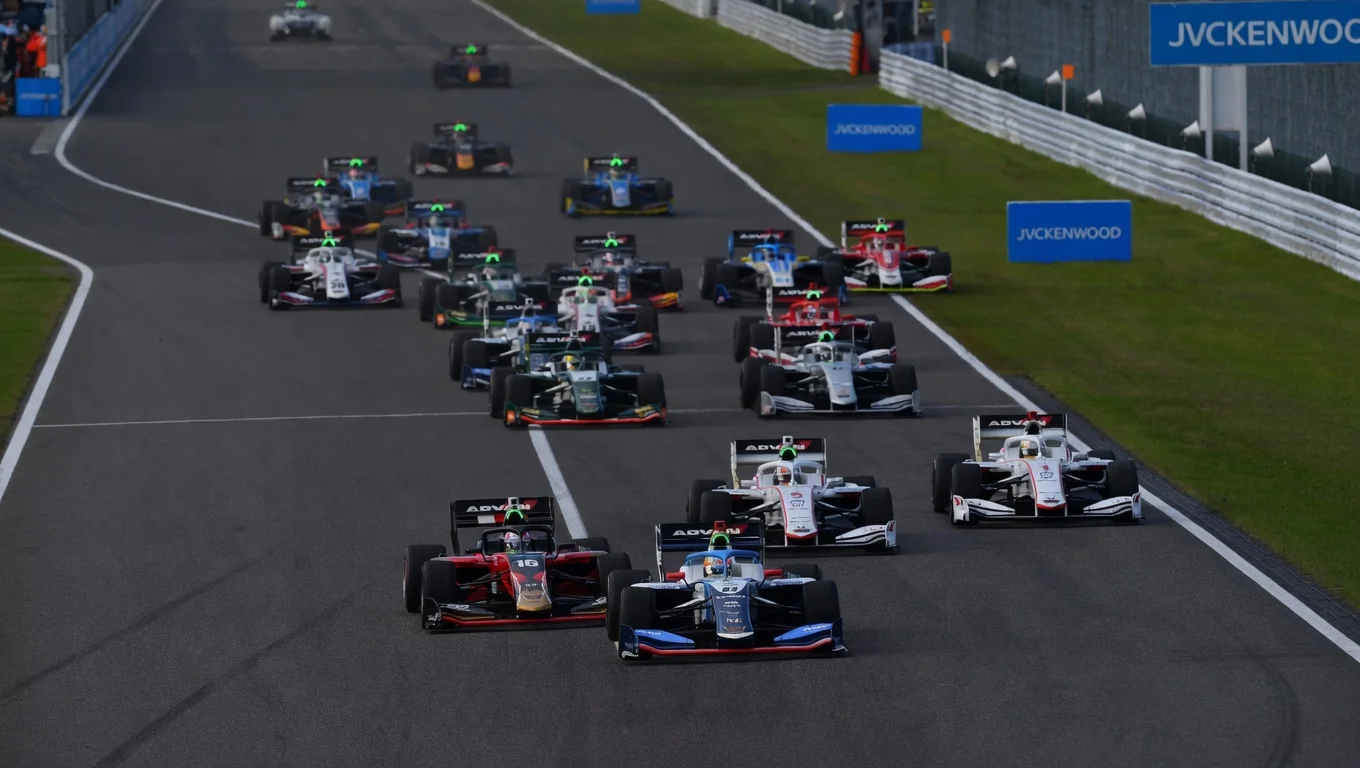
Japan Super Formula is the fastest domestic single-seater championship on the planet — and the 2026 season is its most internationally watched yet. With cornering speeds that rival Formula 1, a spec-chassis format that throws every performance variable onto the driver and the engineer, and a calendar that visits five of the most demanding circuits in Asia, this championship earns the attention it’s getting from F1 paddocks worldwide.
This guide covers everything: the complete 2026 race calendar with confirmed dates, a circuit-by-circuit breakdown of what makes each venue unique, the double-header format explained for new viewers, every streaming and broadcast option by region, teams and drivers worth watching, and a clear assessment of why Super Formula matters far beyond Japan’s borders. Whether you’re setting calendar alerts for the Suzuka finale or tuning in for the chaotic Motegi opener, start here.
Japan Super Formula 2026 — Full Race Calendar
The 2026 Super Formula calendar runs from early April through late November, covering 12 championship rounds across seven weekends at five circuits. Five of those seven weekends are double-headers — two separate qualifying sessions and two full-distance races packed into a single weekend. Only the Autopolis and SUGO rounds run as standalone sprint events. This structure makes the Super Formula calendar one of the most intense in professional motorsport: a mistake on Saturday’s setup compromises Sunday’s race, and a mechanical failure in round one can alter your entire championship trajectory before the month is out.
The season deliberately rotates between high-speed aerodynamic circuits and technical grip-limited layouts, ensuring no single car setup can dominate across all 12 rounds. That variety is exactly why the title fight stays open deep into November.
| Rounds | Venue | Location | Dates 2026 | Format |
|---|---|---|---|---|
| Rds 1 & 2 | Mobility Resort Motegi | Tochigi, Japan | 3 – 5 Apr | Double-Header |
| Round 3 | Autopolis International Course | Hita, Oita | 24 – 26 Apr | Standalone Sprint |
| Rds 4 & 5 | Suzuka International Circuit | Mie, Japan | 22 – 24 May | Double-Header |
| Rds 6 & 7 | Fuji Speedway | Oyama, Shizuoka | 17 – 19 Jul | Double-Header |
| Round 8 | Sportsland SUGO | Murata, Miyagi | 7 – 9 Aug | Standalone Sprint |
| Rds 9 & 10 | Fuji Speedway (Autumn) | Oyama, Shizuoka | 9 – 11 Oct | Double-Header |
| Rds 11 & 12 | Suzuka Circuit — Season Finale | Mie, Japan | 20 – 22 Nov | 🏆 Title Decider |
For the most current confirmed session times, find the full 2026 calendar at worldofspeed.org/f1/super-formula-2026-schedule/ and where to watch at worldofspeed.org/f1/where-to-watch-super-formula-2026/. Both pages are updated throughout the season as broadcast arrangements are confirmed.
Season Structure at a Glance
The championship splits naturally into three phases. The spring block — Motegi and Autopolis in April, Suzuka in May — establishes form quickly under changeable weather. Teams arrive with limited pre-season testing data, making setup adaptation the critical skill in this phase. The summer block — Fuji in July and SUGO in August — delivers the most intense heat and humidity on the calendar, punishing tyre management mistakes with particular severity. The autumn decider — Fuji again in October, then the Suzuka finale in November — sees colder ambient temperatures, denser air from the turbochargers, and peak mechanical grip from the Yokohama tyres: conditions that routinely produce the fastest lap times of the entire year, precisely when the championship is at its most decisive.
The Five Super Formula Circuits Explained
The character of the Super Formula championship is defined by its circuits. Each track demands a fundamentally different approach to aerodynamic setup, tyre management, and overtaking strategy — which is precisely why the calendar rotates between them. A team that masters Suzuka’s flowing high-speed sectors may find itself struggling with Motegi’s heavy braking zones. No single setup philosophy wins the championship outright; adaptation wins it.
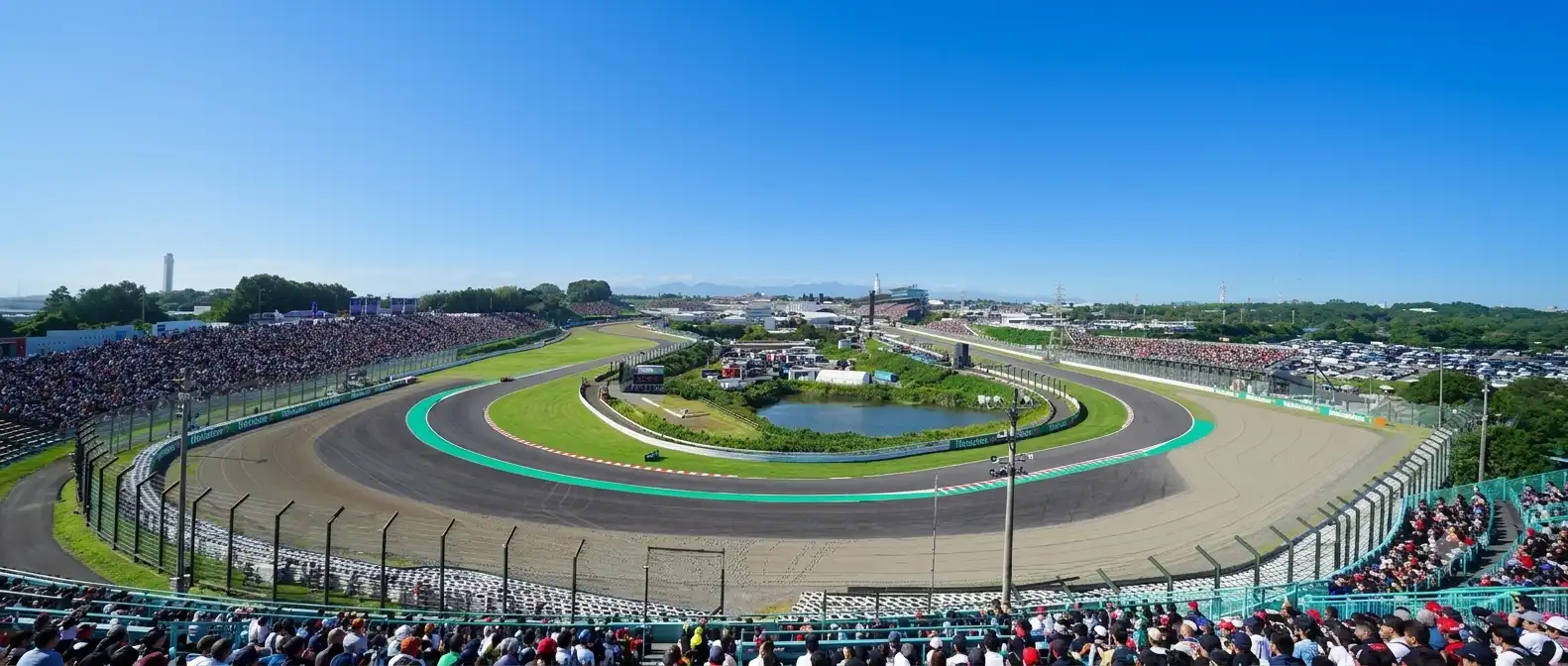
The spiritual home of Japanese motorsport and the season’s centrepiece. Its figure-eight layout — unique on the global calendar — combines the flowing S-curves and ultra-high-speed 130R corner (4.5G lateral load) with the technical Casio Triangle hairpin complex. Hosting both the May double-header and the November title decider, Suzuka is the circuit where champions are built and championships are decided. The cold November air makes the finale laps the fastest of the year.
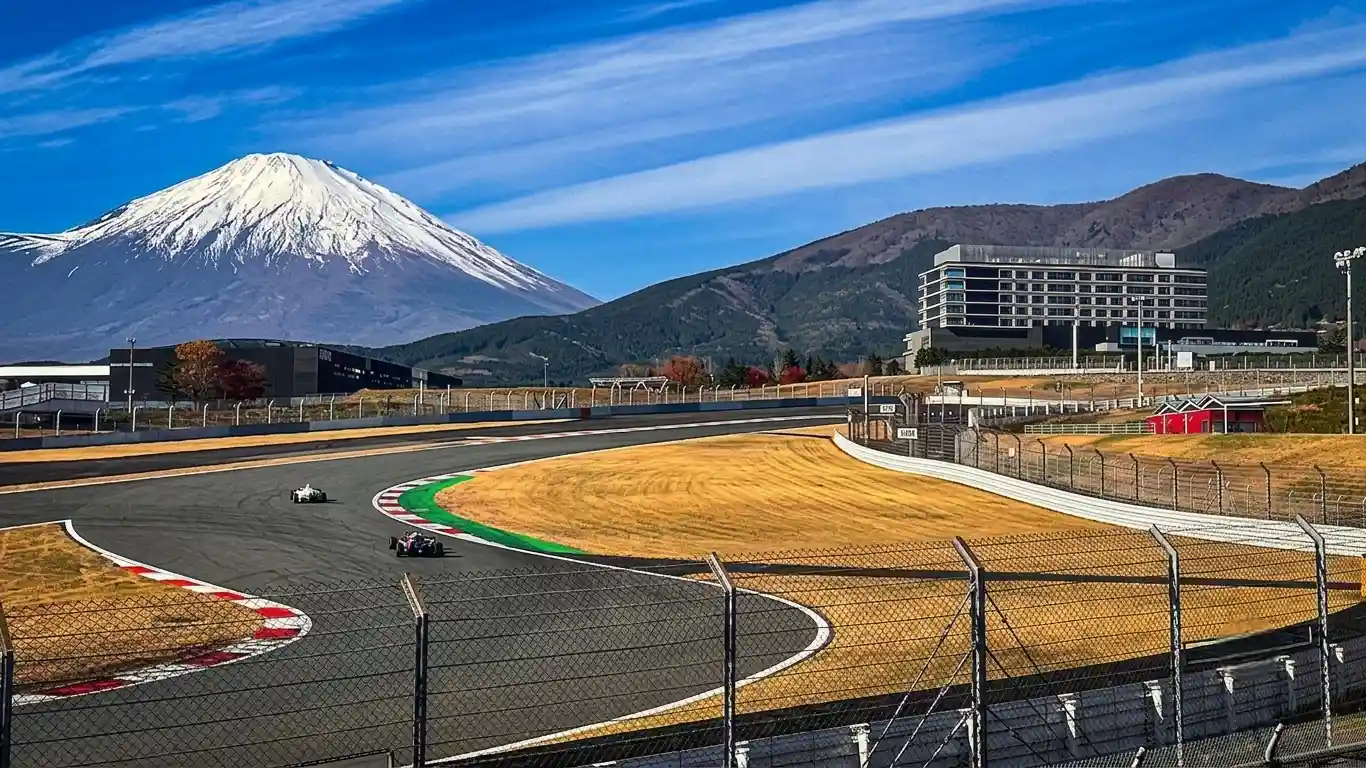
Visited twice — in July heat and October chill — Fuji presents a radically different challenge each time. Its 1.5km front straight demands trimmed rear wings for maximum top speed, but Sector 3’s slow, technical corners punish the resulting reduced downforce through treacherous traction zones. Teams must find a compromise that works in both conditions — the October visit in cooler air typically delivers tighter racing and more decisive tyre strategy. The temperature delta between the two visits is the most dramatic swing on the calendar.
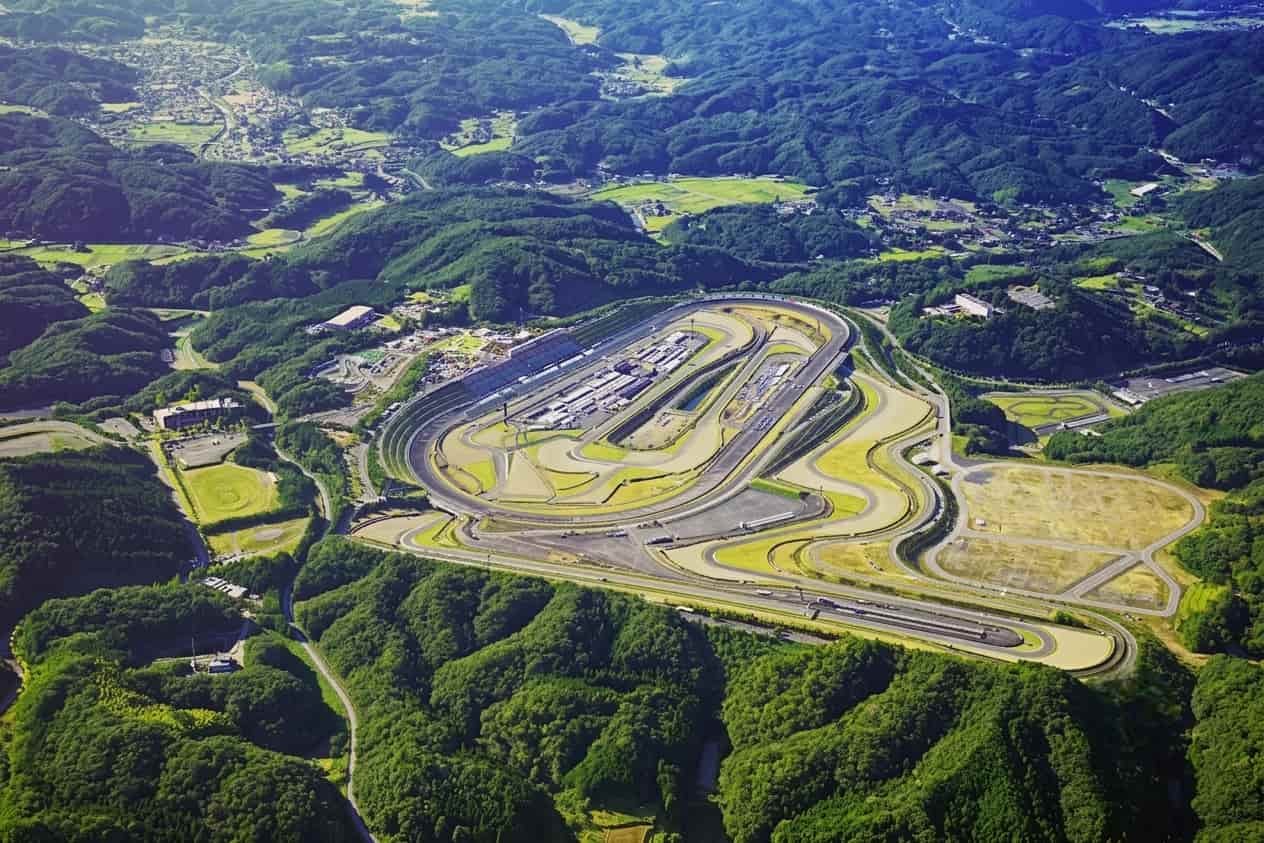
The season opener at Motegi sets the tone with brutal honesty. Its heavy braking zones and stop-and-go layout — built around a Toyota-owned facility with an oval infield — demand extreme brake temperature management and explosive rear-tyre loading on corner exit. With limited pre-season testing, teams arrive with setups built from data rather than live experience, making round one a genuine lottery. Surprise pole-sitters and aggressive first-corner battles are a Motegi speciality.
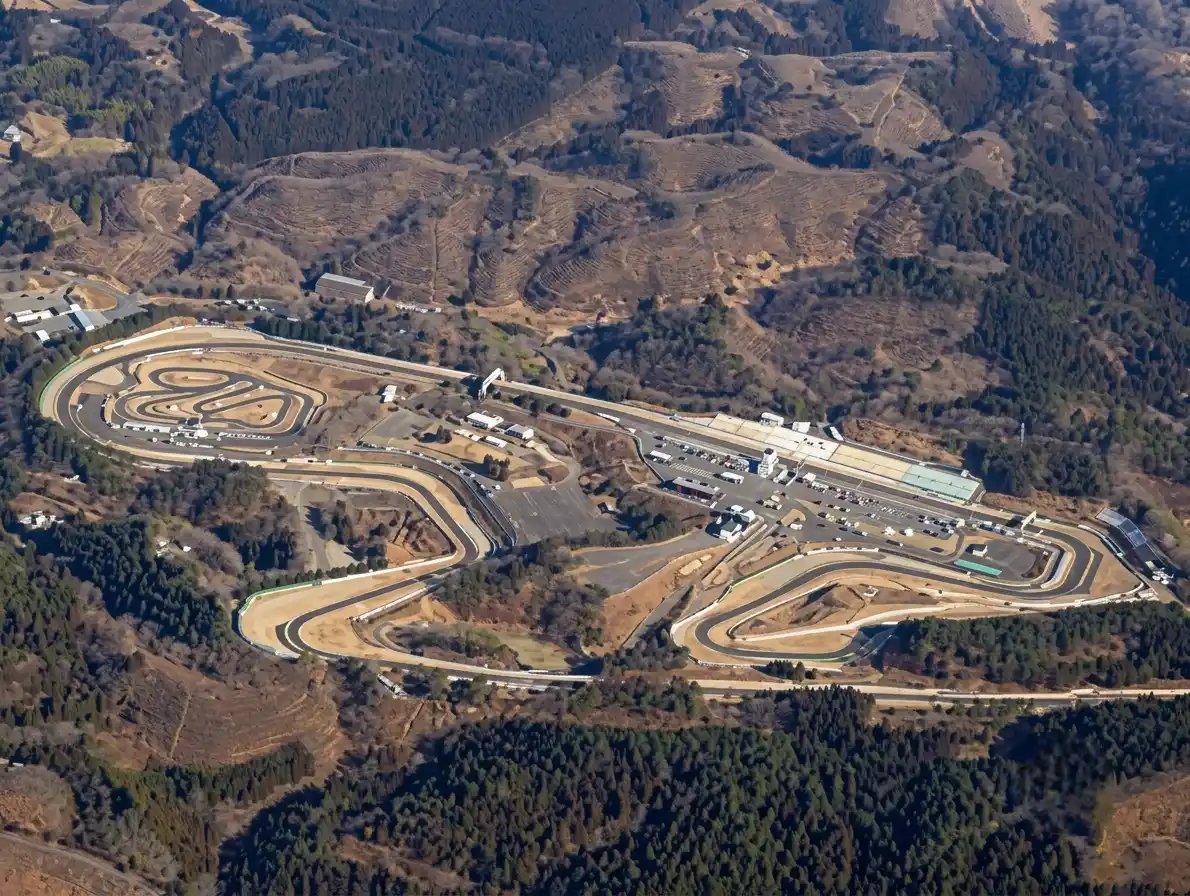
The two wildcard venues reward the purist. SUGO in August is a narrow, old-school circuit with essentially zero runoff — any mistake goes directly into the barrier. Its natural topography creates elevation changes that unsettle aerodynamic balance mid-corner. Autopolis in April is similarly unforgiving: dramatic changes in altitude through its rollercoaster layout stress suspension geometry on every lap. Both standalone events punch above their weight in producing dramatic, unpredictable racing.
Suzuka in November — colder air, denser turbo charge, peak Yokohama grip — routinely delivers the fastest lap times of the entire season. The championship finale is also the fastest race weekend. That combination is rare in any series.
The aerodynamic setup decisions at each Super Formula venue are explained by the fundamentals of how downforce generates cornering grip — and how trimming it gains straight-line speed at the expense of corner stability. Our explainer on what is downforce covers the core physics. The circuit-level tradeoff between drag and grip is the defining engineering challenge at Fuji in particular, where the 1.5km straight rewards low drag but the slow final sector punishes it immediately afterwards. For more on how aerodynamic grip interacts with mechanical grip, the grip explainer in the glossary is the clearest starting point.
Race Weekend Format Explained
Super Formula’s weekend format is unusual enough that first-time viewers benefit from a clear explanation before the lights go out. The double-header structure — five of seven weekends run two qualifying sessions and two full races — creates a pace of competition that punishes teams with poor adaptability. A setup that works on Saturday morning may be wrong by Saturday afternoon as the track rubbers in and ambient temperature shifts. The second qualifying session within a double-header typically produces better lap times for exactly this reason.
Super Formula’s timed format means lap counts vary by circuit — a longer track completes fewer laps in 75 minutes. Understanding how laps are counted in racing and how race timing works makes the broadcast far easier to follow, especially when the leader board switches during the pit window. Racing flags also carry specific meanings at Super Formula events — a full flag reference is in the racing flags guide.
Points System
Points are awarded to the top 10 finishers on a scale of 20-15-11-8-6-5-4-3-2-1, with an additional bonus point available for the fastest qualifier in each session. In a 12-round double-header championship where two races can be run in a single weekend, the cumulative effect of consistent finishes outweighs the impact of individual victories — a driver who finishes second six times out-scores a driver who wins three races and retires from three others. Understanding how racing championships are scored puts the points battles in full context.
How to Watch Super Formula 2026 Live
Access to Super Formula has improved dramatically in recent years. The series now offers genuinely world-class broadcast infrastructure — and if you know where to look, catching every qualifying session and race is straightforward regardless of where you live.
The official Super Formula streaming platform. Available worldwide, SFgo provides the live race feed, selectable driver onboard cameras, real-time telemetry data, and unfiltered team radio communications. Subscription required. This is the most comprehensive and recommended option for international fans.
The primary English-language broadcast platform for Super Formula outside Asia. Motorsport.tv carries the full international feed with English commentary for each session, making it the clearest entry point for fans in Europe, North America, and Australia who prefer native-language coverage.
The exclusive domestic television broadcaster for Super Formula in Japan. J SPORTS provides full HD coverage of every session with Japanese commentary, pre-race analysis, and paddock access programming unavailable on international feeds. Essential viewing for fans based in Japan.
Super Formula races take place in Japanese Standard Time (JST, UTC+9). Race start times are typically in the early afternoon JST, which means European fans are watching in the early hours of the morning and East Coast US fans are viewing late Saturday night. The full where to watch Super Formula 2026 guide includes session times converted to key global time zones. Always verify locally — daylight saving transitions in Europe and North America create one-hour shifts during the season. For a comparative look at how other series handle international broadcast, see how Formula E manages global streaming and the F1 live stream options guide.
Teams & Drivers for Super Formula 2026
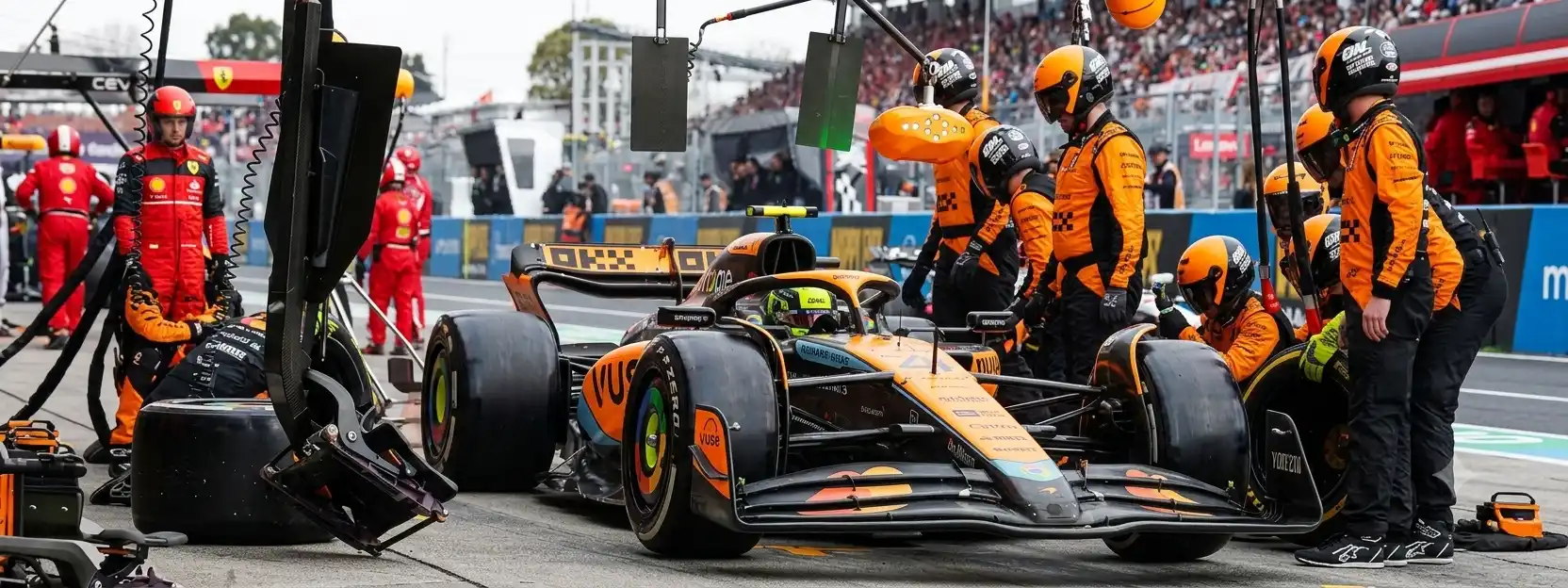
Every car on the Super Formula grid runs an identical Dallara SF23 chassis — the same tub, the same suspension geometry, the same weight. Competitive advantage lives entirely in aerodynamic setup precision, tyre management strategy, pit stop execution, and driver talent. In that environment, the engine manufacturer becomes a meaningful differentiator: Toyota and Honda supply rival 2.0-litre turbocharged powerplants, and the balance between them shifts across circuits depending on which demands peak power delivery versus fuel efficiency.
The Established Championship Squads
Three organisations define the competitive benchmark in Super Formula. Team Mugen — Honda-powered — operates with deep institutional knowledge of the series and an engineering culture focused on tyre-deg management over single-lap pace. Docomo Team Dandelion Racing brings a meticulous data-driven approach and has consistently produced drivers who step up to international series. Vantelin Team TOM’S, aligned with Toyota, is the most resourced operation on the grid and consistently competes at the front across every circuit type, regardless of whether a track suits their engineering philosophy.
Super Formula has become a formal proving ground for F1 talent evaluation. Teams including Red Bull and Mercedes have placed drivers in Super Formula seats to assess their ability to handle high-downforce machinery without power steering or advanced electronic aids. Graduates from FIA Formula 2 arrive expecting their car-control skills to transfer directly — and quickly discover that the Dallara SF23’s aerodynamic sensitivity at low speeds requires a completely different driving style to European spec-chassis machinery. For context on the F1 talent ecosystem, the 2026 Super Formula driver lineup and the full team guide have current detail. The broader F1 2026 driver lineup news provides context on which drivers are moving between series this year.
The Honda vs Toyota Engine Battle
Unlike Formula 1, where engine specifications are tightly controlled, Super Formula’s Toyota-Honda rivalry produces genuine performance differences that shift with circuit characteristics. Honda’s engine tends to excel on circuits that reward linear power delivery and fuel efficiency — giving Mugen and Dandelion a marginal edge at Motegi’s heavy-braking layout. Toyota’s unit frequently shows an advantage on the high-speed sweepers of Suzuka, where peak power at the top of the rev range creates decisive sector-two time differences. The engine manufacturers treat Super Formula as a live development laboratory; what they learn here informs road car turbocharger technology at both companies. For broader context on how turbocharged engines work, the turbo vs naturally aspirated engine explainer and the overview of how car engines work give clear technical grounding.
Super Formula 2026 Standings & Championship Dynamics
Because five of seven weekends are double-headers, the Super Formula standings move in ways that differ fundamentally from a calendar where every round is a separate event. A driver can gain 40 championship points in a single weekend — or lose 40 relative to a rival — within the space of 36 hours. The grid’s mechanical parity means a 20-point lead entering a double-header weekend provides only a moderate cushion; it can evaporate entirely if the engineering setup call on Friday goes wrong.
Points are awarded on the 20-15-11-8-6-5-4-3-2-1 scale to the top 10 finishers per race, with a bonus point for each qualifying session’s pole position. That means a championship-leading driver could theoretically score 41 points in a single double-header weekend (20+20+1 qualifying point). In practice, the most decisive metric to track is not race-by-race results but the average points haul per weekend — a driver consistently scoring 25+ across both races of a double-header is on course to win the title regardless of headline victory totals.
The final two rounds at Suzuka in November carry full points — 20+20 — meaning a driver up to 40 points behind entering the finale weekend can mathematically take the title. In practice, the tight nature of Super Formula racing means the championship leader entering the November weekend has won the title from that position only about half the time. Suzuka’s unique layout, combined with colder conditions that shift car behaviour substantially from the spring event at the same circuit, means the favourite rarely controls the finale as cleanly as the points suggest they should. Understanding how safety cars affect racing strategy and why pole position matters at title-deciding events is useful context for following the November weekend.
Tracking results throughout the year, fans should pay particular attention to the October Fuji double-header (rounds 9 and 10) — historically the round where the championship has crystallised or been blown open in the past three seasons. A driver who wins both Fuji October races often enters Suzuka with the psychological momentum to hold on, even under the particular pressure of racing at the same circuit where their rivals know every metre of tarmac equally well.
Why Super Formula Matters Beyond Japan
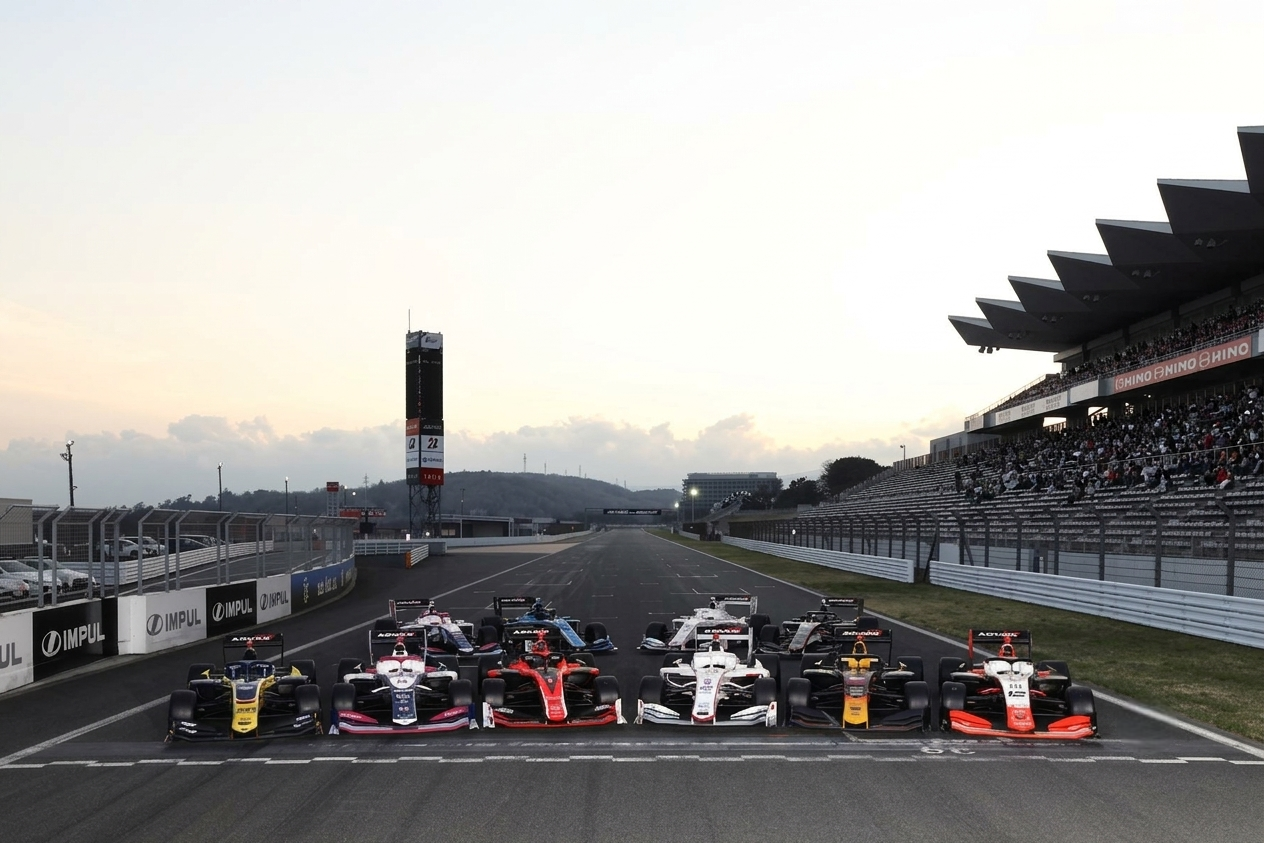
Super Formula is not a regional curiosity. It is, by objective technical measure, the second-fastest road circuit single-seater championship in the world — behind Formula 1 and ahead of Formula 2, Formula E, and IndyCar on most lap-time metrics. The Dallara SF23 generates comparable downforce to a 2019-spec F1 car, operates without power steering, and provides zero electronic driver aids beyond the OTS system. Muscling a car generating those aerodynamic loads around Suzuka’s S-curves for 75 minutes demands a level of physical conditioning that competitors describe as more demanding than any European series they have driven.
The consequence is that Super Formula serves as the most accurate single gauge of whether a driver is ready for Formula 1. A driver can succeed in Formula 2 through machinery advantage, superior tyre management in a softer championship, or circuit familiarity from repeat visits. Super Formula provides none of those escape routes. The grid is mechanically equal, the circuits are unfamiliar to European graduates, and the Japanese veterans have forgotten more about setting up the SF23 than most newcomers will learn in a full season. Performing well here — genuinely well, not just points-scoring — validates a driver’s credentials in a way European series increasingly cannot.
The F1 Connection — Reserve Drivers and Talent Assessment
F1 team reserve drivers race in Super Formula for a clear reason: it keeps their reflexes calibrated on equipment demanding enough to stay useful as preparation for a race seat. A reserve driver spending their year in a slow, low-downforce car loses the physical adaptation to high lateral G — the neck strength, the vestibular calibration, the micro-adjustment speed — that a race seat demands. Super Formula maintains those adaptations in a way that no simulator session can replicate.
For F1 team principals evaluating whether a junior driver is ready for promotion, a Super Formula lap time is one of the most reliable data points available. Comparing that data with how qualifying performance is evaluated across series, and understanding the F1 qualifying format that eventual graduates must master, gives the clearest picture of the pathway from Super Formula to a Grand Prix seat. The question of how that talent ultimately translates to the top is a perennial discussion — see the analysis on the best F1 drivers of all time for context on what the summit of the sport actually requires.
Super Formula’s position in the global single-seater hierarchy sits interestingly relative to other premium series. Formula E operates on street circuits with very different aerodynamic and energy management demands — the comparison between Formula E speed versus F1 provides useful framing. IndyCar’s oval-focused calendar creates a completely different driver skill requirement. The IndyCar vs F1 comparison highlights how circuit type defines the competitive skills a series develops in its drivers. Super Formula’s road-circuit downforce-heavy format creates the closest parallel to F1 out of any non-F1 series currently running.
Frequently Asked Questions
The honest case for watching Super Formula in 2026
If you follow Formula 1, Super Formula is the one other series that delivers a genuinely comparable spectacle — cars at the limit of aerodynamic physics, drivers operating without electronic safety nets, and a championship format that guarantees the title fight stays alive deep into November. The double-header structure creates a rhythm of competition that rewards endurance over a seven-month season rather than a single brilliant weekend.
The Suzuka finale in November is the moment to circle. Cold air, denser turbocharger charge, peak Yokohama grip, maximum championship stakes, and 12 rounds of accumulated pressure releasing across a single weekend: it’s a genuinely unmissable event if you’ve followed the season. Set the SFgo alerts now. The Motegi opener in April will tell you more about who the title contenders are than any amount of pre-season analysis.
Full round-by-round coverage, session results, and standings updates throughout the season at worldofspeed.org.