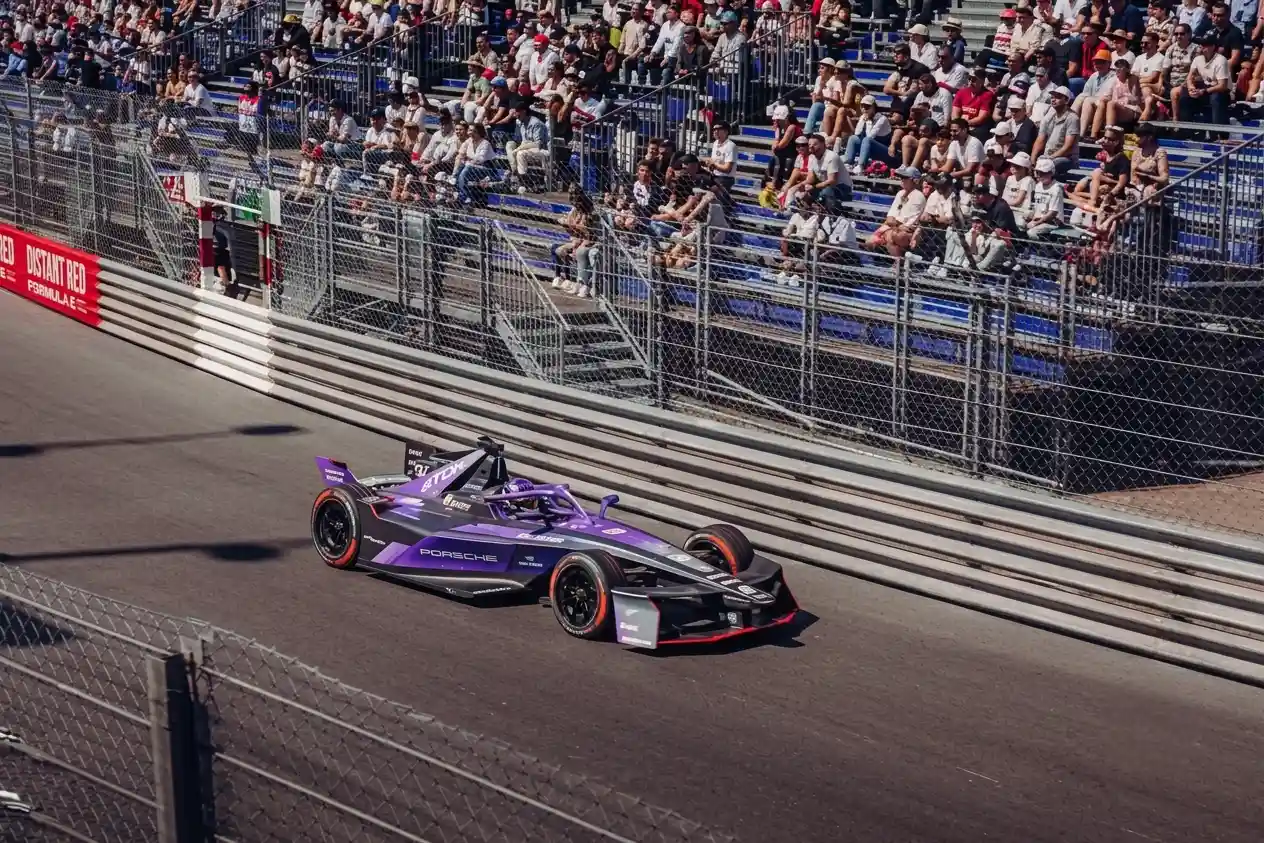
Shanghai E-Prix 2026:
Preview, Track Analysis & Championship Stakes
The 2026 Formula E season heads to the Shanghai International Circuit for a championship-defining double-header on July 4–5. Six races remain. Mitch Evans leads — but by just 19 points, and the wolves are at the door.
Shanghai E-Prix 2026:
Preview & Race Guide
Track analysis, championship standings, driver predictions and how to watch the double-header.
The 2026 Formula E Shanghai E-Prix arrives at a critical moment in Season 12. Mitch Evans leads the drivers’ championship by just 19 points over Oliver Rowland — but a chaotic Sanya race last weekend saw Evans, Rowland, Mortara and Wehrlein all fail to score, handing Jake Dennis and Andretti Formula E a momentum-shifting one-two. Shanghai now becomes the most important event of the season so far. Six rounds remain after the double-header, and the title picture could look completely different by Sunday evening on July 5.
The Shanghai International Circuit is one of the most technically demanding venues on the Formula E calendar. Designed by Hermann Tilke, the layout features a unique combination of sweeping high-speed sections, tight technical chicanes, and long regenerative braking zones — all of which play directly into the energy management demands that separate the best Formula E teams from the rest.
This guide covers everything: the full weekend schedule with times, the circuit lap by lap, the live championship picture after Sanya, the key drivers to watch, race strategy analysis, weather forecast, and how to watch from anywhere in the world.
Full Weekend Schedule — Formula E Shanghai E-Prix 2026
The 2026 Formula E Shanghai double-header runs across three days — Friday July 3 through Sunday July 5. All session times below are in China Standard Time (CST / UTC+8). Formula E race weekends run in a highly condensed format, with practice, qualifying and the race all packed into a single day for each round. Round 12 runs Saturday; Round 13 runs Sunday.
CST (UTC+8) is 8 hours ahead of London (BST), 13 hours ahead of New York (ET), and 16 hours ahead of Los Angeles (PT). Race 1 at 15:05 CST on Saturday = 07:05 BST · 02:05 ET · 23:05 Friday PT. For the full Formula E 2026 schedule, see our season calendar page.
Jul 3
Jul 4
Jul 4
Jul 4
Jul 5
Jul 5
Jul 5
⚡ All times CST (UTC+8). Session times sourced from The Race official Formula E calendar. Minor changes may occur — check fiaformulae.com for latest updates.
Shanghai International Circuit — Track Analysis
The Shanghai International Circuit is unlike anything else on the Formula E calendar. It’s a full permanent racing facility — not a temporary street circuit. However, Formula E uses it in a way that rewards the same skills you need on the streets: precise energy management, intelligent Attack Mode deployment, and the ability to recover from a poor qualifying position.
The circuit was designed by Hermann Tilke and opened in 2004 for the Chinese Formula 1 Grand Prix. From the air, its unique layout resembles the Chinese character “上” (shāng), meaning “up above” — an intentional homage to the host city. Furthermore, the circuit features a challenging mix of long, high-speed sweepers and tight, slow-speed hairpins that demand a genuinely versatile car setup.
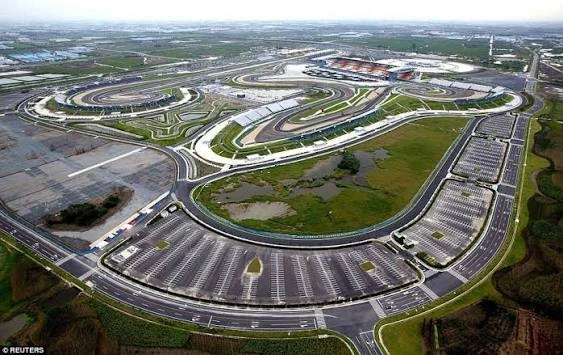
Key Sectors and Overtaking Zones
Shanghai’s layout rewards the same skills as a street circuit — precise energy management, tactical Attack Mode usage — but removes the street circuit lottery of walls and safety cars.
What the Track Demands from the Gen3 Evo
The Gen3 Evo car used throughout Season 12 produces 300kW in race mode and a maximum of 350kW during Attack Mode. Additionally, the Gen3 Evo accelerates from 0-60mph in 1.82 seconds, making it the fastest-accelerating single-seater race car under FIA regulation. Moreover, regenerative braking generates up to 350kW of energy under deceleration — which at Shanghai’s heavy braking zones becomes a genuine competitive differentiator.
Teams with the most efficient powertrain — particularly Porsche, whose manufacturer unit powers Porsche’s own team, Citroën Racing and Andretti — generally manage energy better at technical circuits. Jaguar TCS Racing uses its own powertrain and has shown strong efficiency all season. Nissan and their customer teams face a slightly different challenge on Shanghai’s long sweepers, where sustained high-speed power draw tests the limits of energy budgeting. To understand more about how Formula E cars compare to other top-tier race cars, see our full speed explainer.
Shanghai in early July is part of its traditional “plum rain” (梅雨, méiyǔ) season — a humid, warm period with a higher-than-average chance of afternoon rainfall. Average temperatures sit around 30–33°C (86–91°F). While rain is not certain, teams must be prepared for a mixed-conditions race weekend. In Formula E, a wet race dramatically changes Attack Mode timing, energy recovery from braking, and tyre behaviour — Hankook’s single compound works in both dry and wet, but wet conditions fundamentally reshape the tactical picture. Drivers like Oliver Rowland and Mitch Evans have proven strong in damp conditions this season.
Formula E Championship Standings After Sanya — Round 11
The Sanya E-Prix produced one of the most dramatic afternoons of Season 12. Championship leader Mitch Evans was taken out by contact at the hairpin on Lap 19, finishing 17th. Oliver Rowland crashed two laps from the finish while fighting for the podium. Mortara retired. Wehrlein dropped to 14th. However, none of the top four scored — so Evans retained his lead. Jake Dennis now sits 34 points back in fifth after his Sanya win, with António Félix da Costa 36 points behind in fourth.
| Pos | Driver | Team | Points | Gap | Status |
|---|---|---|---|---|---|
| 1 | Mitch Evans | Jaguar TCS Racing | 128 | — | Leader |
| 2 | Oliver Rowland | Nissan Formula E | 109 | –19 | In Hunt |
| 3 | Edoardo Mortara | Mahindra Racing | 106 | –22 | In Hunt |
| 4 | António Félix da Costa | Jaguar TCS Racing | 92 | –36 | Alive |
| 5 | Jake Dennis | Andretti Formula E | 94 | –34 | Back in Fight |
| 6 | Pascal Wehrlein | Porsche Formula E | 87 | –41 | Long Shot |
| 7 | Nick Cassidy | Citroën Racing | 81 | –47 | Fading |
With 43 points available per driver over the Shanghai double-header (25+18 maximum per race), a single bad weekend for Evans and a double-win for any chasing driver could completely restructure the championship. This is the mathematical reality that makes July 4–5 the most consequential weekend of the 2026 Formula E season so far. For the full Formula E 2026 season preview including team analysis, see our dedicated guide.
Teams’ Championship After Round 11
Jaguar TCS Racing leads the Teams’ Championship ahead of Porsche Formula E Team by 28 points. Andretti Formula E moved from fifth to fourth in Sanya after their 1-2 finish. In the Manufacturers’ standings, Porsche leads thanks to their powertrain also powering Citroën and Andretti. Shanghai could be decisive in the teams’ fight — Jaguar needs to keep both Evans and da Costa scoring consistently. For more on Formula E teams and how they operate, see our teams guide.
Points Per Race at Shanghai — The Stakes
In a non-Pit Boost race weekend like Shanghai, each round awards a maximum of 25 points for a win, plus 3 for pole position and 1 for fastest lap if in the top ten. Therefore, with six rounds remaining after the double-header, Evans’ 19-point lead represents less than one race’s winning margin. Rowland must score big in Shanghai to close the gap before the Tokyo finale swings into view. Consequently, every qualifying session here carries enormous weight — the duels format means one mistake can drop you five grid positions, and track position at Shanghai is genuinely difficult to recover on race day.
Key Drivers to Watch at the 2026 Shanghai E-Prix
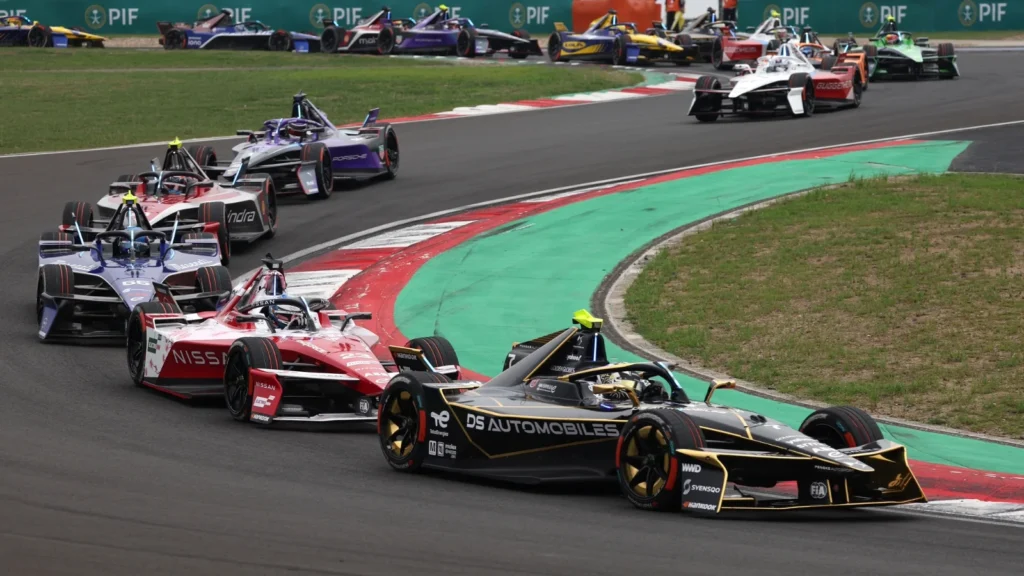
The Cupra Kiro driver has been the standout rookie of Season 12. Martí claimed his second podium of the season in Sanya (third, promoted from fourth after Drugovich’s penalty). He started 18th on the grid that day — evidence of his race-craft and energy management intelligence. Shanghai’s format suits young drivers who focus on race pace over single-lap heroics. Martí could be the wildcard for a podium this weekend.
Race Strategy — Attack Mode, Energy & Pit Boost Explained
Formula E races are won and lost in the tactical layer — not just outright speed. Three strategic systems define every E-Prix at Shanghai, and understanding them is the key to predicting the outcome before a wheel has turned in anger.
Attack Mode: The Power Boost That Changes Everything
Attack Mode provides an extra 50kW of power — activated by driving through a designated zone off the normal racing line. The timing of Attack Mode activation is the single most important strategic decision a driver and engineer make during a Formula E race. Take it too early and you lose track position. Take it too late and faster rivals have already built a gap you cannot close. Attack Mode in Formula E is one of the most complex strategic tools in motorsport.
At Shanghai, the activation zones are placed in a technically demanding section of the circuit — off the racing line, where grip is lower and the risk of a snap oversteer or understeer moment is higher. Moreover, the energy cost of the off-line excursion must be built into the car’s overall energy budget. Therefore, drivers who take Attack Mode on a busy lap — with traffic ahead and the energy gauge already strained — face compounded risk.
Formula E’s Pit Boost mechanism — a mandatory 30-second pit stop that delivers a 3.85kWh energy top-up (10% extra usable energy) — does not apply to both Shanghai races. In Season 12, only one race per double-header weekend features the mandatory Pit Boost. In the Pit Boost race, drivers also only need to activate Attack Mode once (instead of the usual twice). This changes the strategic map significantly: the non-Pit Boost race becomes a pure energy management battle, while the Pit Boost race introduces an undercut/overcut strategic dimension familiar to fans of Formula 1. To understand more about how racing strategies work, see our pit stop strategy explainer.
Energy Management — The Silent Championship Decider
Every Formula E race starts with the same usable energy allocation. However, teams can recover energy through regenerative braking under deceleration. At Shanghai, the heavy braking zones into the Turn 1 hairpin and Turn 8 chicane provide the largest regen opportunities on the circuit. Consequently, teams with the most efficient powertrain — particularly Porsche’s unit, which powers three teams — recover more energy per lap and can sustain a higher average power output late in the race.
Jaguar’s own powertrain has been excellent this season. Evans, in particular, has demonstrated a capacity to close the gap to leaders in the final ten minutes of races when rivals’ energy gauges run low. Meanwhile, drivers who carry too high an average power output in the middle phase of a race — trying to hold position — often find themselves energy-poor in the decisive final laps, forced to lift-and-coast while rivals attack them with full power.
Season 12 marks the final year of the Formula E Gen3 Evo car before the all-new Gen4 regulations arrive in the 2026-27 season. The Gen4 era will bring a new sporting format and even more advanced battery and powertrain technology. What is Formula E racing? is a question worth revisiting with the Gen4 transition coming — and our full explainer covers the history, technology and direction of the championship. McLaren’s withdrawal at the end of Season 11 to focus on LMDh is also covered in our McLaren Formula E withdrawal report.
Formula E Qualifying — The Duels Format Explained
Formula E qualifying uses a knockout duels format — one of the most dramatic and unpredictable qualifying systems in top-level motorsport. Understanding it is essential for predicting who lines up at the front in Shanghai, because a single mistake or mechanical failure in the group stages can eliminate a championship favourite before the duels even begin.
- Group Stage: All 20 drivers split into two groups. Each group gets 10 minutes to set their fastest lap. The top four from each group advance. For the 2025-26 season, the requirement to set a time within the first six minutes has been removed, giving drivers more tactical freedom over when to attempt a fast lap.
- Duels — Quarter-Finals: Eight drivers, four head-to-head battles. Fastest qualifier from Group A faces the slowest from Group B, and vice versa. Fastest lap wins. Loser is eliminated.
- Duels — Semi-Finals: Four drivers remain. Two head-to-head battles. Winners progress to the pole shootout.
- Super Pole — Top 2 Shootout: The two fastest semi-final drivers face a final head-to-head for pole position. Pole earns 3 championship points in addition to grid position.
The duels format consistently produces upsets. Moreover, a poor group stage lap — caused by traffic, a kerb strike, or a temporary power system issue — can eliminate a driver who would have won a conventional qualifying session. Consequently, drivers who are quick and consistent in both group and duel sessions are more valuable than those with one explosive lap but fragile execution under pressure. For more on how racing drivers qualify, see our qualifying format explainer.
How to Watch the 2026 Shanghai E-Prix Live
The 2026 Formula E Shanghai E-Prix is available to watch live through official broadcaster partners around the world. Coverage varies by country, but Formula E has significantly expanded its broadcast reach during Season 12. For a complete guide to streaming Formula E wherever you are, see our dedicated how-to-watch Formula E guide.
| Region | Broadcaster | Platform | Notes |
|---|---|---|---|
| UK | Channel 4 / More4 | Free-to-air + All4 streaming | Live and highlights |
| USA | CBS Sports / Paramount+ | TV + streaming subscription | Some races on CBS network |
| Europe | Eurosport | TV + discovery+ streaming | Varies by country |
| Global | Formula E App / fiaformulae.com | Live timing and highlights | Free live timing for all sessions |
Formula E offers a free live timing service at fiaformulae.com/live that includes a real-time interactive track map, sector times, energy data, and the ability to follow individual drivers. It works across all devices and is available globally without a subscription. For more information on what a Formula E race weekend looks like from inside the paddock, see our race weekend guide.
- FIA Formula E — Official 2026 Shanghai E-Prix Page (Rounds 12 & 13)
- FIA Formula E — Official Season 12 Championship Standings
- The Race — Formula E 2026 Official Schedule with Full Session Times
- RacingNews365 — 2026 Formula E Championship Standings After Sanya (Round 11)
- Wikipedia — 2025–26 Formula E World Championship (Season 12 overview)
Frequently Asked Questions — Shanghai E-Prix 2026
Why Shanghai could decide the 2026 Formula E title
Mitch Evans has been the season’s most consistent driver. However, consistency alone does not win championships when every top rival is within a race and a half of you. Shanghai is the proving ground. The circuit is honest — it rewards energy intelligence, precise technique and tactical patience over raw aggression. Those qualities describe Evans’ strengths exactly. Yet the same circuit also rewards the kind of controlled aggression that Jake Dennis and Oliver Rowland have shown in 2026’s best races.
Two races in 48 hours. Six rounds left after them. Up to 56 championship points on the table across the Shanghai weekend alone. The 2026 Formula E title fight just entered its decisive phase — and the Shanghai International Circuit is where the story either becomes a coronation for Evans or a full reignition for everyone behind him.
Stay with World of Speed’s Formula E coverage for qualifying reports, race recaps and live standings updates across the full Shanghai weekend.