Rev-Happy vs Torquey Engines — Which One Actually Wins?
A screaming naturally aspirated four-cylinder and a low-rev turbo-diesel make power in completely different ways. Here’s the engineering behind both — and which one actually suits how you drive.

Rev-Happy vs Torquey Engines — Which One Wins?
Two completely different ways to make power — and two completely different driving experiences.
Ask ten gearheads whether they’d rather have a screaming naturally aspirated four-cylinder that wakes up at 7,000 rpm, or a thumping turbo-diesel that does its best work before 2,000 rpm, and you’ll get ten confident, completely contradictory answers. That’s because rev-happy vs torquey engines isn’t really a question about which spec sheet is better — it’s a question about two entirely different philosophies for getting power to the road.
This guide breaks down exactly what makes an engine rev-happy versus torquey, the engineering that creates each character, and — using verified specs from real production engines — which one actually wins depending on whether you’re commuting, towing, or chasing a lap time.
Neither type is objectively “better” — they’re built for different jobs. Rev-happy engines (Honda’s S2000, Porsche’s 911 GT3) make their power high in the rev range and reward a driver willing to work the gearbox, which suits track driving and mountain roads. Torquey engines (turbo-diesels, big-displacement turbocharged V8s) deliver huge force low in the rev range with almost no effort, which suits towing, overtaking, and everyday commuting. For raw drama and engagement, rev-happy usually wins. For real-world usability, torque almost always wins.
Horsepower vs Torque: The Numbers Behind the Argument
Every rev-happy vs torquey argument is really an argument about two different numbers: torque and horsepower. Torque is the actual rotational force the engine produces — the twisting effort at the crankshaft, measured in pound-feet or newton-metres. Horsepower measures how quickly that force can be applied: torque multiplied by how fast the engine is spinning. For a closer look at either number on its own, our explainers on what torque actually is and what horsepower means are worth a detour first.
The two are locked together by one of the few genuinely universal formulas in this hobby: horsepower equals torque in pound-feet, multiplied by engine speed in rpm, divided by 5,252. Flip it around and torque equals horsepower multiplied by 5,252, divided by rpm. That constant isn’t arbitrary — it falls directly out of the 18th-century definition of one horsepower as 33,000 foot-pounds of work per minute, combined with the conversion between revolutions and radians. The practical result: plot torque and horsepower on the same chart using their conventional units, and the two lines always cross at exactly 5,252 rpm, no matter which engine you’re looking at.
That formula explains why rev-happy and torquey engines can produce similar horsepower yet feel completely different to drive. An engine that makes its torque at 2,000 rpm only needs to spin moderately to hit a given horsepower figure, while an engine that makes the same torque at 8,000 rpm has to work much harder to get there — but it can also keep building horsepower long after the low-revving engine has run out of road. Neither number tells the whole story alone, which is exactly why this comparison exists in the first place.
What Makes an Engine “Rev-Happy”?
A rev-happy engine is built around one core idea: spin the engine fast and safely, and use that speed — rather than brute force — to generate power. Because horsepower is torque multiplied by rpm, an engine that can’t make huge torque can still make big horsepower simply by spinning to extreme engine speeds. That’s the entire design brief behind cars like the Honda S2000 and Porsche’s naturally aspirated 911 GT3.
The clearest real-world example is Honda’s F20C engine, fitted to the original S2000. It displaced just 2.0 litres but redlined at 9,000 rpm and produced around 240 horsepower at 8,300 rpm — a specific output of roughly 120 horsepower per litre that no other mass-production naturally aspirated engine matched until the Ferrari 458 Italia arrived a decade later. The trade-off was torque: peak twist was a relatively modest 153 lb-ft, and it didn’t arrive until well past 7,000 rpm, which is why early reviewers complained the S2000 felt flat anywhere below 6,000 rpm.

Porsche’s modern 911 GT3 follows the same script with a 4.0-litre naturally aspirated flat-six that also redlines at 9,000 rpm and produces roughly 500 horsepower without any turbocharging at all — deliberately, because Porsche knows GT3 buyers want the high-rev drama as much as the lap time. Mazda’s MX-5 brings the same philosophy down to an everyday price point: its 2.0-litre Skyactiv-G four-cylinder makes 181 horsepower at 7,000 rpm and 151 lb-ft at 4,000 rpm, with a 7,500 rpm redline that turns even a grocery run into an excuse to use third gear properly.
The engineering that allows it
What lets these engines spin so high without destroying themselves comes down to physics as much as metallurgy. A shorter piston stroke means each piston travels less distance per revolution, which keeps peak piston speed and the loads on the connecting rods manageable even at extreme rpm — which is why high-revving engines tend to be short-stroke, “oversquare” designs, where the bore is wider than the stroke is long. Lighter pistons, lighter connecting rods, and a smaller flywheel all reduce the rotating mass the engine has to accelerate and decelerate on every single stroke, letting the whole assembly change speed faster.
None of this comes free. It usually means less cylinder volume working for you at low rpm, which is exactly why these engines tend to feel soft until the tachometer climbs. For more on how bore, stroke, and displacement shape an engine’s character, our guide on how engine displacement affects performance goes deeper, and inline vs V vs flat engine layouts explains why Porsche’s flat-six handles high rpm so well in the first place.
What Makes an Engine “Torquey”?
A torquey engine takes the opposite route to making horsepower: instead of relying on extreme rpm, it generates huge rotational force at low engine speed and lets that brute torque do the work. Big-displacement engines, long-stroke designs, diesels, and turbocharged engines all lean this way, because each is good at building cylinder pressure — and cylinder pressure is what creates torque — without needing to spin fast to do it.

Diesel trucks are the textbook case. The current Ram 2500’s 6.7-litre Cummins inline-six turbo-diesel produces 430 horsepower, but the headline number is 1,075 lb-ft of torque — more than four times what the rev-happy S2000 ever made — and it arrives at barely 1,800 rpm, with peak power following at a leisurely 2,800 rpm. There’s no high-rpm theatre here, just an enormous wall of force available almost the instant you touch the throttle. That’s exactly what’s needed when towing a trailer rated above 36,000 lb, and exactly why diesels dominate heavy-duty trucking. Our explainer on why diesel engines make more torque goes deeper into the combustion-side reasons.
Forced induction delivers the same low-rpm torque advantage in a performance context. Bugatti’s quad-turbocharged 8.0-litre W16 in the Chiron produces 1,479 horsepower, yet it hits its peak torque of 1,180 lb-ft at just 2,000 rpm — barely above idle for a road car — which is how a car weighing well over 1,800 kg can launch to 60 mph in roughly 2.3 seconds without the driver ever needing to chase a redline. Turbochargers achieve this by using the engine’s own exhaust gas to force extra air into the cylinders, effectively letting a smaller-feeling engine behave like a much bigger one at low rpm. For the mechanical breakdown of how that compares with belt-driven superchargers, our guide on how a supercharger differs from a turbocharger covers it directly, alongside our wider piece on turbo vs naturally aspirated engines.
The common thread across diesels, turbocharged engines, and big-displacement V8s is that none of them need to rev high to feel strong. That’s also their character on the road: less theatre, less need to downshift, and a flat, accessible kind of speed that doesn’t ask much of the driver.
Reading the Power Band: Where Each Engine Does Its Best Work
Lining up peak torque and peak power for real production engines shows exactly how differently each one is tuned, even though every single one of them obeys the same formula.
| Engine | Peak Torque | Peak Power | Redline | Character |
|---|---|---|---|---|
| Honda S2000 (F20C) | 153 lb-ft, ~7,500 rpm | 240 hp @ 8,300 rpm | 9,000 rpm | Rev-happy |
| Porsche 911 GT3 | ~340 lb-ft @ 6,300 rpm | ~500 hp @ 8,400 rpm | 9,000 rpm | Rev-happy |
| Mazda MX-5 (ND) | 151 lb-ft @ 4,000 rpm | 181 hp @ 7,000 rpm | 7,500 rpm | Mildly rev-happy |
| Ram 2500 Cummins | 1,075 lb-ft @ ~1,800 rpm | 430 hp @ ~2,800 rpm | Low, diesel-limited | Torquey |
| Bugatti Chiron (W16) | 1,180 lb-ft @ 2,000 rpm | 1,479 hp @ 6,700 rpm | ~6,700 rpm | Torquey |
Two patterns stand out. First, every rev-happy engine in that table needs at least 6,000 rpm to reach peak torque, while every torquey engine reaches peak torque before 2,800 rpm — a gap of several thousand rpm that defines the entire character difference. Second, redline tells its own story: the rev-happy engines all redline north of 7,000 rpm, while the torquey ones are mechanically done well before that, partly because the long stroke and heavier internals that make low-rpm torque possible also limit how fast they can safely spin. For the mechanical reason behind that ceiling, our piece on what engine redline actually means explains where that number comes from, and what causes engine knock covers one of the failure modes that limits it further.
The Driving Feel — Side by Side
Neither column is “wrong” — they’re simply optimised for different jobs. A rev-happy engine asks you to be an active participant: read the tachometer, choose your gear, time your shift. A torquey engine does that work for you, which is exactly the point if you’re hauling a trailer up a grade rather than chasing an apex.
Daily Driving and Real-World Use
In ordinary traffic, torque has the advantage almost every time. A torquey engine lets you merge, overtake, and pull away from a stop without dropping two gears and waiting for the tachometer to climb — which matters far more in stop-and-go traffic than any top-end number ever will. This is precisely why turbocharged engines have largely replaced large-displacement naturally aspirated engines in everyday cars: manufacturers can deliver strong low-rpm torque from a smaller, more efficient engine, and most drivers never explore the upper half of the rev range anyway.
A rev-happy engine, by contrast, can feel genuinely underwhelming in daily use if you’re not willing to use the gearbox. The Honda S2000’s reputation for feeling slow in normal driving was never really about a lack of power — it was about a lack of torque below 6,000 rpm, at exactly the rpm range where most commuting happens. Drive it like that and it disappoints; drive it at 7,000 rpm on a mountain road and it’s a completely different car.
Towing and hauling make the gap even starker. The Ram Cummins’ 1,075 lb-ft at 1,800 rpm is what lets it pull a loaded trailer up a long grade without constantly hunting for gears or overworking an engine that was never designed to labour at low rpm for hours at a time. No rev-happy engine, however exotic, is built for that job — and no torquey engine is built to feel exciting doing 30 mph through a parking lot, either.
Track, Performance, and Motorsport Context

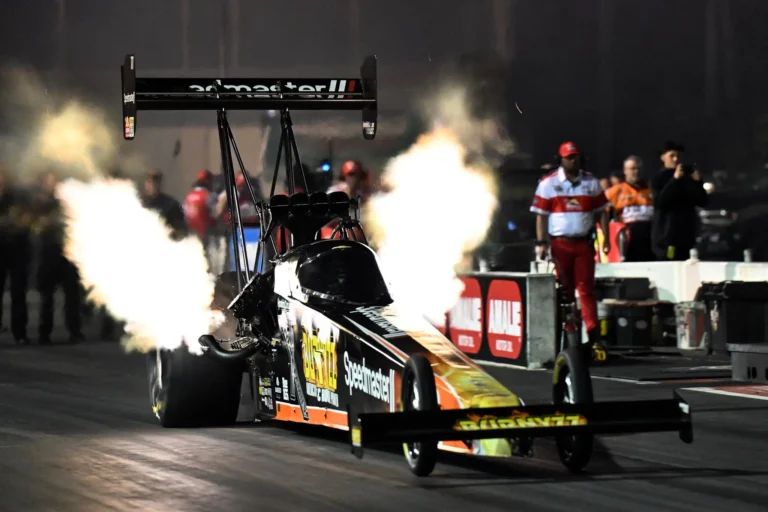
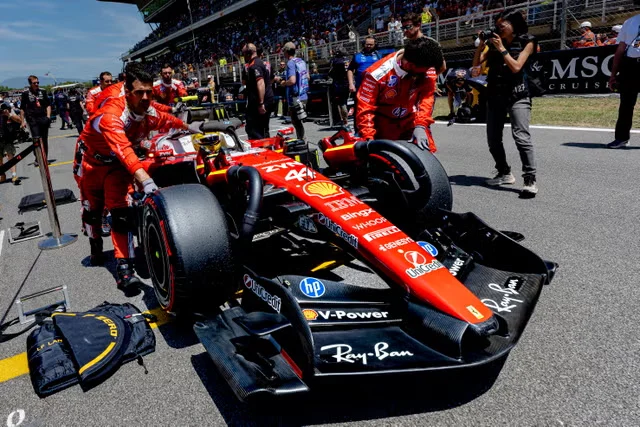
On a circuit, the priorities flip. Lap time rewards horsepower far more than torque, because a car only needs enough torque to accelerate hard out of a corner — but it benefits from every extra horsepower all the way to the next braking zone. That’s a big part of why naturally aspirated, high-revving engines dominated motorsport for so long, and why some classes still chase extreme rpm today.
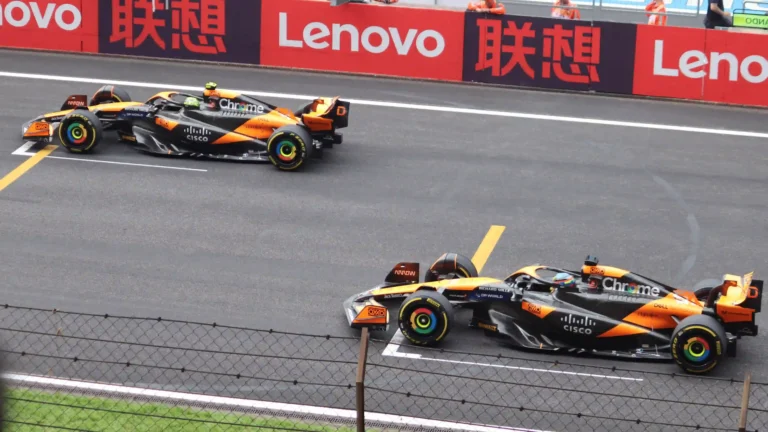
Formula 1’s current hybrid V6 turbo power units are permitted to spin to 15,000 rpm under the technical regulations, and the 2026 rules keep the same 1.6-litre turbocharged V6 layout while removing the MGU-H heat-recovery unit and roughly tripling the hybrid motor’s output to 350 kW. The combustion engine still has to be worked hard to extract its share of that power, even with a much bigger electric system filling in low-rpm torque. MotoGP pushes the same idea further: Ducati’s street-legal Panigale V4 R, derived directly from its MotoGP race engine, is permitted to spin to 16,500 rpm in top gear, and the full prototype racing engines are widely reported to run even higher than that. Our Formula 1 and MotoGP hubs track the current rules and results in both series, and our GT3 hub covers how this same philosophy plays out in sports car racing.
Endurance and touring car categories tell a more nuanced story, since reliability and fuel efficiency matter as much as outright pace over a race distance — which is part of why turbocharged, torquier engines have become common even in prototype and GT3-class machinery. The choice between rev-happy and torquey in motorsport isn’t really about which is faster in isolation; it’s about which one suits the specific rules, distance, and car the regulations are built around.
Where Do Electric Motors Fit In?
Electric motors break the whole rev-happy-versus-torquey framework, because they deliver their maximum torque from a standstill — at 0 rpm — rather than building to it the way every combustion engine does. There’s no waiting for revs, no powerband to chase, and usually no multi-speed gearbox to manage at all, because a single-speed reduction gear is enough to cover the car’s entire speed range.
That’s also why EVs feel almost unnervingly torquey from a stop, even though they don’t have a torque “curve” in the combustion sense at all — the number is simply available immediately, then tapers off as rpm rises and the motor moves into its horsepower-limited range.
That doesn’t make the rev-happy vs torquey debate obsolete for combustion cars — it just confirms which side of the argument most drivers actually prefer day to day. The popularity of instant EV torque is a pretty strong real-world vote for usable low-end force over high-rpm drama, even if enthusiasts will keep paying a premium for the latter.
So… Which One Is Actually Better?
Strip away the marketing and the nostalgia, and the answer is genuinely conditional. For commuting, towing, and most real-world driving, torquey engines win clearly — they ask less of the driver, behave better in traffic, and don’t punish you for sitting in the wrong gear. For driver engagement, track days, and the kind of car that makes you want to take the long way home, rev-happy engines win just as clearly — working a high-revving engine through its full range is part of the appeal, not an inconvenience.
A torquey engine makes you faster without trying. A rev-happy engine makes the trying part of the fun.
If there’s one genuine takeaway, it’s that the “better” engine has never really been about horsepower or torque figures in isolation — it’s about which kind of effort you want from the car, and which kind you want to provide yourself. Most modern manufacturers have stopped picking a side entirely, blending turbocharging’s low-rpm torque with redlines that still climb past 7,000 rpm, precisely because most drivers want a taste of both depending on the day. For how that blend plays out across different cylinder counts and layouts, V6 vs V8 vs V10 vs V12 vs V16 and why a V8 sounds different from a V12 are good next reads.
Frequently Asked Questions
The Bottom Line on Rev-Happy vs Torquey Engines
There’s no universal winner here, because rev-happy and torquey engines were never built to do the same job. One trades low-end ease for high-rpm drama and outright specific output; the other trades excitement for effortless, accessible force exactly when you need it.
The honest way to choose isn’t to ask which engine type is objectively better — it’s to ask what you actually want from your next drive: a car that does the work for you, or one that asks you to work for it.