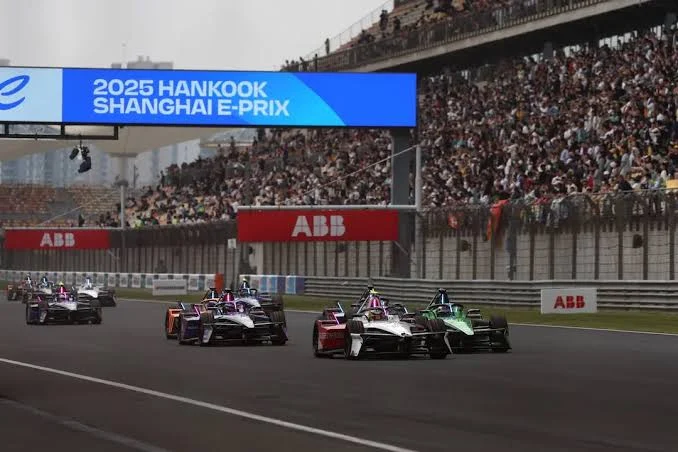
Shanghai E-Prix 2026 Preview: Championship Contenders, Track Guide & Predictions
Formula E returns to Shanghai for a race that could reshape the 2026 championship. Here’s what you need to know — circuit breakdown, title standings, strategy calls, and who’s most likely to win.
The 2026 Shanghai E-Prix is one of the most significant rounds of the Formula E season — a technical street circuit that rewards energy management, precise Attack Mode timing, and qualifying pace above almost everything else. Championship leader Mitch Evans arrives under genuine pressure. António Félix da Costa and Stoffel Vandoorne both have the machinery and form to close the gap. Expect a tight, tactical race that goes down to the final few minutes on the clock.
Formula E’s return to Shanghai is one of the most anticipated events on the calendar. The circuit layout around the Shanghai International Circuit complex gives drivers just enough room to breathe — but not enough to hide. Track position matters enormously here. Meanwhile, energy deployment through the closing lap sequence is where championships are either built or broken.
This preview covers everything you need for the Shanghai E-Prix 2026 — from the circuit’s key corners and overtaking spots to the championship standings, the main contenders, and a genuine prediction backed by data and form analysis.
What Is the Shanghai E-Prix 2026?
Race duration
Activations required
Gen3 Evo power
Attack Mode
The Shanghai E-Prix is a round of the ABB FIA Formula E World Championship, the world’s premier all-electric single-seater racing series. Formula E races in city centres and at temporary street circuits, and Shanghai’s layout — built around the permanent Shanghai International Circuit — blends tight technical sections with a few higher-speed sweeps that demand different energy approaches across the same lap.
The 2026 season, known as Season 12, marks the second full year of the Gen3 Evo car — a machine that produces 350 kW in qualifying trim and charges through regenerative braking at up to 600 kW under heavy deceleration. Consequently, Shanghai’s braking zones become some of the most energetically productive corners on the entire calendar, which shapes strategy in ways that wouldn’t apply to a conventional circuit. For newcomers wanting background on the series, our what is Formula E explainer covers the basics in full.
In the US, the race airs on CBS Sports Network, with streaming available on Paramount+ and the Formula E app. UK viewers can watch live on Channel 4. Race start is approximately 8:00 AM ET. For the full Formula E broadcast guide, see our how to watch Formula E page.
Shanghai Circuit Guide — What Makes This Layout So Demanding
The Shanghai E-Prix circuit runs on a temporary layout built around the infield and outer perimeter of the Shanghai International Circuit. It’s not the traditional F1 layout — Formula E uses a custom configuration designed to give the Gen3 Evo car the right mix of technical challenge and spectator proximity. The result is a circuit that punishes errors in the low-speed sections while rewarding smooth, precise energy management through every transition between acceleration and braking.
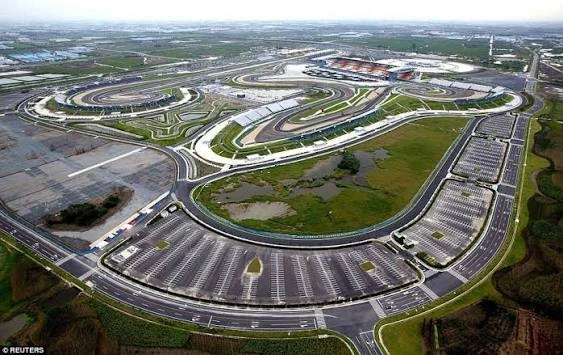
Key Circuit Characteristics
| Feature | Detail |
|---|---|
| Circuit type | Temporary street circuit on permanent venue grounds |
| Lap length | Approximately 2.1–2.3 km (varies by season configuration) |
| Race duration | 45 minutes + 1 lap |
| Attack Mode zones | 2 activations required per race |
| Key challenge | Low-speed chicanes with tight kerbs and limited runoff |
| Overtaking opportunity | Main straight DRS-equivalent zone, and post-chicane braking areas |
| Regen potential | High — multiple heavy braking zones recover meaningful energy per lap |
| Track surface | Permanent circuit asphalt mixed with temporary street surface sections |
The two main overtaking zones sit at the end of the main straight and in the braking area before the tight hairpin sequence roughly halfway around the lap. However, divebombing into Shanghai’s tighter sections carries significant risk — the barriers are close, and a collision typically ends both drivers’ races rather than producing a clean pass.
Furthermore, the kerb profiles at the slow corners have historically caught out drivers who are too aggressive on the entry. The Gen3 Evo’s stiff suspension setup means a heavy kerb strike can translate directly into an understeer moment that ruins the following straight-line energy recovery. Therefore, car setup at Shanghai tends to prioritise mechanical stability and driver confidence in the slow sections over outright qualifying pace. For more on how energy recovery shapes electric racing, our ERS explainer is a useful technical primer.
“Shanghai rewards the driver who can read the energy state of the car lap by lap and make micro-decisions at every corner that add up to a decisive advantage by lap twenty.”
Formula E Championship Standings Before Shanghai
The 2026 Formula E championship is tighter than it looks on paper. Mitch Evans has built his lead through consistency rather than a dominant run of wins — he’s been on or near the podium in most rounds without necessarily leading the timing screens in practice. That reliability has proven more valuable than sprint speed in the early part of this season. However, the gap is still small enough that a single bad result could swing the picture completely.
| Pos | Driver | Team | Points | Status |
|---|---|---|---|---|
| 1 | Mitch Evans | Jaguar TCS Racing | 147 | Leader |
| 2 | António Félix da Costa | Porsche Motorsport | 131 | −16 |
| 3 | Stoffel Vandoorne | DS Penske | 124 | −23 |
| 4 | Jake Dennis | Andretti Global | 108 | −39 |
| 5 | Pascal Wehrlein | Porsche Motorsport | 96 | −51 |
| 6 | Jean-Éric Vergne | DS Penske | 88 | −59 |
| 7 | Nick Cassidy | Jaguar TCS Racing | 82 | −65 |
| 8 | Maximilian Günther | Maserati MSG Racing | 74 | −73 |
The teams’ championship is equally tense. Porsche Motorsport holds an advantage through the combined points of da Costa and Wehrlein, but DS Penske’s Vandoorne/Vergne pairing is closing. Moreover, Jaguar TCS Racing risks having all their title hopes concentrated in Evans rather than receiving meaningful support from Cassidy, whose season has been inconsistent.
With several rounds remaining after Shanghai, a win here is worth 25 points — plus potentially fastest lap bonus and pole position points in qualifying. For the drivers within striking range, the gap between first and fifth could compress or expand by 30+ points in a single race weekend. Furthermore, Shanghai’s technical nature means the unpredictability is genuinely high; there have been multiple safety car periods here in previous seasons. For a full explanation of how Formula E’s points system works, see our guide on how racing championships are scored.
Key Contenders for the Shanghai E-Prix 2026
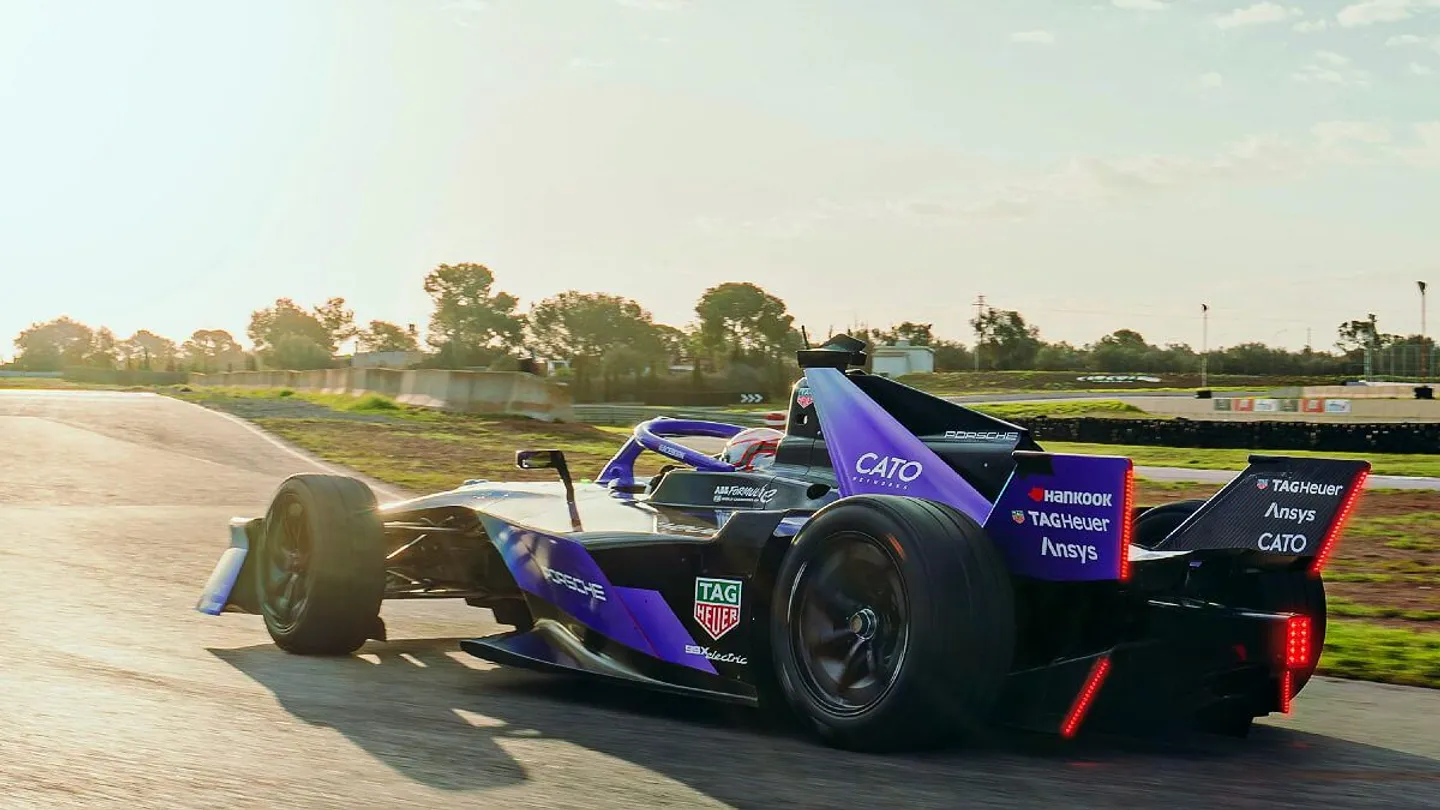
Teams to Watch at Shanghai
Beyond the individual drivers, Porsche Motorsport enters Shanghai as the team with the most raw speed this season. Their powertrain has shown a clear advantage in qualifying trim at medium-speed circuits, which suits parts of the Shanghai layout well. Meanwhile, Jaguar TCS Racing has the best race-pace balance — their car performs consistently across varying energy states, which is exactly what a 45-minute street circuit race demands.
DS Penske is the team with the most strategic flexibility, running two legitimate title challengers in Vandoorne and Vergne. They can use that depth to create coverage on Attack Mode timing and force rivals into reactive decisions. For more on how Formula E teams are structured and funded, our Formula E teams guide covers the full grid.
Attack Mode Strategy at Shanghai — How the Race Gets Won
Formula E strategy is not like conventional motorsport strategy. There are no tyre compounds, no pit stops for fuel, and no wet-weather gamble that can turn a backmarker into a race winner in one call. Instead, the strategic layer runs continuously through every lap — Attack Mode timing, energy deployment rates, regen balance, and the interplay between those choices determines who wins. Shanghai, with its mix of tight chicanes and medium-speed sections, puts all of those decisions under maximum pressure simultaneously.
What Is Attack Mode and Why Does It Matter at Shanghai?
Attack Mode temporarily boosts a Formula E car’s power output by 35 kW for a defined duration — typically four or eight minutes depending on the event format. To activate it, drivers must steer off the racing line and pass through a designated activation zone marked on the circuit surface. Taking it costs time on that lap. However, the power boost in the following minutes can more than compensate if used aggressively on a high-energy consumption section.
At Shanghai, the Attack Mode zone is positioned in a section that drivers would normally take at a specific speed to preserve energy. Going through the activation zone means accepting a slightly wider line and a marginal time loss. Consequently, the decision of when to go for Attack Mode is not purely about the boost — it’s also about where in the race order you’re willing to drop momentarily and what you gain from having more power in the subsequent laps.
| Strategy | Timing | Advantage | Risk |
|---|---|---|---|
| Early Attack Mode | Laps 5–10 | Power boost in congested traffic, creates gaps | Energy deficit in closing laps when it matters most |
| Mid-race Attack | Laps 12–18 | Balanced energy, timing mimics rival moves | Reactive rather than proactive; harder to gain track position |
| Late Attack Mode | Laps 18–22 | Maximum energy for final push, huge power in finale | No time to recover if the boost doesn’t produce an overtake |
| Staggered (with teammate) | Split timing | Team covers multiple windows; pressure on rivals | Complex communication; risk of blocking own teammate |
Furthermore, the Gen3 Evo’s regenerative braking system adds another layer. Shanghai’s braking zones before the hairpin and the chicane sequence allow drivers to recover significant energy each lap — but only if they brake late and hard enough. Drivers who are already managing an energy deficit tend to brake earlier and softer, which compounds their problem by recovering less energy. Therefore, protecting energy through the first third of the race is not just about what you spend — it’s about ensuring the regen zones remain productive throughout.
Formula E’s Pit Boost system allows teams to add extra energy to the car during the race via a high-speed charging cable in the pit lane. Drivers can take a Pit Boost stop of around eight seconds and gain a meaningful energy advantage for the remaining laps. At Shanghai — where energy margins are typically tight — a well-timed Pit Boost can transform a car that’s managing an energy shortage into one that’s genuinely fast in the finale. The key is timing it so you re-emerge from the pit lane in clean air rather than stuck behind a traffic queue in the slow section.
Shanghai E-Prix 2026 Full Weekend Schedule
| Day | Session | Time (ET) | Time (Local CST) | Coverage |
|---|---|---|---|---|
| Saturday | Free Practice 1 | 6:00 AM ET | 7:00 PM CST | Formula E app, YouTube |
| Saturday | Free Practice 2 | 8:30 AM ET | 9:30 PM CST | Formula E app |
| Saturday | Qualifying | 10:30 AM ET | 11:30 PM CST | CBS Sports Network · Paramount+ |
| Sunday | Race Day Warm-Up | 6:00 AM ET | 7:00 PM CST | Formula E app |
| Sunday | Shanghai E-Prix — Race | ~8:00 AM ET | ~9:00 PM CST | CBS Sports Network · Paramount+ |
Note that the race start time in Eastern Time is early on Sunday morning, since Shanghai runs on China Standard Time, which is 13 hours ahead of ET. However, the CBS Sports Network broadcast timing is confirmed for approximately 8:00 AM ET on race day, making it feasible to catch the full race before most American viewers’ Sunday plans begin. For live timing data, the Formula E app provides lap-by-lap updates with energy state readouts for every car. See our Formula E 2026 schedule for the full season calendar.
UK: Channel 4 (free-to-air live) · Germany: Sat.1 · France: France TV Sport · Italy: Italia 1 · Australia: Stan Sport · Formula E+ streaming app is available in most territories as the official global streaming platform. For the complete territory-by-territory guide, visit the official Formula E website.
Shanghai E-Prix 2026 Predictions — Who Wins?
Predicting a Formula E result with confidence is harder than in most motorsport. The Attack Mode timing variable, the Pit Boost gamble, and the unpredictable safety car periods make a definitive call almost impossible before the first lap. However, a structured look at form, circuit fit, and championship motivation points toward a clear group of probables.
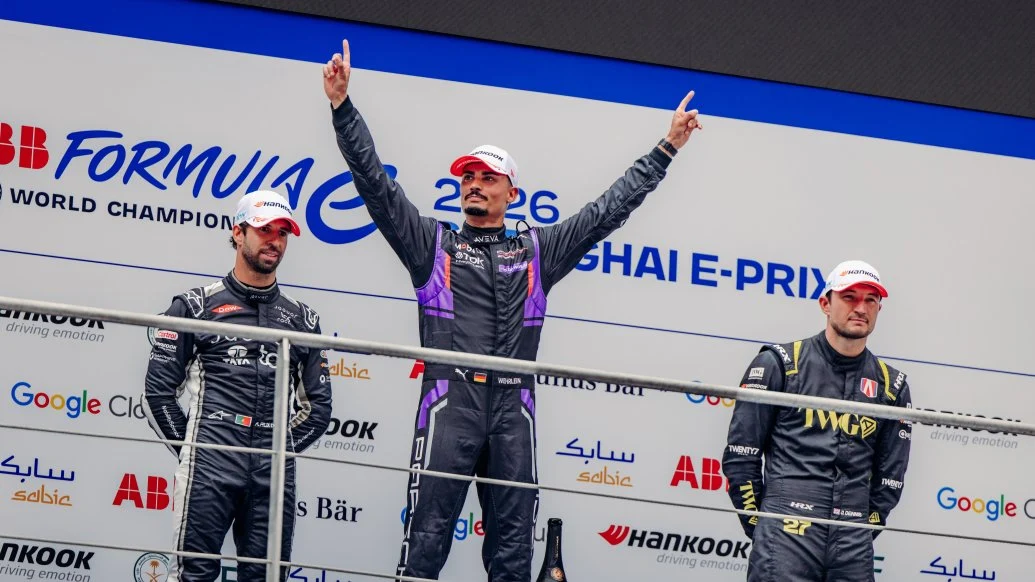
Race Winner Prediction: António Félix da Costa
Da Costa is the pick for the win at Shanghai. His qualifying pace at technical circuits is the best in the field, and starting from the front row — which he’s strongly placed to achieve — makes a significant difference here. Moreover, the Porsche powertrain’s performance advantage in qualifying mode carried over into race pace in recent rounds, suggesting it’s not just a one-lap phenomenon. Da Costa’s experience at this specific track, combined with Porsche’s Attack Mode strategy flexibility running two cars, makes him the most dangerous driver on the grid this weekend.
Podium Prediction: Evans P2, Vandoorne P3
Evans finishes second. He’ll be on pole or right near it, and his race management over 45 minutes rarely produces a catastrophic drop. Even if da Costa gets past in the closing stages, Evans keeps his championship points at 22 rather than 25. That’s still a strong result and maintains his title lead heading into the next round.
Vandoorne completes the podium in third. His energy management, precise Attack Mode calls, and the reliability of the DS Penske package make him a consistent podium presence when the strategic dice land correctly. He’s unlikely to win unless Evans and da Costa both have issues, but third is a very realistic outcome based on his form this season.
| Pos | Driver | Team | Confidence | Key factor |
|---|---|---|---|---|
| 1st | António Félix da Costa | Porsche Motorsport | ★★★★☆ | Qualifying pace + Porsche powertrain edge |
| 2nd | Mitch Evans | Jaguar TCS Racing | ★★★★☆ | Race management + championship motivation |
| 3rd | Stoffel Vandoorne | DS Penske | ★★★☆☆ | Energy management + Attack Mode precision |
| Dark horse | Jake Dennis | Andretti Global | ★★☆☆☆ | Strong Shanghai single-lap pace in history |
The wildcard in all of this is Jake Dennis. If he qualifies inside the top four and executes an early Attack Mode timing that catches the leaders off guard, he has the pace to win. However, his inconsistency across the season makes him a dark horse rather than a favourite. Furthermore, any safety car period — and Shanghai has historically produced them — reshapes the energy picture and could elevate a driver who was carefully managing from seventh or eighth into a podium position through smart Pit Boost timing. For historical context on how Formula E races tend to unfold on street circuits, our Formula E 2026 season preview covers the series-wide form picture in depth.
Weather Forecast and Track Conditions
Shanghai in mid-summer runs warm and humid. Race day temperatures are forecast to be in the range of 28–33°C (82–91°F) with moderate humidity. These conditions are significant for Formula E because battery performance is temperature-sensitive — cooler temperatures allow the Gen3 Evo to sustain higher power outputs for longer, while extreme heat can require software-level power management changes that affect the race performance ceiling.
Moreover, the likelihood of afternoon thunderstorms in Shanghai during this season means there’s a non-trivial chance of a wet qualifying session. A damp track in qualifying reshuffle the starting order significantly, since the wet handling characteristics of the Gen3 Evo differ meaningfully between teams depending on setup philosophy. However, Sunday’s race window currently sits in a drier period of the forecast. Therefore, teams are likely building their car setups around a dry race while keeping a wet-weather contingency in reserve. For more on how weather shapes motorsport strategy, our piece on safety car strategy in racing has relevant context.
Temperature: 28–33°C (82–91°F) · Conditions: Partly cloudy, isolated storm risk during qualifying, drier window for race · Humidity: 65–75% · Impact: Battery temperature management will be a factor; teams may run conservative power modes in early laps to protect energy efficiency in the heat.
Shanghai E-Prix 2026 — Frequently Asked Questions
The Bottom Line on Shanghai 2026
The Shanghai E-Prix is shaping up as one of the most consequential races of the Formula E Season 12 calendar. The championship gap is small enough that a win or a retirement by any of the top three drivers could meaningfully reshape the title picture. Moreover, Shanghai’s specific circuit characteristics — its tight braking zones, the Attack Mode activation placement, and the energy recovery profile — mean that the result won’t simply follow qualifying order. Strategy, adaptability, and composure under pressure will separate the race winner from the rest of the field.
Da Costa is the pick to win. Evans is the pick to keep his championship lead. And at some point during those 45 minutes, there will be a moment that makes this race worth remembering — a decisive Attack Mode move, a brave Pit Boost call, or a last-lap battle that goes all the way to the line. That’s what Formula E at its best looks like, and Shanghai delivers it reliably.
Sources & External References
- FIA Formula E Official Website — championship standings, calendar, and race format details
- Motorsport.com Formula E — race reports, qualifying analysis, team updates
- Autosport Formula E — driver interviews, technical analysis, season coverage
- CBS Sports Formula E — US broadcast schedule and live race coverage